
Marine Viewpoint
Cape Cornwall
A rugged Atlantic headland of granite cliffs, mining history and vast ocean views — often quieter and wilder in feeling than nearby Land's End.
The Coastal Experience
What Cape Cornwall Is Actually Like
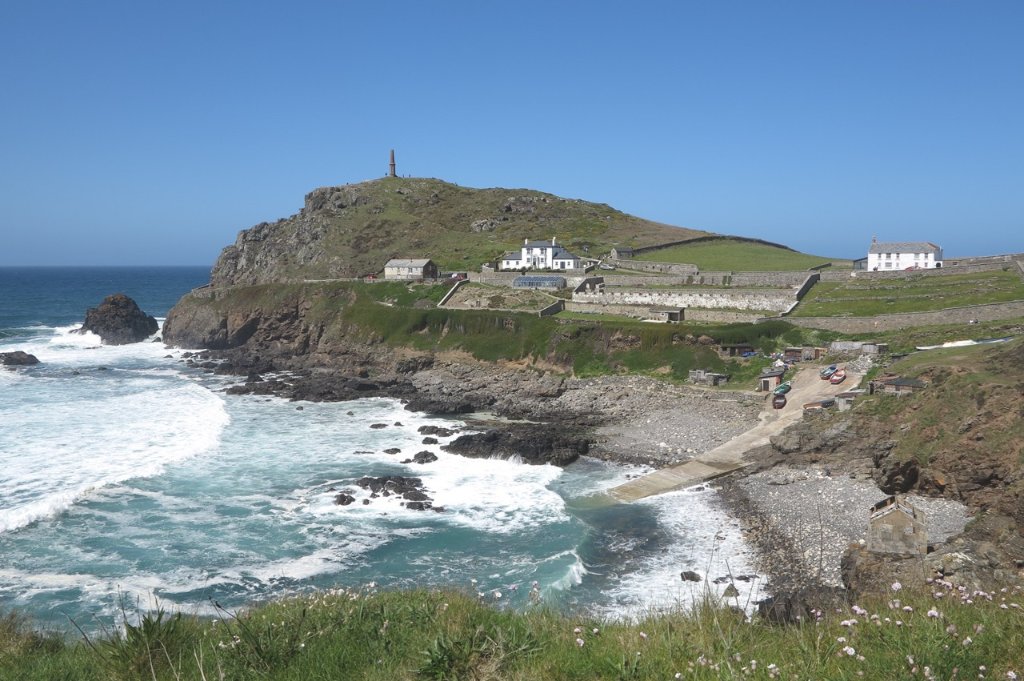
Cape Cornwall feels exposed to the full scale of the Atlantic. The granite headland pushes directly into the ocean while steep cliffs and mining remains dominate the surrounding landscape.
Unlike busier visitor attractions nearby, Cape Cornwall often feels quieter and more elemental. Wind, sea and weather shape the atmosphere constantly.
The remains of Cornwall's industrial coastline still stand above the cliffs, creating a striking contrast between mining history and raw Atlantic scenery.
The surrounding South West Coast Path provides exceptional walking with huge ocean views stretching along the Penwith coastline.
Current conditions & location
This morning at Cape Cornwall



Weather
☁️ Overcast
16°C (feels like 13°C)
Moderate wind from the SW
14% chance of rain
Today: 17°C / 15°C
Tides today
Today's tide at Cape Cornwall is building from low water. For this beach, the headland itself remains dramatic at all states of tide, though lower tides reveal more of the rocky shoreline and offshore formations beneath the cliffs.. Conditions now are overcast, moderate wind from the SW, 16°C.
Met Office forecast updated every 30 minutes. Tide times are modelled estimates — confirm with local tide tables before swimming or crossing tidal ground.
Who Is This Place For?
Select your visit style to see what to expect.
Preparation
Useful for this beach
Based on what this location offers and what visitors typically find helpful.
Photography
- Spare battery — cold and salt air drain them faster
- Lens cloth for sea spray
- Check the tide and light direction before you set up
Wildlife watching
- Binoculars if you have them
- Soft-soled footwear — quieter on rock and shingle
- Keep well back from nesting birds and resting seals
Bringing a dog
- Lead — livestock and wildlife may be close by
- Fresh water and a bowl
- Waste bags
- Check seasonal restrictions before you go
Wind exposure
- A windproof layer — this beach catches prevailing winds
- Secure bags and towels before you put them down
Tidal ground
- Footwear for wet sand and channels
- Be aware of how quickly tidal estuaries change
- Check crossing times if you plan to walk beyond the beach
Water & Safety
Know Before You Go
Lifeguards
There are no RNLI lifeguard patrols around Cape Cornwall.
RNLI Information
Visitors should remain well back from cliff edges during rough weather and avoid entering the water around exposed rocky areas. In emergencies call 999 or 112 and ask for the Coastguard.
Rip Currents
Strong currents, swell surges and dangerous water movement may occur around the rocky coastline and offshore formations.
Tidal Hazards
Changing tides can isolate rocky shoreline areas beneath the cliffs and increase wave impact around exposed sections of coast.
Safe Swimming Areas
Swimming is not generally recommended around the headland due to rocks, swell and strong Atlantic water movement.
Cliff Hazards
The cliffs and coastal paths around Cape Cornwall are steep, exposed and potentially dangerous during strong winds or wet weather.
Safety Summary
Cape Cornwall is a genuinely exposed Atlantic headland where weather, wind, cliffs and sea conditions can become severe very quickly.
Seasonal Character
Through the Seasons
Summer brings quieter cliff walking and broad Atlantic visibility beneath long daylight hours.
Autumn often provides the best mix of dramatic skies, migrating wildlife and atmospheric photography conditions.
Winter transforms Cape Cornwall into a raw storm coastline dominated by heavy seas, wind and crashing surf.
Spring brings fresh coastal flowers and calmer exploration before the busiest visitor season arrives.
Wildlife & Nature
Wildlife at This Location
Seabirds regularly move around the cliffs and offshore waters, particularly during migration periods.
Choughs are occasionally seen along the surrounding coastline.
Spring and summer bring coastal wildflowers and insect life across the cliff tops.
Seals and dolphins may occasionally be spotted offshore during calmer sea conditions.
Community & Care
Who looks after this place
Volunteer groups
National Trust teams, coastal conservation volunteers and local wildlife organisations help care for the headland and surrounding coastline.
Beach cleans
Coastal clean activity periodically takes place around the surrounding shoreline, particularly following winter storms.
Wildlife protection
Remain on established cliff paths where possible and avoid disturbing nesting seabirds or fragile coastal vegetation.
Community
Cape Cornwall remains deeply connected to Cornwall's mining and maritime heritage, with the surrounding landscape still carrying strong traces of its industrial past.
Respecting this place
Use designated parking and walking routes, respect conservation areas and remain aware of changing Atlantic weather conditions.
Photography
What to Photograph Here
Cape Cornwall is especially strong during dramatic weather and lower evening light, when the granite cliffs and mining chimney stand against the Atlantic horizon.
Storm conditions can create exceptional surf and sea-spray photography from safe viewpoints.
Wide-angle compositions work particularly well here due to the scale of the landscape and ocean views.