Exmoor National Park · Somerset & Devon
Exmoor: coast, valleys, wildlife and moorland places
High cliffs, wooded valleys and open moorland — a landscape of contrast, movement and changing light.
What makes Exmoor different
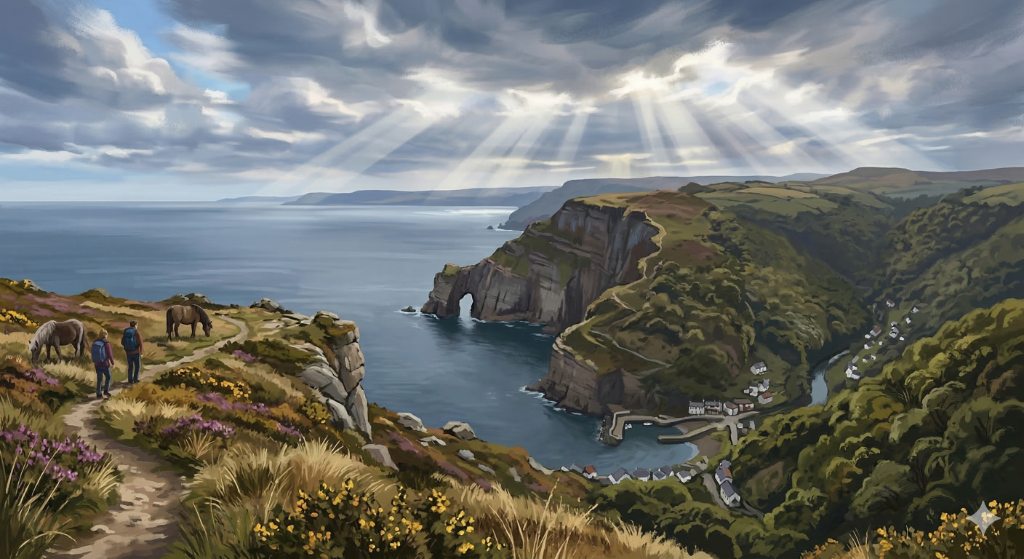
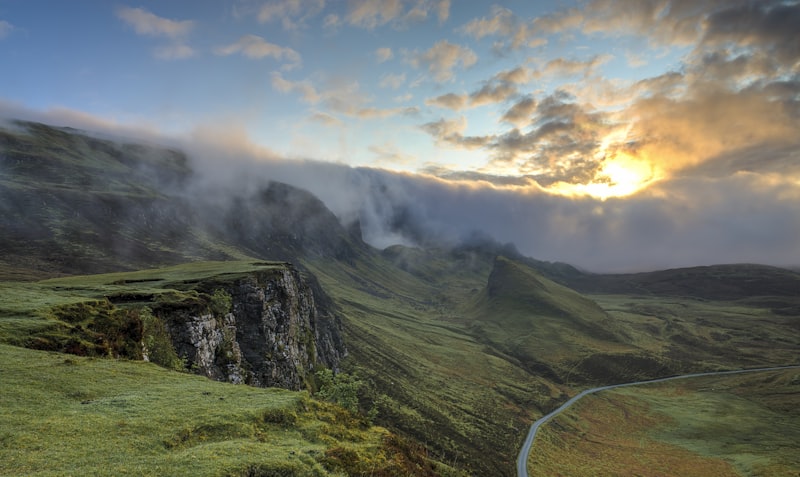
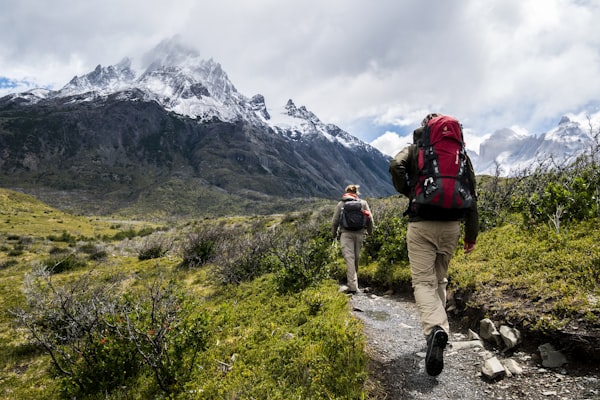
Exmoor is not one landscape. In a single walk you can move from wooded river valleys to open moorland, then out onto high coastal cliffs. Routes rise and fall quickly, and views constantly change.
The terrain shifts every half mile. The sea is almost always present — on the horizon or just around the next headland. That constant variation is what makes walking here feel different from anywhere else.
Coastal cliffs
Steep edges with big sea views. Some of England's highest coastline.
Wooded combes
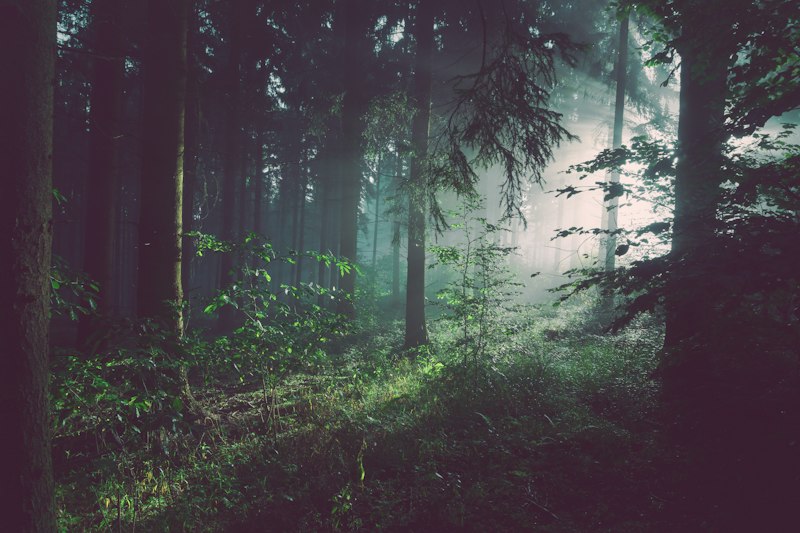
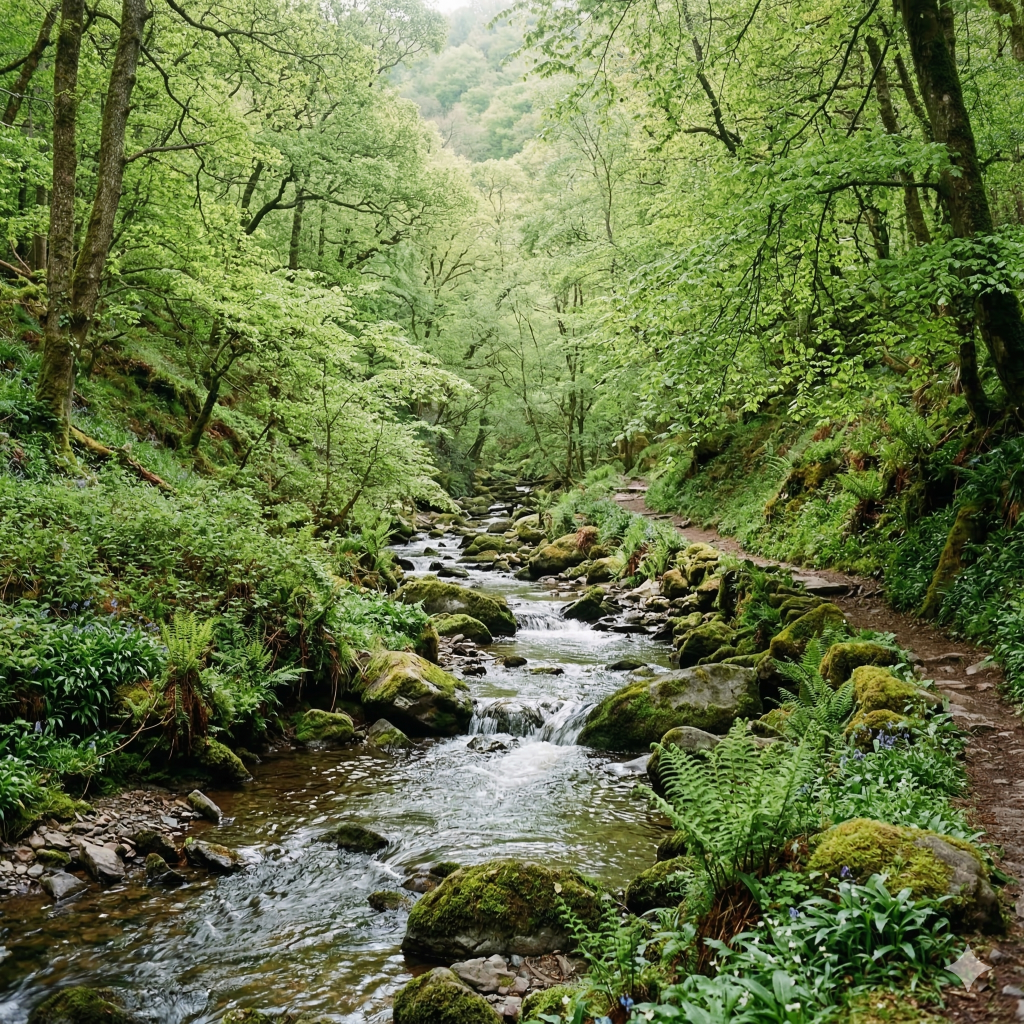
Shaded valleys with rivers, oak woodland and ferns — a world away from the open moor above.
Rolling moorland
Open but less exposed than Dartmoor. Heather, gorse and long views across the Bristol Channel.
Constant variation
Terrain changes quickly. A morning's walk can move through cliff, woodland, bog and open heath.
Exmoor walks to start with
All Exmoor walksExmoor walks to start with
We’re building a growing collection of Exmoor routes — from coastal paths to quiet inland valleys. Check back shortly as new walks are added.
Browse all walksExplore by experience
Exmoor is about variety. Find your kind of walk.


Places on Exmoor
Exmoor's character changes depending on where you start — coast, village or inland moor.
Lynton & Lynmouth
Twin villages connected by a cliff railway. Dramatic gorge, coastal paths and the Valley of Rocks nearby.
Porlock
Ancient village at the foot of the notorious hill. Porlock Weir is a short walk away — a classic.
Dunster
A medieval village with a castle, yarn market and easy access to the eastern moor.
Minehead
Start of the South West Coast Path and gateway to Exmoor's eastern edge.
Exmoor through the seasons
Coastal light and wooded valleys mean every season has its own character.
Spring
Apr – May
Green valleys, rivers flowing, fresh growth. The combes turn vivid almost overnight and the coast path is quiet.
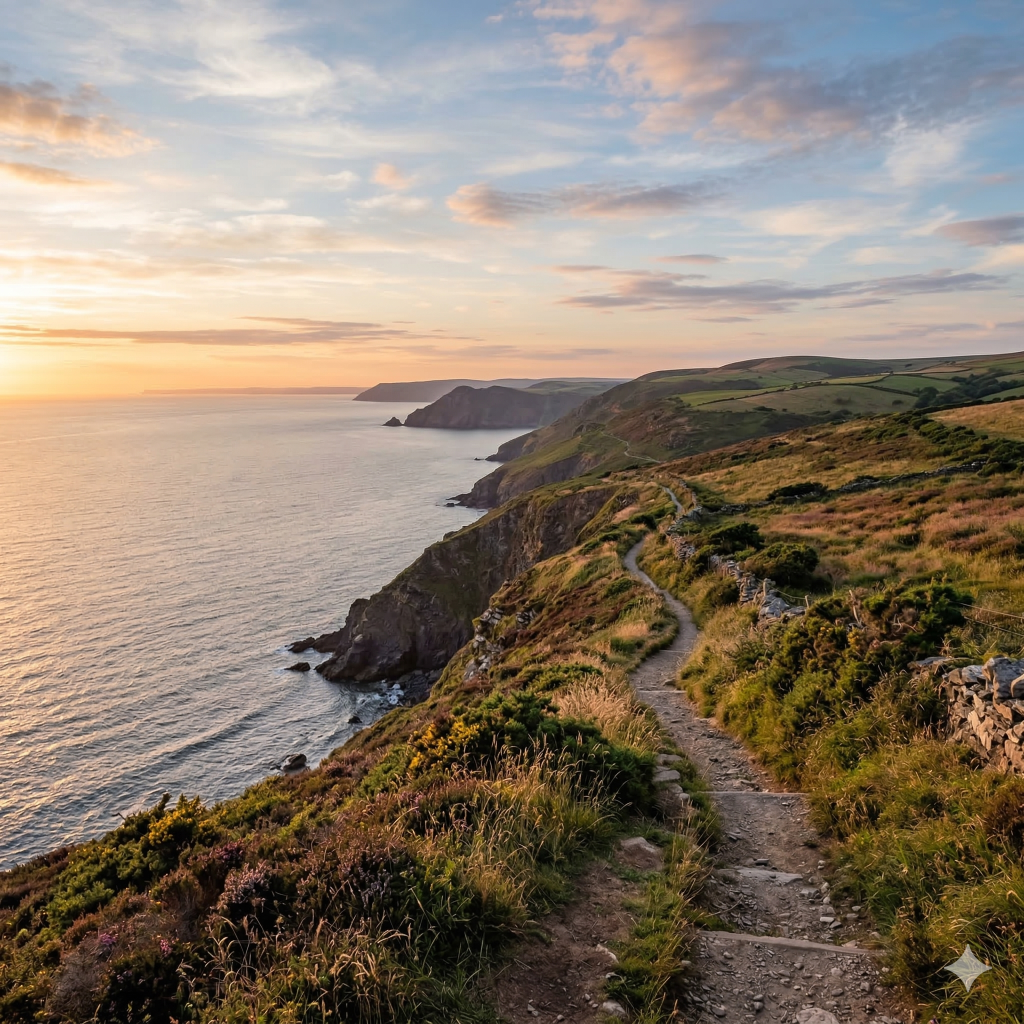
Summer
Jun – Aug
Clear coastal views, long days, warm evenings. Valley floors get lush. The Bristol Channel shimmers on still mornings.
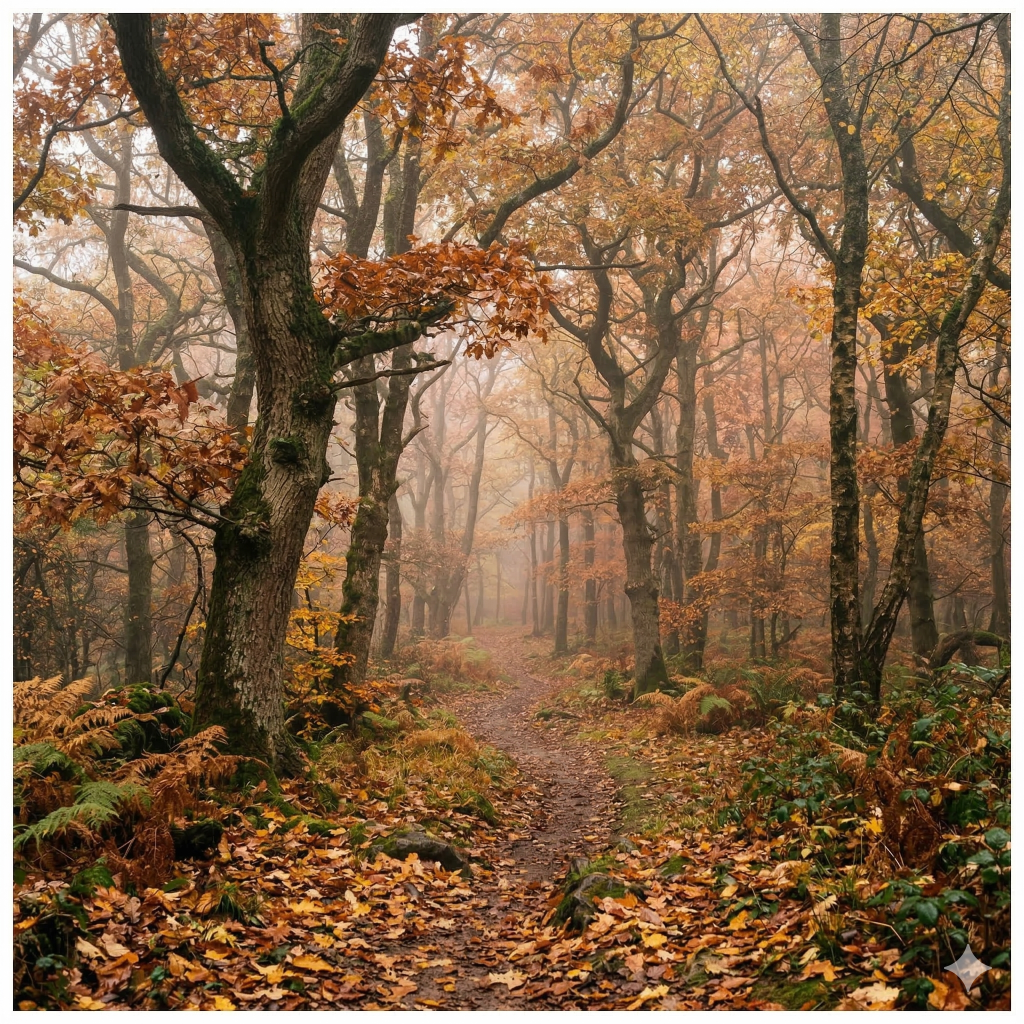
Autumn
Sep – Oct
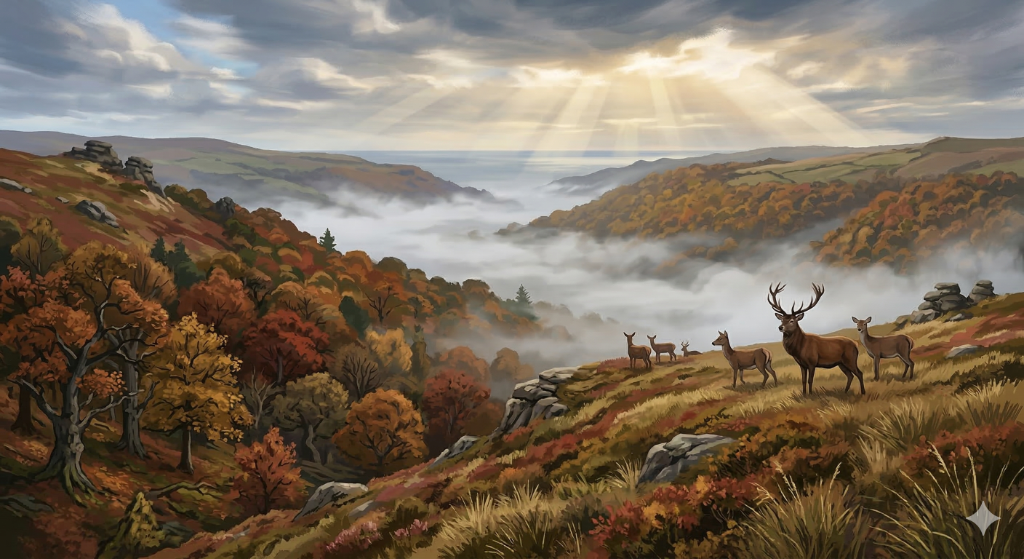
Wooded valleys blaze with colour. Red deer rut on the open moor. Quieter paths, softer light — Exmoor's finest season.
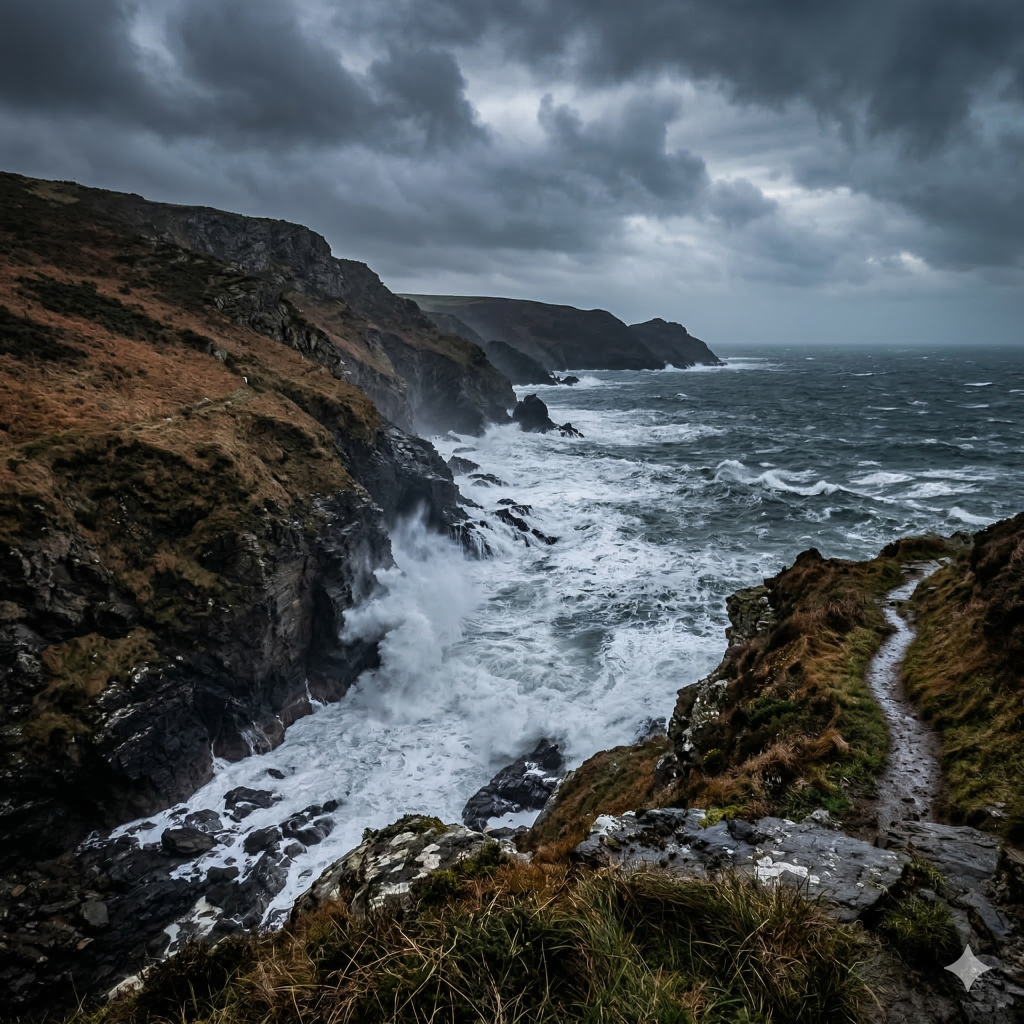
Winter
Nov – Mar
Dramatic Atlantic swells on the coast. The moor can be bleak and beautiful. Valley paths get muddy — gaiters essential.
Before you head onto Exmoor
Steep terrain
Climbs and descents can be sustained — particularly on the coast path where the route rises and falls repeatedly.
Cliff edges
Take care near exposed sections. Unfenced cliff edges with significant drops — keep children and dogs under close control.
Weather shifts
Coastal weather changes quickly. A morning forecast can be obsolete by lunchtime — carry a waterproof every time.
Distance feels longer
Routes can feel longer than expected due to constant ascent and descent. Allow more time than the map suggests.
Why walk Exmoor
Exmoor is never one thing. Coast, valley and moor meet in a way that keeps every walk changing — in light, terrain and atmosphere. It's a place you explore, not just walk through.
Morning sea mist in the combes, afternoon sun breaking through oak canopy, the moment a clifftop clears and you see forty miles of Bristol Channel — these aren't rare conditions. They happen on ordinary days, on ordinary walks.
View all Exmoor walks