Dartmoor National Park · Devon
Dartmoor: walks, places, wildlife and stories
20,000 hectares of open moorland, granite tors and deep river valleys — one of England's last truly wild landscapes.
Dartmoor isn't a gentle walking destination with signposted trails. It's an active, working moorland — grazed by ponies, crossed by military ranges, and exposed to Atlantic weather with little warning. That's precisely what makes it exceptional.
The landscape
What makes Dartmoor different
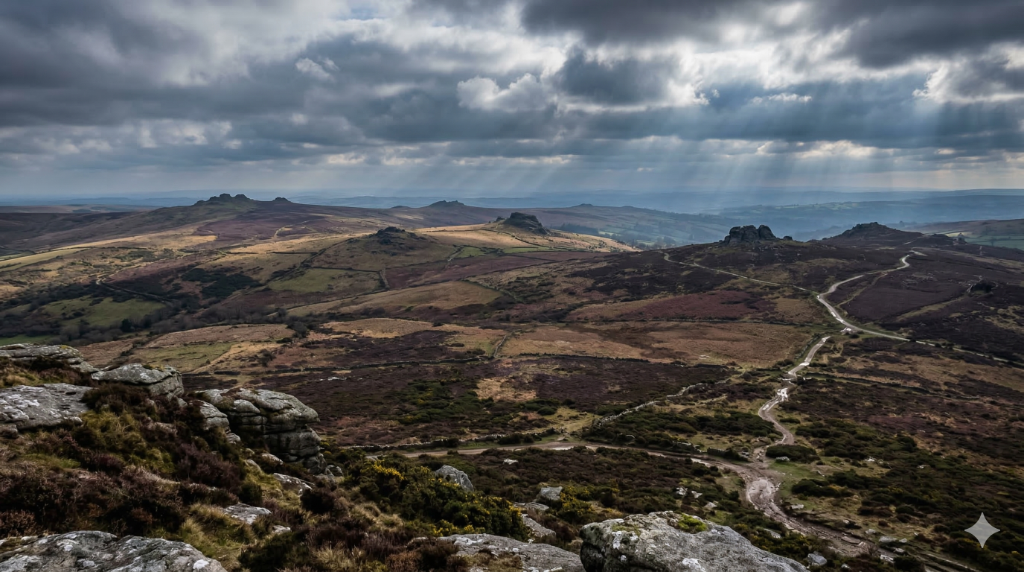
The sense of space here is unlike anywhere else in southern England. On a clear day from the high plateau, you can see for thirty miles in every direction. On a misty October morning, you could be the only person within miles.
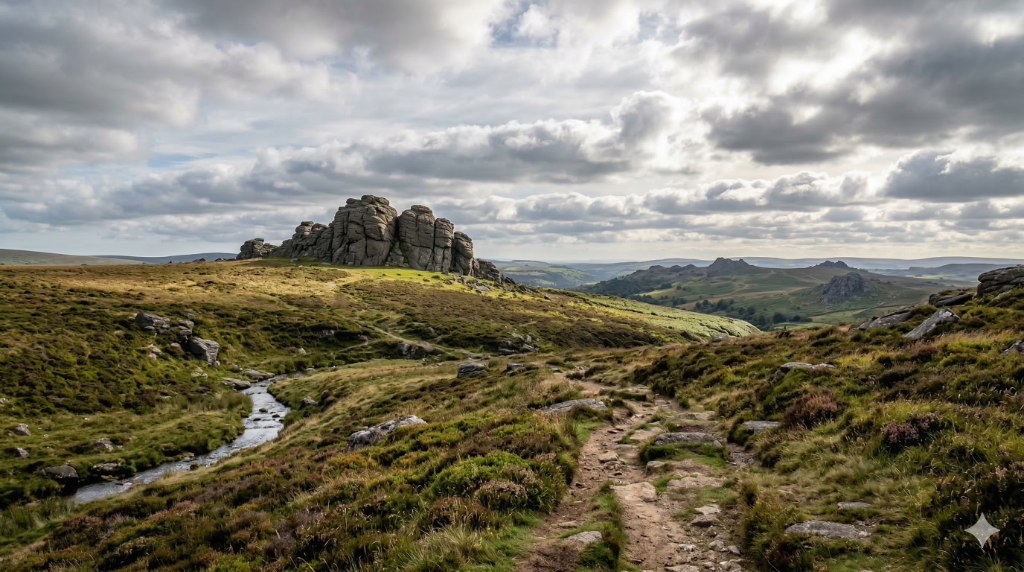
The landscape shifts constantly: short grass giving way to boggy ground, granite tracks crossing open heath, river valleys cutting through ancient woodland. On the same walk, you might cross streams, navigate rough stones and climb an exposed ridge — all within a few miles.
Exposed terrain
The high moorland sits above 400m with no tree cover — weather hits hard and fast.
Navigation matters
Fewer waymarks, fewer paths. A map and compass are genuine requirements above the valleys.
Fast-changing weather
Clear skies can become thick mist in under an hour. Pack layers even in summer.
Unmatched space
20,000 hectares of open access land. True solitude is genuinely possible here.
Routes
Dartmoor walks
We're adding Dartmoor routes regularly — check back soon.
Browse all walks

Where to go
Places on Dartmoor
Dartmoor has no single obvious centre. Here are six starting points — each with a distinct character.
Princetown
The highest town on Dartmoor. Gateway to the wild central plateau.
Tavistock
Market town on the western moor. Medieval abbey, canal walks, river valleys.
Widecombe-in-the-Moor
Classic moorland village, famous for its fair and surrounded by tors.
Postbridge
Ancient clapper bridge at the heart of the moor. Excellent walking in all directions.
Haytor
Iconic granite tor with sweeping views across south Dartmoor. Perfect for a first visit.
Bellever
Woodland, ancient stone row, open moor and the East Dart river all within easy reach.
When to visit
Dartmoor through the seasons
The moor is worth walking in every season — but each requires different expectations.
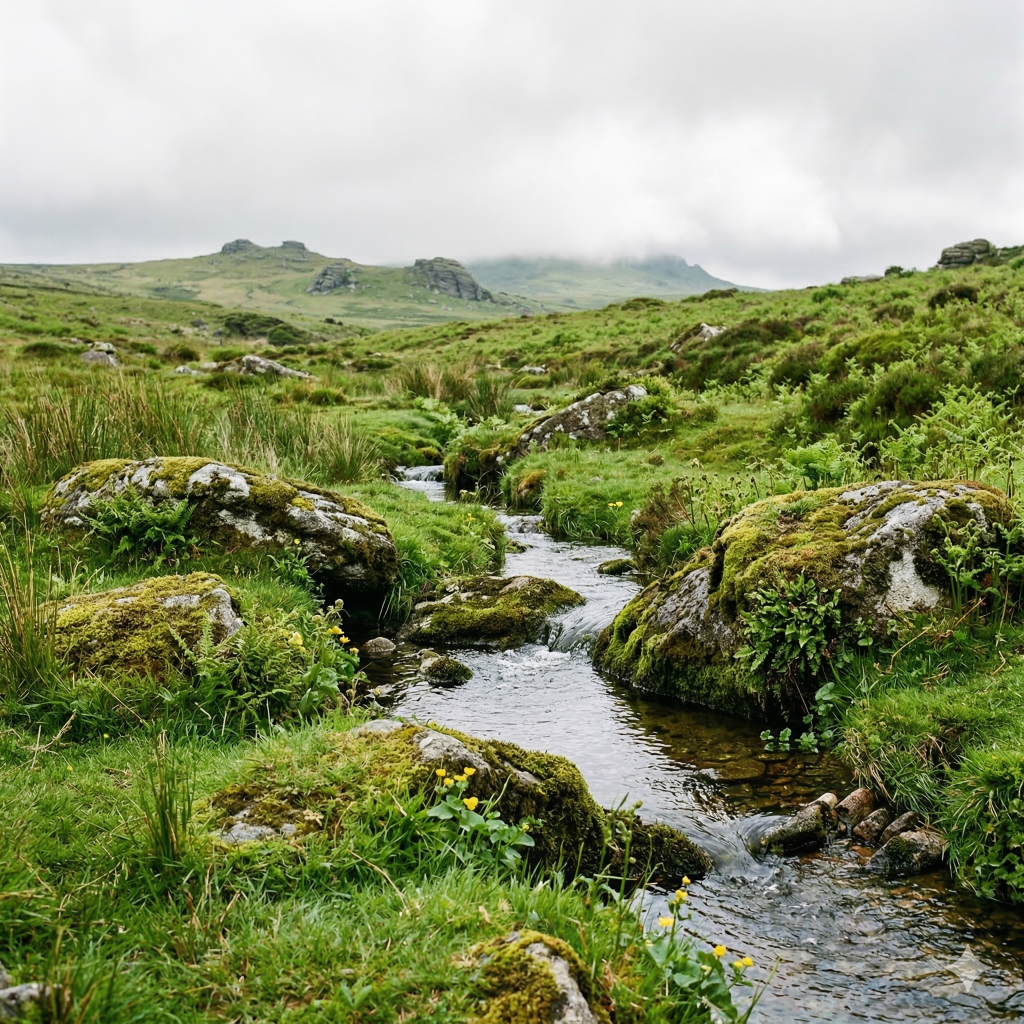
Apr – May
Bracken not yet up, valley bluebells, and birdsong everywhere. Ground drying after winter. Cold on exposed tops but exceptional visibility.
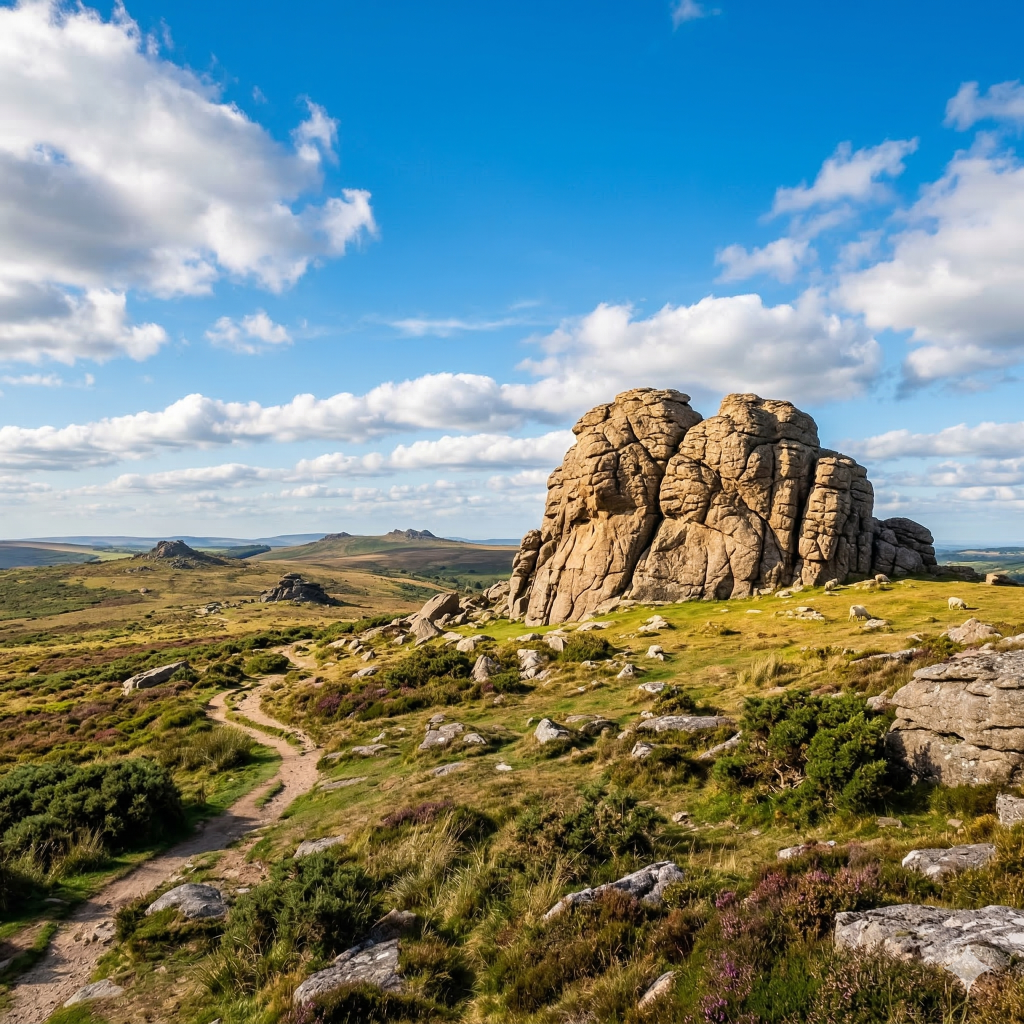
Jun – Aug
Long days, mostly dry, warm on the open moor. Popular car parks fill early. Bracken is thick — stay on paths. Best season for river swimming.
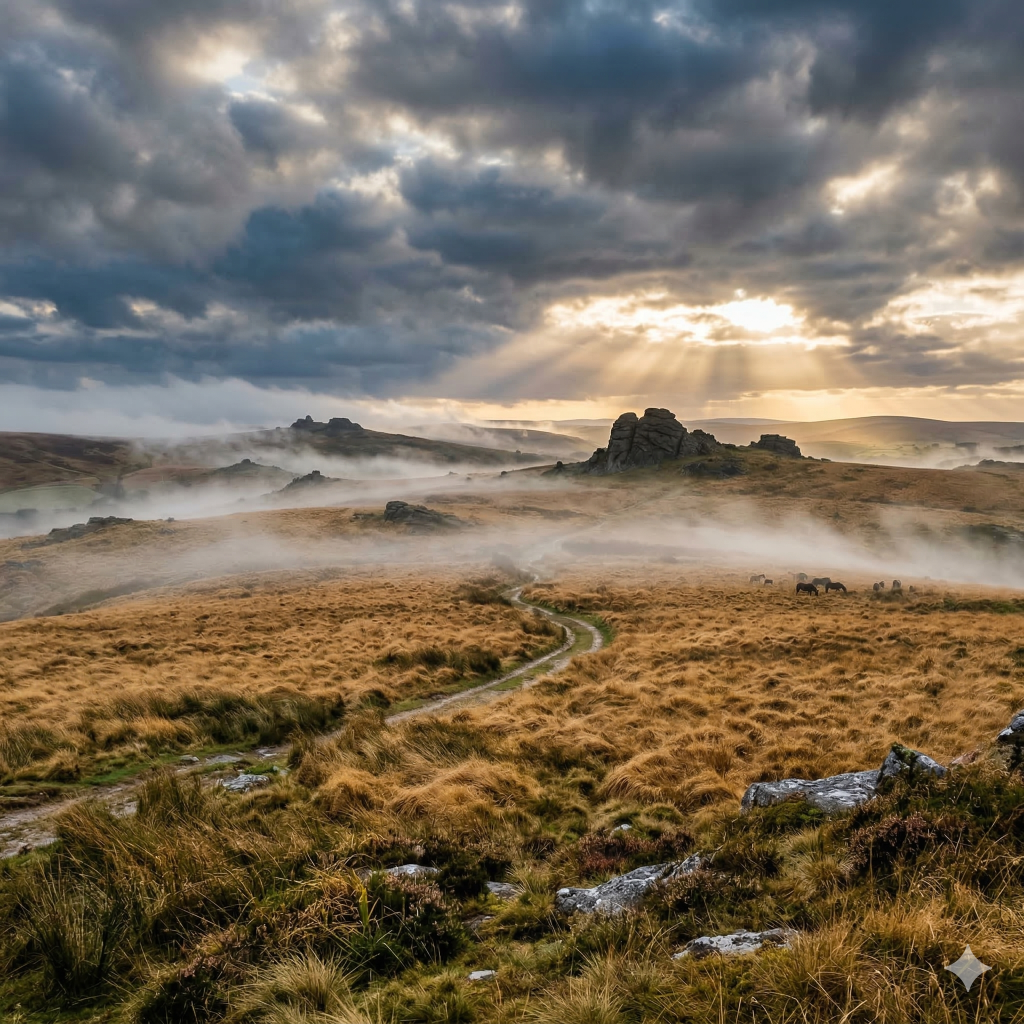
Sep – Oct
The best walking season. Low golden light, bracken turning, quieter paths. Rutting season for Dartmoor ponies. Days shorten fast after mid-October.
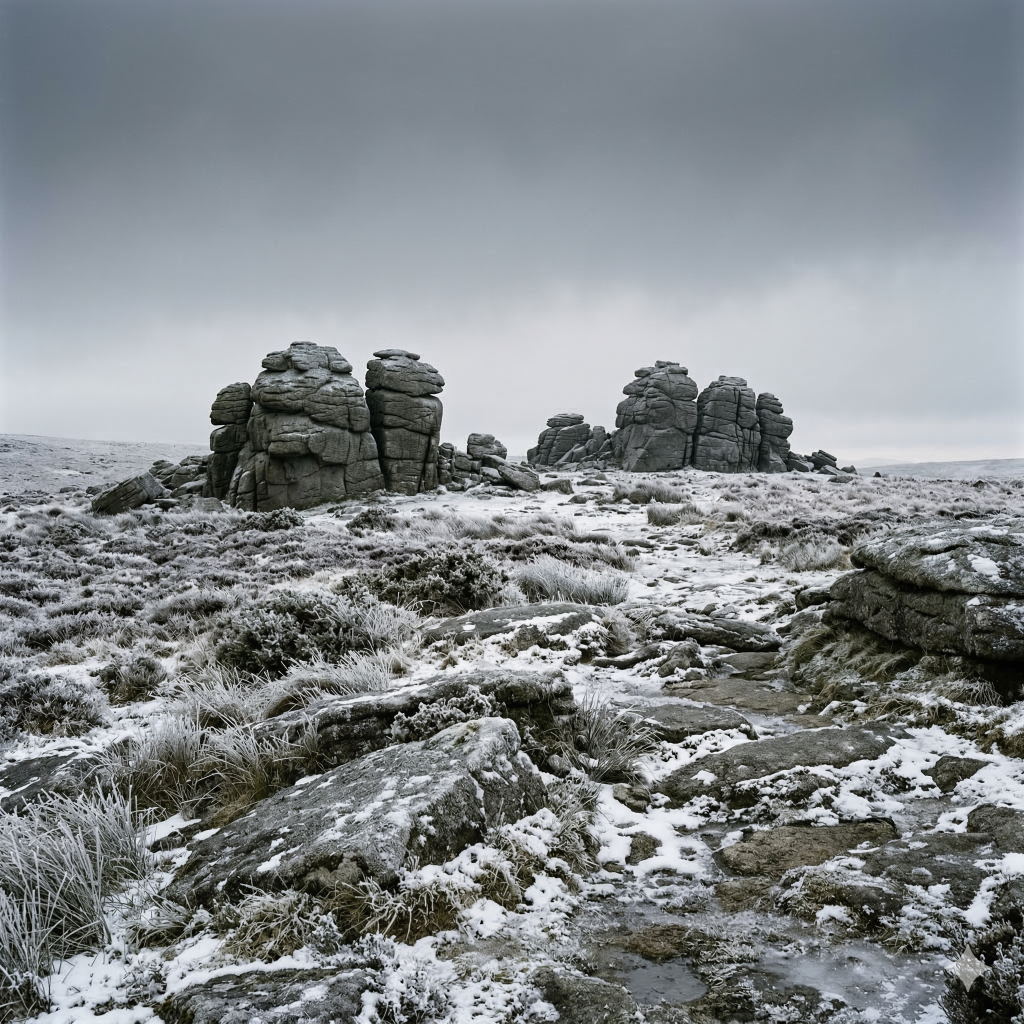
Nov – Mar
Raw, beautiful, and serious. Snow on high tors isn't uncommon. Navigation skills are essential. The solitude is extraordinary — few other people, no crowds, no noise.
Interactive map
Explore Dartmoor on the Map
All routes, places and landmarks plotted across tors, valleys and open moorland.
Open Dartmoor MapKnow before you go
Before you head onto the moor
Weather changes fast
Clear skies can become thick mist in under an hour. Check the forecast and carry a waterproof — always.
Visibility can drop
Mist on the high moor is genuine fog. If you can't navigate by map and compass, stick to valley routes.
Signal is unreliable
Coverage disappears in valleys and on the northern plateau. Download your maps before you leave.
Footwear matters
Trainers are not moorland footwear. Waterproof walking boots with ankle support — every time, every season.
Why Dartmoor
A landscape you return to
Dartmoor isn't just somewhere to walk. It's somewhere to feel space, weather and time — all at once. The landscape is ancient in a way that most of England isn't anymore: Bronze Age field systems still visible in the grass, tin miners' ruins slowly returning to the moor, ponies that have grazed here for centuries.
The experience changes with each visit. The same route in October feels completely different in March. That's not a cliché — it's what keeps people coming back.
Dartmoor in autumn
Low light, golden bracken, quieter paths