Tors on Dartmoor Worth Visiting
The granite summits that define Dartmoor's character — and the walks to reach them.
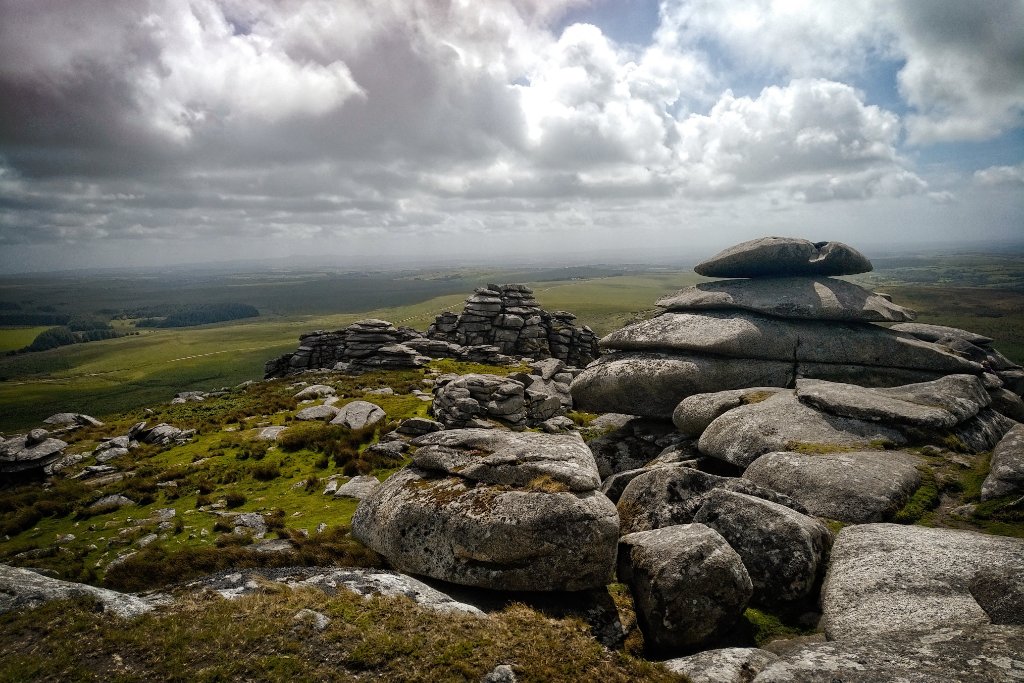
Dartmoor has over 160 named tors. They're the exposed tops of granite intrusions that pushed up through older rocks millions of years ago — worn into their present fantastical shapes by frost and water over thousands of years. No two are alike.
Some are roadside and easy to reach in five minutes. Others require a half-day commitment across open moorland. The best tor walks combine the summit experience with everything around it: the approach, the views from the top, and the sense of scale you only get when you're standing on one and looking out across miles of uninterrupted moorland.
The routes below are chosen because the tor itself is worth the effort — architecturally impressive, well-positioned for views, or simply satisfying to stand on.
Who this page is for
- Walkers who want a clear objective — a summit to aim for and views to justify the effort
- People interested in Dartmoor's geology and the process that shaped these extraordinary rock formations
- 'Tor baggers' — those working their way through the named tors as a long-term walking project
- Anyone who wants the high moorland experience with a focal point rather than open-ended wandering
Walks coming soon
About this area
Haytor is the most visited tor on Dartmoor and justifiably so — it's large, impressive and the views are remarkable on a clear day. Hound Tor nearby is arguably more dramatic. Further north, Great Mis Tor and the Yes Tor/High Willhays plateau give a completely different sense of scale. Brentor, on the western edge, sits above a medieval church and looks straight out to sea on the clearest days.
Safety on this terrain
High tors are exposed and wind speeds increase significantly near summits. Descending granite can be slippery in wet or icy conditions — take your time and pick your route down carefully. In poor visibility, descending the wrong side of a tor can take you into difficult ground. Always know which direction you need to descend before you reach the top.
When to go
Spring (Apr–May)
Clear air after winter rains gives the best long-distance visibility from summits. Pack wind layers — tors are exposed.
Summer (Jun–Aug)
Hazy days can reduce views but walking is comfortable. Early morning visits avoid crowds at popular tors like Haytor.
Autumn (Sep–Oct)
Outstanding light. Low sun from the south-west catches the granite at extraordinary angles from mid-afternoon.
Winter (Nov–Mar)
Frost on the granite and snow in the crevices — spectacular if conditions allow. Full winter gear required on high tors.
Plan your visit
Use the interactive map to explore routes, check conditions, and plan your day across all three moors.
Open the map