
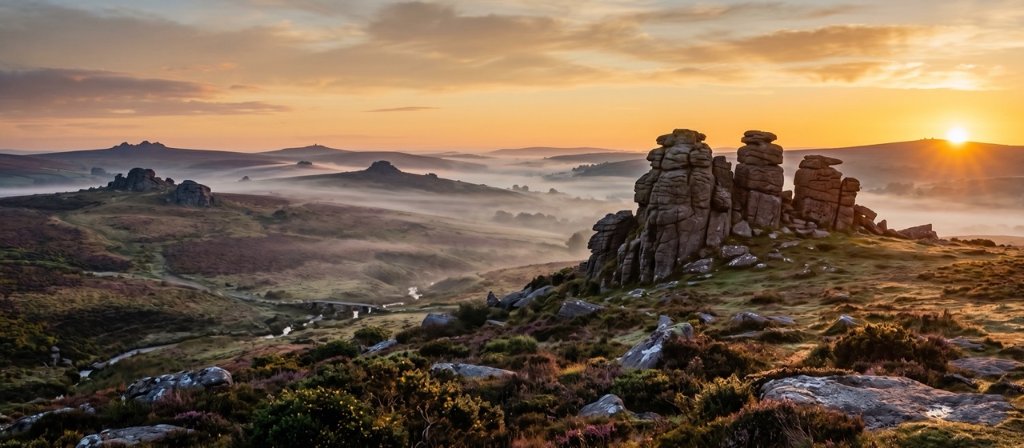
Photography · Dartmoor · Exmoor · Bodmin Moor
Photograph the three moors
Sunrise over granite, mist in the valleys, deer at dusk. The South West moors are among England's finest landscapes for photography in every season.
Three National Parks. Three distinct landscapes. Every season brings different light, different subjects and different reasons to get up before dawn. This section collects the best photography spots, the right conditions to aim for, and walks planned around the light.
What to photograph
Photography by subject

Open moorland, granite tors, valley mist and sweeping upland skies. The three moors offer some of the most dramatic natural landscapes in southern England.
Explore
Golden hour on Dartmoor rewards early risers. Watch warm light rake across the tors, catch long shadows on heather and photograph reflected colour in still moorland pools.
Explore
When low cloud rolls across Exmoor or fog settles in the Dart valley, the moorland transforms. Mist days create subtle, painterly scenes that clear skies never produce.
Explore
Red deer on Exmoor, Dartmoor ponies in morning light, ravens over granite ridges. The moors hold exceptional wildlife photography opportunities across every season.
Explore
Exmoor holds International Dark Sky Reserve status. Away from the coast road, deep moorland skies offer some of the darkest conditions in England for astrophotography.
Explore
Circular routes planned around the best light — from the Haytor ridge to Dunkery Beacon. Each walk notes the best positions, times of day and seasonal variation.
Explore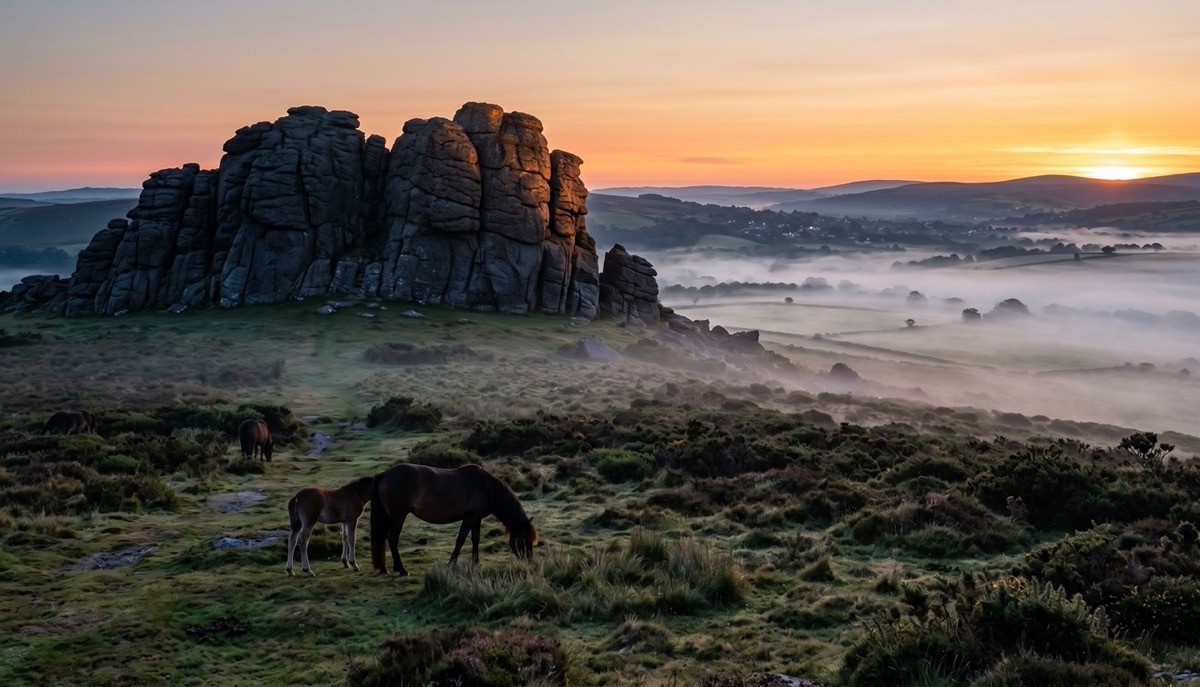
When to go
Seasonal inspiration
Each season on the moors produces distinct light, subject matter and conditions. Understanding the seasonal rhythm helps you plan better shots.

September – November
Autumn
Peak colours on Exmoor woodlands and valley oaks. Red deer rut on open moorland. Bracken turns copper and gold across the plateau.

December – February
Winter
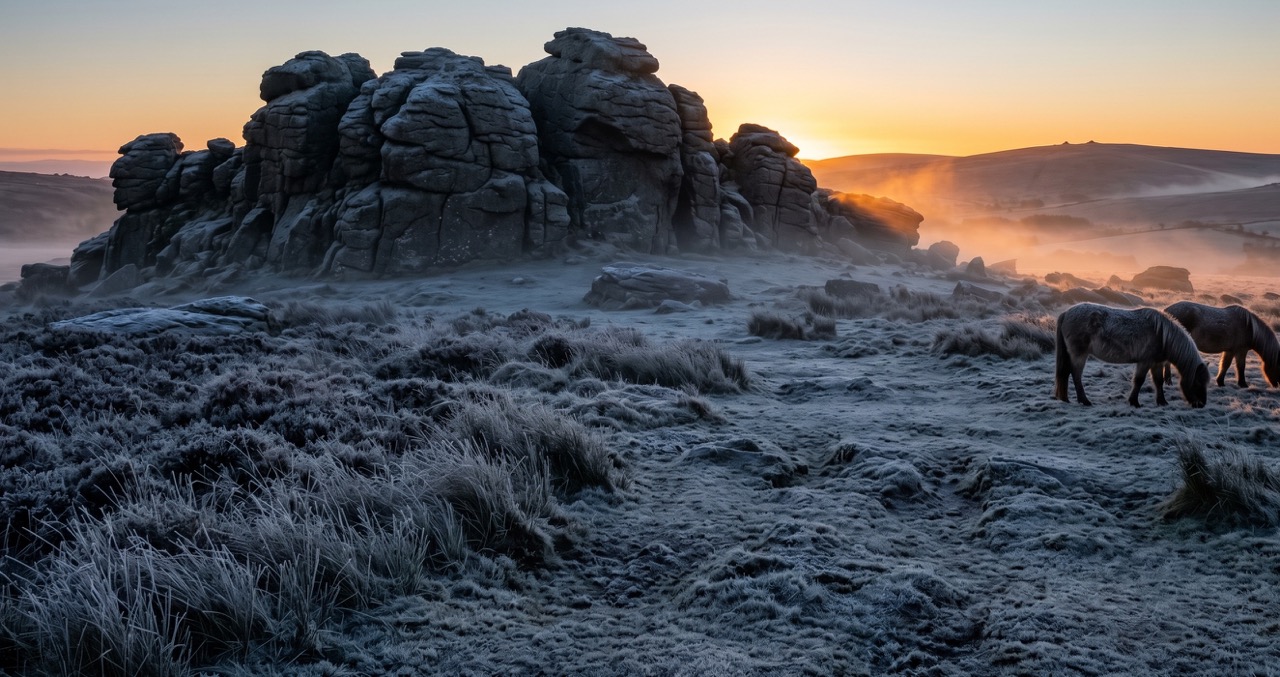
Frost on granite, snow on high ground and low-angled winter sun create long hard shadows. The moors are at their most elemental and most photogenic.

March – May
Spring
New foliage, morning mist in the river valleys and lambs on the slopes. The plateau heather is low and walking is easy — good conditions for wide landscape work.

June – August
Summer
Long evenings give golden-hour light past 9pm. Heather begins to purple in late July. Look for high-visibility wildlife in open moorland and coastal locations.
Field notes
The moors are not predictable. That is the point.
Conditions shift fast. A clear forecast can become a mist morning. A grey November day can produce extraordinary light in the last ten minutes before dark. The best moorland photography comes from knowing the landscape well enough to be in the right place — and patient enough to wait.