We use essential cookies to keep the site working. Non-essential cookies help us improve your experience and understand how you use the site. You can accept or reject non-essential cookies at any time. Learn more
Walking on Dartmoor: What First-Time Visitors Need to Know
Walking on Dartmoor can be wonderful, but it is different from walking in a park or on a signposted town trail. A practical guide for first-time visitors.
How todartmoordevon
TypeWalk Guide
How to
Moordartmoor
Countydevon
Quick Answer
<p>Walking on Dartmoor can be wonderful, but it is different from walking in a park or on a signposted town trail.</p><p>The ground can be rough, the weather can change quickly, paths may be faint or missing, and distances often feel longer than they look on a map.</p><p>For a first visit, choose a shorter route, check the weather, take proper footwear, carry water and a waterproof layer, and avoid pushing deep into open moorland until you understand the terrain.</p>
Introduction
<p>Dartmoor rewards people who arrive prepared.</p><p>You do not need to be an expert mountaineer to enjoy it. Plenty of Dartmoor walks are short, beautiful and manageable. But you do need to respect the place.</p><p>This is open moorland. It can be bright and gentle one moment, then misty, wet and disorientating the next. The paths can be clear around popular tors and reservoirs, but once you move further out, the landscape becomes less forgiving.</p><p>Start small. Choose a route with obvious features, a clear start point, and an easy return. Build confidence before attempting longer open-moor routes.</p><p>That way, Dartmoor becomes what it should be: exciting, spacious, memorable and safe.</p>
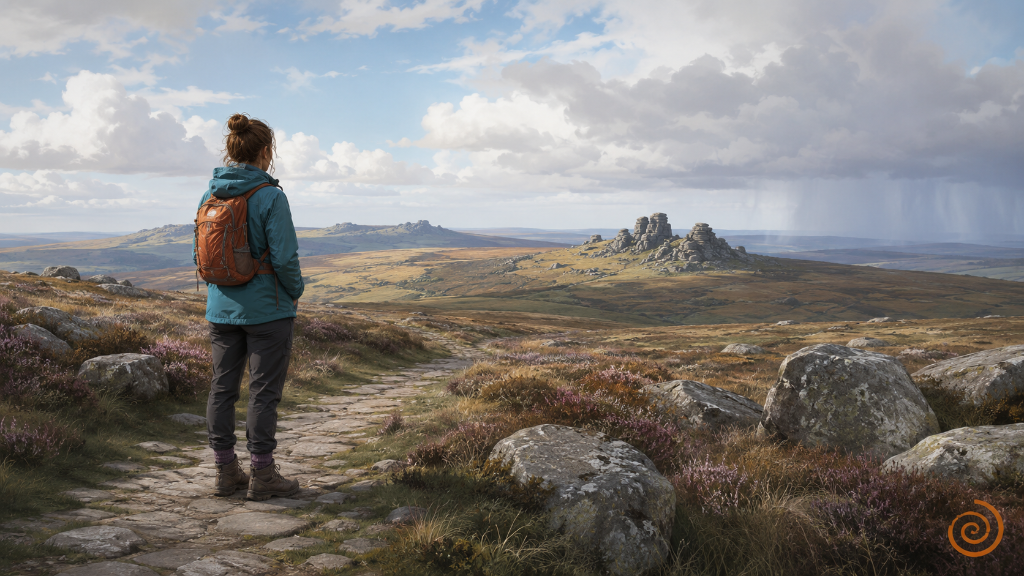
<h2>Why Dartmoor feels different</h2><p>Dartmoor is not just one type of landscape.</p><p>You may find yourself walking across short grass, granite tracks, boggy ground, open heath, ancient lanes, river valleys, woodland edges and exposed hilltops — sometimes on the same walk.</p><p>That variety is part of the joy, but it also means conditions can change underfoot very quickly.</p><p>A route that looks simple on a map may involve:</p><ul><li>uneven stones</li><li>muddy sections</li><li>wet grass</li><li>boggy patches</li><li>stream crossings</li><li>steep climbs</li><li>exposed ridges</li><li>livestock</li><li>very little shelter</li></ul><p>This is why Dartmoor miles can feel longer than ordinary miles.</p><h2>Start with the easier places</h2><p>For a first Dartmoor walk, do not feel you have to march straight into the wildest part of the moor.</p><p>Some of the best beginner areas include:</p><p><strong>Burrator</strong> — Reservoir views, woodland, open moor edges and easier route options.</p><p><strong>Haytor</strong> — Iconic granite scenery, good access, clear landmarks and big views.</p><p><strong>Princetown</strong> — A useful base for walks, history, open views and visitor facilities.</p><p><strong>Bellever</strong> — Woodland, river, stone circles, open moor and manageable routes.</p><p><strong>Postbridge</strong> — Good for history, clapper bridge views and gentler exploring.</p><p>These places still feel like Dartmoor, but they give first-time visitors more obvious structure.</p><h2>The biggest beginner mistake</h2><p>The biggest mistake is not usually lack of fitness.</p><p>It is assuming that because a walk is “only” three or four miles, it will be easy.</p><p>On Dartmoor, distance is only one part of the story. Terrain matters. Weather matters. Visibility matters. How easy it is to navigate matters.</p><p>A short route over rough, wet ground can feel harder than a longer route on a good path.</p><p>So when choosing your first walk, look at:</p><ul><li>distance</li><li>terrain</li><li>ascent</li><li>visibility</li><li>escape points</li><li>nearby roads or settlements</li><li>whether the route has clear landmarks</li></ul><p>A simple, enjoyable walk is better than an ambitious one that turns stressful.</p><h2>What to wear</h2><p>For most Dartmoor walks, wear comfortable walking shoes or boots with decent grip.</p><p>Trainers may be fine for very short dry-weather routes around car parks, reservoirs or surfaced paths, but they are not ideal for wet grass, stones, mud or open moor.</p><p>You should usually carry:</p><ul><li>waterproof jacket</li><li>warm layer</li><li>water</li><li>snacks</li><li>phone</li><li>map or route guide</li><li>basic first aid</li><li>hat or sun protection in summer</li></ul><p>Dartmoor can feel colder and windier than nearby towns, especially on exposed ground.</p><h2>Navigation matters</h2><p>Phone apps are useful, but do not rely on signal alone.</p><p>The moor can be confusing in mist, rain or low cloud. Tors that looked obvious from the car park can disappear quickly when visibility drops.</p><p>For beginner walks, choose routes with clear features such as:</p><ul><li>reservoirs</li><li>roads</li><li>rivers</li><li>woodland edges</li><li>obvious tors</li><li>marked tracks</li><li>villages or visitor centres</li></ul><p>As confidence grows, you can move onto more remote routes.</p><h2>Weather can change quickly</h2><p>This is one of the key things every visitor should understand.</p><p>You might begin in sunshine and finish in wind, rain or mist. That is normal moorland behaviour.</p><p>Before walking, check:</p><ul><li>rain forecast</li><li>wind speed</li><li>temperature</li><li>visibility</li><li>sunset time</li><li>any weather warnings</li></ul><p>Do not just check the nearest town. Conditions can feel very different higher up on the moor.</p><h2>Livestock and ponies</h2><p>Dartmoor ponies, sheep and cattle are part of the landscape.</p><p>Enjoy seeing them, but give them space. Do not feed them. Do not try to touch foals. Keep dogs under close control, especially near livestock and ground-nesting birds.</p><p>If cattle are on or near your route, move calmly and give them a wide berth.</p><h2>Dogs on Dartmoor</h2><p>Dogs can enjoy Dartmoor, but owners need to be careful.</p><p>There may be livestock, nesting birds, steep drops, fast rivers, ticks and adders. Some areas also have seasonal restrictions.</p><p>Keep your dog close, especially during bird nesting season and near animals. A lead is often the simplest answer.</p><h2>When to turn back</h2><p>Turning back is not failure. It is good judgement.</p><p>Turn back if:</p><ul><li>mist comes down</li><li>you lose the path</li><li>the ground becomes too wet or boggy</li><li>someone is tired or cold</li><li>daylight is running out</li><li>the weather worsens</li><li>the walk stops feeling enjoyable</li></ul><p>The moor will still be there another day.</p><h2>Best first-time Dartmoor walking approach</h2><p>For your first few Dartmoor walks, use this simple rule:</p><p><strong>Short, clear, scenic and easy to retreat from.</strong></p><p>That means:</p><ul><li>not too long</li><li>not too remote</li><li>easy to follow</li><li>good landmarks</li><li>nearby parking</li><li>suitable for the weather</li><li>enjoyable rather than exhausting</li></ul><p>Once you understand the landscape, you can start building up to bigger routes.</p>
3moors Community
Recent conditions or questions about this walk?
Join the 3moors Community to ask about path conditions, parking, wildlife sightings and local tips.