Exmoor Coastal Walks
England's highest sea cliffs, deep wooded combes, and the most dramatic coastal path in the South West.
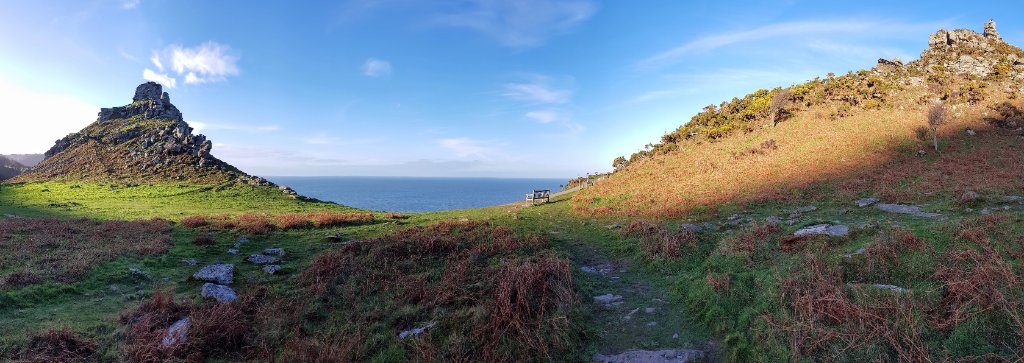
Exmoor meets the sea along a stretch of coast that is, by most measures, the most spectacular in southern England. The cliffs between Combe Martin and Minehead are the highest sea cliffs in England — not dramatic rocky stacks like Cornwall but massive rounded headlands dropping straight to the water.
The South West Coast Path runs the full length of this coast, but the best walking is away from the main trail — into the deep wooded combes that run inland from the sea, up onto the coastal heathland above the cliffs, and along the remote stretches between the tourist villages.
These routes combine real effort with extraordinary reward. The walking is often steep — the combes are deep and the coast path gains and loses height constantly — but the views and the solitude more than justify it.
Who this page is for
- Walkers who want dramatic coastal scenery without the crowds of the more famous stretches of the South West Coast Path
- People already visiting Exmoor who want to combine moorland walking with a coastal day
- Anyone who wants to understand why this coastline is classified as a Heritage Coast and what makes it different from Cornwall or Dorset
- Photographers and those interested in wildlife — the coastal heathland is exceptional for birds of prey and red deer
Walks coming soon
About this area
The Exmoor coast runs from Combe Martin in Devon to Minehead in Somerset. Key villages are Porlock, Lynton and Lynmouth (connected by a Victorian cliff railway), Brendon, and the tiny hamlet of Culbone — home to England's smallest church and accessible only on foot. Porlock Bay has an unusual vegetated shingle ridge that changes after every major storm.
Safety on this terrain
Exmoor's coastal cliffs are genuine hazards. Stay well back from cliff edges, which can be undercut and unstable in places. The coast path can be extremely slippery after rain. Steep descents into the combes should be taken slowly. Phone signal is poor along much of this coast — tell someone your route before setting out.
When to go
Spring (Apr–May)
Bluebells carpet the coastal woodlands. Seabirds nesting on the cliff ledges. Weather improving but still changeable.
Summer (Jun–Aug)
Warm and generally dry. Sea views can be hazy. The busier villages fill up — arrive early or park further afield.
Autumn (Sep–Oct)
The best coastal walking season. Clear air, long views across the Bristol Channel to Wales. Red deer rutting on the coastal heathland.
Winter (Nov–Mar)
Dramatic winter storms. The cliff paths are walkable in all but the worst conditions. Coastal light in winter is extraordinary.
Plan your visit
Use the interactive map to explore routes, check conditions, and plan your day across all three moors.
Open the map