
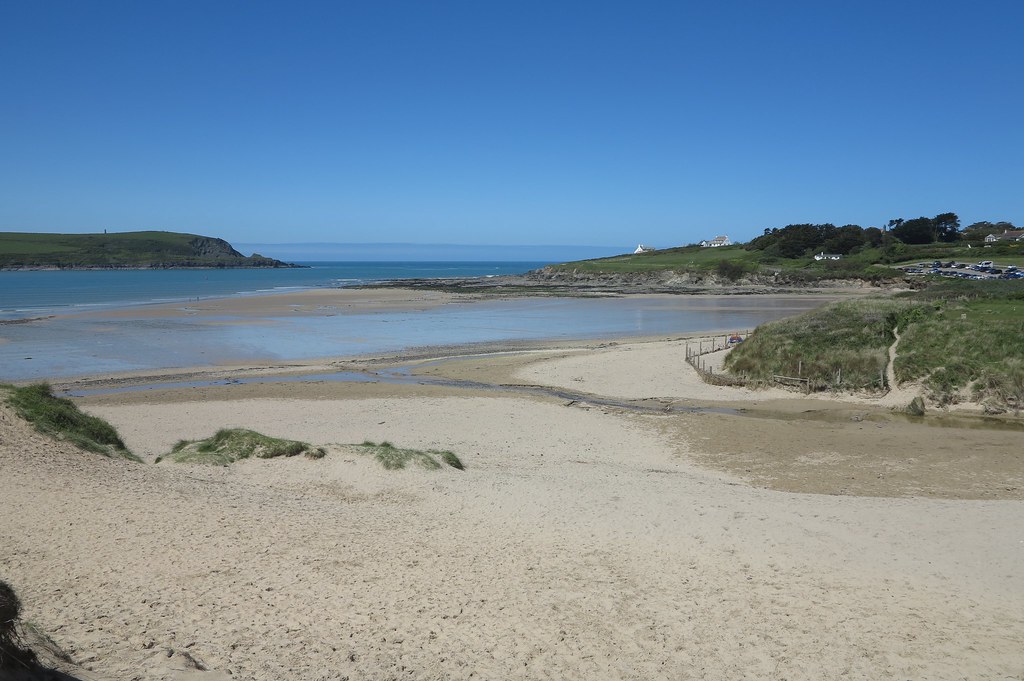
Estuary Beach
Daymer Bay
A sheltered sandy bay on the Camel Estuary — known for calm swimming, dog walking, dunes, Brea Hill and wide low-tide sands.
The Coastal Experience
What Daymer Bay Is Actually Like
Daymer Bay has a softer feel than the surf beaches immediately around it. Polzeath carries the wave energy, Rock has the sailing and estuary glamour, but Daymer sits between them with a more relaxed, open character.
At low tide the bay becomes broad and generous, with wide sand, shallow water and long views across the Camel Estuary. Brea Hill gives the beach a distinctive shape, while the dunes and nearby St Enodoc landscape add a sense of depth beyond the shoreline.
The beach is especially good for people who want the north Cornwall coast without the full force of Atlantic surf. It is still tidal, windy and exposed at times, but in settled weather it can feel calm, spacious and very easy to spend time in.
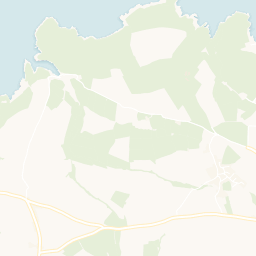
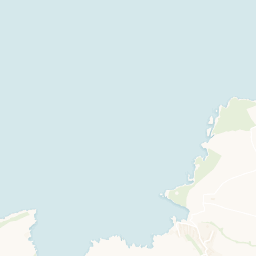
Current conditions & location
This night at Daymer Bay


Weather
☁️ Overcast
16°C (feels like 16°C)
Light breeze from the W
11% chance of rain
Today: 18°C / 11°C
Tides today
Today's tide at Daymer Bay is well out on the ebb. For this beach, low tide reveals wide sandy flats and gives the bay its most spacious feel. mid tide is often good for swimming and paddleboarding in settled conditions. take care with estuary currents.. Conditions now are overcast, light breeze from the W, 16°C.
Met Office forecast updated every 30 minutes. Tide times are modelled estimates — confirm with local tide tables before swimming or crossing tidal ground.
Who Is This Place For?
Select your visit style to see what to expect.
Families
For families, Daymer Bay is one of the gentler north Cornwall choices. The sand is broad at low tide, the water is usually calmer than nearby surf beaches, and the beach has enough space for paddling, games and relaxed family time.
Preparation
Useful for this beach
Based on what this location offers and what visitors typically find helpful.
Rockpooling
- Old trainers or beach shoes — rocks are slippery
- Small bucket for a closer look
- Best explored at or near low tide
Swimming
- Swim shoes if the seabed is rocky or shingly
- A warm layer for afterwards — wind chill is real here
- Dry bag to keep clothes off the sand
- Swim with others where possible
Photography
- Spare battery — cold and salt air drain them faster
- Lens cloth for sea spray
- Check the tide and light direction before you set up
Wildlife watching
- Binoculars if you have them
- Soft-soled footwear — quieter on rock and shingle
- Keep well back from nesting birds and resting seals
Bringing a dog
- Lead — livestock and wildlife may be close by
- Fresh water and a bowl
- Waste bags
- Check seasonal restrictions before you go
Water & Safety
Know Before You Go
Lifeguards
Daymer Bay does not usually have RNLI lifeguard patrol cover. Visitors should choose conditions carefully and supervise children closely.
RNLI Information
If someone is in difficulty, call 999 or 112 and ask for the Coastguard. For lifeguarded swimming, check nearby beaches with seasonal RNLI cover.
Rip Currents
Surf-style rip currents are less typical than at exposed beaches, but estuary currents and wind-driven water movement can still create risk, particularly during stronger tide flows.
Tidal Hazards
Large tidal changes alter the shape of the bay. Low tide creates broad sand flats, while higher tides reduce beach space and change access patterns. Check tide times before longer walks or watersports.
Safe Swimming Areas
Swimming is best during calm, settled conditions and close to shore. Take care with estuary currents and avoid swimming alone. There is no regular RNLI lifeguard cover at Daymer Bay.
Cliff Hazards
The main beach is not strongly cliff-backed, but care is still needed around Brea Hill paths, dune edges and rocky areas, especially in wet or windy weather.
Safety Summary
Daymer can look calm, but it remains an estuary beach with tide, wind and current considerations. Check tide and weather conditions before swimming, paddleboarding or walking far across the sands.
Seasonal Character
Through the Seasons
Summer brings families, dog walkers, swimmers and watersports users. The beach can become busy, but it often retains a more spacious feel than nearby Polzeath.
Autumn is one of the best times for quieter walks, softer estuary light and open sands. The beach feels calmer once the main holiday crowds have gone.
Winter gives Daymer a wide, elemental character. It becomes a place for dog walking, big skies and watching weather move across the Camel Estuary.
Spring brings dune flowers, brighter light and good walking conditions around Brea Hill, St Enodoc and the coast path.
Wildlife & Nature
Wildlife at This Location
Daymer Bay sits within an important estuary and dune landscape. Shore birds may feed around quieter tidal margins, especially outside the busiest summer periods, while the dunes and grassland support coastal plants and insects.
The bay is also known for unusual low-tide interest, including submerged forest remains that may occasionally be visible when conditions allow. These features are fragile and should be left undisturbed.
Rockpool and shoreline life may include small crabs, anemones, limpets, periwinkles and other typical intertidal species.
Community & Care
Who looks after this place
Volunteer groups
Local beach clean groups, coastal volunteers and Cornwall conservation organisations help care for beaches and dune systems around the Camel Estuary.
Beach cleans
Beach cleans may take place locally through community groups and wider Cornwall coastal campaigns, especially after storms or busy holiday periods.
Wildlife protection
Keep dogs under control around feeding birds and dune habitats. Avoid disturbing exposed low-tide features, rockpools or fragile dune vegetation. Leave natural materials and marine life where they belong.
Community
Daymer Bay is closely connected with the local communities of Rock, Trebetherick and Polzeath. Its quieter character depends on responsible beach use, careful dog control and respect for the dune and estuary landscape.
Respecting this place
Take litter home, respect dune paths, keep dogs under close control around wildlife and other beach users, and treat low-tide features as fragile parts of the landscape rather than objects to collect.
Photography
What to Photograph Here
Daymer Bay is best photographed for space, light and estuary shape rather than high drama. Low tide gives the strongest compositions, with wide sand patterns, shallow water and reflections across the bay.
Brea Hill provides a distinctive landform and a useful visual anchor, while evening light across the Camel Estuary can create soft, layered images.
Winter and autumn often bring the best emptiness, with broad sands, dog walkers in scale and big skies moving across the estuary.