Holywell Bay
A sweeping North Cornwall beach backed by huge dunes — famous for family days, surf, sunsets and the iconic twin rocks offshore.
The Coastal Experience
What Holywell Bay Is Actually Like
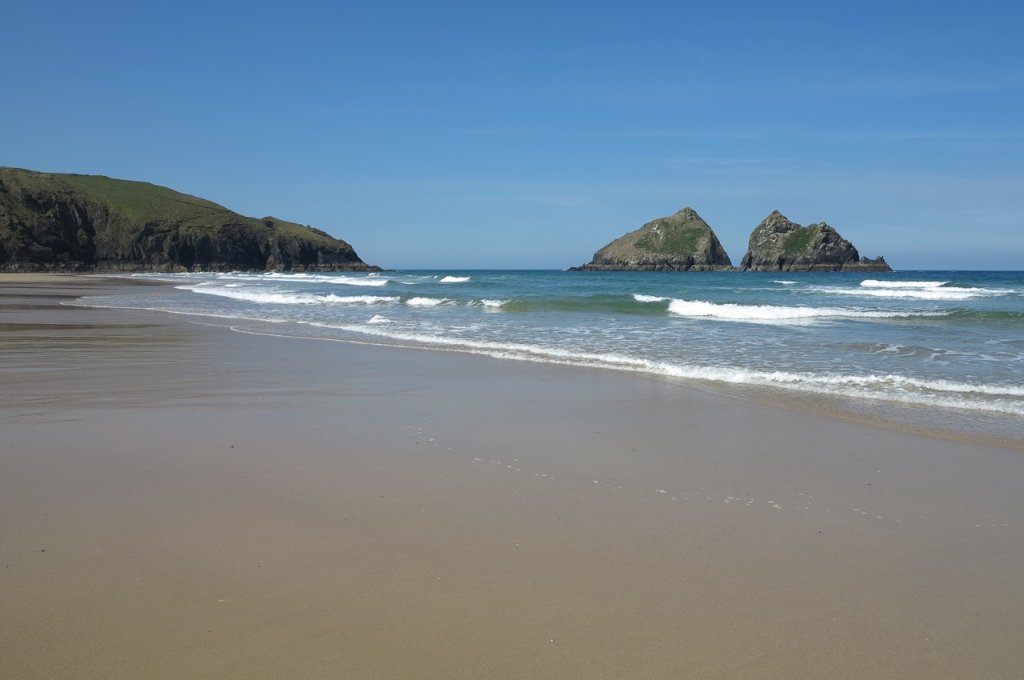
Holywell Bay has that big, open North Cornwall feeling — wide sand, high dunes, Atlantic surf and a horizon broken by the twin shapes of Gull Rocks.
The dunes are a major part of the experience. They create a natural amphitheatre behind the beach and give children space to explore, while also showing how fragile and important coastal dune systems can be.
The beach itself feels broad and generous at lower tides, with plenty of room for families, walkers, surfers and photographers. At high tide the character changes quickly as the sea pushes closer to the dune line.
In the right evening light, Holywell Bay becomes one of Cornwall's great sunset beaches, with reflections across wet sand and the offshore rocks turning into silhouettes against the Atlantic sky.
Current conditions & location
This afternoon at Holywell Bay

Weather
☁️ Overcast
18°C (feels like 13°C)
Fresh wind from the SW
13% chance of rain
Today: 19°C / 16°C
Tides today
Today's tide at Holywell Bay is ebbing from high tide. For this beach, mid to low tide gives the widest beach space, best walking conditions and the strongest sense of scale across the bay. high tide can reduce usable sand significantly beneath the dunes.. Conditions now are overcast, fresh wind from the SW, 18°C.
Met Office forecast updated every 30 minutes. Tide times are modelled estimates — confirm with local tide tables before swimming or crossing tidal ground.
Who Is This Place For?
Select your visit style to see what to expect.
Families
For families, Holywell Bay is one of North Cornwall's strongest beach choices, offering space, sand, dunes and a classic seaside atmosphere.
Preparation
Useful for this beach
Based on what this location offers and what visitors typically find helpful.
Surfing
- Wetsuit appropriate to the season
- Board wax if you know the water temperature
- Towel or changing robe
- Check flag colours and tide before paddling out
Swimming
- Swim shoes if the seabed is rocky or shingly
- A warm layer for afterwards — wind chill is real here
- Dry bag to keep clothes off the sand
- Swim with others where possible
Photography
- Spare battery — cold and salt air drain them faster
- Lens cloth for sea spray
- Check the tide and light direction before you set up
Wildlife watching
- Binoculars if you have them
- Soft-soled footwear — quieter on rock and shingle
- Keep well back from nesting birds and resting seals
Bringing a dog
- Lead — livestock and wildlife may be close by
- Fresh water and a bowl
- Waste bags
- Check seasonal restrictions before you go
Water & Safety
Know Before You Go
Lifeguards
RNLI lifeguard patrols operate seasonally at Holywell Bay. Check local signage for current patrol dates and safe swimming areas.
RNLI Information
Always swim between the red and yellow flags when lifeguards are present. If someone is in difficulty, call 999 or 112 and ask for the Coastguard.
Rip Currents
Rip currents can occur at Holywell Bay, particularly during stronger surf and changing tides. Visitors should follow lifeguard advice and avoid swimming outside marked safe areas.
Tidal Hazards
High tide reduces beach space and can push visitors closer to the dunes. Tide times should be checked before long beach walks or exploring further along the bay.
Safe Swimming Areas
Swimming is safest during lifeguarded periods and between the red and yellow flags. Less experienced swimmers should avoid entering the water during stronger surf or rip-prone conditions.
Cliff Hazards
The main beach is dune-backed rather than cliff-dominated, but surrounding headlands and coast path sections require care, especially in strong wind or wet weather.
Safety Summary
Holywell Bay is a brilliant family beach but remains an Atlantic surf environment. Respect the flags, watch the tide and take care around dunes, surf and changing weather.
Seasonal Character
Through the Seasons
Summer brings families, surf schools, beach games and long evenings beneath the dunes.
Autumn often provides the best mix of surf, quieter sand and rich golden light.
Winter turns Holywell Bay into a dramatic Atlantic landscape with strong winds, larger waves and fewer visitors.
Spring brings dune flowers, fresh coastal walking and a calmer atmosphere before peak season.
Wildlife & Nature
Wildlife at This Location
The dunes behind Holywell Bay support specialised coastal plants, insects and birdlife, especially during spring and summer.
Marram grass helps stabilise the dunes and plays an important role in protecting the beach landscape.
Offshore, seabirds are often visible around Gull Rocks and along the wider coast.
Community & Care
Who looks after this place
Volunteer groups
National Trust teams, RNLI volunteers, local beach clean groups and coastal conservation volunteers help care for Holywell Bay and the surrounding coastline.
Beach cleans
Beach cleans regularly take place around Holywell Bay, especially after storms and busy summer periods.
Wildlife protection
Keep to established dune paths where possible and avoid trampling fragile vegetation. Do not disturb birds or damage marram grass, which helps hold the dunes together.
Community
Holywell Bay balances family tourism, surfing culture and sensitive dune habitats. The beach works best when visitors respect both the fun of the place and the fragile landscape behind it.
Respecting this place
Use official paths through the dunes, take litter home, respect lifeguard guidance and avoid blocking local lanes or beach access points.
Photography
What to Photograph Here
Holywell Bay is especially strong at sunset, when Gull Rocks form a powerful silhouette against the Atlantic sky.
Wet sand at lower tide creates excellent reflections, while the dunes provide foreground texture and elevated viewpoints.
Stormy winter conditions can produce dramatic wave photography from safe positions above the beach or along the coast path.