
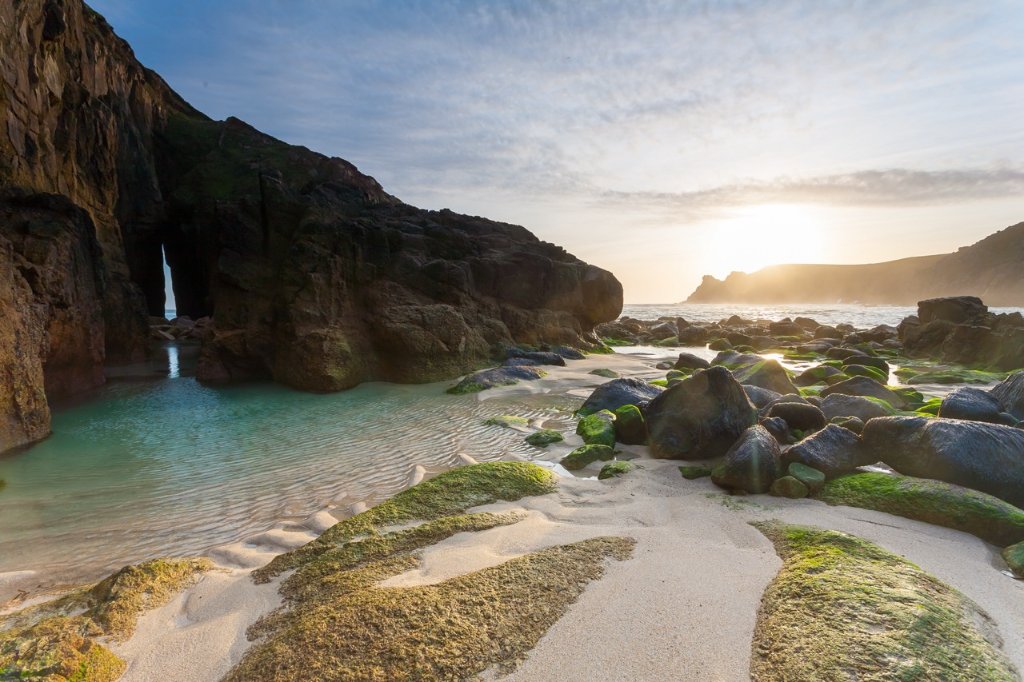
Nanjizal
A remote and atmospheric cove near Land's End — known for sea caves, turquoise water, granite cliffs and one of Cornwall's most secret-feeling coastal landscapes.
The Coastal Experience
What Nanjizal Is Actually Like
Nanjizal feels hidden in a way that very few coastal places still manage. Reached only by foot and enclosed beneath steep granite cliffs, the cove has an atmosphere that changes immediately once the sea comes into view.
The beach itself shifts constantly with tide and weather. Sand, rock shelves, channels and pools appear and disappear beneath the Atlantic movement, while the cliffs above create a feeling of isolation from the wider world.
The most famous feature is the sea cave and rock arch known as the Song of the Sea. During certain tides and swell conditions the cave fills with echoing sound and reflected light, giving the cove an almost mythical quality.
Unlike Cornwall's larger beaches, Nanjizal rewards slower exploration and observation. The mood of the place matters as much as the scenery itself.
Current conditions & location
This afternoon at Nanjizal



Weather
☁️ Overcast
17°C (feels like 14°C)
Moderate wind from the SW
13% chance of rain
Today: 18°C / 15°C
Tides today
Today's tide at Nanjizal is ebbing from high tide. For this beach, lower tides reveal more sand, rock formations and easier access around the cove and sea cave areas. higher tides can significantly reduce space and alter access near the cliffs.. Conditions now are overcast, moderate wind from the SW, 17°C.
Met Office forecast updated every 30 minutes. Tide times are modelled estimates — confirm with local tide tables before swimming or crossing tidal ground.
Who Is This Place For?
Select your visit style to see what to expect.
Preparation
Useful for this beach
Based on what this location offers and what visitors typically find helpful.
Swimming
- Swim shoes if the seabed is rocky or shingly
- A warm layer for afterwards — wind chill is real here
- Dry bag to keep clothes off the sand
- Swim with others where possible
Photography
- Spare battery — cold and salt air drain them faster
- Lens cloth for sea spray
- Check the tide and light direction before you set up
Wildlife watching
- Binoculars if you have them
- Soft-soled footwear — quieter on rock and shingle
- Keep well back from nesting birds and resting seals
Tidal ground
- Footwear for wet sand and channels
- Be aware of how quickly tidal estuaries change
- Check crossing times if you plan to walk beyond the beach
Water & Safety
Know Before You Go
Lifeguards
Nanjizal is not lifeguarded. Visitors enter the water entirely at their own risk.
RNLI Information
In emergencies call 999 or 112 and ask for the Coastguard. Rescue conditions around remote Atlantic coves can be extremely difficult.
Rip Currents
Strong currents and unpredictable water movement may develop around rock channels and during larger swell conditions. The Atlantic should never be underestimated here.
Tidal Hazards
Incoming tides can rapidly reduce beach space and alter access around caves, arches and rock shelves. Visitors should check tide times carefully before exploring lower sections of the cove.
Safe Swimming Areas
Swimming should only take place during calm conditions and with awareness of swell, submerged rock and tidal changes. Avoid swimming near cave entrances or strong wave movement.
Cliff Hazards
Steep cliffs, slippery rock and uneven paths require constant care. Surfaces become particularly hazardous after rain or during strong winds.
Safety Summary
Nanjizal is a genuinely wild Atlantic cove shaped by erosion, tide and swell. Conditions may appear calm but can change rapidly, especially near cave systems and rock channels.
Seasonal Character
Through the Seasons
Summer brings calmer access conditions and clearer turquoise water beneath the cliffs.
Autumn often provides the best combination of atmosphere, quieter paths and dramatic Atlantic light.
Winter transforms Nanjizal into a darker and far more elemental landscape shaped by storm swell and heavy seas.
Spring combines fresh coastal flowers, sea air and quieter exploration before the busiest months arrive.
Wildlife & Nature
Wildlife at This Location
The cliffs and surrounding coastal slopes support seabirds, insects and seasonal wildflowers throughout spring and summer.
Rockpools and lower tidal shelves may contain crabs, limpets, anemones and small fish.
Seabirds are frequently visible around the cliffs, while offshore waters occasionally attract dolphins and seals during calmer conditions.
Community & Care
Who looks after this place
Volunteer groups
National Trust teams and local coastal conservation volunteers help maintain the surrounding cliff paths and protect the wider west Cornwall coastline.
Beach cleans
Occasional beach cleans and conservation activity take place around Nanjizal and nearby coves following Atlantic storms and visitor periods.
Wildlife protection
Remain on established paths where possible and avoid disturbing nesting seabirds or fragile coastal vegetation. Respect rockpool habitats and marine life.
Community
Nanjizal remains quieter than many Cornwall beaches largely because access requires effort and awareness. The cove works best when visitors respect both the landscape and the solitude many people come here to experience.
Respecting this place
Take litter home, avoid damaging cliff vegetation and respect the quieter atmosphere that makes Nanjizal distinctive. Visitors should avoid unsafe cliff-edge photography or risky cave exploration.
Photography
What to Photograph Here
Nanjizal is strongest during changing weather and softer light rather than bright midday conditions.
The Song of the Sea cave creates remarkable compositions during lower tides, especially when reflected Atlantic light enters the rock opening.
Storm conditions and heavy seas can produce extraordinary coastal photography from safer elevated positions along the coast path.