The Black Hound of Exmoor
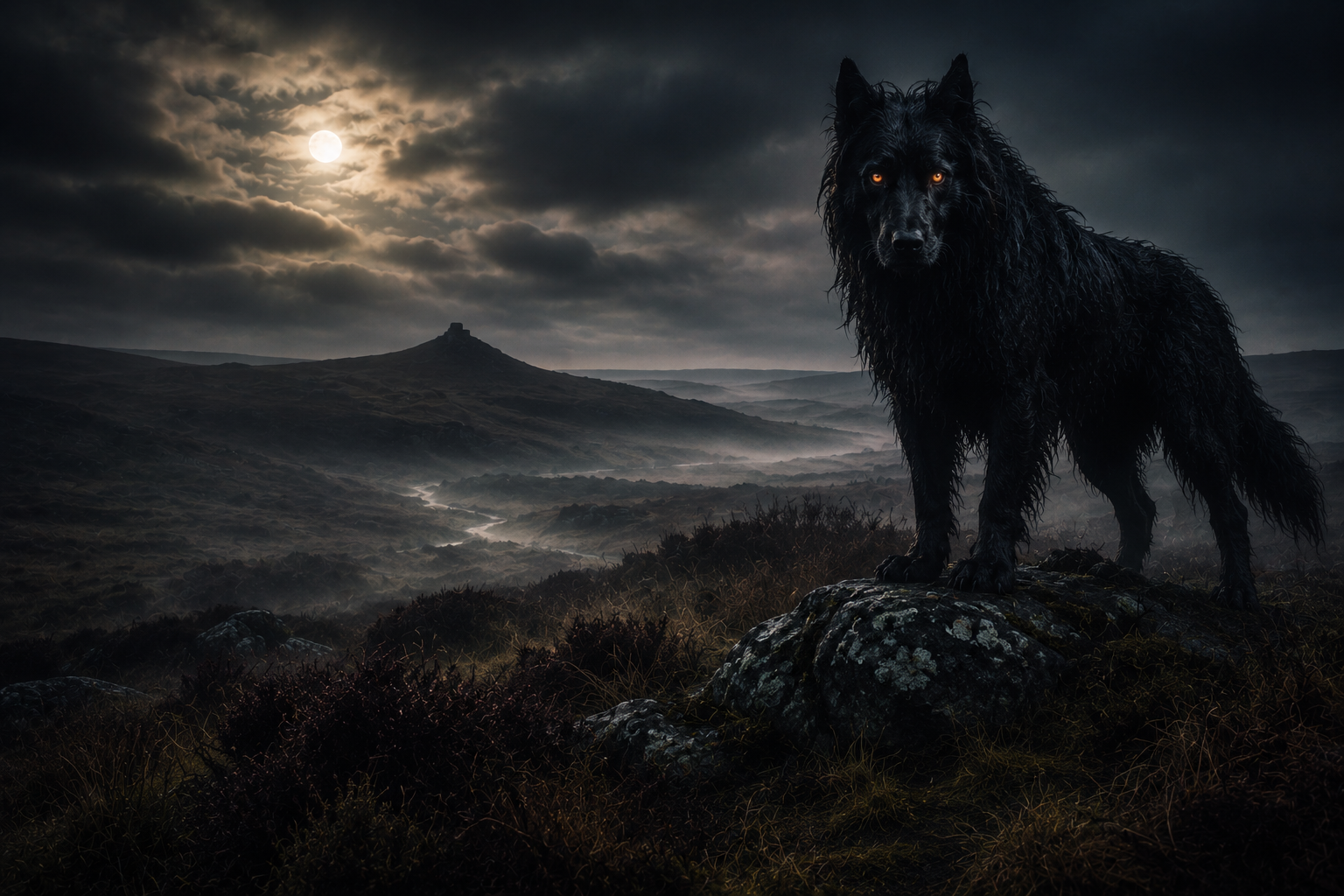
Across the lonely tracks of Exmoor, travellers once spoke of a great black hound that emerged silently from the mist. Its glowing eyes and soundless stride became one of the moor’s most feared night-time legends.
Introduction
Exmoor changes character quickly when the weather closes in. Wide open grassland becomes uncertain ground, paths vanish into mist, and distances feel distorted beneath low cloud and fading light.
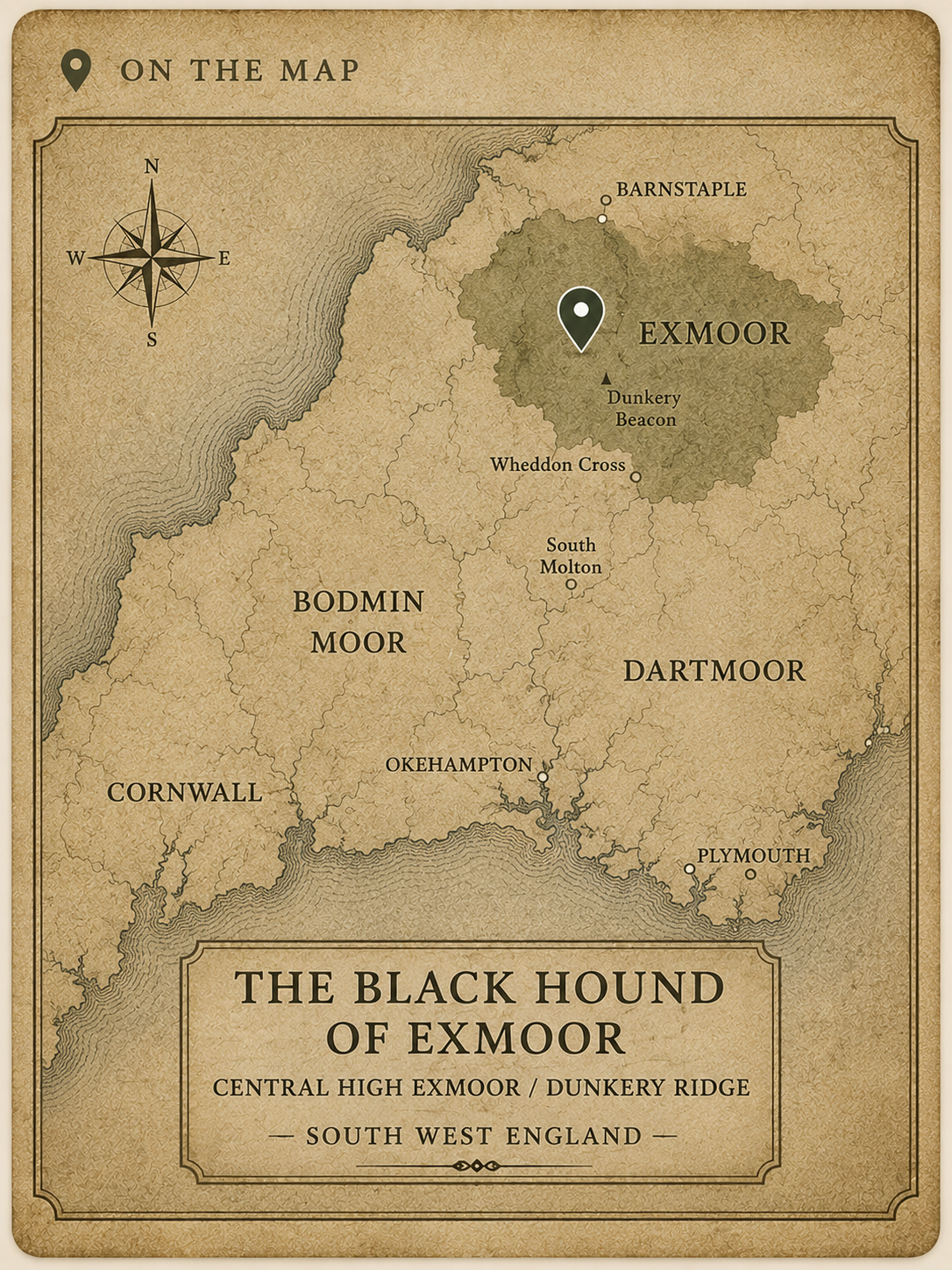
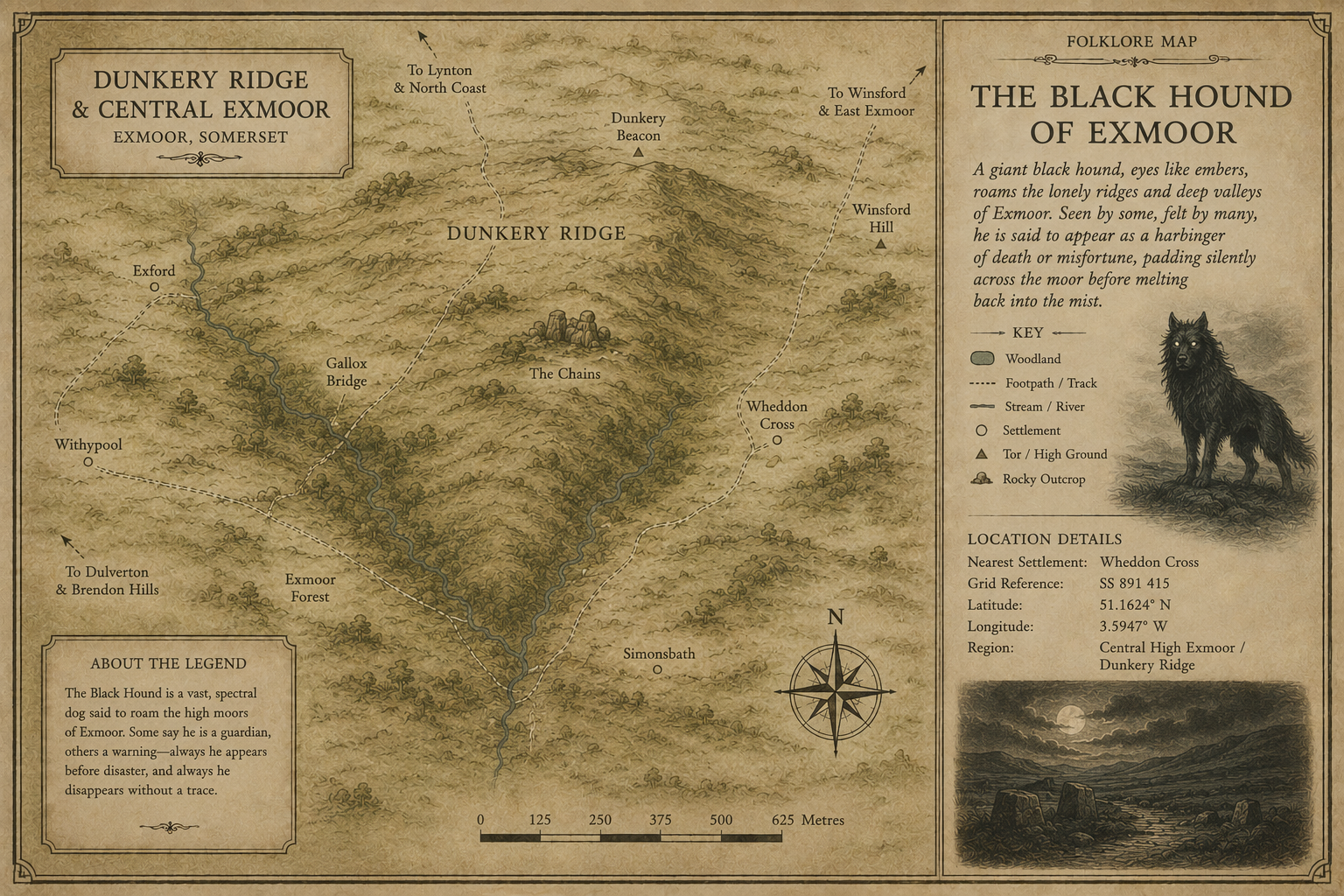
For centuries, people crossing the higher tracks near Dunkery Beacon and the Chains told stories of something moving alongside them in silence. Not a wolf, not a dog, but something larger — a black hound that appeared without warning and vanished just as suddenly.
The legend became especially common among coachmen, farmers and late-night travellers attempting to cross the moor after dark.
"It walked without sound, but every horse on the moor knew it was there."
Creature Lore · Exmoor
Black Hound of Exmoor
The Legend
The Story of The Black Hound of Exmoor
The Black Hound was said to appear on lonely stretches of moorland road during fog, rain or moonless nights.
Witnesses described an enormous dog with dark matted fur and pale burning eyes. Unlike ordinary animals, it made almost no sound. Some travellers claimed it paced beside them for miles without ever attacking, while others believed seeing it was an omen of death or disaster.
One story tells of a farm worker travelling home from Porlock late one winter evening. As mist rolled across the moor, he noticed a shape walking ahead of him. At first he believed it was a stray sheepdog, but when it turned its head he saw glowing eyes fixed directly upon him.
His horse refused to move.
The creature then crossed the road and disappeared into the fog without leaving tracks in the wet ground.
By morning, the man reportedly refused ever again to cross the moor after dark.
Other variations claim the hound guards ancient pathways or burial sites hidden beneath Exmoor’s grasslands. Some believed it protected the old boundaries of the moor itself.
In the field
Dunkery Beacon & the Chains remains accessible on foot today. The landscape that gave rise to this story is largely unchanged — you can still walk the same ground.
Historical Context
In the Historical Record
Black dog legends appear throughout Britain and often became attached to dangerous landscapes, isolated roads and ancient trackways. On Exmoor, the story likely grew from genuine fears surrounding travel across remote upland terrain before modern roads and lighting existed.
Exmoor’s weather could become life-threatening within minutes, and folklore often acted as a warning system disguised as story.
The legend also shares similarities with wider West Country folklore involving spectral animals and omens.
The Landscape
Reading the Land
The exposed ridges and valleys around Dunkery Beacon create exactly the kind of atmosphere that feeds legends. Mist moves quickly across the higher ground, visibility disappears suddenly, and the silence of the moor can feel immense after sunset.
The long isolation between farms and villages would once have made night travel deeply unsettling, particularly during winter storms.
Even today, certain stretches of Exmoor road can feel ancient and strangely untouched after dark.
Visiting Today
Going There
Visitors can explore the Dunkery Beacon area via several public walking routes from Wheddon Cross and Horner.
Sunrise and sunset walks across the higher moorland are especially atmospheric, though weather conditions change rapidly and proper footwear is essential.
Foggy evenings around the Chains still carry the kind of mood that keeps the old story alive.
On the ground
Folklore comes alive in place. Walk the land slowly, at the right hour, in the right season — and you'll understand why stories like this one took root here.
Sources & Further Reading
Exmoor folklore collections, West Country ghost traditions, Local oral history archives, Traditional black dog folklore of Britain
At a Glance
Moor
Exmoor
Type
Creature Lore
Location
Dunkery Beacon & the Chains
On the Map
Archival illustration