Georgian · Moor-edges
Chapman’s Pool Smugglers Cove
A remote Dorset cove tied to smuggling stories, hidden trade and the dangerous realities of illicit coastal enterprise.
Quick facts
Why this place matters
Chapman’s Cove isn’t just a smuggling anecdote. It reveals how isolated coves formed part of a vast unofficial economy that challenged state power, fed coastal communities, and shaped local folklore. It is a small place tied to a much bigger story.
Some coves were made for secrecy.
What it is
A remote cove associated with smuggling history.
Why it mattered
It mattered because hidden places shaped hidden trade.
What you can see
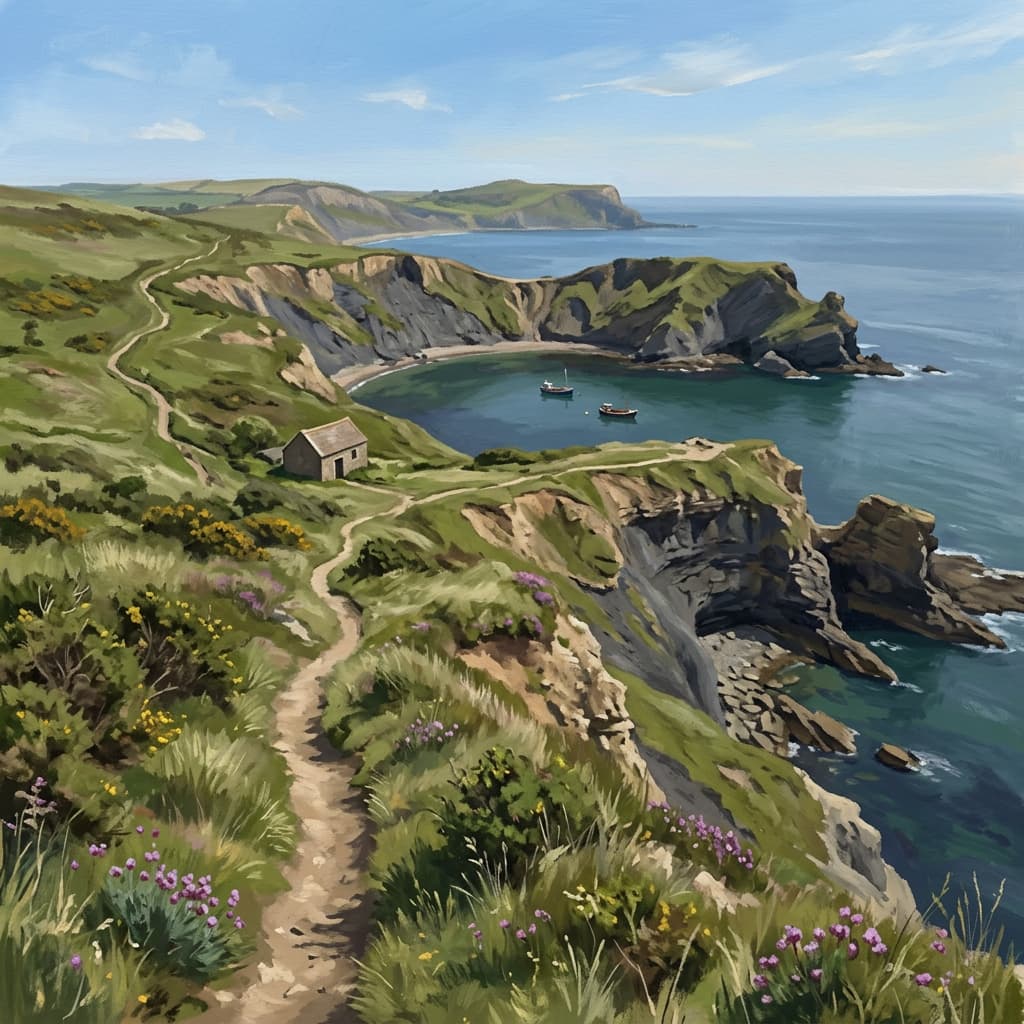
Cove, access routes and dramatic coastal setting.
This feels like one of them.
What happened here
A hidden inlet shaped by sea, silence, and contraband
At first glance, Chapman’s Cove feels too small, too exposed, too awkward a place for organised smuggling.
That may have been its greatest advantage.
Tucked beneath high cliffs and approached by difficult land routes, the cove offered what smugglers valued most: obscurity. Not safety, not comfort, obscurity.
In the 18th and early 19th centuries, this stretch of coast was part of a shadow economy. Brandy from France, Dutch gin, tobacco, tea, silks, goods heavily taxed by the Crown, could be worth fortunes if landed unseen.
And unseen was exactly what Chapman’s offered.
The sea cave, cut naturally into the rock, is thought to have served as a temporary hiding place. Cargo could be moved ashore by small boats at night, concealed in the cave or among the broken cliff margins, then taken inland by packhorse or by trusted men moving along hidden tracks.
There was a practical genius to these operations.
No harbour master. No customs house. No witnesses.
Only moonlight, tides, and silence. Some stories tell of signals from the cliffs, lantern flashes to guide boats in.
Others speak of armed riding officers searching the coast, sometimes arriving too late, sometimes ambushed, sometimes bribed.
Smuggling was rarely the romantic business later legend made it seem.
It involved violence. Informers disappeared. Excise men were attacked.
And local communities, though often dependent on the trade, could become divided by loyalty, fear or greed.
Chapman’s Cove seems to hold some of that tension even now.
The cave itself, especially at low tide, feels less like a picturesque curiosity and more like something used.
A place of waiting. A place where men listened for oars. A place where barrels stood in darkness until the tide or the next signal. And then there are the older layers.
This is Jurassic Coast country — cliffs full of ancient upheaval, landslips and fractured rock. The cave was not made by smugglers at all, but by the sea over immense time.
The smugglers merely borrowed it. Which somehow makes the story better. Because Chapman’s Cove was not built for secrecy. It simply became useful to those who dealt in it.
Even today, arriving there on foot, with the steep descent, broken rock and echo of surf in the cave mouth, it is not hard to understand why rumours endured.
Some places invite stories. This one seems to keep them.
Key dates
18th century
Smuggling activity associated with the cove
Georgian period
Coastal trade and illicit landings
Modern era
Recognised as historic coastal landscape
Standing here now
It is easy to see why secrecy mattered here.
What to look for
The sea cave at low tide
Landing conditions in the cove itself
Cliff paths once useful for lookouts
Natural concealment points in the rock
The sheer difficulty of reaching the place, part of its historic value
Landscape & wider significance
A steep-sided cove cut into the Dorset coast, remote and naturally concealed.
Myths & folklore
Smuggling tales and ghost stories cling to the place.
Visiting today
Reached by steep coastal walking routes. Care near cliffs.
Good to know
💡 Did you know?
🎯 Try this when you visit
🤔 Think about this
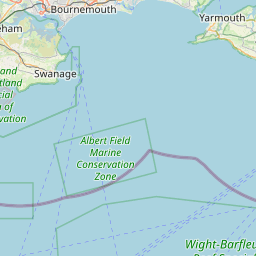
Map & Directions



Join the 3moors Community for path conditions & local tips.
JoinNearby places
Quick facts