Exmoor · South Exmoor
Dulverton
A riverside town known as the southern gateway to Exmoor.
About
Dulverton
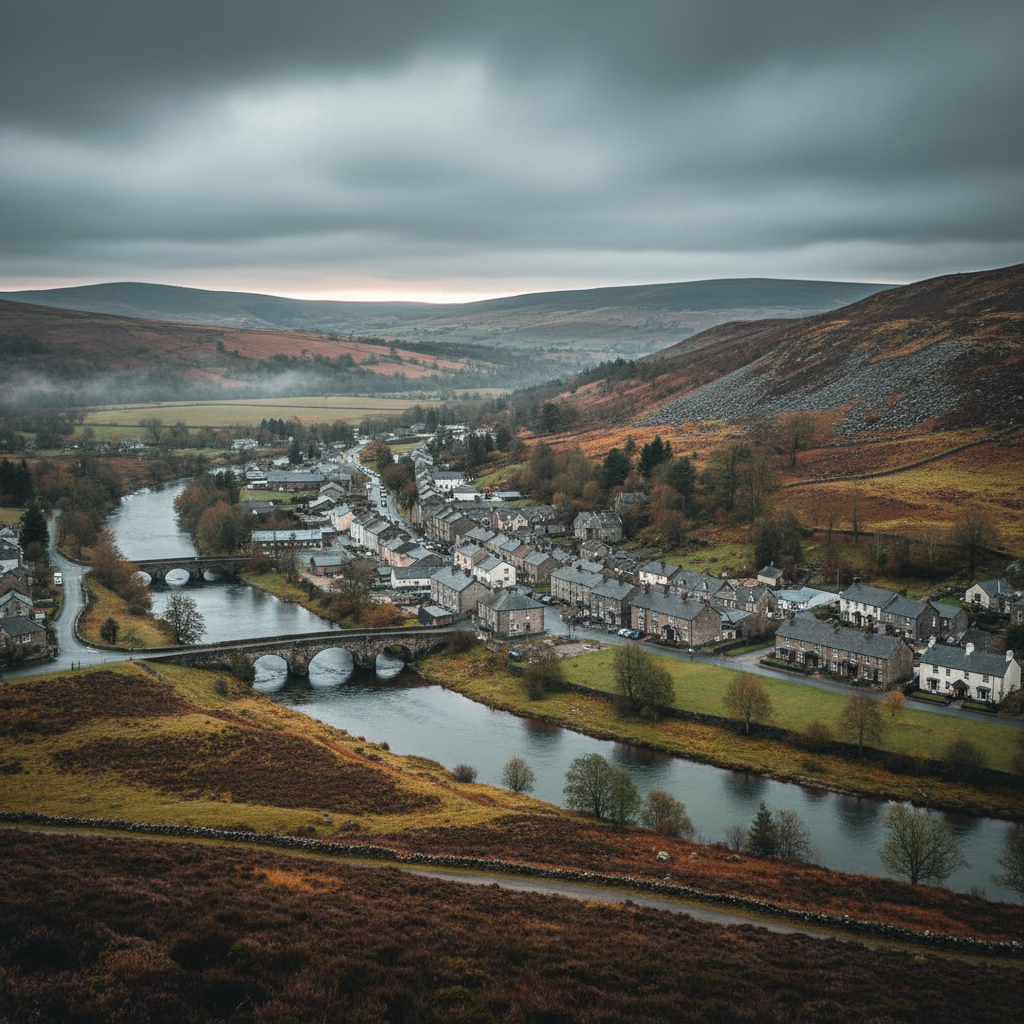
Dulverton sits at the southern edge of Exmoor, tucked into the Barle valley where the river runs below wooded hillsides and the moor begins to rise in earnest to the north. It is a small but substantial town, with a proper high street, a weekly market tradition, and the kind of civic infrastructure that has served the surrounding farms and villages for centuries. This is not a tourist settlement that grew up around a viewpoint. It grew around commerce and exchange, and that origin still shapes its bones.
The market function here has deep roots. Dulverton was granted a market charter in the medieval period, and the town's central role in local trade persisted well into the twentieth century. The wide main street and the layout of the town centre still reflect that mercantile logic: buildings set back enough to allow movement, a natural gathering point, a practical generosity of space. Today the weekly rhythms are quieter, but the town retains independent traders, a butcher, a post office, and the kind of hardware shop that stocks what a working farm might actually need.
Visitors come to Dulverton for several reasons. Some use it as a base for walking southern Exmoor, where the landscape is less exposed than the high plateau but no less varied. Others come for the river, particularly the stretch of the Barle that runs close to the town. A smaller number simply find that the town itself repays a few hours on foot, with enough architectural texture and quiet corners to reward someone not in a hurry.
The approach from the south, through the Exe valley, gives little warning of what lies ahead. The roads narrow, the hedges rise, and then the town appears: compact, purposeful, with a church tower visible above the rooftops and the sound of the river never entirely absent.
Character
The feel of Dulverton
Dulverton does not perform itself for visitors. It continues its business at its own pace, and the visitor who fits themselves to that pace will find the town considerably more interesting than one who moves through it quickly. The high street has the texture of a place that has been used continuously rather than preserved: the buildings are mostly modest Georgian and Victorian stone, well-maintained without being polished, and the shop fronts are functional rather than decorative. There is no obvious centrepiece, no focal square. The town reveals itself gradually, which suits it.
What gives Dulverton its particular personality is the persistence of working life within it. This is not a town that has become entirely service-oriented towards visitors. The conversations in the post office are local conversations. The vehicles parked on a Thursday morning include more pickups and Land Rovers than would be found in a comparable town on the Somerset Levels. The agricultural connection is real and current, not historical decoration, and it gives the town a grounded quality that is difficult to manufacture but immediately felt.
There is also the matter of the surrounding landscape pressing in. The hills are visible from almost every street, and in wet weather the cloud sits low enough to make the town feel enclosed and intimate in a way that is specific to deep valleys. This relationship with the terrain above is not incidental to Dulverton's character. It is part of why the town feels as it does: contained, purposeful, oriented inward and yet always aware of what lies beyond its rooftops.
First-hand visit
Keith's Take
Something about the sound of the Barle made it harder to leave than I had planned. Dulverton is one of those towns that gives back more the longer you stay with it.
The river was audible from the car park, a steady low sound that cut through the general noise of the street. Moving towards it, down the lane that drops from the main road to the bank, the town gave way quickly to something quieter. The willows were bare, it being late November, and the Barle was running high and the colour of dark tea, carrying leaves and small debris downstream at a pace that was surprising if you had only seen the river in dry weather. I stood on the bridge for longer than I intended.
Going back up into the town, the high street opened out with a plainness that was more interesting than it first appeared. The buildings are not remarkable individually, but the ensemble has the coherence of a place that was built to function rather than to impress. A man emerged from the butcher carrying a paper-wrapped parcel. Two women spoke at length outside the post office without any apparent urgency. The pace of things was not slow exactly, but it was unforced, and that distinction matters.
What emerged as I moved through the afternoon was a particular quality of attentiveness the town seemed to draw from you. There was no single thing to fix on, no view or monument that organised the experience. Instead there were accumulating details: the way a lane narrowed between stone walls before opening again, the sudden visibility of the hill above the rooftops to the north, the quality of the light at four o'clock when the valley began to fill with shadow while the high ground above remained in full sun. The moor was up there, waiting. Dulverton, for its part, was simply getting on with things.
Keith's Take — a first-hand account from the 3moors team
Map & Getting Here
Getting to Dulverton
What to expect
A natural way to spend time here
Moving through Dulverton on foot is a matter of a few interconnected streets and a short descent to the river. The town is compact enough that you will cover most of it within half an hour without hurrying. From the main street, lanes lead off at slight angles, following the logic of the valley floor, and the gradient is gentle enough that most visitors manage without difficulty. The church of All Saints sits above the centre, reached by a short climb, and the view back down over the town from its churchyard is modest but clarifying.
In wet weather, the smell of the Barle reaches further into town than you might expect: a clean, mineral smell, faintly peaty, that mixes with woodsmoke when the cooler months arrive. On market mornings the acoustic of the street changes, becomes more layered, and the mix of voices is noticeably local. These are small details, but they are the kind that stay with you when the general impression of a place fades.
The town rewards a measured approach rather than a determined itinerary. Spend time in the butcher. Linger near the bridge and watch the river for a few minutes rather than walking straight past it. The path down to the Barle from the town is signed and easy to follow, but the first few hundred metres, where the river comes properly into view below the willows, are worth more than the approach suggests.
What makes it stand out
What makes Dulverton special
What distinguishes Dulverton from other small towns on Exmoor's southern approaches is not scenery or history alone, but the way the town functions as a genuine service hub without having hollowed itself out in the process. There are independent businesses here that local people actually use. The presence of the Exmoor National Park Authority's headquarters within the town adds an institutional weight that many comparable settlements lack, giving Dulverton a relevance beyond its size.
The river access is also particular. The Barle runs within easy walking distance of the town centre, and the paths that follow it are not remote or demanding. A visitor in ordinary footwear can reach good stretches of riverside within fifteen minutes of leaving the main street. This combination of an accessible, functioning town and immediate river and woodland walking is rarer than it might seem. Many Exmoor villages offer the latter without the former. Dulverton offers both, without either overwhelming the other.
Don't miss
Things to see and do
Cross the old bridge over the Barle and look upstream towards the wooded bend where the river narrows.
Walk south along the riverbank in the early morning, when the mist sits in the valley and the water is audible before it is visible.
Find the Exmoor National Park visitor centre and pick up a large-scale map before heading onto the moor.
Step into the butcher on the high street and ask what is in season locally.
Follow the riverside path to Tarr Steps, a flat-topped ancient clapper bridge set in deep woodland, approximately four miles from town.
Sit near the church at All Saints long enough to notice the quality of the light across the rooftops below.
Watch the river from the bridge in winter spate, when the Barle runs dark and fast and the force of it becomes fully apparent.
Check the noticeboard near the town hall for local events. Dulverton's calendar reflects the farming year more than the tourist season.
Walks from here
Getting out from Dulverton
The most celebrated walk from Dulverton follows the River Barle upstream to Tarr Steps, a journey of roughly four miles through woodland and along the valley floor. The path is well-marked and the terrain is not demanding in dry conditions, though the riverside sections can become muddy after sustained rain. The Steps themselves are worth the walk regardless of season: a long, low structure of large stone slabs thought to date from the medieval period, set in woodland that closes in on both sides. A circular return can be made via higher ground with open moorland views, adding perhaps an hour to the journey.
For those wanting higher ground without a long approach, the lanes north of the town lead fairly quickly to open moorland within two or three miles on foot. The ridge above the Barle valley gives wide views west towards the Brendon Hills and east across the vale. Winsford Hill, accessible as part of a longer circuit, is one of the better high-point walks in southern Exmoor and can be reached from Dulverton without needing to drive to a separate trailhead. The Two Moors Way, which links Exmoor and Dartmoor, passes through Dulverton, giving the town a natural connection to longer-distance walking routes.
Good to know
Before you go
Dulverton has limited parking, and the main car park fills quickly on summer weekends and during any local events. Arriving before ten in the morning on busy days is advisable. The town's shops and cafes observe relatively traditional hours, and some close early or on specific weekdays, so checking ahead before a long drive is worth doing. Mobile signal can be patchy in the valley, particularly on the river paths.
The riverside paths can flood after heavy rainfall, and the Barle rises quickly. Check conditions locally before committing to a river walk after a period of wet weather. Good waterproof footwear is worth bringing even in summer, as the valley paths tend to hold moisture. The town itself has enough shelter and provision that a visit in poor weather is entirely worthwhile.
Across the seasons: Dulverton is at its most useful as a base in spring and early autumn, when the walking conditions on surrounding moorland are reliable and the town is busy enough to feel alive without becoming crowded. In late April and May the valley woodland is vivid with fresh leaf, and the river runs clear after the winter rains have eased. The path to Tarr Steps is particularly good in this period. Mid-summer brings more visitors, and the car park and main street can feel pressed on warm weekends. The town manages this well enough, but the riverbank paths become noticeably busier between late July and August. Those seeking quieter conditions should aim for weekdays in June or late September. By mid-October the bracken on the upper slopes is turning copper and the light in the valley becomes distinctly autumnal, low and golden in the afternoons. Winter in Dulverton is quiet and honest. The town continues its business, the river is often in spate, and the surrounding hills are sometimes cloud-capped for days at a time. There are fewer visitors, the independent shops are easier to spend time in, and the character of the place is perhaps most apparent when it is not on its best seasonal behaviour.
Practical info
Practical info
Dulverton has a public car park off Tanners Road, which is the most reliable option for visitors and is signed from the main road through town. On-street parking in the centre is limited and fills quickly on market days and summer weekends. Some spaces near the river are short-stay only, so check signage carefully. Arriving early in the morning avoids the worst of the competition for spaces.
Dulverton is one of the better-served towns on the southern edge of Exmoor, with independent shops, a handful of cafés, pubs, and a pharmacy. Public toilets are available near the car park. There is no large supermarket in the town, so significant food shopping requires travelling further afield. Mobile signal can be patchy in and around the valley, particularly on routes heading north onto the moor.
The town itself is easy to move around on foot, though the streets rise and fall with the hillside and some lanes are steep underfoot. The riverside paths along the Barle are generally well-maintained but can become muddy and slippery after prolonged rain. Sensible footwear is worth wearing even for a town visit, particularly if you plan to follow the river beyond the immediate centre. Routes heading north from Dulverton onto the open moor involve significant ascent and should be treated as full moorland walks.
varies
Explore nearby
Places nearby
Bossington
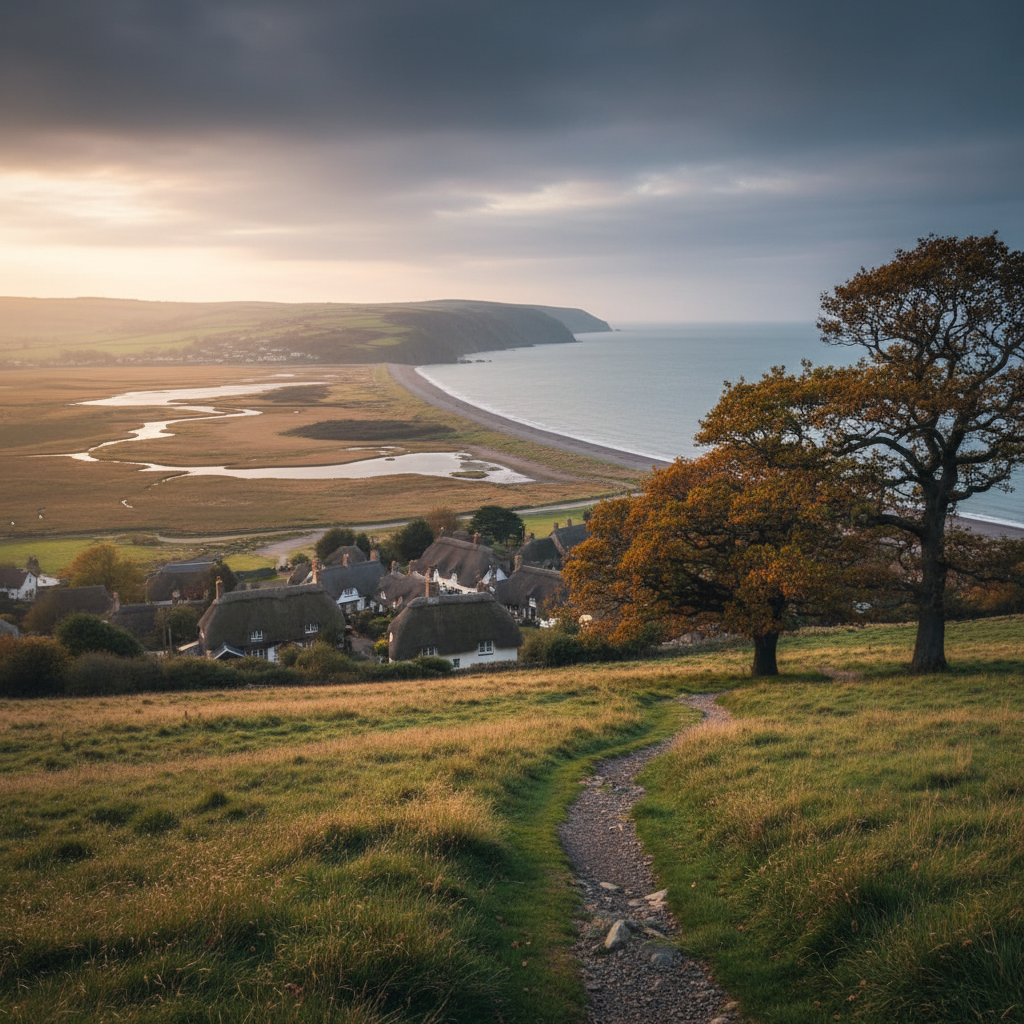
Bossington offers a softer Exmoor coastal stop, with village character, marshland, beach and good walking links.
Heddon Valley
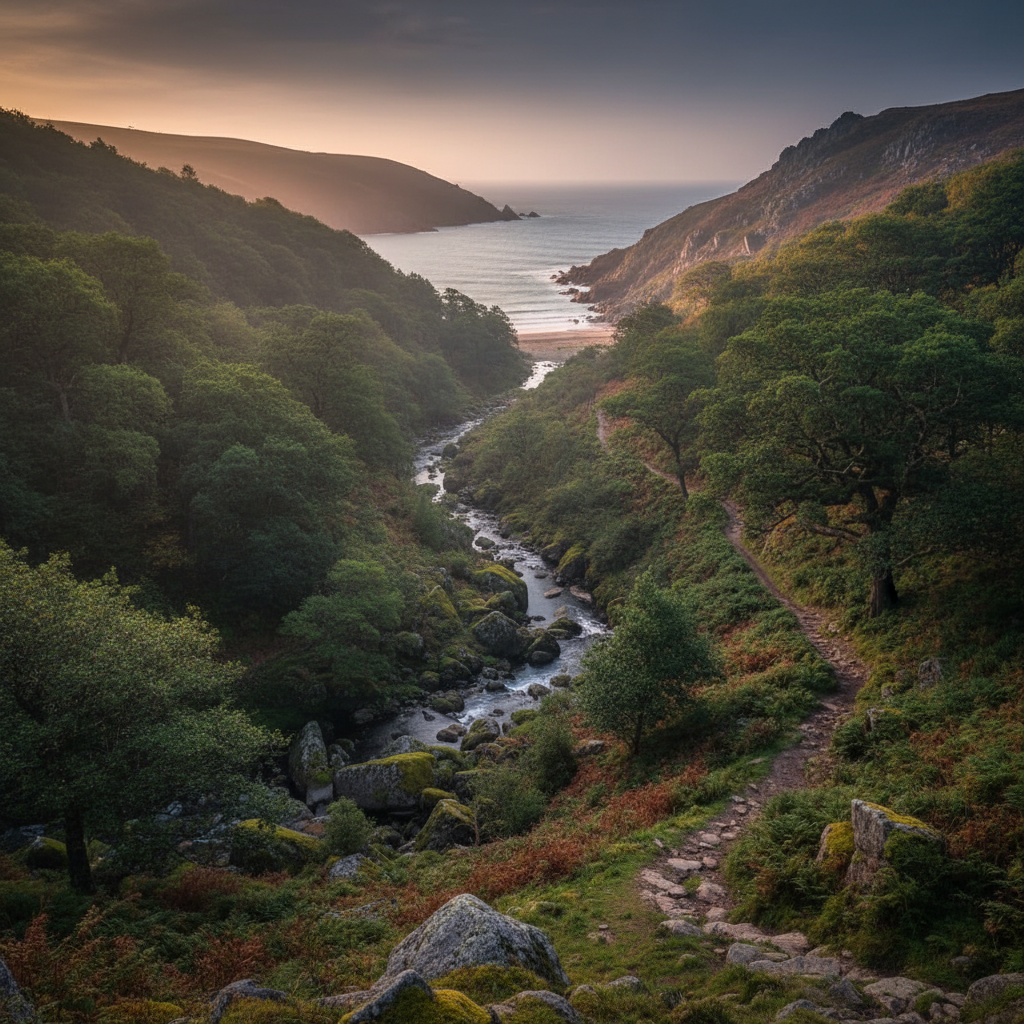
Heddon Valley is one of Exmoor’s best coast-and-combe places, combining woodland, river and sea-edge walking.
Porlock Weir
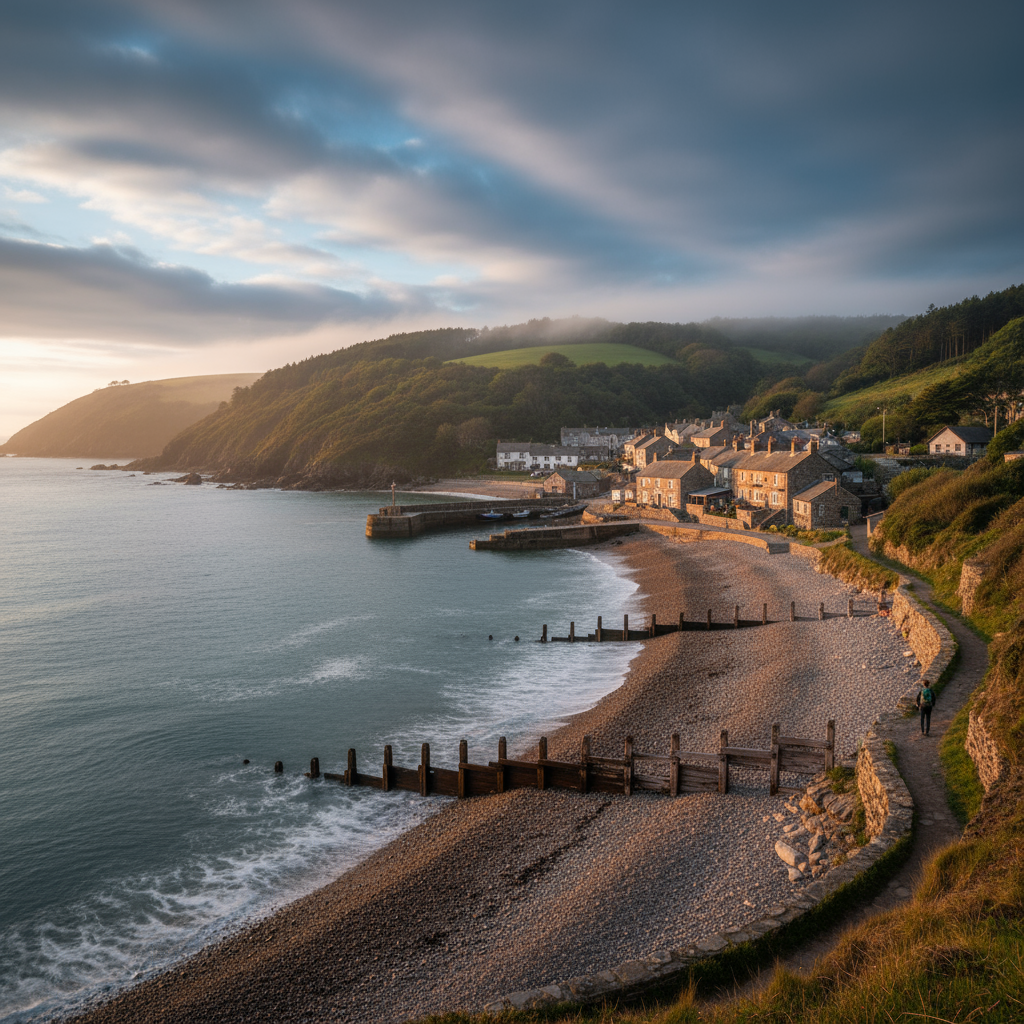
Porlock Weir adds harbour character, coastal walking and one of Exmoor’s most atmospheric sea-edge stops.
Join the 3moors Community for path conditions & local tips.
JoinWhy this place matters
Dulverton — in its own right
What Dulverton offers, finally, is a sense of being at the edge of something larger. The town itself is modest in scale, unpretentious in character, and fully occupied with the business of being a working settlement. But beyond its northern boundary the land lifts sharply and the landscape changes register entirely: the enclosed fields give way to open heath, the valley sounds fade, and you are on the moor in the fullest sense of that word. Dulverton is the last town before that transition, and it serves that role without dramatising it. That threshold quality is easy to overlook if you move through quickly. But spend a day here, walk to the river and back, eat something local, look at the hills from the churchyard in the late afternoon, and the position of the town in the landscape becomes clear. It sits at a border between the managed and the open, between the valley and the plateau, and that position gives it a particular gravity. Places at edges tend to accumulate meaning over time. Dulverton has been accumulating it for a long while.