
Exmoor · South Exmoor edge
Exebridge
A quiet crossing point where river valley landscapes lead towards Exmoor.
About
Exebridge
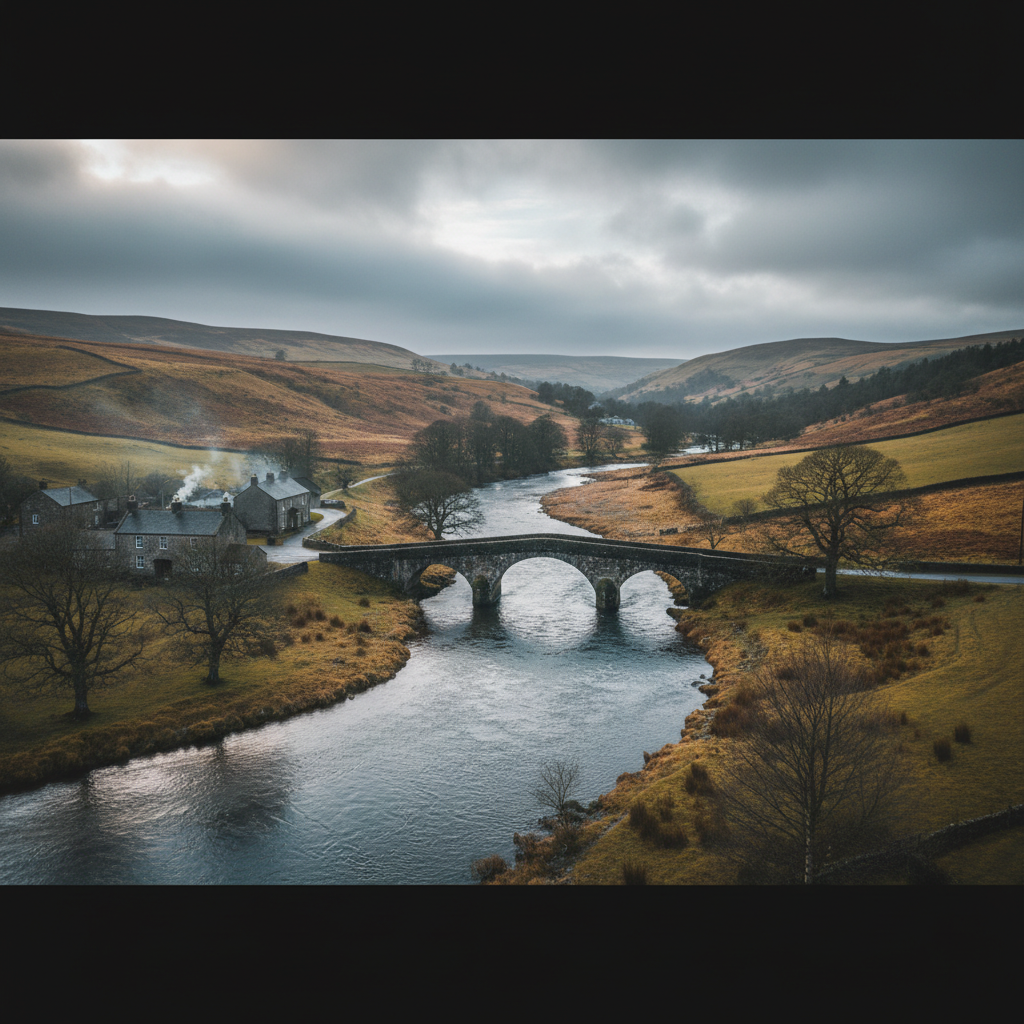
Exebridge sits at the southern fringe of Exmoor, where the River Exe moves through a broad, tree-lined valley before the land begins to climb towards the higher moor. It is a small and unhurried place — a hamlet rather than a village — and its identity is shaped almost entirely by the river and the quiet lanes that converge here at a crossing point that has long connected the lowland edge with the moorland interior.
People come to Exebridge not for spectacle but for a particular kind of quietness. The river is the draw: wide enough here to feel significant, slow enough in places to reflect the willows and alder that lean over its banks. Fishermen have always known this stretch, and the water has a reputation for good salmon and trout fishing that has sustained a quiet trade in visiting anglers across many seasons.
The surrounding landscape is one of transition. To the south, the ground flattens into the Exe valley proper, with its pastoral fields and hedged lanes. To the north, the land rises and the character changes — the hedges grow taller, the soil darker, and the sense of entering true Exmoor country becomes gradually more pronounced. Exebridge sits at exactly that seam.
For walkers and those simply exploring the southern edges of the national park, Exebridge offers a calm and accessible starting point. There are no crowds here, no managed visitor attractions. What there is instead is a sense of the landscape working quietly on its own terms, with the river at its centre and the moor visible on the horizon to the north.
Character
The feel of Exebridge
Exebridge has the feel of a place that has never quite needed to announce itself. It functions as a crossing point — practical, unshowy, defined by the bridge that gives it its name and the river that made the bridge necessary. The pace here is slow in a way that feels organic rather than cultivated, shaped by the rhythms of water and weather rather than any particular effort to preserve it.
The atmosphere is rural in the plainest sense: birdsong, moving water, the occasional vehicle on the lane, the sound of the wind in riverside trees. There is little here to distract from the landscape itself, and that absence of distraction is, for many visitors, precisely the point. This is a place where attention naturally settles on what is in front of you — the colour of the river, the quality of the light, the way the valley opens or closes depending on where you stand.
It is worth noting that Exebridge sits just inside or just outside the national park boundary depending on the map you consult, and this ambiguity suits it. It belongs to the Exmoor character without being dominated by it — a threshold place, useful and quiet in equal measure.
First-hand visit
Keith's Take
Exebridge slows time in the way only river places can — stand on the crossing for a moment and you may find the Exe has quietly taken your attention without asking permission.
On a calm morning, the sound of the Exe is the first thing you notice at Exebridge — a steady, unhurried presence that sets the tone for everything that follows. The river here is not the fast moorland stream it begins as further north, but something wider and more considered, moving through a valley that has had time to broaden and settle. The trees along the banks hold the space, and the light through them in mid-morning has a greenish, diffused quality that belongs to rivers and nowhere else.
On a clear day, the land to the north shows its hand — the rising ground, the change in vegetation, the darkening of the soil that signals the beginning of real Exmoor country. From the bridge itself, looking upstream, the sense of the valley drawing you towards something is quite strong, even if you stay put and simply watch the water pass beneath your feet. The bridge is a functional thing, plain and well-made, but standing on it gives a particular vantage that the lane on either side cannot provide.
What strikes most visitors, eventually, is the absence of apparatus. There is nothing here to tell you what to look at or how to feel about it. The landscape simply continues, as it has done, with the river at its centre and the moor above, and the hamlet sitting quietly at the hinge between the two.
Keith's Take — a first-hand account from the 3moors team
Map & Getting Here
Getting to Exebridge
What to expect
A natural way to spend time here
Visitors arriving at Exebridge will find a small, functional hamlet with limited infrastructure. The river and its immediate surroundings are the primary focus, and the experience is essentially one of landscape rather than amenity. Expect narrow lanes, a riverside atmosphere, and the kind of quiet that comes from being slightly off the main routes into the national park.
The terrain at river level is easy and accessible, with flat or gently sloping ground near the water. Those intending to walk further north towards the higher moor should be prepared for the gradient to increase as the valley narrows and the land rises. The transition from gentle riverside walking to more exposed moorland can happen relatively quickly on some routes, so layered clothing and appropriate footwear are sensible regardless of the season.
The hamlet itself offers very little in the way of services, so visitors should plan to be self-sufficient in terms of food, water and navigation. The pub at Exebridge has historically served the community and visiting anglers, though it is always worth checking current opening times and status before relying on it as part of a visit.
What makes it stand out
What makes Exebridge special
What distinguishes Exebridge from other small settlements on the southern edge of Exmoor is its relationship with the river. The Exe here is not a dramatic moorland stream but a mature, purposeful river — wide-banked, tree-shaded, and generous in its pace. That quality of water sets the tone for the whole place, lending it a calm that feels geological rather than accidental.
Many of the more well-known entry points to Exmoor involve immediate elevation — car parks that open directly onto high heathland, villages perched on combes with long views from the start. Exebridge offers the opposite experience: a gradual approach, a low-level beginning, a sense of the moor as something to move towards rather than something immediately encountered. That gradualism is its particular gift to the visitor willing to take it slowly.
For those who find the more popular Exmoor destinations too managed or too frequented, Exebridge provides a genuinely quieter alternative. The landscape here is working farmland and river corridor rather than managed access land, and the sense of stepping into a landscape with its own priorities — rather than one arranged for visitors — is quietly noticeable.
Don't miss
Things to see and do
Walk the riverbank to observe the Exe in its lower moorland character — wide, clear and tree-lined.
Watch for fishing activity on the river
this is a well-regarded stretch for salmon and trout.
Cross the bridge and take time to look upstream and downstream — the views from the crossing are distinctively good.
Follow lanes and footpaths northward to feel the landscape begin to shift towards open moorland.
Look for riverside birds along the water's edge and in the overhanging trees.
Pause at the valley sides for views back across the Exe valley to the south.
Explore the transition zone where valley farmland gives way to the rougher ground of the moorland fringe.
Walks from here
Getting out from Exebridge
The most natural walking from Exebridge follows the river corridor, either upstream towards the higher ground of the moor or downstream into the broader Exe valley. Both directions offer easy, low-level walking on relatively firm paths, though the paths can become muddy after wet weather, particularly in the sections closest to the water. The riverside route northward gradually gains character as the valley narrows and the surrounding land rises.
For those wanting to gain height, there are footpaths and lanes leading away from the river and up into the hillside farmland above the hamlet. From these higher points the views open out considerably — back across the valley and south towards the lowlands, and northward towards the upland mass of Exmoor itself. These routes involve moderate gradients and can be incorporated into circular walks that return to the river crossing.
Longer expeditions can use Exebridge as a southern staging point for routes that push deeper into the national park, connecting with paths and bridleways that lead towards the open moor. The hamlet's position at a river crossing makes it a logical start or finish point for linear walking, particularly for those exploring the Exe valley as a continuous corridor from the high moor to the lowland edges.
Good to know
Before you go
The river can rise quickly after heavy rain, particularly following prolonged wet periods on the moor to the north. Riverside paths may flood or become impassable in winter and early spring, so it is worth checking conditions before setting out. Wellingtons or waterproof boots are useful at almost any time of year given the proximity to the water and the clay-heavy nature of some field paths.
Because Exebridge is a small working settlement rather than a managed visitor destination, it is worth approaching with the mindset of a guest in someone else's landscape. Gates should be closed, lanes kept clear of parked vehicles, and noise kept low. The fishing on this stretch of the Exe is taken seriously by those who hold the rights, and it is worth being aware of that when walking near the water's edge during the fishing season.
Across the seasons: Spring brings the river up after winter rains and fills the valley with the sound of water moving purposefully through its banks. The riverside trees come into leaf relatively late compared to the lowlands, and for a brief period the valley has an open, luminous quality that changes noticeably once the canopy closes. This is also when migratory birds begin to appear along the water corridor, making early spring particularly rewarding for those paying attention to the river. Summer is generally quiet here — Exebridge draws nothing like the visitor numbers of the more celebrated Exmoor locations — and the river under a high canopy of summer leaves has a green, underwater quality of light that is particular to well-wooded river valleys. Fishing activity is most visible in summer and early autumn, and the sense of the place being primarily a working landscape rather than a visitor one is strongest at this time. Autumn is arguably the most atmospheric season. The valley trees turn steadily from late September, and on calm days the river reflects the colour of the canopy in a way that makes the whole corridor feel enclosed and golden. Winter brings the river to its highest and most dramatic levels, and while access to some riverside paths may be restricted by flooding, the bare valley has a stark, structural beauty that rewards those willing to visit in the colder months.
Practical info
Practical info
Parking at Exebridge is limited and informal, as befits a small hamlet on narrow lanes. There is no dedicated visitor car park. Check local parking options before travelling and avoid blocking gates, passing places or private accesses. Roadside parking requires care and consideration for local residents and farm traffic.
Facilities at Exebridge are minimal. There has historically been a pub in the hamlet which may offer food and drink, but visitors should check current availability before relying on it. There are no public toilets, no visitor centre and no shops. Those planning longer walks should bring all food, water and supplies with them.
The terrain at river level is largely flat and accessible, making the immediate riverside area suitable for most visitors. Paths leading away from the valley bottom involve moderate gradients as the land rises towards the moorland fringe. Surfaces can be muddy and uneven after rain. Use designated paths in poor visibility. Those venturing onto higher ground above the hamlet should carry a map and be prepared for changing weather conditions.
varies
Explore nearby
Places nearby
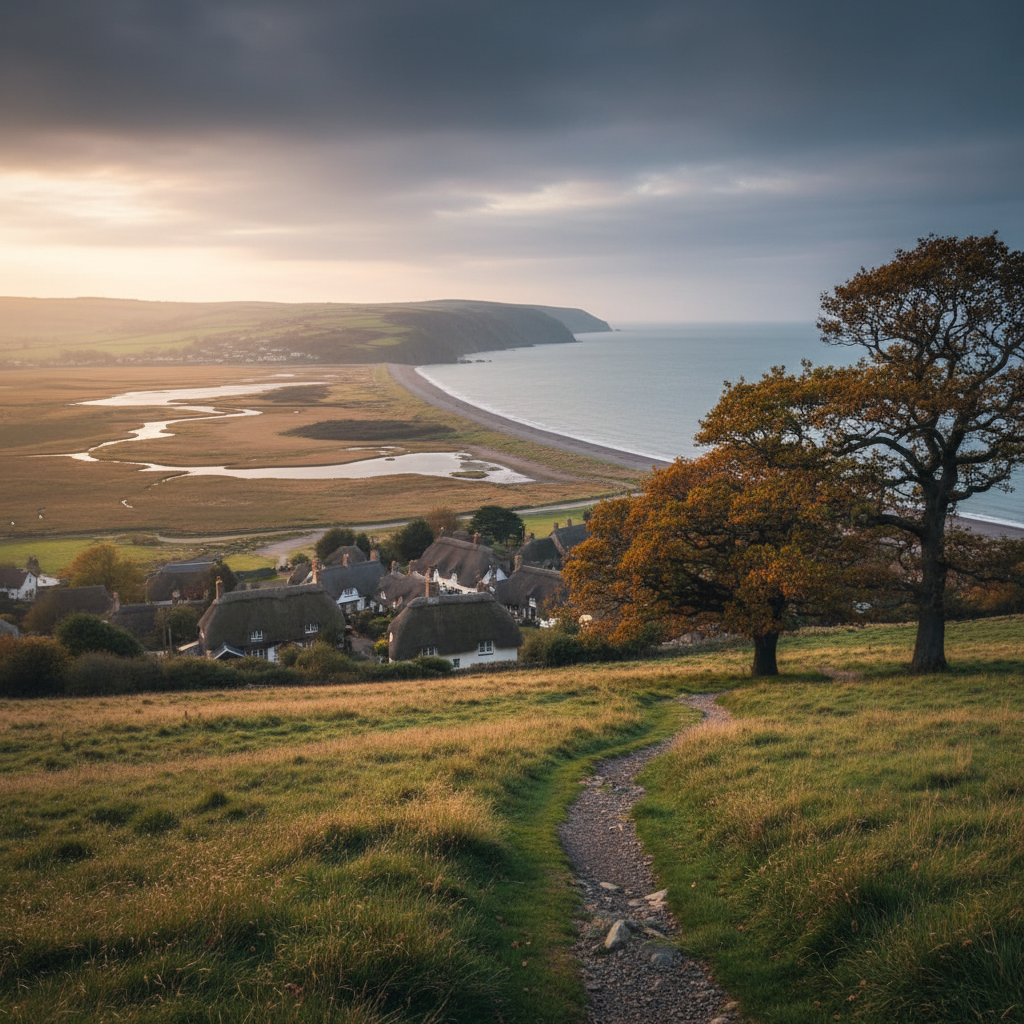
Bossington
Bossington offers a softer Exmoor coastal stop, with village character, marshland, beach and good walking links.
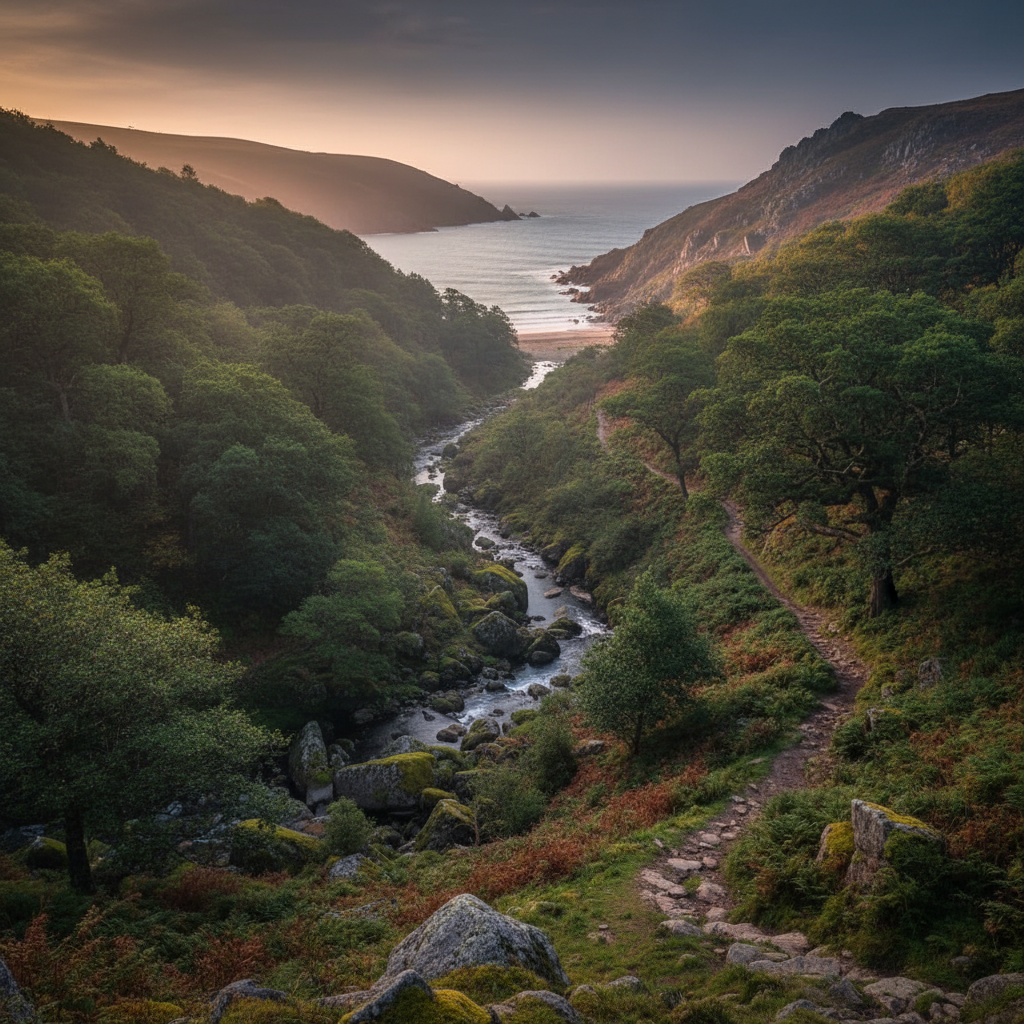
Heddon Valley
Heddon Valley is one of Exmoor’s best coast-and-combe places, combining woodland, river and sea-edge walking.
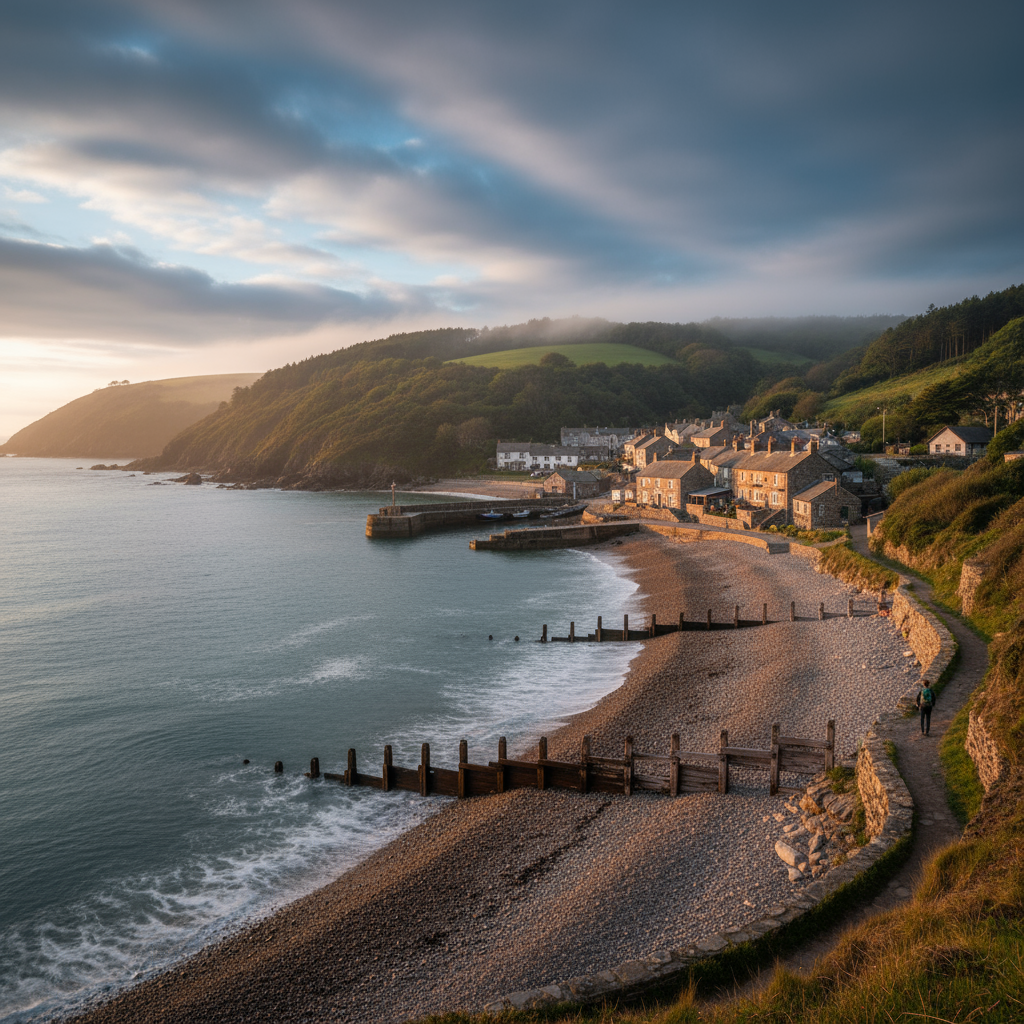
Porlock Weir
Porlock Weir adds harbour character, coastal walking and one of Exmoor’s most atmospheric sea-edge stops.
Join the 3moors Community for path conditions & local tips.
JoinWhy this place matters
Exebridge — in its own right
Exebridge is not a destination in the usual sense. It is a crossing point, a pause, a place where the logic of the landscape — water moving downhill, roads following valleys, settlements forming where crossings are needed — becomes briefly visible. Its value is precisely in that ordinariness, in the way it sits at the edge of the moor without trying to be the moor. For those who approach it in the right spirit — unhurried, attentive, prepared to find interest in the understated — it offers something that more prominent places on Exmoor cannot quite replicate: the experience of the landscape on its own terms, without mediation or arrangement, at a place where the river is still doing what it has always done and the moor waits quietly to the north.