
Dartmoor · West Dartmoor
Lydford
A small village known for its dramatic gorge and waterfall walks.
About
Lydford
Lydford sits on the wild western edge of Dartmoor and is one of Devon’s most atmospheric villages, where dramatic nature and dark history meet. Best known for the thunderous beauty of Lydford Gorge and the haunting remains of Lydford Castle, this quiet village offers immediate access to some of the most visually striking walks in the South West. Beneath its peaceful appearance lies a rich Saxon past, tales of brutal “Lydford Law”, and a landscape shaped by rushing water, deep woodland and the open moor beyond.
Character
The feel of Lydford
Lydford may look like a peaceful Devon village on the western edge of Dartmoor, but beneath its quiet lanes lies one of the darkest and most dramatic histories in the South West.
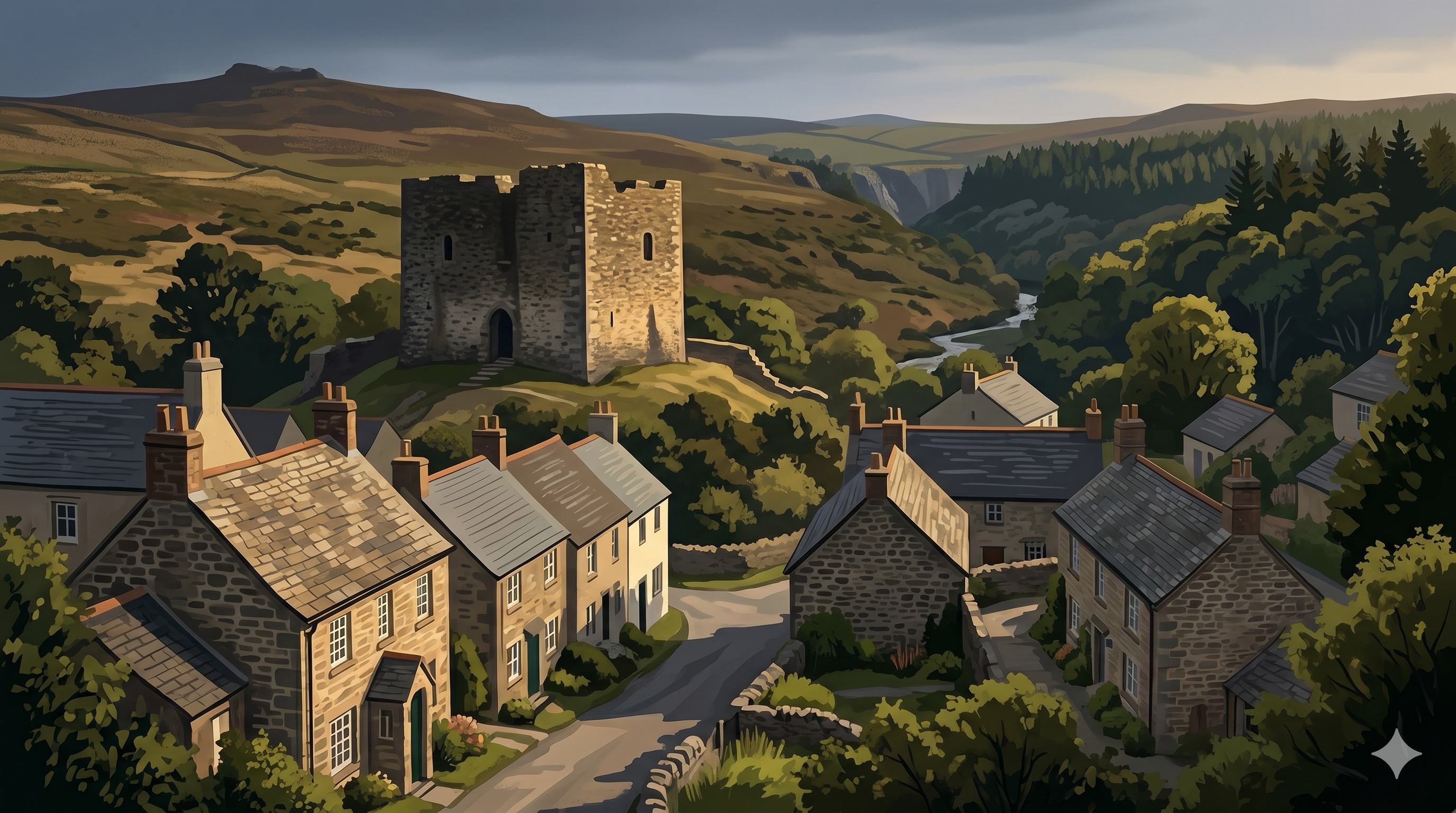
Once an important Saxon town and one of Devon’s oldest settlements, Lydford was a centre of law, trade and punishment. Today it is known for three unforgettable things: the thunder of Lydford Gorge, the grim silhouette of Lydford Castle, and the feeling that history still lingers in the air.
There is a wildness here. The River Lyd tears through deep woodland before plunging into the famous Devil’s Cauldron, while above the trees the old Norman keep stands on its mound like a warning from another age.
Lydford feels both beautiful and severe.
First-hand visit
Keith's Take
The sound of water finds you before the gorge does. Lydford is that kind of place: quieter than you expect on the surface, and considerably louder underneath it.
A rook lifted from the churchyard wall as the path curved downhill, and the village fell behind almost immediately. That was the thing about Lydford: the transition from lane to landscape happened without ceremony, a gate, a few steps, and then the trees closed in and the roar began to build from somewhere below. The gorge doesn't announce itself from above. It reveals itself gradually, the path narrowing, the air cooling, the sound of the Lyd growing from a murmur to something that fills the chest. By the time the Devil's Cauldron came into view, the village felt a long way off in character if not in distance.
What stayed with me most wasn't the waterfall, though the White Lady is worth every step of the path that leads to it. It was the quality of attention the gorge demands. The wooden walkways are close to the rock face. The water moves fast below. You find yourself reading the path more carefully than usual, and in doing so you notice things: the particular green of moss on a wet stone, the way a root has worked its way through a crack over what must be decades, the sound changing as the canyon widens or tightens. It's a contained world, and it asks you to be present in it.
Back in the village afterwards, that contrast was striking. The lane past the castle earthworks was utterly still, a tabby cat stretched across a low wall, someone's washing moving faintly on a line. Lydford holds these two registers at once: the unhurried domestic life of a west Devon village, and, just a few minutes on foot, something considerably more elemental.
The castle has always been part of that quieter side for me. Years ago, when my sons were young, I used to bring them up here after school, often with my two nieces and whichever friends happened to be with them that day. In those days the castle grounds were free to wander, and the children would race around the earthworks, disappear through doorways, climb the steps and reappear moments later full of excitement. There was plenty of open grass to run on and enough history in the old stones to spark a child's imagination without them even realising it. Looking across the site now, it is easy to picture those evenings again.
Perhaps that's why Lydford stays with me. It isn't just the dramatic gorge or the famous waterfall. It's the way a remarkable landscape sits alongside everyday village life and personal memory. The walk makes you notice the power of the place, but the village reminds you that people have been living, working, raising families and making memories here for centuries. For me, Lydford is one of those rare places that feels both wild and familiar at the same time.
Keith's Take — a first-hand account from the 3moors team
Map & Getting Here
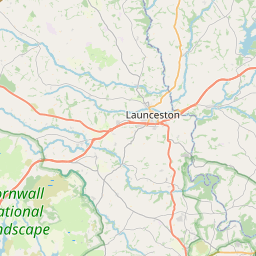
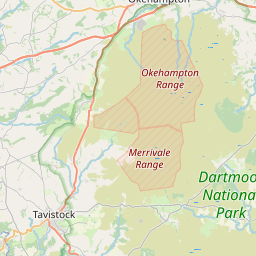
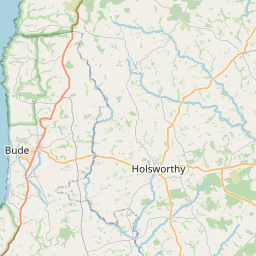
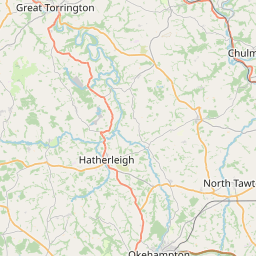
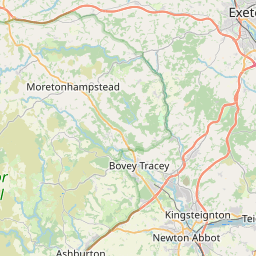
Getting to Lydford



What to expect
A natural way to spend time here
Lydford is one of the best places on Dartmoor for combining dramatic nature, medieval history and short rewarding walks.
Come for: the spectacular waterfalls and whirlpools of Lydford Gorge
the haunting remains of Lydford Castle and prison
rich Saxon and Norman history
woodland walks and riverside trails
photography in all seasons
What makes it stand out
What makes Lydford special
The gorge walk is one of Dartmoor's standout natural experiences, a contained, dramatic environment that contrasts with the open moor.
Don't miss
Things to see and do
Walk through Lydford Gorge to see the Devil’s Cauldron and White Lady Waterfall
Explore Lydford Castle and its prison cells
Visit the church and old village lanes
Use it as a launch point for western Dartmoor walks
Photograph the gorge in autumn or after rain
Walks from here
Getting out from Lydford
Gorge circuit
short woodland walks
links onto moorland routes.
Good to know
Before you go
Parking available in the village and at the National Trust gorge entrance
Gorge paths can be steep and slippery
Castle area is exposed in bad weather
Dogs welcome on many routes, but check gorge restrictions
Good café/refreshments nearby seasonally
Across the seasons: Best after rain when waterfalls are strongest; autumn colours are particularly good.
Local weather
Practical info
Practical info
Lydford has several convenient parking options, including village parking areas and the main National Trust car park for Lydford Gorge. The gorge entrance has seasonal facilities including toilets, a small shop and refreshments. In the village you’ll often find a café or pub nearby, with more services available in nearby Tavistock or Okehampton. Mobile signal can be patchy in the gorge itself, and paths can be steep, muddy and slippery after rain.
The National Trust car park at the gorge entrance offers seasonal toilets, a small shop and light refreshments, though these are not available year-round. The village itself has limited amenities, and visitors should not expect a full range of cafés or shops in the immediate area. It is worth carrying your own food and water, particularly outside the summer season. Mobile signal can be patchy in the gorge and on surrounding lanes.
Village is accessible, but gorge paths require care and good footing.
yes
Accessibility
Accessible at Lydford
What's on nearby
Events near Lydford
Join the 3moors Community for path conditions & local tips.
JoinWhy this place matters
Lydford — in its own right
Lydford, beauty, power and history in one place Lydford may be small, but few places on Dartmoor pack so much into such a compact area. Within minutes, you can move from quiet village lanes to roaring white water, deep ancient woodland, and the cold stone walls of one of Devon’s most feared medieval prisons. This is a place where nature and history both leave an impression. The River Lyd crashes through the dramatic depths of Lydford Gorge, carving whirlpools, waterfalls and steep-sided ravines through the rock. Above it all stands Lydford Castle, a Norman tower that later became a prison, infamous for harsh justice and the saying: “First hang and draw, then hear the cause.” Lydford matters because it captures so much of what makes the western edge of Dartmoor special: wild landscapes, ancient stories, dramatic weather and a sense that the past still lingers close by. For walkers, photographers, history lovers and anyone exploring West Devon, Lydford is one of those places that stays with you long after you leave.
Explore more
Discover other places, walks, and hidden corners across Dartmoor.