
Exmoor · West Somerset
Selworthy
One of Exmoor’s prettiest villages surrounded by woodland and heathland.
About
Selworthy
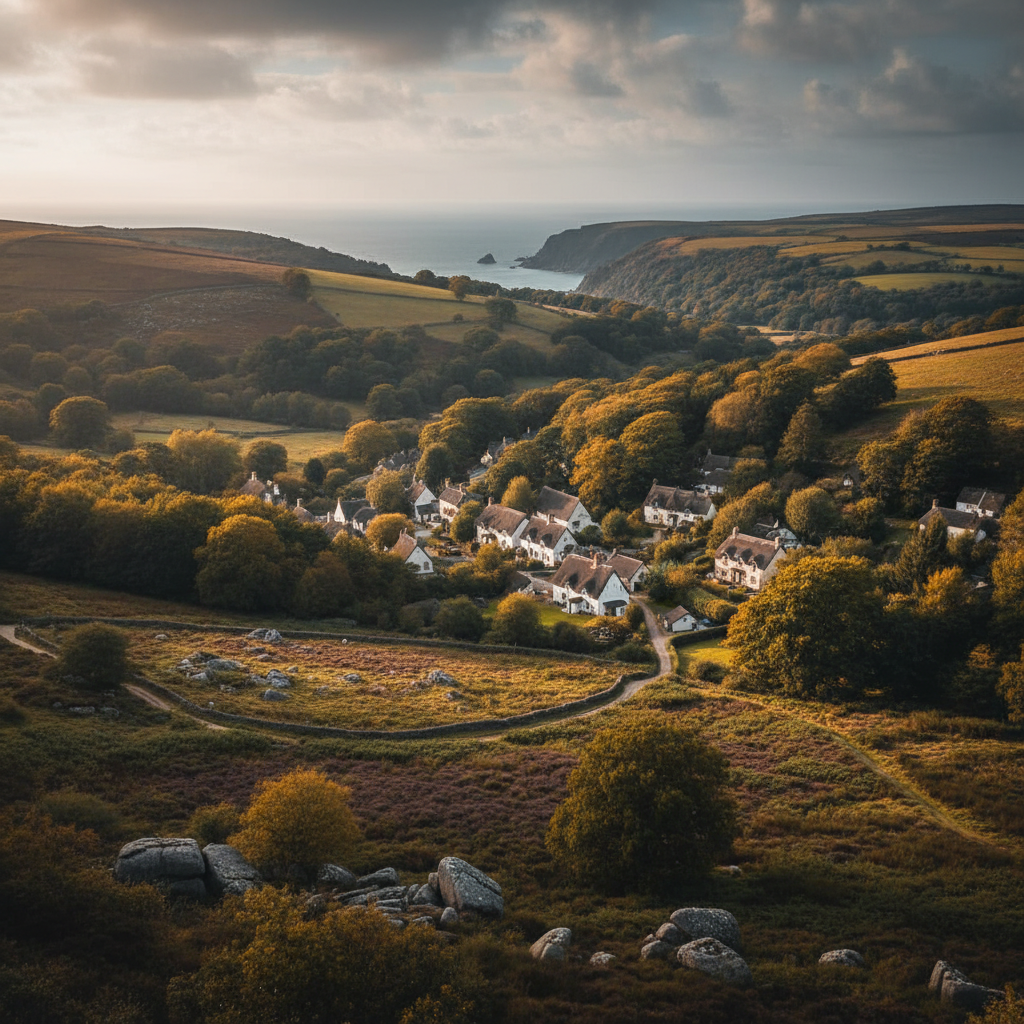
Selworthy sits quietly in a wooded combe on the northern edge of Exmoor, a short distance from the Bristol Channel coast and the open heathland above. It is one of those villages that seems to have arrived fully formed from another century, its thatched cottages arranged around a sloping green with an air of unhurried permanence. The church of All Saints, whitewashed and visible from some distance across the vale below, has long been a landmark in this corner of West Somerset.
The village has been in the care of the National Trust for many decades, which goes some way to explaining its immaculate appearance. This is not a place that has resisted change noisily — it simply appears to have been left largely alone, tucked away from the main roads and the busier visitor circuits of Exmoor. People come here for the scenery, for the calm, and for the walking that opens up almost immediately beyond the last cottage.
The surrounding landscape is varied and accessible. Selworthy Beacon rises above the village to the north, offering wide views over the vale and the channel. Horner Wood stretches to the south and east, one of the finest ancient oak woodlands on Exmoor. The combination of pretty village, open heath, and deep woodland makes Selworthy a useful and rewarding base for a half-day or full day on foot.
For many visitors, the village itself is the draw — a place to pause, look around, and take in the detail of a well-preserved settlement without feeling that anything has been staged for their benefit. The pace here is genuinely slow, and that quality is part of what makes it worth the visit.
Character
The feel of Selworthy
There is something noticeably still about Selworthy. The village green sits at a slight angle to the slope, ringed by cream-washed cottages with deep thatch, and in mild weather the whole scene has the quality of something lit carefully from the side. It does not feel theatrical, but it does feel composed — as though the place has always been arranged just so.
The church above the green is a constant presence. Its whitewashed tower appears through trees on the approach from the valley, and from the churchyard there are long views south across the Holnicote Estate and the wooded combes beneath Dunkery Beacon. The atmosphere is one of quietness rather than emptiness — this is a lived-in landscape, tended and known, but without the noise of commerce or passing traffic.
What defines the character of Selworthy more than anything else is the sense that the village exists in proportion with its surroundings. The woodland above, the open heath beyond, the farmland below — none of it feels dominated or diminished by the settlement at its centre. It is a place that fits its landscape, and that fitting is what gives it its particular tone.
First-hand visit
Keith's Take
Selworthy asks very little of its visitors but gives back a great deal — a thatched village, a whitewashed church, and the open Exmoor landscape beginning at the garden wall.
On a clear day, the whitewashed tower of All Saints is visible from the lower ground of the Holnicote Estate long before the village itself appears, sitting above the treeline like a small beacon of its own. The approach through the lanes is part of the experience — the narrowing of the road, the closing in of hedgerow and canopy, and then the opening of the green with the cottages arranged around it in their unhurried way.
The light in the late afternoon falls particularly well on the south-facing slope of the village. The thatch takes on a warm tone, the church wall holds the last of the sun, and the paths upward through the bracken become gilded and inviting. On such afternoons the village has the quality of somewhere that has been waiting patiently, certain that the evening will be good.
In quieter seasons, with fewer people on the green and the lanes clear, Selworthy settles into something close to its natural register. The sounds are of wind through oak canopy, of jackdaws around the church tower, of water somewhere in the combe below. It is not a dramatic place, but it is a deeply coherent one — a village and a landscape that have reached a long accommodation with each other.
Keith's Take — a first-hand account from the 3moors team
Map & Getting Here
Getting to Selworthy
What to expect
A natural way to spend time here
Arriving at Selworthy, most visitors will find a quiet approach along narrow lanes, with the church appearing above the treeline before the village itself comes into view. The green is the natural gathering point, with the almshouses and church close by and the woodland paths beginning almost at the edge of the settlement. It is a compact place, and the central area can be taken in comfortably on foot in a short time.
The walking that opens up beyond the village is where most people will spend the bulk of their visit. Routes lead uphill through bracken and gorse to Selworthy Beacon with its wide coastal and moorland views, or descend through oak woodland towards Horner and the interior of the estate. The terrain is varied but generally well-marked, and the contrast between heath and woodland within a short distance is one of the pleasures of walking here.
On busy summer weekends the village and its nearby parking can become congested, and the combination of narrow lanes and high visitor numbers can take some of the calm away. Earlier in the day, or outside the peak summer period, Selworthy is a noticeably quieter and more rewarding place to be.
What makes it stand out
What makes Selworthy special
Many Exmoor villages are attractive, but Selworthy has a quality of concentration that sets it apart. The combination of the whitewashed church, the thatched almshouses, the sloping green, and the immediate proximity of both ancient woodland and open heathland is unusual even by the standards of this landscape. Most comparable villages sit in valleys or along roadsides
Selworthy feels tucked away, discovered rather than arrived at.
The Holnicote Estate, of which Selworthy is a part, adds a further layer of interest. The estate covers a large swathe of northern Exmoor including Horner Wood, Dunkery Beacon, and several miles of coastline, and walking from the village connects you to all of it. The sense of having a coherent, well-managed landscape around you — rather than a patchwork of access and restriction — makes the walking here feel genuinely open.
There is also a human-scale quality to Selworthy that resists easy categorisation. It does not feel like a museum piece, despite its appearance, and it does not feel groomed for tourism in the way that some well-known villages do. It feels, more than anything, like a place that has simply continued to be itself.
Don't miss
Things to see and do
Visit the Church of All Saints and explore the churchyard for views south across the vale.
Walk the slope of Selworthy Beacon for wide views over the Bristol Channel and the Holnicote Estate.
Follow paths down into Horner Wood to experience one of Exmoor's finest ancient oak woodlands.
Take time on the village green to observe the thatched almshouses and the scale of the settlement.
Look for the estate landscape of the Holnicote Estate stretching away to the south and east.
Explore the woodland edge paths immediately above the village where heath and tree cover meet.
Watch for red deer on the open heath above the village, particularly in the early morning or evening.
Walks from here
Getting out from Selworthy
The most immediate walking from Selworthy leads uphill through bracken and heathland to the ridge above, where Selworthy Beacon offers a wide panorama taking in the Somerset vale, the Bristol Channel, and on clear days the coast of South Wales. The route is straightforward and moderately short, making it accessible to most walkers. From the beacon the ridge can be followed further west or east, linking into the broader network of paths across the northern edge of Exmoor.
Downhill routes from the village lead into Horner Wood, a large and ancient oak woodland that is among the most ecologically rich habitats on Exmoor. Paths thread through the wood alongside the Horner Water, and circuits can be made that return to the village via the valley or the ridge above. The contrast between open heath and closed woodland canopy within a single walk is one of the particular pleasures of routes in this area.
For those wanting a longer day, the paths of the Holnicote Estate connect Selworthy to Dunkery Beacon, Porlock, and the coast, with a variety of return options. The terrain is varied and the waymarking generally reliable, though a map is advisable for anything beyond the more immediate routes from the village.
Good to know
Before you go
The village lanes are narrow and the approaches can be slow in summer. Arriving early in the day — particularly on weekends between May and September — makes a significant difference to both the parking situation and the quietness of the village itself. Weekday visits outside school holidays offer the most undisturbed experience.
Weather on the open heath above the village can change quickly, and the ridge above Selworthy is exposed to wind from the north and west. Even on mild days it is worth carrying a layer. The woodland paths below can be muddy after rain at any time of year, and waterproof footwear is sensible for anything beyond the village green.
Across the seasons: Spring and early summer bring the best combination of light, warmth, and green growth, with bluebells appearing in Horner Wood in April and May and the heathland beginning to come into colour through June. The woodland is particularly good in this period, with fresh oak foliage and long light on the valley sides in the evening. Summer brings the highest visitor numbers, and Selworthy can feel noticeably busy on fine weekends from July through August. The village retains its appeal, but the experience of arriving to find the green crowded and the lanes blocked with parked cars is not uncommon. Visiting early in the morning largely resolves this. The heathland in late summer, when the heather is fully in flower, is one of the finer sights on this part of Exmoor. Autumn is arguably the finest season here. Horner Wood turns slowly through September and October, and the views from Selworthy Beacon acquire a particular clarity in the lower autumn light. Winter strips the woodland back but opens up views through the trees that are invisible in summer, and the village in frost or mist has a quality all of its own. Visitor numbers fall sharply after October, and the place returns to something closer to its natural quietness.
Practical info
Practical info
There is parking available in the vicinity of the village, managed by the National Trust as part of the Holnicote Estate. Spaces can fill quickly on summer weekends and bank holidays. Check local parking information before travelling, particularly during peak visitor periods. The lanes approaching the village are narrow and not suitable for large vehicles in most conditions.
There is a National Trust tearoom in the village which is open seasonally — it is worth checking current opening times before visiting, as hours vary. Toilet facilities may be available nearby when the tearoom is open. Facilities on the open heath and in the woodland beyond the village are limited to none, so visitors heading out on longer walks should come prepared.
The village itself is on a gentle slope and is largely accessible on foot from the parking area. Paths leading up to the beacon involve moderate gradients over uneven ground and are not suitable for pushchairs or wheelchairs beyond the lower sections. Woodland paths can be muddy and root-strewn after wet weather. Use designated paths in poor visibility, particularly on the open heath above the village where the terrain becomes less defined.
varies
Explore nearby
Places nearby
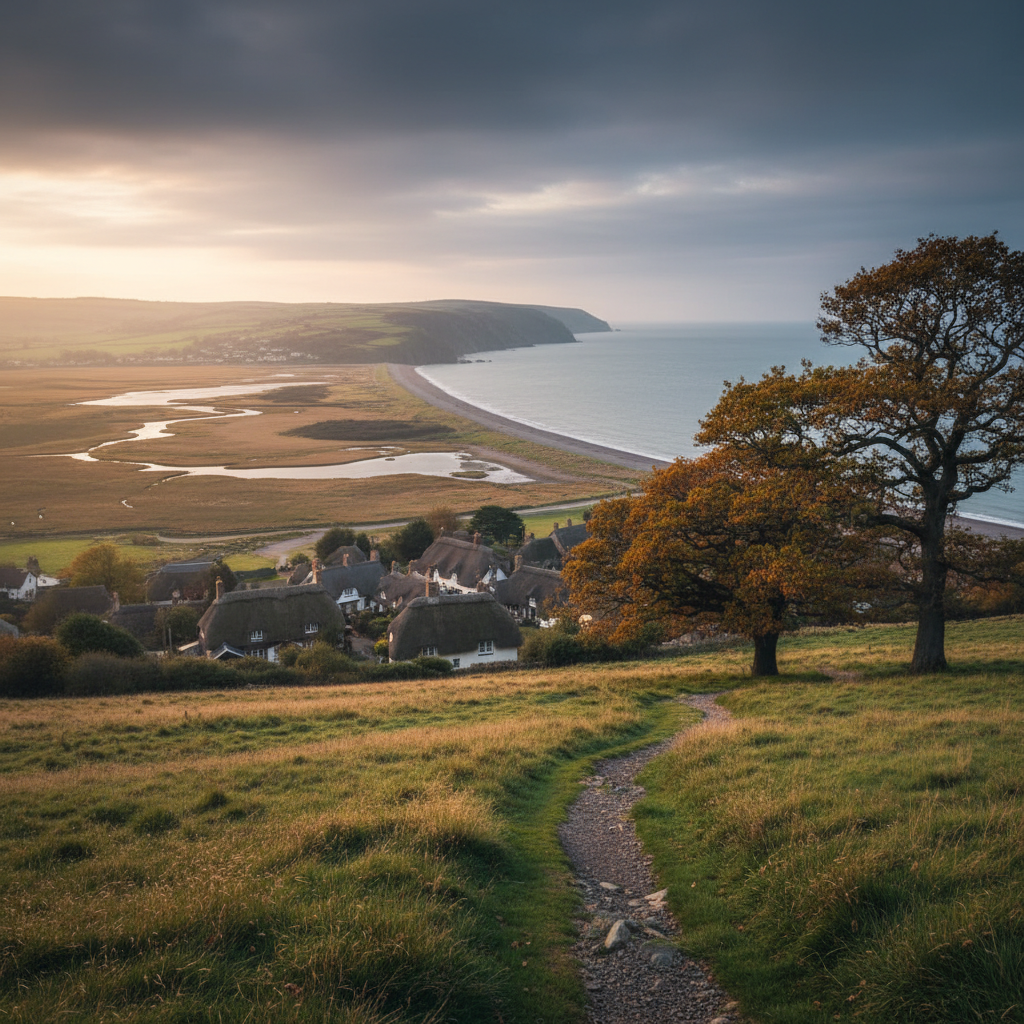
Bossington
Bossington offers a softer Exmoor coastal stop, with village character, marshland, beach and good walking links.
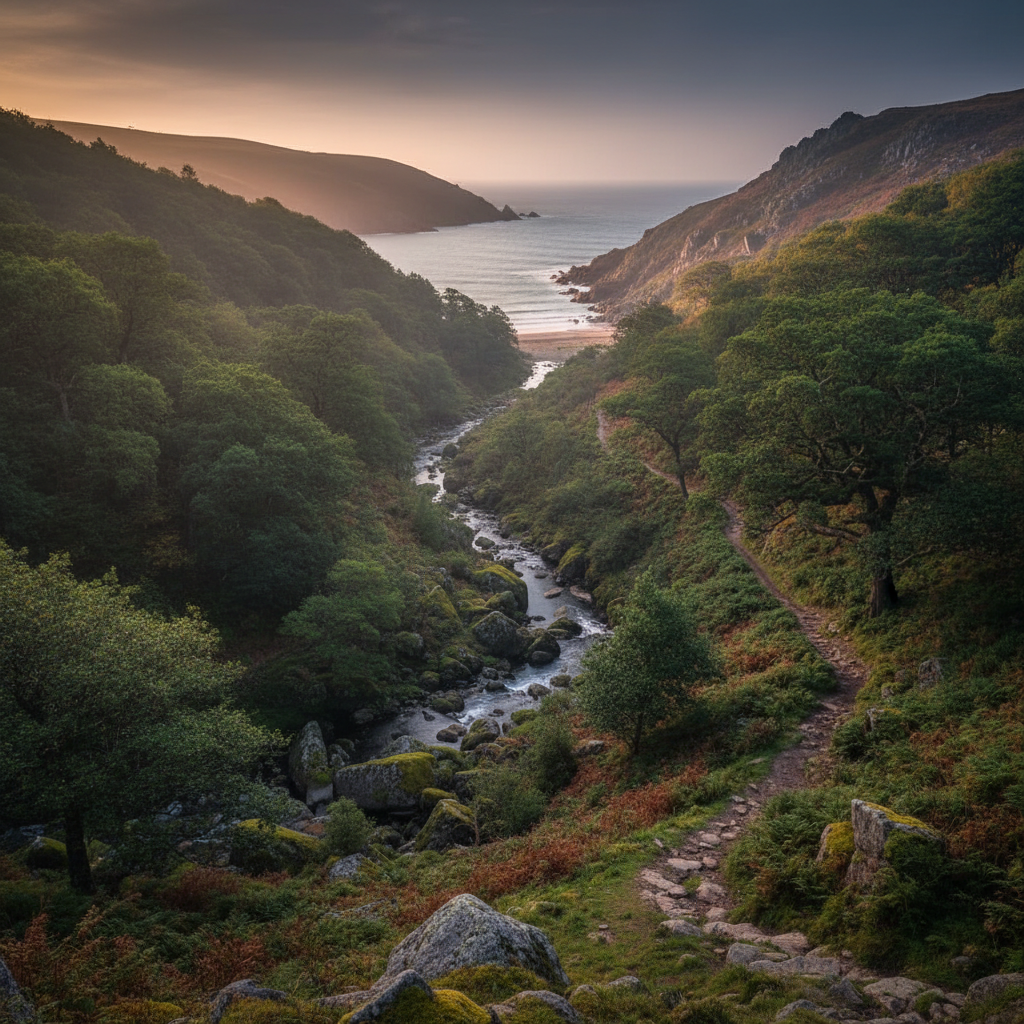
Heddon Valley
Heddon Valley is one of Exmoor’s best coast-and-combe places, combining woodland, river and sea-edge walking.
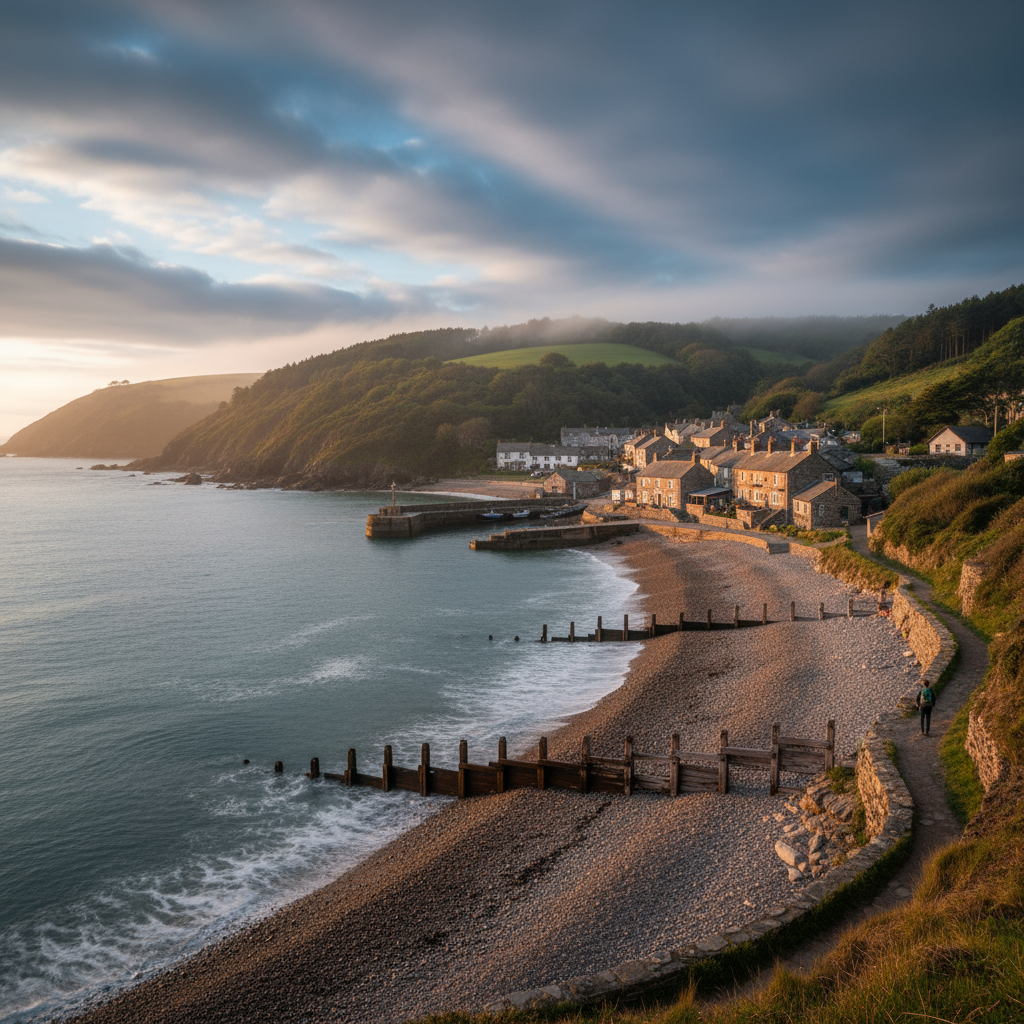
Porlock Weir
Porlock Weir adds harbour character, coastal walking and one of Exmoor’s most atmospheric sea-edge stops.
Join the 3moors Community for path conditions & local tips.
JoinWhy this place matters
Selworthy — in its own right
Selworthy is one of those places that rewards a certain kind of attention. It does not demand anything of its visitors, but it offers a great deal to those who arrive without hurry and allow it to unfold at its own pace. The church, the green, the woodland path, the ridge above — these are simple things, but in combination and in this setting they make for an experience that is difficult to improve upon. What Selworthy demonstrates, perhaps better than anywhere else on Exmoor, is that landscape beauty and human settlement can coexist with grace. The village does not diminish the moor around it, and the moor does not overwhelm the village. That balance, maintained over a long time in a particular place, is worth travelling to see.