
Exmoor · Somerset coast
Watchet
A small harbour town with maritime history and access towards eastern Exmoor.
About
Watchet
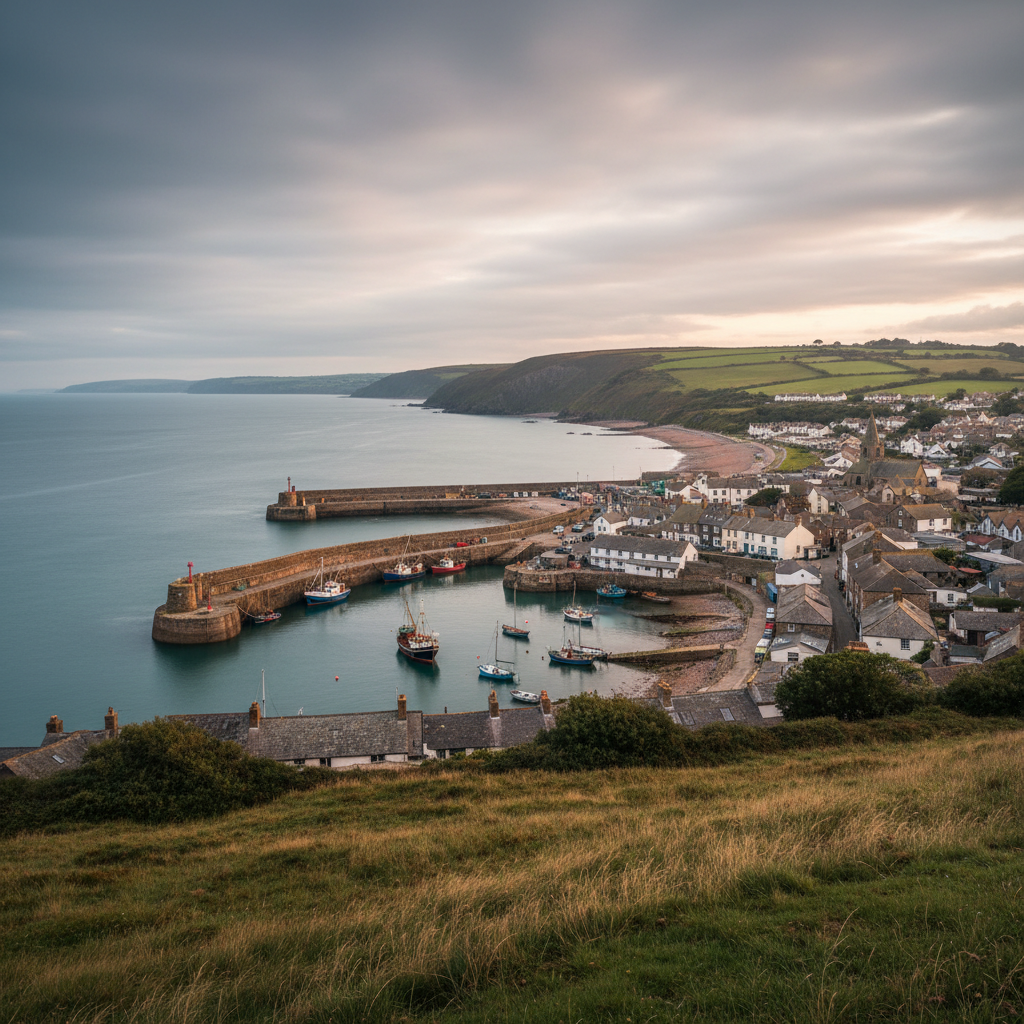
Watchet sits on the Somerset coast at the point where the land drops to a narrow harbour and the Bristol Channel opens wide to the west. It is a small town, compact and particular, built around a working port that has been sending and receiving vessels for centuries. The hills of eastern Exmoor begin just beyond its edge, but the town itself belongs to the water, and it is the water that defines what you find here.
The tides here are among the most dramatic on the British coastline. The Bristol Channel has one of the highest tidal ranges in the world, and at Watchet that fact becomes visible, almost theatrical. At low tide the harbour floor is exposed mud and dark rock, the boats tipped sideways on their keels, the stonework of the quay running down to nothing. At high tide the same space is full, glossy and purposeful, the water pressing against the harbour walls. Visiting without noticing the tide is missing the essential rhythm that runs beneath everything else here.
People come to Watchet for its harbour and its history, for the fossil-bearing cliffs along the coast, and for quieter access into the eastern reaches of Exmoor. It is not a resort and does not carry itself like one. There is a market town directness to the place, a sense that it has been here a long time and is not especially concerned with performing itself for visitors. That quality is part of what makes it worth the journey.
Character
The feel of Watchet
The built environment around the harbour is layered and unglamorous in the best sense. Georgian and Victorian frontages sit alongside working sheds and modern berthing infrastructure. The quayside is stone-flagged and functional. Nothing has been prettified to the point of falseness, and the occasional weathered notice or rusting bollard carries more atmosphere than any deliberate restoration could manufacture. It is a town that has continued to use its waterfront rather than merely display it.
To understand Watchet properly is to understand it as a place shaped by the instinct to move outward. From the harbour, the coastal path runs in both directions, and the hills behind the town open into the eastern margins of Exmoor. The town has always faced outwards, towards the channel and towards the moor, and that orientation gives it an exploratory character that differs markedly from more self-contained inland villages. The visitor who arrives with some intention of moving beyond the quay will find that Watchet rewards that impulse generously. There are fossil cliffs to the east, the wooded combes of the Quantock fringe inland, and the open coast westward towards Minehead and beyond.
Samuel Taylor Coleridge is said to have been a visitor here in the late eighteenth century, and there is a statue of the Ancient Mariner on the harbourside to mark the connection. Whether or not Watchet directly inspired the poem, the association feels apt. This is a place that looks out at open water and imagines what lies beyond it.
Map & Getting Here
Getting to Watchet
What to expect
A natural way to spend time here
Moving through Watchet begins naturally at the harbour gate, where the quay opens before you and the relationship between town and water becomes immediate. The main streets step down from the higher ground of the town centre to the waterfront in a matter of a few hundred metres, and the descent takes you past independent shops, a museum housed in a former goods shed, and the gradual shift from ordinary high street to something more specific and salt-aired. The change in character happens quickly and without ceremony.
At the quayside, the sensory register is particular: the smell of low tide in summer carries a mineral sharpness from the exposed mud, and the cry of herring gulls overhead is near-constant. Ropes creak against mooring rings when the water is in. In the early morning, before the day-trippers arrive, the harbour has a concentrated stillness broken only by the small sounds of boats adjusting to the swell.
The best approach is an unhurried one. This is a town that gives itself up gradually. A first circuit of the harbour takes perhaps twenty minutes, but the reward for staying longer is an accumulating sense of how the tides dictate everything from the position of the boats to the smell of the air to the light on the water. Returning to the same spot two hours later, you will find a different harbour. That repetition is not tedious: it is the point.
What makes it stand out
What makes Watchet special
What distinguishes Watchet from other small Somerset harbours is the combination of genuine working activity and deep historical layering. The port received significant trade in the nineteenth century, importing timber and esparto grass for local paper mills, and that industrial past has left its mark on the physical fabric of the town in ways that have not been smoothed away. It is a harbour with a story that runs considerably further back than tourism, and that depth is legible if you look for it.
The fossil cliffs immediately to the east of the harbour are notable in their own right. The coastal path beyond the town passes exposures of Triassic mudstone and limestone that yield ammonites and other marine fossils with some regularity, particularly after winter storms have freshened the rock faces. This is not a formal attraction but a natural feature of the coastline, and its proximity to the harbour makes it one of the more accessible geological sites on the Somerset coast. Very few harbour towns of this scale sit alongside anything comparable.
Don't miss
Things to see and do
Watch the state of the tide from the end of the east pier and notice how completely it changes the harbour's character, both visually and acoustically.
Walk east along the coastal path beyond the harbour to the fossil-bearing cliffs and look for ammonites in the Triassic rock faces, particularly after rough weather has loosened the surface.
Visit the Watchet Boat Museum and the Market House Museum for the local industrial and maritime history, neither of which takes long but both of which earn their place.
Find the statue of the Ancient Mariner on the harbourside and read the verse inscribed at its base before looking out at the channel and deciding whether the connection feels right.
Take the coastal path west towards Blue Anchor Bay when the tide is low and the sand briefly appears along that stretch of shore.
Cross to the upper town and find the Church of St Decuman on the hill above, which looks out over the harbour and the channel from a position that makes the town's geography suddenly legible.
Sit on the harbour wall in the late afternoon when the light on the water goes flat and gold and the boats settle into their moorings for the evening.
Walks from here
Getting out from Watchet
The West Somerset Coast Path runs directly through Watchet in both directions and provides the most immediate walking from the harbour. Heading east, the path climbs above the town and follows the clifftop towards Doniford and then St Audries Bay, with views back along the coast and access to the fossil-bearing rock exposures. The section as far as St Audries Bay and back is manageable as a half-day walk and gives a strong sense of the coastal geology. Heading west, the path follows Blue Anchor Bay towards Minehead, a longer route but one of the more varied stretches of the Somerset coast.
Inland, the Mineral Line trail follows the course of a disused railway northward from the Brendon Hills towards Watchet, and walking part of this route in reverse from the town gives access to the wooded, enclosed landscape of the lower Brendon Hills. It is a different register entirely from the coast: hedged lanes, old farmland, and the gradual rise towards the open moor. The full Mineral Line to Brendon Hill is approximately seven miles from Watchet but the first few miles offer good walking without committing to the full distance.
For those wanting a connection to eastern Exmoor proper, the town is a reasonable base for driving a short distance inland before setting out on foot onto the higher ground above Dunster or Luxborough. Watchet itself does not sit on the open moor, but the transition from harbour to heathland is achievable within a single day's outing.
Good to know
Before you go
The harbour is tidal and the timing of your visit matters more here than at most places. A rising or high tide makes the harbour look and feel at its best
arriving at low water on a grey day can make it feel diminished in comparison. Checking the tide tables before you go is genuinely worthwhile. The Bristol Channel tidal range means there can be a difference of several metres between high and low water, and both states are worth seeing at least once.
The town is small and parking can be tight in summer, particularly at weekends. The main car park near the harbour fills early. Arriving mid-morning rather than at peak opening hours gives you a better chance of a space and a quieter first hour on the quayside. The museum and the coastal path to the fossil cliffs are both free to access, which makes Watchet an unusually cost-light day visit for what it offers.
Across the seasons: Late spring and early autumn are the most considered times to visit Watchet. In May and June the coastal path to the east is at its greenest, the light on the channel is long and clear in the evenings, and the town has not yet reached its summer capacity. September and October bring lower visitor numbers and, after the first autumn storms, freshly exposed sections of the fossil cliffs that can reward a careful eye. Midsummer brings families and day visitors in numbers that the small harbour area absorbs less comfortably than a larger resort would. The quayside becomes busy by late morning on fine days, and the particular quality of attentive, unhurried observation that the place rewards is harder to find. If a summer visit is unavoidable, early morning, before ten o'clock, returns the harbour to something closer to itself. Winter is undervisited and has its own character. The tidal mudflats attract wading birds from October onwards, including dunlin and redshank, and the low winter light on the channel at mid-afternoon can be extraordinary. The town is quiet without being unwelcoming. For those interested in the fossil cliffs, winter and early spring after storm activity are often the most productive periods, when fresh faces of rock have been exposed along the lower cliff sections.
Practical info
Practical info
Watchet has a public car park close to the harbour, though spaces fill quickly during summer weekends and bank holidays. On-street parking in the town is limited and subject to restrictions; arriving early in the morning gives the best chance of a reasonable spot. There is no large overflow facility immediately adjacent to the quay, so visitors arriving later in the day may need to park further into town and walk down. Check current signage on arrival, as restrictions in small harbour towns can change seasonally.
The town has public toilets near the harbour area, and there are cafes, a pub, and a small number of independent shops within easy walking distance of the quay. Facilities are those of a functioning small town rather than a dedicated visitor attraction, so expectations should be adjusted accordingly. There is no dedicated visitor centre. Out of season, some cafes and food options operate reduced hours or close entirely, so it is worth checking ahead.
The harbour area and main quayside are largely flat and accessible, though cobbled or uneven surfaces near the older parts of the quay require some care. Coastal paths leading out from the town involve gradients, and the cliff sections can be exposed in westerly or south-westerly winds. Wet weather makes some path surfaces slippery, particularly where clay-rich soil meets rock. Sturdy footwear is advisable if you plan to walk beyond the immediate town; trainers are adequate for the harbour area itself.
varies
Explore nearby
Places nearby
Bossington
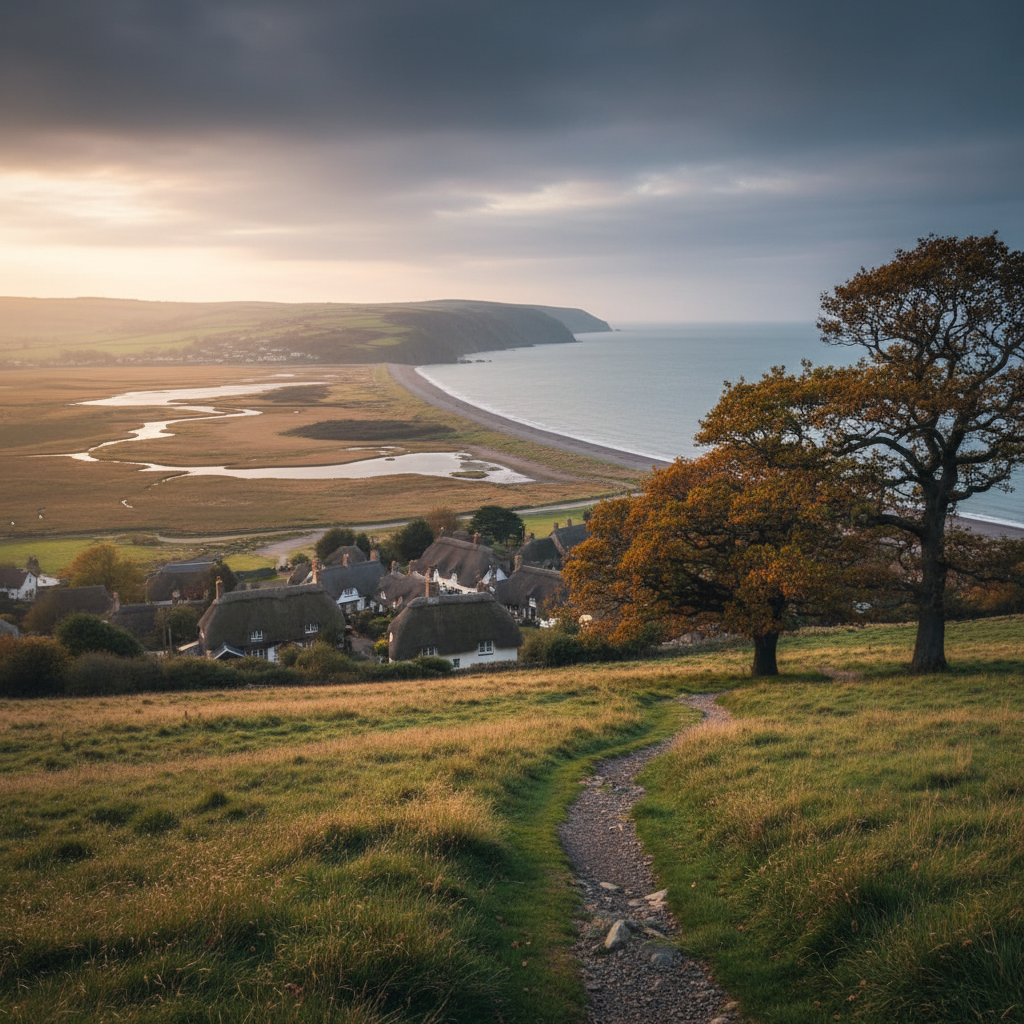
Bossington offers a softer Exmoor coastal stop, with village character, marshland, beach and good walking links.
Heddon Valley
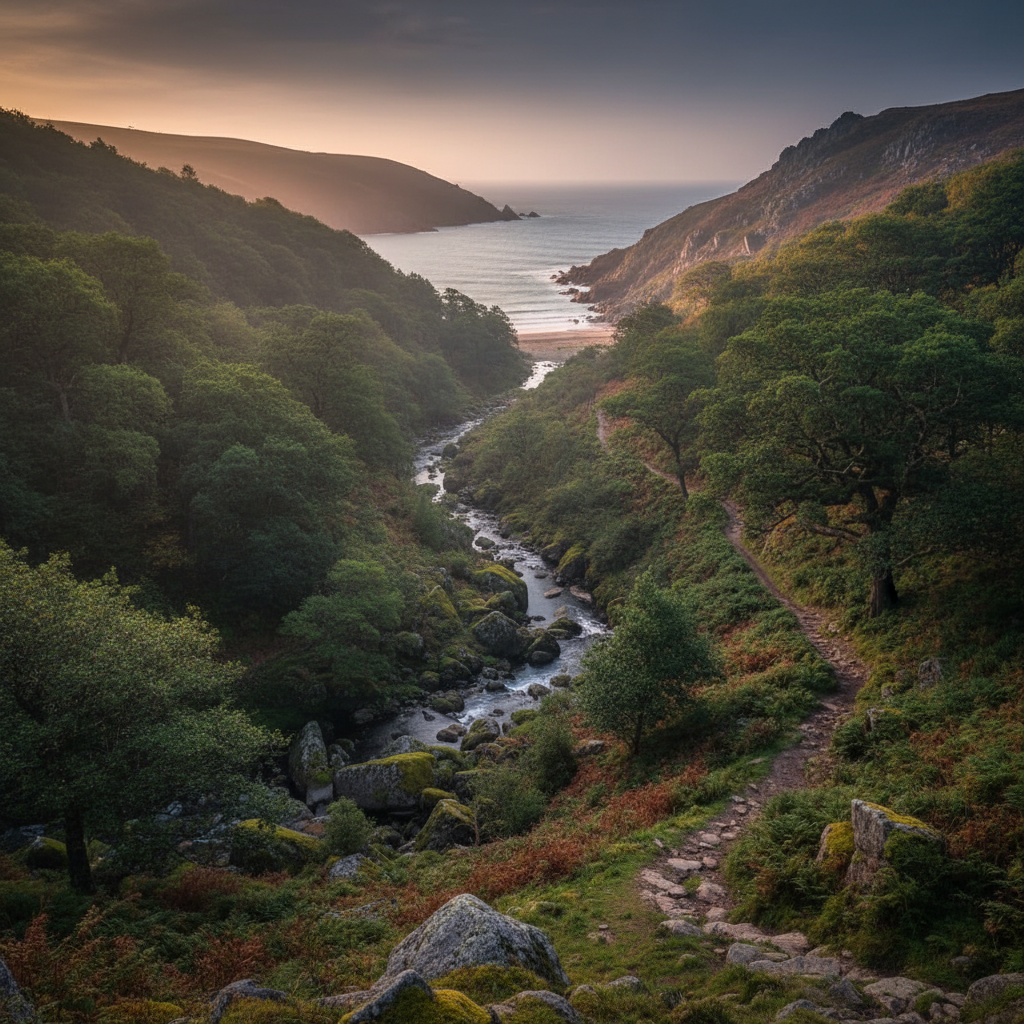
Heddon Valley is one of Exmoor’s best coast-and-combe places, combining woodland, river and sea-edge walking.
Porlock Weir
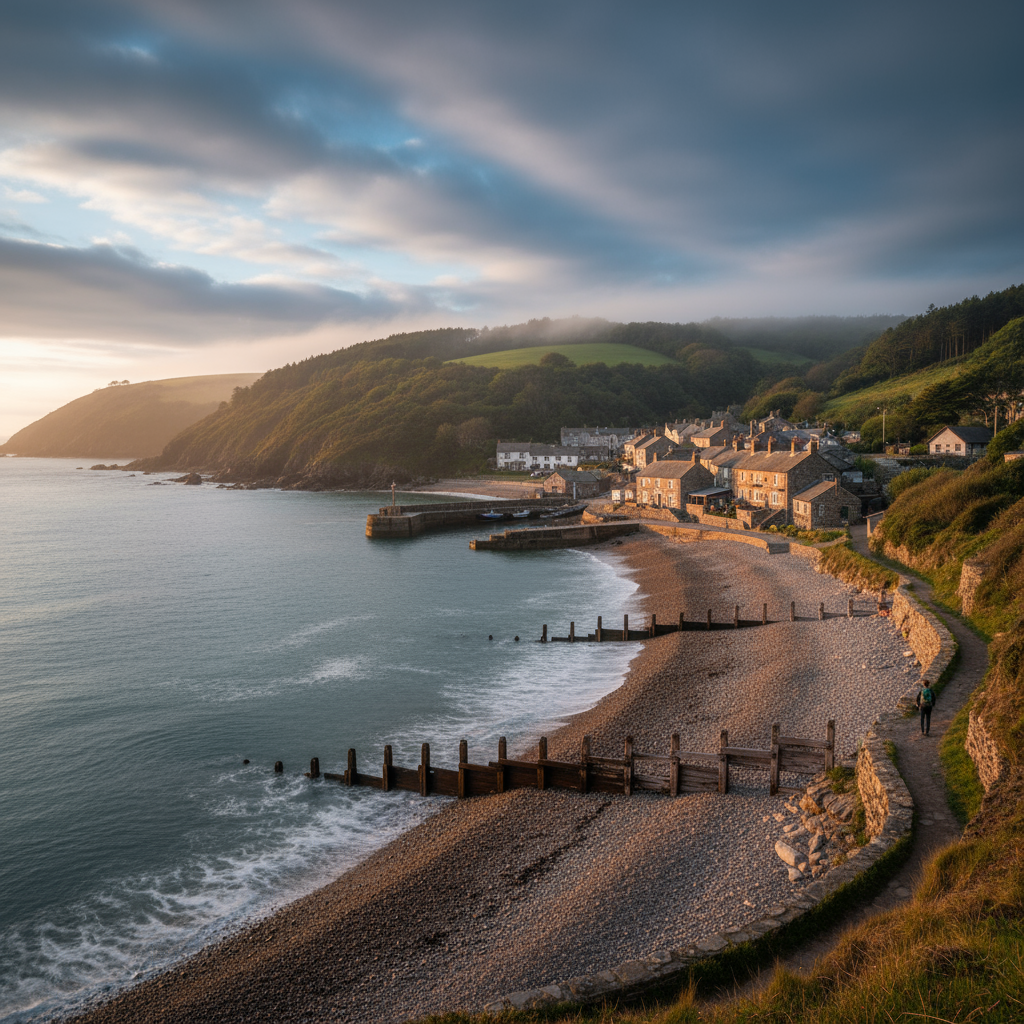
Porlock Weir adds harbour character, coastal walking and one of Exmoor’s most atmospheric sea-edge stops.
Join the 3moors Community for path conditions & local tips.
JoinWhy this place matters
Watchet — in its own right
What Watchet leaves you with, more than any single sight, is a sense of a place that has been earning its living from the sea for a very long time. The fishing heritage here is not reconstructed or presented as a visitor experience: it is embedded in the structure of the harbour, in the names above the older shopfronts, in the way the quay is built to work rather than to be admired. The boats that still use the harbour are not there for atmosphere. They are there because this has always been what this place does. That continuity matters. In a landscape where many harbours have completed the transition from working port to leisure marina, Watchet retains a functional integrity that is increasingly uncommon on this coast. It is not frozen in any particular era. It is simply still doing what it was built to do, with the tides coming and going as they always have, and the channel beyond the harbour wall as wide and indifferent as ever.