History
Moonlight & Mackerel Skies: The Smugglers’ South West
Hidden coves, coaching inns and the truth behind the South West’s smuggling legends.
From Prussia Cove to Exmoor’s wooded combes, this guide explores the real history of smuggling in the South West — and the places you can still walk today.
Quiet coves. Cut steps in the rock. Moorland inns that still feel like they’re keeping secrets.
Smuggling shaped the South West for centuries.
From Cornwall’s hidden coves to Exmoor’s moonlit combes, these landscapes were more than beautiful, they were useful. The coastline and inland moorland tracks formed part of a shadow network where tea, silk, tobacco, brandy and rum were moved by night.
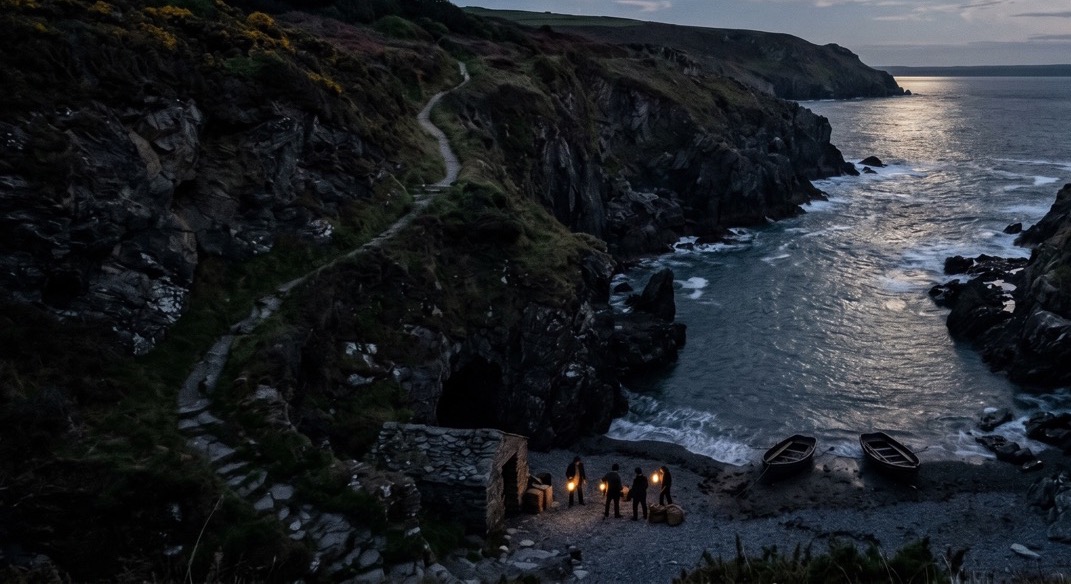
Boats slipped into narrow inlets under darkness.
Barrels were hauled ashore by lantern light.
Then the goods moved inland, through wooded valleys, over bleak ridges, and into villages where questions were not always asked.
The stories remain.
Some are true.
Some have grown taller with every telling.
And in places where moonlight catches sea mist and mackerel skies ripple overhead, it’s easy to understand why the myths survive.
At Prussia Cove, the legacy feels almost tangible. John Carter, the infamous “King of Prussia”, turned this cluster of hidden coves into a smuggling machine. Rock-cut steps still lead down toward the sea. Cart ruts are worn deep into the stone. Narrow landing places hide between the rocks where cargo once changed hands in silence.
Further east, Polperro tells a different story. Here, smuggling was less chaos and more commerce. Zephaniah Job, the so-called “Smugglers’ Banker,” kept ledgers, tracked routes and managed risk. Walking the harbour today, with its tight lanes and secret corners, it’s easy to imagine whispered deals behind shuttered doors.
In Beer and Branscombe, the cliffs themselves became accomplices. Quarry caves, cliff adits and hidden chambers gave cover to men like Jack Rattenbury, whose memoirs remain one of the most vivid records of the trade.
Then there is Exmoor.
The route from Porlock Weir to Culbone Church passes through wooded combes where moonlight barely touches the ground. Here, concealment mattered more than speed. Goods disappeared inland beneath trees while coastguards watched from the high points.
And on the wild shipwreck coast near Hartland and Clovelly, the sea itself did most of the work.
Which brings us to one of the South West’s darkest legends.
Were there really “wreckers”?
Stories tell of false lanterns hung on cliffs to lure ships onto rocks. Modern historians are less certain. Most wrecks were caused by weather, reefs and cruel tides. Coastal communities often salvaged cargo, but hard evidence of deliberate deception is thin.
Books like Jamaica Inn made the myth famous.
The truth is less dramatic.
And perhaps far more human.
Today, these routes can still be walked.
But the dangers remain.
Tides swallow coves.
Cliff edges crumble.
Mist rolls in quickly.
And the weather, just as it did centuries ago, can turn a calm path into something far less forgiving.
That is why these stories matter.
They are not just tales.
They are written into the land.
The coves shaped the stories.
The moors shaped the routes.
The weather shaped the risks.
And when you stand in these places at dusk, hearing gulls over dark water or wind across moor grass, the old South West doesn’t feel very far away.
3moors Editorial
Keith