Tintagel is one of those places where the walk is part of the story. You do not simply arrive, look around, and leave. You climb, cross, descend, climb again, pause for breath, look out across the Atlantic, then realise the place has already started working on you.
I visited with my brother and his family, and even before the history properly kicked in, the landscape had taken over. The cliffs were high, properly high, and the views out across the sea were the sort that make you pause without really meaning to. Even on a grey day, Tintagel had that big Atlantic feeling: wind, height, stone and open water all around you. It was not a sunny day, but in some ways that suited Tintagel. The breeze kept us cool, the sky had that Cornish grey-blue mood, and the sea below gave the whole place a sense of scale.
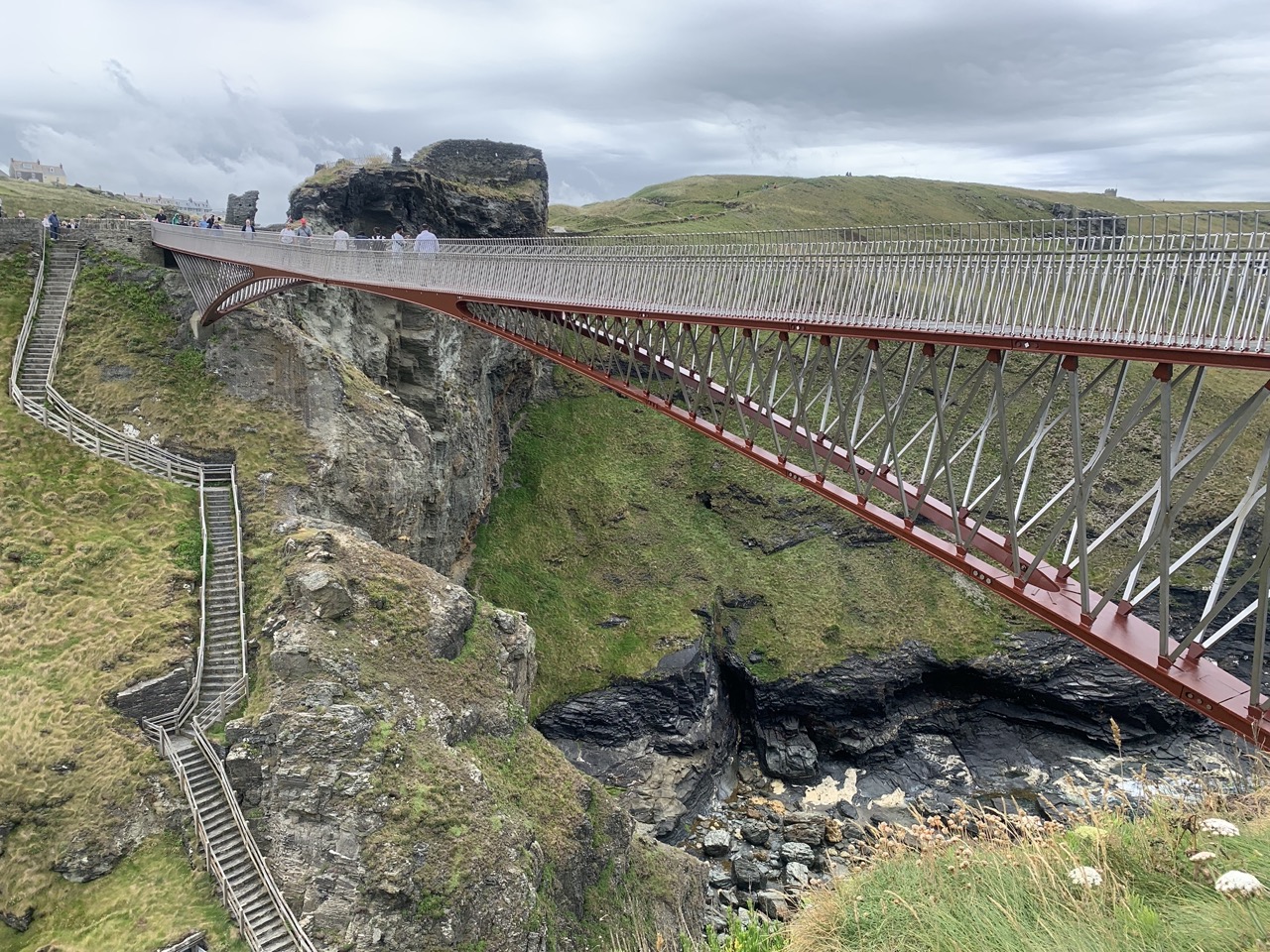
The bridge was one of the highlights. Walking across it feels modern, but it also makes you think about how separated the castle site once was. You are moving between two halves of a place that has been shaped by weather, erosion, ambition and legend. It is a clever piece of access, but it still leaves you very aware of the drop, the wind, and the rawness of the coast.
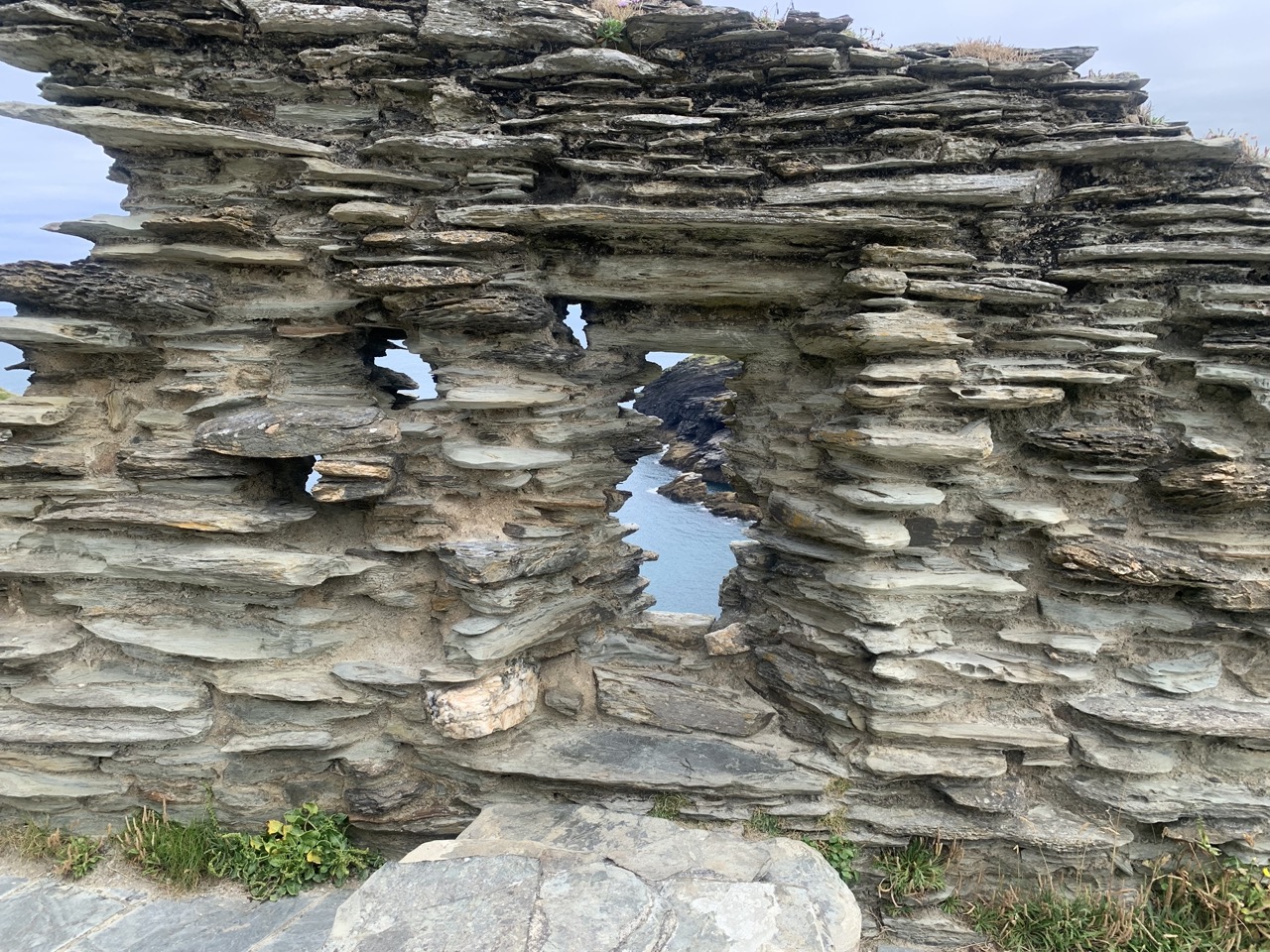
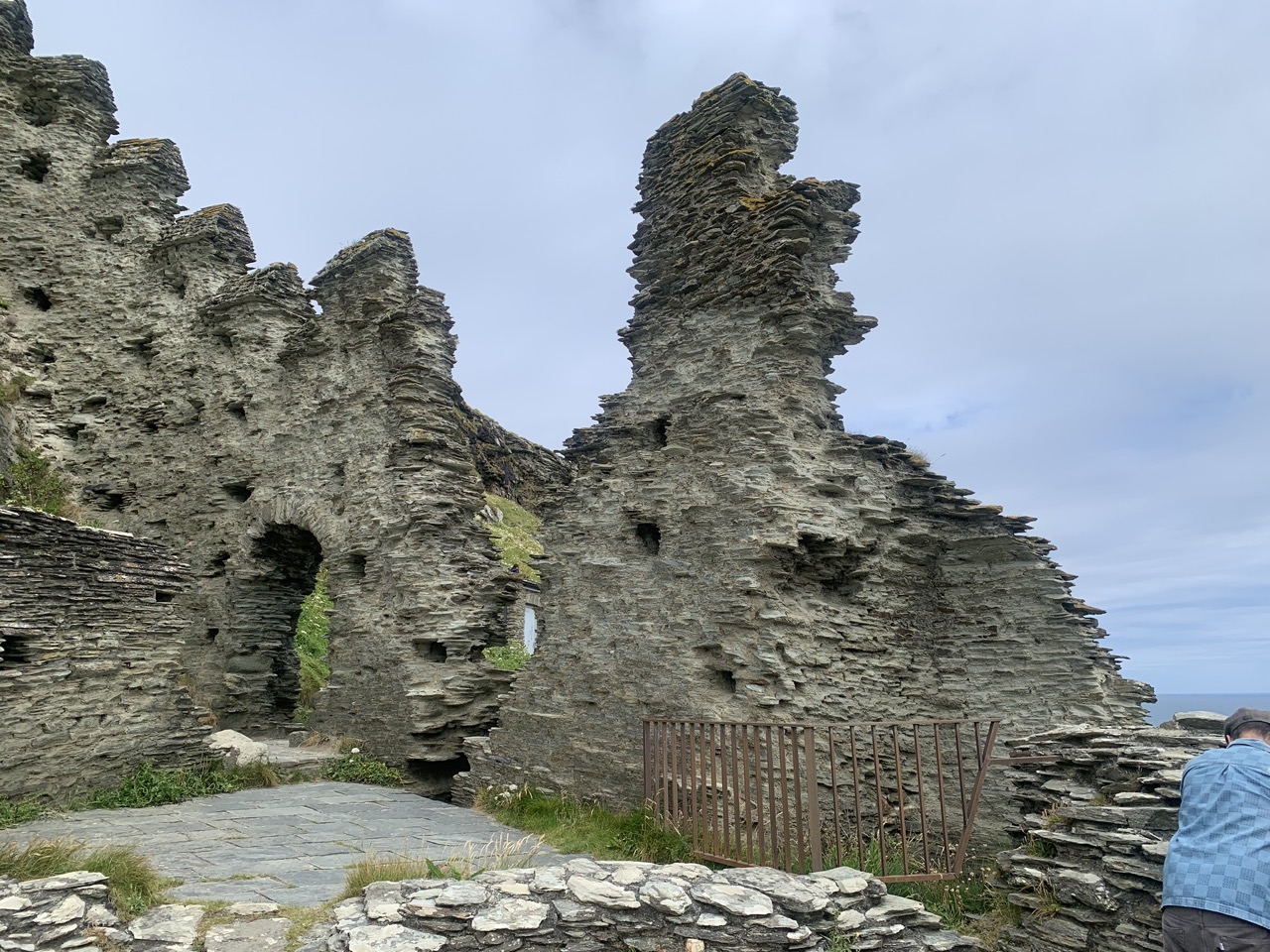
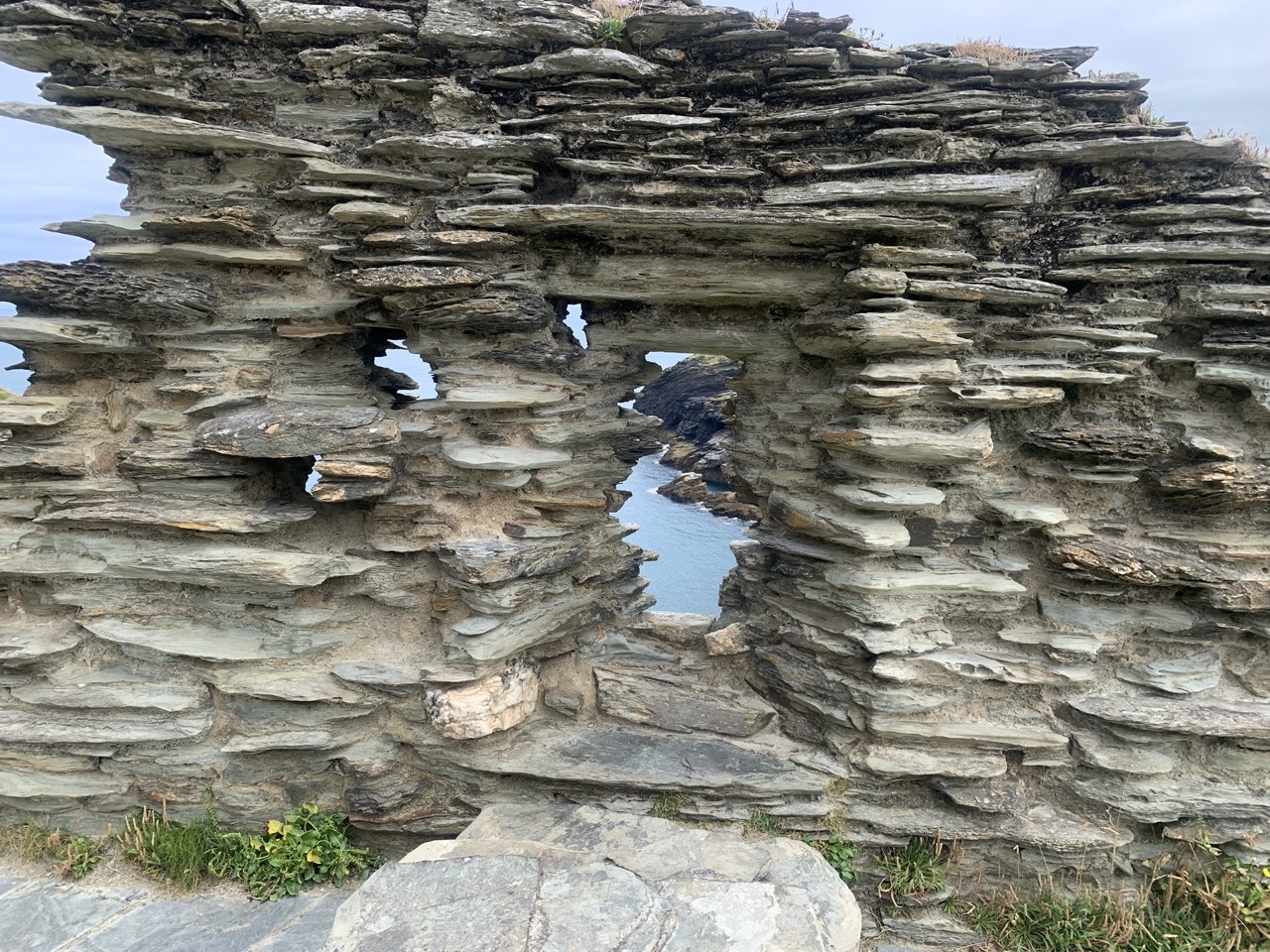
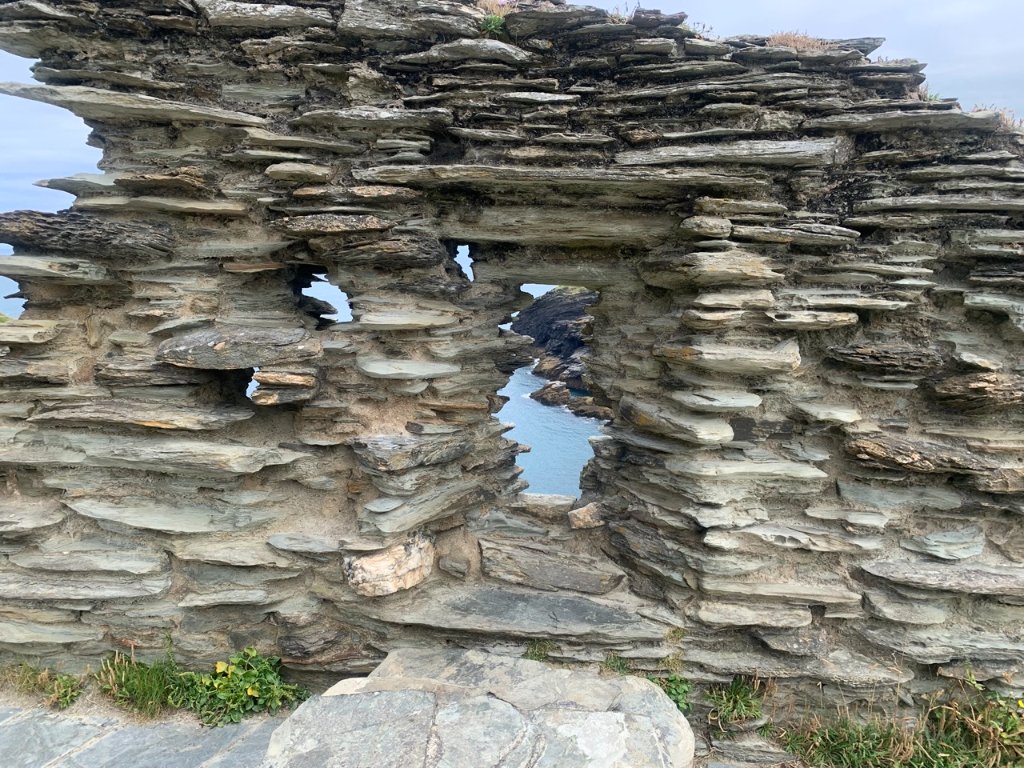
Once inside the ruins, the place becomes more than just a dramatic viewpoint. There are walls, passages, foundations, remains of buildings, and the sense of an early medieval settlement clinging to the edge of the land. Tintagel is often wrapped in King Arthur, Merlin and legend, but there is real history here too. This was an important site in the centuries after Roman Britain, associated with the rulers of Dumnonia, the old kingdom that covered much of Cornwall and Devon.
The remains of the Dark Age settlement are especially interesting. The huts, chapel and early structures help you imagine a community living and working here long before the later medieval castle became part of the Arthurian story. The chapel stood out for me. There is something powerful about seeing a later chapel built on the site of an earlier one, as though each generation wanted to keep hold of the same sacred ground.
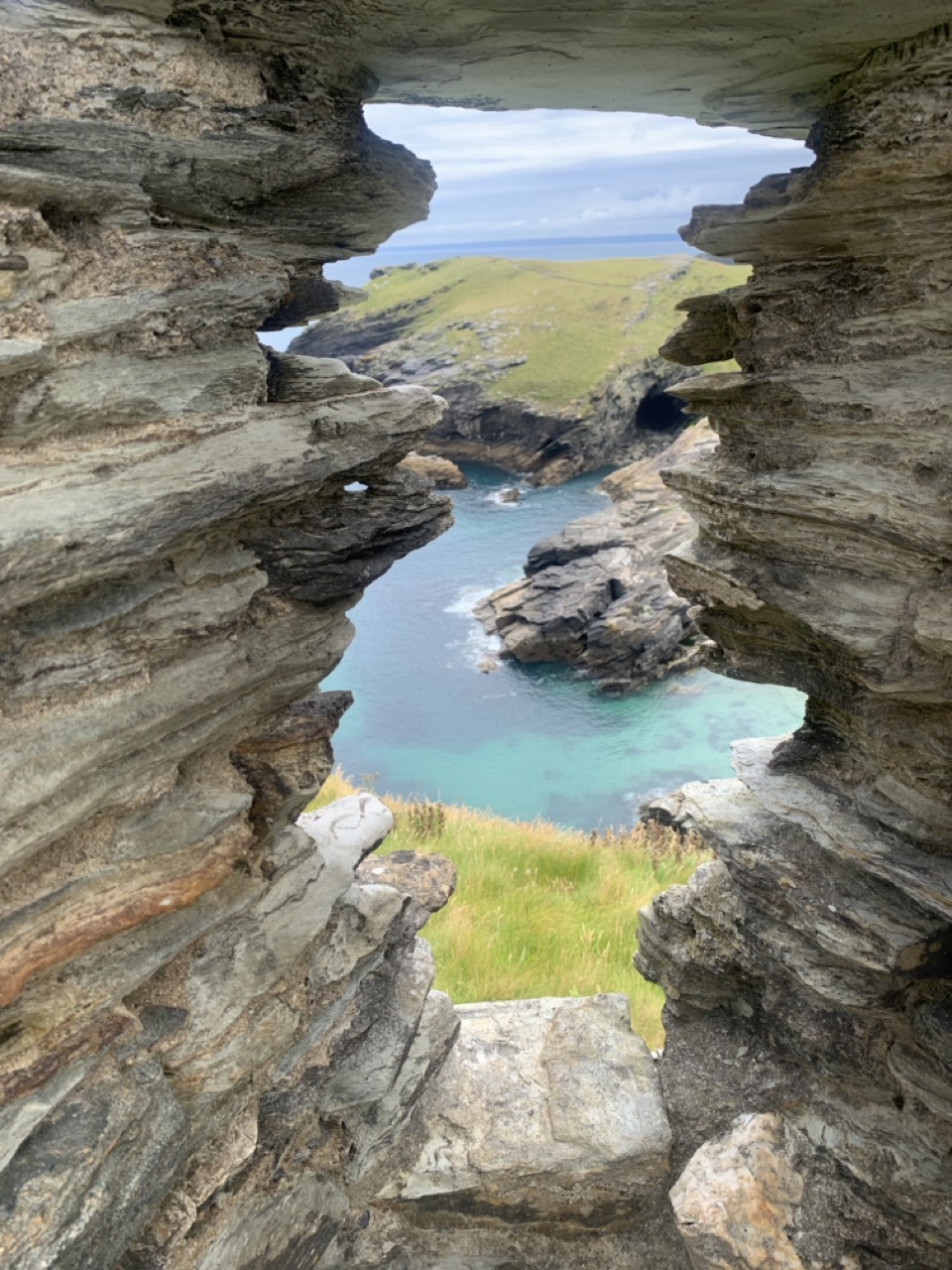
From the top, I took photographs looking down towards the beach and Merlin's Cave. That view is one of Tintagel's great moments: the ruins above, the sea below, the cave tucked into the base of the cliffs, and the whole place balanced between history and imagination. You can see why stories gathered here.
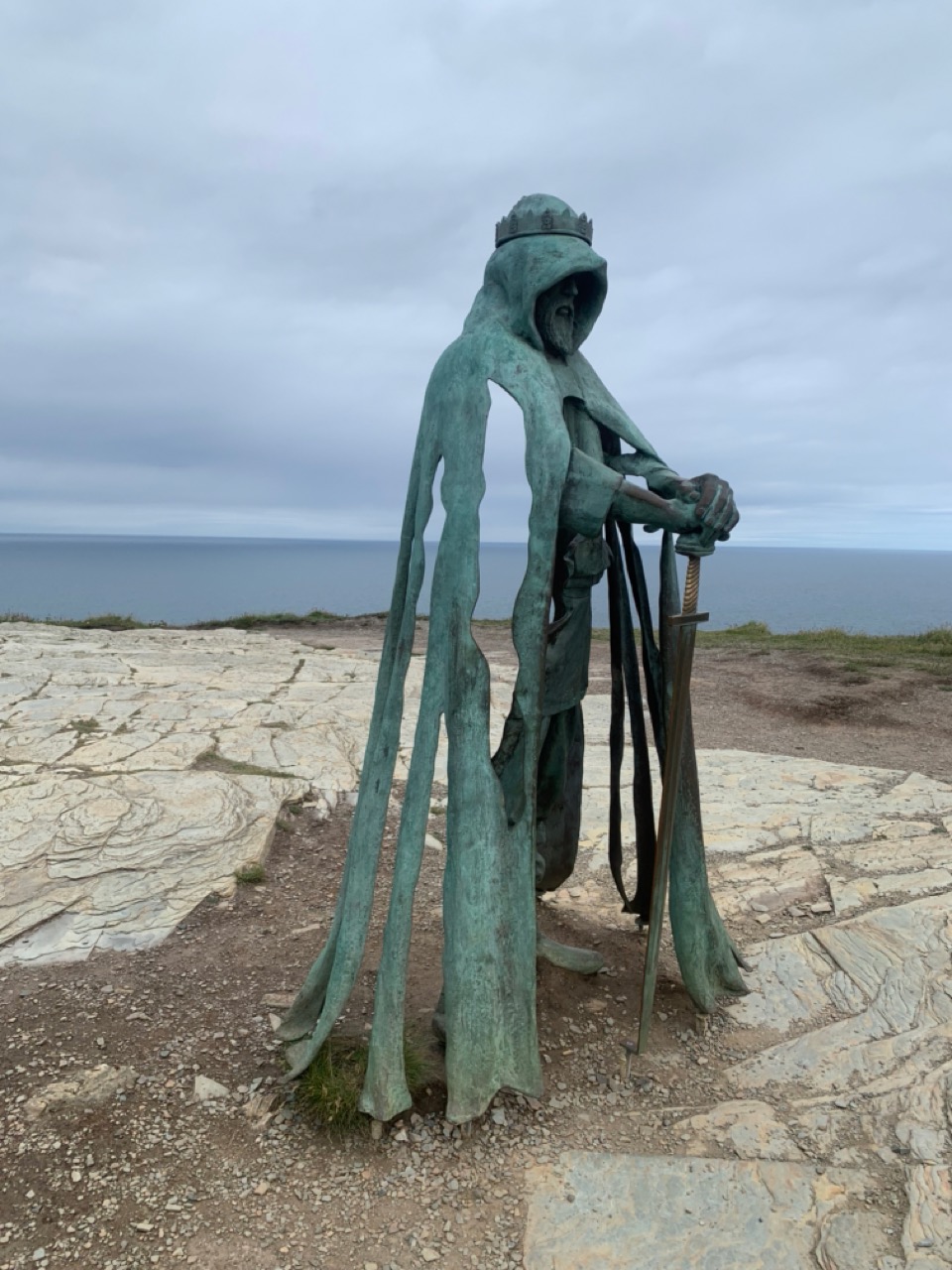
Then there is the figure on the headland, often thought of as King Arthur, though officially called Gallos. It is a striking bronze figure, crowned and holding a sword, but hollow enough that the sky and sea show through it. That makes it more interesting than a normal statue. It feels less like a person and more like a presence, part king, part ghost, part memory of the place itself.
Tintagel does that well. It never quite lets you separate fact from legend. Geoffrey of Monmouth helped fix the Arthurian connection in the 12th century, writing that Arthur was conceived at Tintagel. Later, Richard, Earl of Cornwall, built a castle here in the 13th century, partly because the place already had legendary power. So while we cannot say Arthur stood there, we can say this coastline helped shape one of Britain's greatest myths.
After exploring the ruins, the chapel, the clifftop paths and the gardens, we headed back down the steps towards the beach area. By then, the legs had done enough. Thankfully, we got the truck back up to the top, and I was not complaining.
Tintagel is not just a castle visit. It is a coastal experience: steps, cliffs, sea air, ruins, myth, family, photographs, and that feeling that the past is still half-visible in the stone. It is dramatic, slightly exhausting, deeply atmospheric, and genuinely worth the effort.
For me, it was one of those places that reminds you why Cornwall is never just scenery. It is story, weather, history and legend all piled on top of each other, and Tintagel may be one of the best examples of that anywhere on the South West coast.