
The encounter
The blonde ray is one of the larger ray species found in UK waters, including parts of the South West coast. It spends much of its life close to the seabed, where its patterned upper surface helps it blend into sand and gravel. For most visitors it remains unseen, but it is an important part of the coastal marine ecosystem.
Quick ID — at a glance
Marine lifeLook for
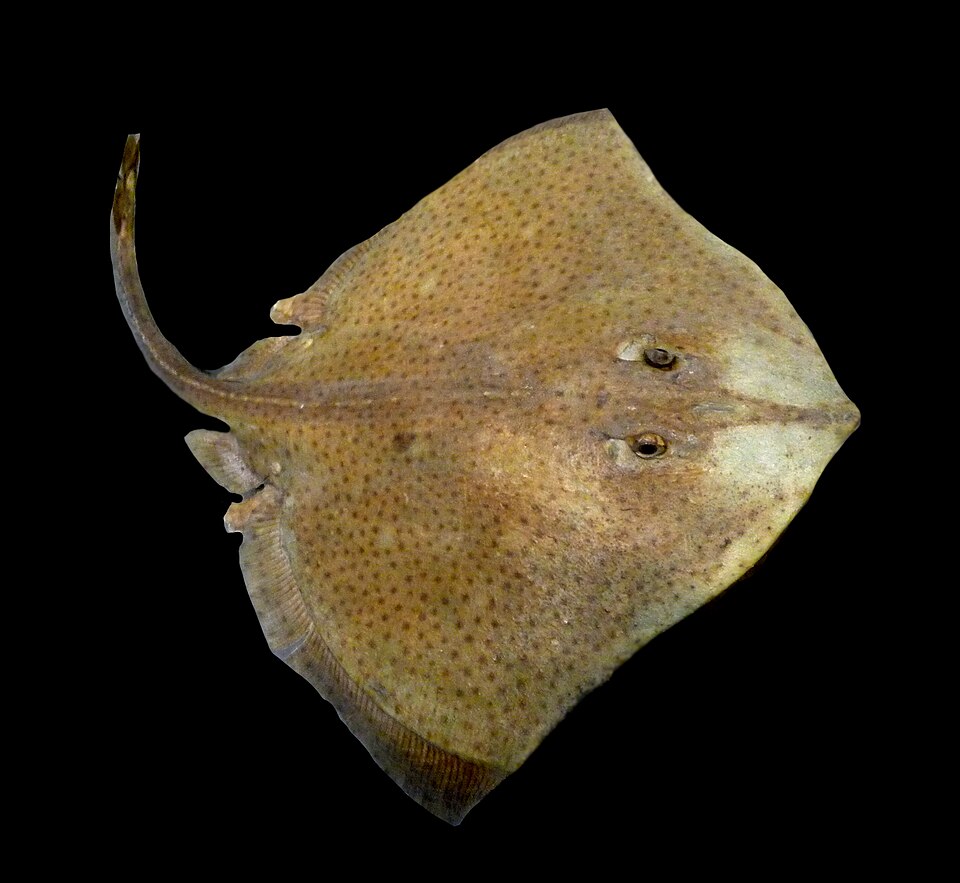
A large, flat ray with a broad diamond-shaped body, pale sandy-brown colouring and scattered darker spots
Where to look
Deeper sandy bays, offshore grounds, reef edges and mixed seabed areas around the South West coast.
Likelihood
Difficult — present in South West waters but usually hidden or offshore.
Best time of day
Daytime visibility helps, though rays may be more active in lower light.
Best months
Late spring to early autumn — best in settled sea conditions.
Your spotting mission
Watch for a large flat shape resting low on the seabed, often almost buried.
Identification guide
How to identify a Blonde Ray
A large, flat ray with a broad diamond-shaped body, pale sandy-brown colouring and scattered darker spots. It has a powerful, rounded shape compared with smaller, narrower rays.
Best time to see them
When to look for Blonde Ray
May, Jun, Jul, Aug, Sep, Oct
Best time of day: Daytime visibility helps, though rays may be more active in lower light.
Best conditions: Clear, calm water over sandy, gravelly or mixed seabeds.
Most likely to be encountered by anglers or divers over sandy and mixed seabeds.
Through the seasons
Spring
Active May
Mar · Apr · May
Summer
Peak season
Jun · Jul · Aug
Autumn
Active Sep, Oct
Sep · Oct · Nov
Winter
Not typically present
Dec · Jan · Feb
Safety & Respect
What to do if you see one
Avoid disturbing resting rays. If caught while fishing, handle gently and release promptly.
Community sightings
Have you spotted one?
Seen one of these on Dartmoor, Exmoor or Bodmin Moor?
Tell the 3moors community where and when you saw it.
Recent sightings
No sightings recorded yet — be the first!
Printable field notes
A reference sheet for this species — identification, best months, habitat and spotting tips.
Further reading
Authoritative resources
External links open in a new tab. 3moors is not responsible for third-party content.
Join the 3moors Community for path conditions & local tips.
Join