
The encounter
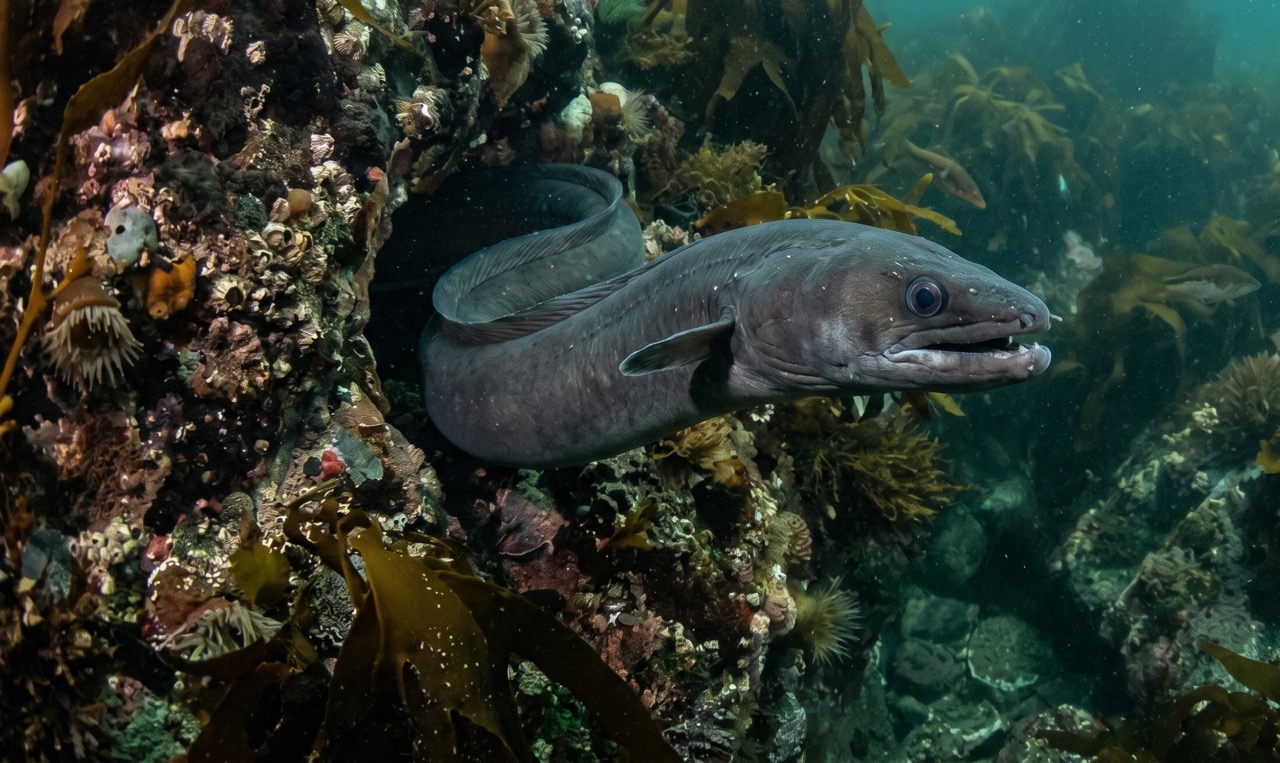
The conger eel is one of the most dramatic creatures of the South West’s underwater world. Large, powerful and secretive, it is strongly associated with wrecks, reefs and rocky holes. Divers around places such as Plymouth may encounter them peering from dark gaps in metal or stone, giving a glimpse of the wilder life hidden beneath familiar coastal waters.
Quick ID — at a glance
Marine lifeLook for
A large, thick-bodied eel with grey to dark skin, a powerful head, large mouth and continuous fin running along the back and tail
Where to look
Wrecks, reefs, rocky gullies, harbour walls and deeper coastal structures around Devon and Cornwall, including areas off Plymouth.
Likelihood
Moderate for divers in the right habitat — difficult from shore unless seen by anglers or in harbour areas.
Best time of day
Most active at night. By day, divers may see just the head showing from a hole, wreck or rocky crevice.
Best months
Late spring to early autumn — best for diving, snorkelling and coastal visibility.
Your spotting mission
Check holes, crevices and wreck openings carefully — often only the head and watchful eyes are visible.
Identification guide
How to identify a Conger Eel
A large, thick-bodied eel with grey to dark skin, a powerful head, large mouth and continuous fin running along the back and tail. Often seen partly hidden, with just the head emerging from a crevice or wreck opening.
Best time to see them
When to look for Conger Eel
May, Jun, Jul, Aug, Sep, Oct
Best time of day: Most active at night. By day, divers may see just the head showing from a hole, wreck or rocky crevice.
Best conditions: Calm, clear water around reefs, wrecks, boulder fields and harbour walls. Night dives or low-light conditions offer the best chance of activity.
Conger eels live around rocky reefs, wrecks, harbour walls and deeper coastal structures. They are present year-round but more likely to be noticed during calmer sea conditions.
Through the seasons
Spring
Active May
Mar · Apr · May
Summer
Peak season
Jun · Jul · Aug
Autumn
Active Sep, Oct
Sep · Oct · Nov
Winter
Not typically present
Dec · Jan · Feb
Safety & Respect
What to do if you see one
Do not put hands into holes or try to touch a conger eel. Give it space and observe from a safe distance.
Community sightings
Have you spotted one?
Seen one of these on Dartmoor, Exmoor or Bodmin Moor?
Tell the 3moors community where and when you saw it.
Recent sightings
No sightings recorded yet — be the first!
Printable field notes
A reference sheet for this species — identification, best months, habitat and spotting tips.
Further reading
Authoritative resources
External links open in a new tab. 3moors is not responsible for third-party content.
Join the 3moors Community for path conditions & local tips.
Join