
The encounter
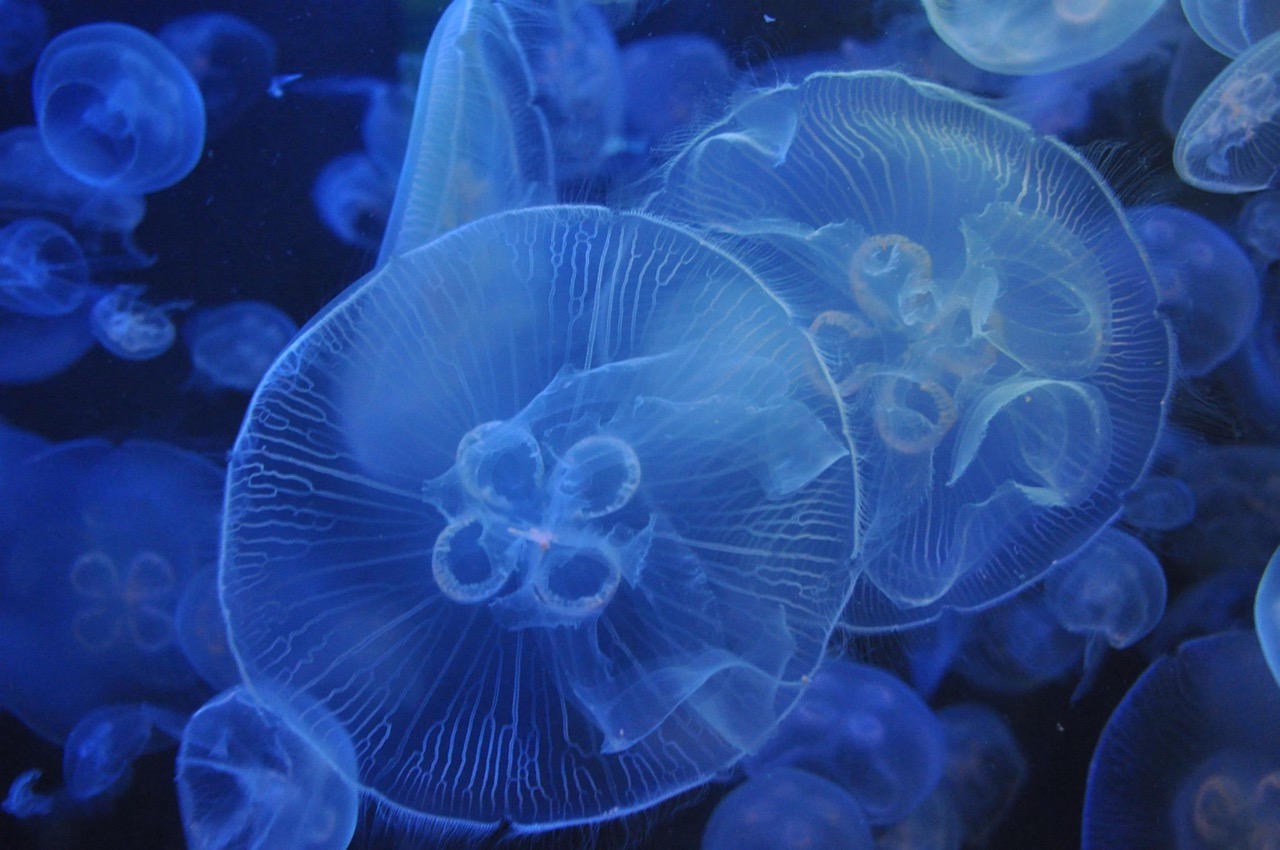
Moon jellyfish are among the most graceful and recognisable jellyfish found around the coasts of Devon and Cornwall. Their pale, almost transparent bodies pulse gently through the water, often revealing the distinctive four horseshoe-shaped rings inside the bell. In bright sunlight they can appear ghostly white or faintly blue, drifting just beneath the surface in harbours, estuaries, and sheltered coves.
Despite their delicate appearance, moon jellyfish are efficient predators, feeding on plankton, tiny fish larvae, and microscopic sea life. They do not actively hunt in the way fish do; instead, they drift with tides and currents, using their trailing tentacles to catch food as it passes. Their movement is slow and hypnotic, making them fascinating to watch from harbour walls, beaches, or boats in calm weather.
For visitors exploring the South West, sightings are most likely in warmer months when seas are calmer and plankton levels rise. Places such as Teignmouth, Plymouth Sound, and sheltered Cornish estuaries can sometimes host large blooms of moon jellyfish, turning clear water into a drifting constellation of translucent bells. While generally harmless to humans, it’s best to admire them without touching, especially if they have washed ashore.
Quick ID — at a glance
Marine lifeBest time of day
Any time in calm, clear conditions
Best months
Summer is the most reliable period, especially in calm, sheltered waters.
Best time to see them
When to look for Moon Jellyfish
May, Jun, Jul, Aug, Sep
Best time of day: Any time in calm, clear conditions
Best conditions: Spring: occasional early arrivals Summer: peak sightings in calm waters Autumn: still possible in sheltered bays Winter: less common
Look in harbours, estuaries, marinas, and calm bays on still days when the water is clear enough to see drifting shapes below the surface.
Through the seasons
Spring
Active May
Mar · Apr · May
Summer
Peak season
Jun · Jul · Aug
Autumn
Active Sep
Sep · Oct · Nov
Winter
Not typically present
Dec · Jan · Feb
Community sightings
Have you spotted one?
Seen one of these on Dartmoor, Exmoor or Bodmin Moor?
Tell the 3moors community where and when you saw it.
Recent sightings
No sightings recorded yet — be the first!
Printable field notes
A reference sheet for this species — identification, best months, habitat and spotting tips.
Further reading
Authoritative resources
External links open in a new tab. 3moors is not responsible for third-party content.
Join the 3moors Community for path conditions & local tips.
Join