The encounter
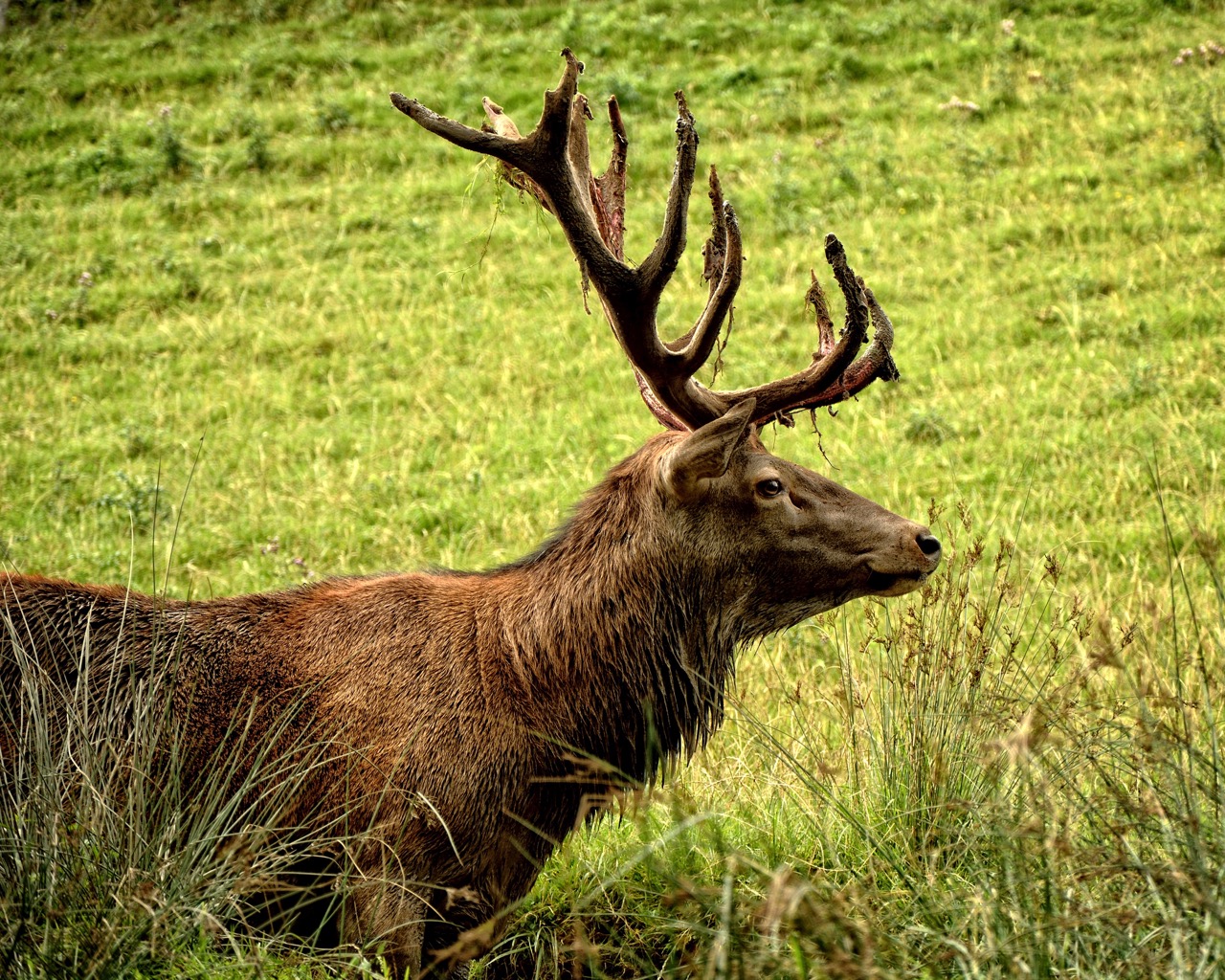
Red deer are the defining wildlife experience of Exmoor and one of the most memorable sights anywhere on the moors. Larger and more powerful than roe deer, they move with a steady confidence across open ground, valleys and wooded combes. Seeing a stag silhouetted on a ridge or hearing the echo of the autumn rut is something that stays with you long after the walk ends.
Quick ID — at a glance
MammalSize
Britain's largest native land mammal. Stags stand up to 1.4 m at the shoulder and can weigh over 200 kg. Hinds are noticeably smaller.
Look for
In summer, a rich reddish-brown coat. In winter, a thick grey-brown coat. Stags carry large, branching antlers from spring through to winter. A pale yellowish rump patch is visible at all times of year.
Colour & shape
Warm reddish-brown in summer, greyer and shaggier in winter. Calves born with white spots that fade by autumn. Rump patch is distinctively pale cream-yellow.
Sound / call
Stags roar loudly during the autumn rut — a deep, guttural bellow that carries across the moor. Hinds and calves use soft bark-like alarm calls when disturbed.
Where to look
Open moorland, valleys, and the edges of woodland on Exmoor are the best places. Look across wide combes, high ridges, and quiet valleys early or late in the day. On Dartmoor and Bodmin Moor they are less widespread, but can still be found in quieter, less disturbed areas.
Likelihood
Moderate — common on Exmoor, but distance and light can make them easy to miss.
Best time of day
Dawn and dusk
Best months
Autumn is the rutting season, when stags are most visible and vocal. Early mornings and evenings give the best chance of sightings.
Your spotting mission
Head to the open moorland and valley combes of Exmoor at first light or in the last hour before dark. During the autumn rut (late September to October) stags roar from ridgelines and hillsides — follow the sound. At other times of year scan open slopes and woodland edges from a distance, moving quietly and keeping the wind in your face. Binoculars are essential; deer will smell you long before you see them.
Identification guide
How to identify a Red Deer
The UK’s largest land mammal. Stags (males) are large and muscular with branching antlers, especially prominent from late summer into autumn. Hinds (females) are smaller and lack antlers. Coat colour is typically rich brown, turning greyer in winter, with a pale rump patch. Their size and slower, deliberate movement set them apart from roe deer.
Confused with
Roe deer (smaller, faster-moving, no large antlers) and occasionally ponies at long distance. Red deer are much larger and move with a slower, more deliberate gait.
Where to see them on the moors
Red Deer across Dartmoor, Exmoor and Bodmin Moor
Red deer are present on Dartmoor but in much smaller numbers than Exmoor. They are most likely in the northern valleys — around Sticklepath, Belstone and the upper Taw — and along the eastern fringes near Lustleigh Cleave. Dawn visits to these areas in autumn give the best chance of a sighting.
Exmoor holds the largest free-roaming population of wild red deer in England — around 3,000 animals. The Exmoor Deer Management Group estimates this is one of the most significant herds in Europe. Porlock Hill, Dunkery Beacon, Brendon Common and the Barle valley are all prime areas. The autumn rut (late September to mid-October) is unmissable.
Red deer are occasionally recorded on Bodmin Moor, particularly in the quieter northern sections near Rough Tor and Brown Willy, but sightings are infrequent. The moor lacks the extensive woodland cover that supports large established herds.
Find walks where you might spot one
Browse moorland walks that pass through habitat favoured by this species.
Browse walksBest time to see them
When to look for Red Deer
Sep, Oct, Nov
Best time of day: Dawn and dusk
Best conditions: Still, quiet conditions with soft light. Misty mornings in valleys or across open moor can be ideal, as deer feel more secure and are easier to spot as silhouettes.
Outside the rut, dawn and dusk are still the most reliable times, especially in quieter areas away from busy paths.
Through the seasons
Spring
Not typically present
Mar · Apr · May
Summer
Not typically present
Jun · Jul · Aug
Autumn
Peak season
Sep · Oct · Nov
Winter
Not typically present
Dec · Jan · Feb
Autumn rut (Sept–Oct) is the highlight, but winter can offer clear views against open landscapes, and spring brings calmer group behaviour with young deer appearing later in the season.
Behaviour & life through the year
How the Red Deer lives
During the autumn rut, stags gather groups of hinds and compete with rivals, often roaring loudly across valleys. Outside of this period, deer tend to move more quietly in small groups, feeding and resting between open ground and cover. They are alert and will move off if disturbed, but may pause to watch from a distance.
Sound & call
The deep, echoing roar of a stag during the autumn rut is one of the most distinctive wildlife sounds on Exmoor. It carries across valleys, especially in still morning or evening air.
Through the seasons
Autumn rut (Sept–Oct) is the highlight, but winter can offer clear views against open landscapes, and spring brings calmer group behaviour with young deer appearing later in the season.
Safety & Respect
What to do if you see one
Keep a safe distance, especially during the rut when stags can be unpredictable. Do not approach, and keep dogs under close control at all times.
Conservation
Conservation status
Community sightings
Have you spotted one?
Seen one of these on Dartmoor, Exmoor or Bodmin Moor?
Tell the 3moors community where and when you saw it.
Recent sightings
No sightings recorded yet — be the first!
Printable field notes
A reference sheet for this species — identification, best months, habitat and spotting tips.
Often seen alongside · Similar species
Further reading
Authoritative resources
External links open in a new tab. 3moors is not responsible for third-party content.
Join the 3moors Community for path conditions & local tips.
Join