The encounter
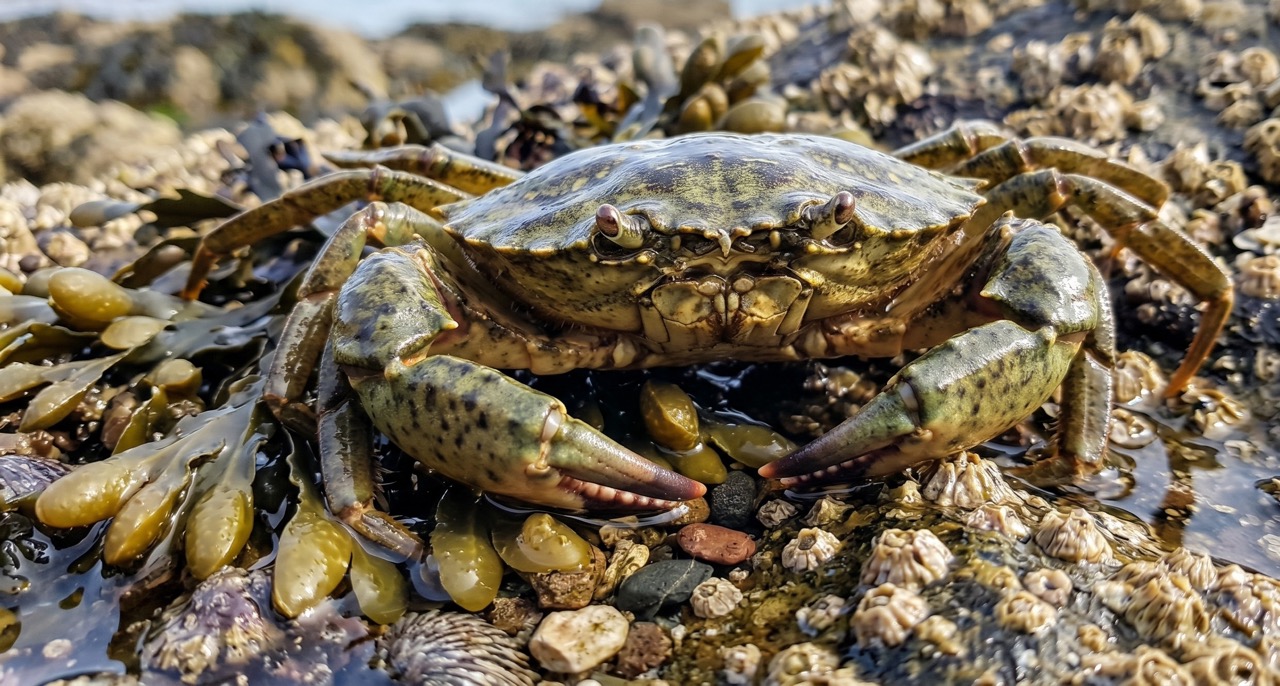
The shore crab is one of the most common and easily spotted creatures of the South West coast, found in rock pools, harbours, estuaries and beneath seaweed-covered stones. Usually greenish-brown but highly variable in colour, they can also appear reddish, mottled or almost black depending on habitat and age. Their quick sideways scuttle and habit of darting into cracks make them a favourite discovery for children exploring the shoreline. Shore crabs are opportunistic feeders, eating small shellfish, worms, dead fish and scraps of organic matter. In rock pools they are often the dominant predator, helping keep the small ecosystem in balance. Young crabs hide in weed and shallow pools, while larger adults may be found in deeper water or under larger rocks.
They are easiest to spot at low tide, especially on calm days when pools are clear and sunlight reveals movement among the stones. Around Devon and Cornwall they are abundant in places such as Wembury, Teignmouth back beach pools, and sheltered coves along the North Devon and Cornish coasts.
Quick ID — at a glance
Marine lifeBest time of day
Any daylight hours
Best months
Most active in warmer months, especially when low tides expose rock pools and shoreline habitat.
Best time to see them
When to look for Shore Crab
Apr, May, Jun, Jul, Aug, Sep, Oct
Best time of day: Any daylight hours
Best conditions: Low tide, calm weather, clear rock pools Spring: increasingly active in warming pools Summer: abundant and easy to find Autumn: still common in sheltered pools Winter: present but less active
In Rock Pools at Low Tide A common find around Devon and Cornwall shores Spring to autumn
Through the seasons
Spring
Active Apr, May
Mar · Apr · May
Summer
Peak season
Jun · Jul · Aug
Autumn
Active Sep, Oct
Sep · Oct · Nov
Winter
Not typically present
Dec · Jan · Feb
Community sightings
Have you spotted one?
Seen one of these on Dartmoor, Exmoor or Bodmin Moor?
Tell the 3moors community where and when you saw it.
Recent sightings
No sightings recorded yet — be the first!
Printable field notes
A reference sheet for this species — identification, best months, habitat and spotting tips.
Further reading
Authoritative resources
External links open in a new tab. 3moors is not responsible for third-party content.
Join the 3moors Community for path conditions & local tips.
Join