
The encounter
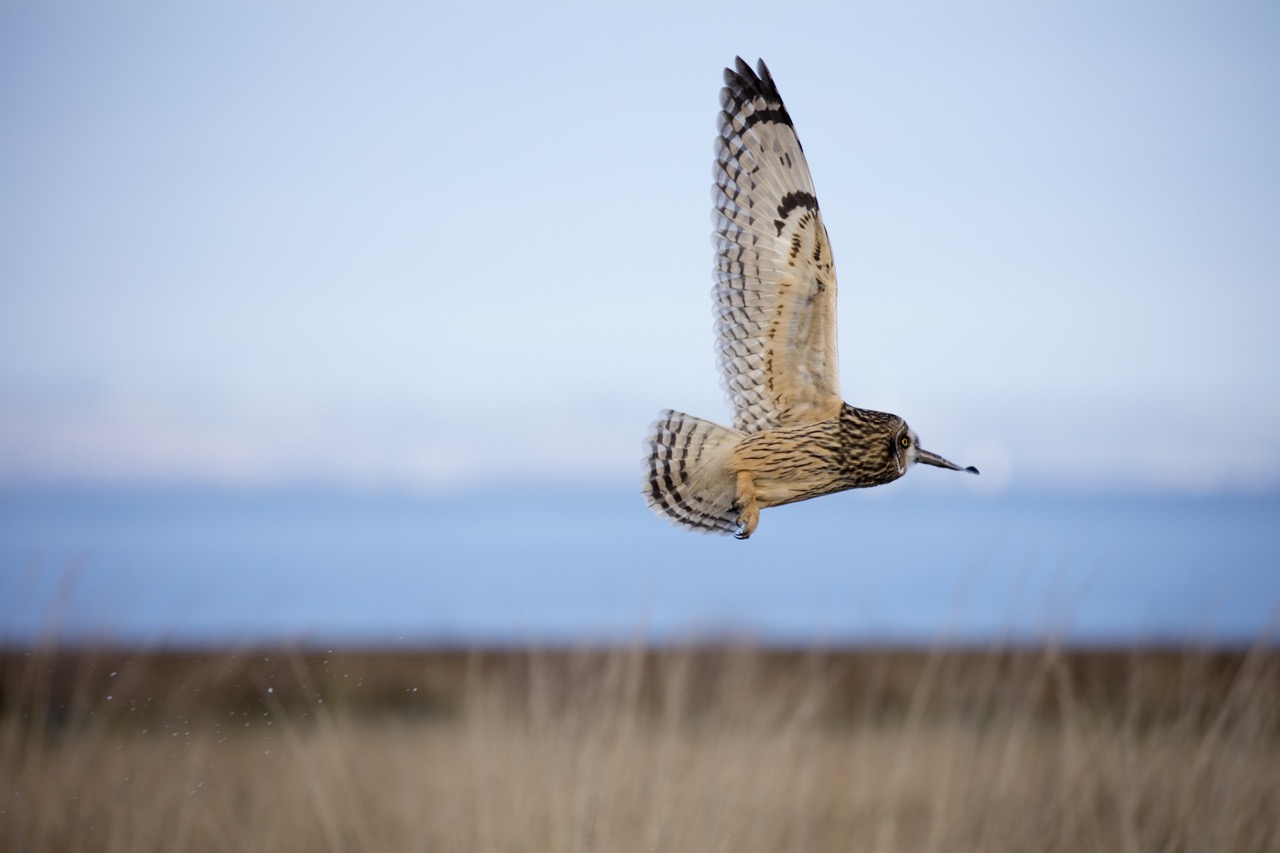
Short-eared owl on the moor The Short-eared Owl is one of the most thrilling wildlife sights on the moors, often seen quartering low over rough grassland and open heath in broad daylight. Unlike most owls, it hunts during the day as well as at dawn and dusk, using buoyant, moth-like wingbeats as it glides and twists over the land in search of voles and small mammals.
With long wings, a pale underbody and distinctive dark patches at the “wrist” of each wing, it can look almost ghostly in fading light. Its round face and bright yellow eyes can sometimes be seen clearly when it turns towards you mid-flight.
Short-eared owls favour wild, open landscapes with plenty of rough vegetation and prey, making parts of Dartmoor, Exmoor and Bodmin Moor ideal hunting ground. They often fly a set route, repeatedly sweeping the same patch of moor as they listen and watch for movement below.
In spring, males perform dramatic display flights—climbing, wing-clapping and diving to impress females and defend territory. In winter, sightings can increase as birds move south or gather in favoured hunting areas.
If you see one in golden evenin
Quick ID — at a glance
BirdBest time of day
Late afternoon and dusk
Best months
Autumn and winter often give the best chance, when birds hunt open ground in daylight and are easier to see.
Best time to see them
When to look for Short-eared Owl
Oct, Nov, Dec, Jan, Feb, Mar
Best time of day: Late afternoon and dusk
Best conditions: Still or lightly breezy afternoons with open views and quiet ground
Late afternoon into dusk is especially good, though daytime sightings are very possible in winter.
Through the seasons
Spring
Active Mar
Mar · Apr · May
Summer
Not typically present
Jun · Jul · Aug
Autumn
Active Oct, Nov
Sep · Oct · Nov
Winter
Peak season
Dec · Jan · Feb
Community sightings
Have you spotted one?
Seen one of these on Dartmoor, Exmoor or Bodmin Moor?
Tell the 3moors community where and when you saw it.
Recent sightings
No sightings recorded yet — be the first!
Printable field notes
A reference sheet for this species — identification, best months, habitat and spotting tips.
Further reading
Authoritative resources
External links open in a new tab. 3moors is not responsible for third-party content.
Join the 3moors Community for path conditions & local tips.
Join