Bodmin Moor · Lizard Peninsula
Cadgwith
A traditional fishing cove where Cornwall’s working maritime character still survives.
About
Cadgwith
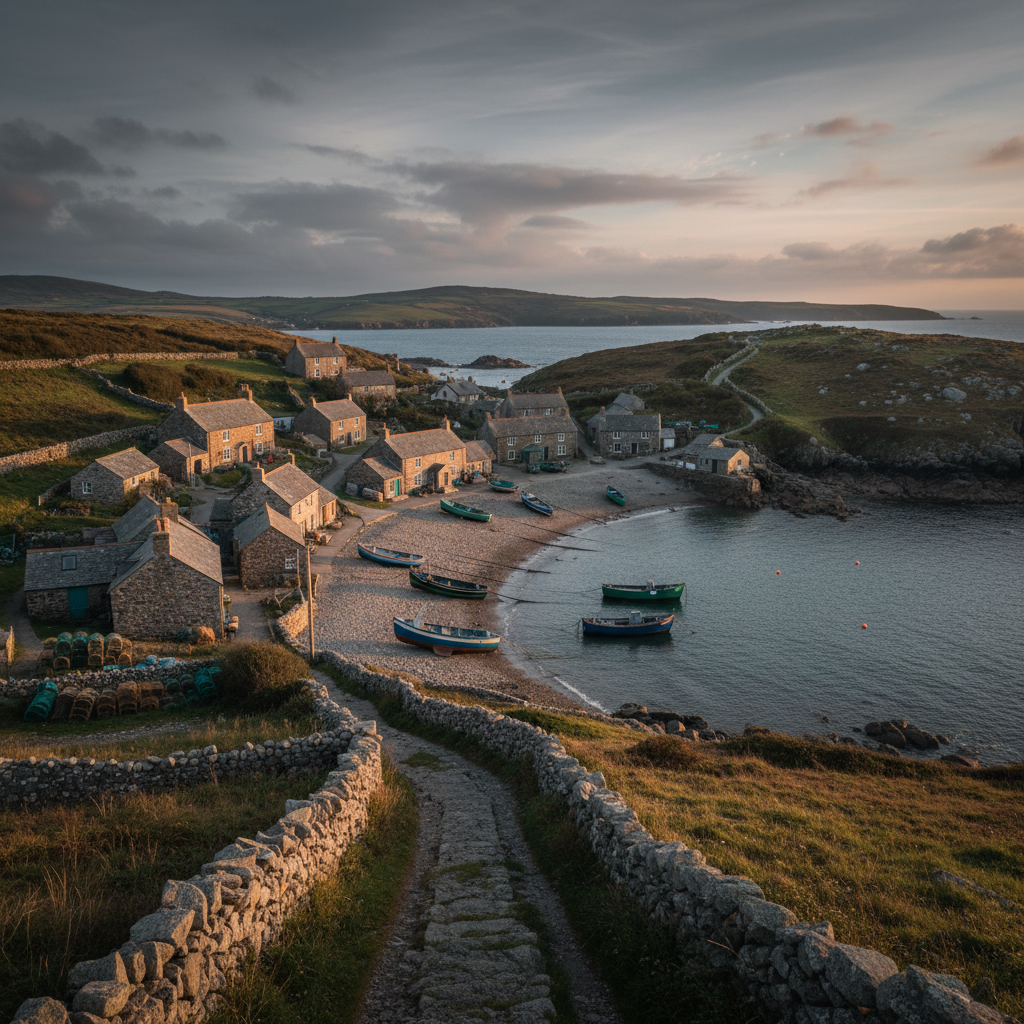
Cadgwith sits at the foot of a narrow combe on the eastern side of the Lizard Peninsula, where a pair of small shingle beaches are divided by a grassy promontory known as the Todden. It is not on the way to anywhere else. The lane that drops into it from the village of Ruan Minor is steep and single-track, and that approach alone tells you something about what you will find at the bottom: a place that has not been organised for visitors, because geography made that difficult.
The cove is working in the most literal sense. Crab pots are stacked on the foreshore. Tractors are used to haul boats clear of the tide. A handful of thatched cottages rise behind the beach in tight rows, their whitewashed walls close enough together that you could touch both sides of a passage without stretching. The Cadgwith Cove Inn sits above the smaller of the two beaches, and on the right evening it is the loudest building on the peninsula.
What makes Cadgwith coherent as a community rather than a collection of pretty buildings is the fact that the fishing has never entirely stopped. Boats still go out. Catch is still landed. The infrastructure of a working cove remains, slightly worn and entirely functional, because it is still needed. That continuity gives the place a self-possession that many Cornish villages have lost. It does not feel preserved. It feels inhabited.
People come here because they have heard, correctly, that it is quieter and less polished than the fishing villages further up the coast. They come for the walking along this particular stretch of the South West Coast Path, for the cove itself, and, if they time it right, for the singing sessions at the pub on Friday evenings. But the village does not perform for its visitors, and that restraint is precisely what makes it worth visiting.
Character
The feel of Cadgwith
The physical setting of Cadgwith is unusually compressed. The combe closes in tightly around the cove, so the village has no room to sprawl. Cottages are stacked on the slopes above the beach, connected by footpaths rather than roads, and the whole settlement can be walked from one end to the other in a few unhurried minutes. The Todden, the grassy headland between the two beaches, gives the cove its distinctive double shape and provides the only open ground within the village itself. In fine weather, people sit on it. In poor weather, it absorbs the wind and spray without complaint.
The landscape that presses against Cadgwith on all sides is not the open moorland of central Cornwall but something closer and more coastal: short clifftop grass, exposed gorse, serpentine rock in shades of dark green and grey, and the constant presence of the sea below. The Lizard's coastline here is jagged and irregular, with small stacks and inlets visible from any elevated point. The light in late afternoon, when the sun begins to drop towards the west, catches the water in the cove and the pale walls of the cottages in a way that changes quickly and is worth watching.
There is very little that is decorative about Cadgwith's built environment. The thatched roofs are practical rather than picturesque in intention, the boats are working vessels rather than ornaments, and the crab pots piled on the foreshore are there because they need to be somewhere dry. The village has the look of a place that has always been about something other than how it appears.
First-hand visit
Keith's Take
The kind of place that asks nothing of you except that you pay attention and stay out of the way of the boats.
Voices carried over the shingle before anything else came into focus: two men at the water's edge, working methodically on a rope, talking without looking up. The cove arranged itself around them as I came down the path, the Todden to the left, the pub above to the right, the boats pulled clear of the tide in a line that suggested long habit rather than any particular order. Nothing was set out for looking at. Everything was just there, in its place, being used.
Moving through Cadgwith is less a matter of navigation than of finding the grain of the place and going with it. The paths between the cottages take you where they want to go: down to the shingle, up to the headland, round the back of the Todden to the smaller beach that opens to the south. Each turn produces something the previous angle had concealed, a stack of creels against a white wall, a cat on a window ledge entirely indifferent to the view, the sound of the sea suddenly louder as the cottage walls fall away and the open clifftop appears. The scale of it is small enough that nothing feels like a destination. You are always, in some sense, already there.
What accumulated, by the time I had covered every path the cove offers and ended up back on the Todden looking at the water, was not information but something closer to a composite impression: a place with its own pace and its own preoccupations, tolerant of visitors but not organised around them. I stayed longer than I had planned. I usually do.
Keith's Take — a first-hand account from the 3moors team
Map & Getting Here
Getting to Cadgwith
What to expect
A natural way to spend time here
The lane into Cadgwith ends abruptly at a small parking area above the cove. From there, the village opens downward: a narrow path between cottage walls, the sound of the sea arriving before the water is visible, and then the shingle beach appearing at the bottom with a suddenness that still surprises, however many times you have made the descent.
At low tide, the cove smells of seaweed and rope and the faint diesel of boat engines. Gulls work the foreshore. The shingle is coarse and shifts underfoot. On the Todden, the grass is cropped short by salt wind and, occasionally, by a grazing animal that has no business being there but appears anyway. These are small details, but they accumulate into something specific: the sense that you are inside a place that has its own logic, its own daily sequence of events, into which you have arrived as a witness.
The best approach is to resist the impulse to immediately walk out along the clifftop. Spend time in the cove first. Sit on the Todden. Watch the boats. Go into the pub and order something and stay long enough to hear a proper conversation at the next table. Cadgwith rewards patience and a certain willingness to do very little for a while.
What makes it stand out
What makes Cadgwith special
Most fishing villages on the Cornish coast retain the architecture and the atmosphere of working harbours while the fishing itself has dwindled to almost nothing. Cadgwith is a partial exception. The crab and lobster fishery here has persisted at a small but genuine scale, and the physical evidence of that persists with it: winches, ropes, stacked creels, and boats that are actually used. Visitors who spend more than an hour will see the rhythm of it. That rhythm is not performed for their benefit.
The other quality that sets Cadgwith apart is harder to quantify but easier to feel: it has not been extensively renovated into uniformity. The cottages vary in condition and age. Some are immaculate
others are salt-scoured and peeling at the edges. There is no single aesthetic imposed across the cove, no consistent signage or branded experience. What you see is what has accumulated over time, which gives the place a texture and an honesty that more curated villages cannot replicate.
Don't miss
Things to see and do
Cross the Todden at low tide and find the second, quieter beach to the south, which most visitors miss entirely.
Watch the boats being hauled up the shingle on the tractor winch, a process that is methodical and worth observing from beginning to end.
Follow the coast path south towards the Devil's Frying Pan, a collapsed sea cave that opens dramatically above the water.
On a Friday evening, take a seat at the Cadgwith Cove Inn in time for the singing session, which is the kind of unironic communal music-making that does not exist in many places anymore.
Walk north along the coast path to Kennack Sands and look back at the cove from the headland to understand the shape of the landscape that contains it.
Look at the serpentine rock at close range on the clifftops south of the village: the colouring ranges from dark olive to near-black, with veining that is unlike anything on the rest of the Cornish coast.
Buy crab from the fishermen directly if the boats have been out, and eat it somewhere on the shingle without a plate.
Walks from here
Getting out from Cadgwith
The South West Coast Path runs directly through Cadgwith, and the sections in both directions from the cove are among the more rewarding stretches on the Lizard. Heading south, the path climbs quickly to clifftops above the Devil's Frying Pan, a large collapsed cave that now forms an open geo with the sea visible far below through the arch at its foot. From there, the path continues towards Landewednack and the Church Cove at Lizard Point, the southernmost tip of mainland Britain, roughly four miles in total from Cadgwith. The terrain is exposed but not technically demanding.
North of Cadgwith, the coast path follows the clifftop towards Kennack Sands, a wider and sandier beach that offers a complete contrast to the shingle cove below. The walk there and back, with time spent at Kennack, makes a comfortable half-day circuit. Those who prefer to return by a different route can cut inland through the farmland above Ruan Minor and return to Cadgwith along the lane, though the coastal return is the more interesting option.
For a shorter walk that does not require leaving the immediate area, the path that climbs behind the village to the clifftop south of the cove gives a perspective on Cadgwith from above that is worth having early in a visit, before the rest of the afternoon unfolds below.
Good to know
Before you go
Parking above the cove is limited and fills quickly on summer weekends by mid-morning. Arriving before nine or after four makes a significant difference. The lane itself is not suitable for larger vehicles, and there is no alternative approach.
The Cadgwith Cove Inn closes between lunch and the evening session, so timing matters if the pub is part of your plan. The Friday singing is informal and begins when enough people are present, which is usually sometime between eight and nine in the evening. It is not advertised as a formal event, and that is part of the point.
Across the seasons: Cadgwith in summer is busy by its own standards, which means the lane is congested, the parking area fills early, and the cove has more visitors than it has space for during the middle of the day. The village manages this without drama, but the atmosphere is diluted when the population of the cove doubles before noon. Those who want to see Cadgwith as it operates on its own terms should consider arriving early or visiting outside the core summer months. Late September and October are particularly good. The sea remains warm enough that the boats are still working, the coast path vegetation is beginning to turn, and the light on the water in the afternoons takes on a particular quality that is different from the flat brightness of August. The Todden is empty enough to sit on in peace. The pub is quieter and the conversations at the bar tend to be more interesting. Winter visits require preparation. The coast path in this section can be slippery after rain, and the exposure on the clifftops south of the cove is considerable in strong westerly winds. But the cove in winter, when the fishing continues and the village has returned entirely to itself, has a concentration and an integrity that summer cannot replicate. The thatched roofs look their best under a low grey sky.
Practical info
Practical info
Parking at Cadgwith is genuinely limited. There is a small car park above the village, but spaces fill quickly in summer and there is little room to improvise along the narrow lanes leading down to the cove. Arriving early in the morning or later in the afternoon significantly improves your chances. Do not expect to park close to the water.
A pub (the Cadgwith Cove Inn) and a small beach café serving drinks and light food are present in the village, though opening hours vary by season and it is worth checking ahead in winter or early spring. There are no public toilets that can be reliably counted on year-round. Bring what you need, particularly if you are planning to walk beyond the village itself.
The lanes into Cadgwith are steep and narrow, and the descent to the cove itself is on uneven ground. Wet weather makes the paths noticeably slippery, particularly the stepped sections near the beach. Sturdy footwear is advisable even for a short visit. Those continuing onto the South West Coast Path should be prepared for exposed clifftop terrain with significant ascents on either side of the village.
varies
Explore nearby
Places nearby
Boscastle
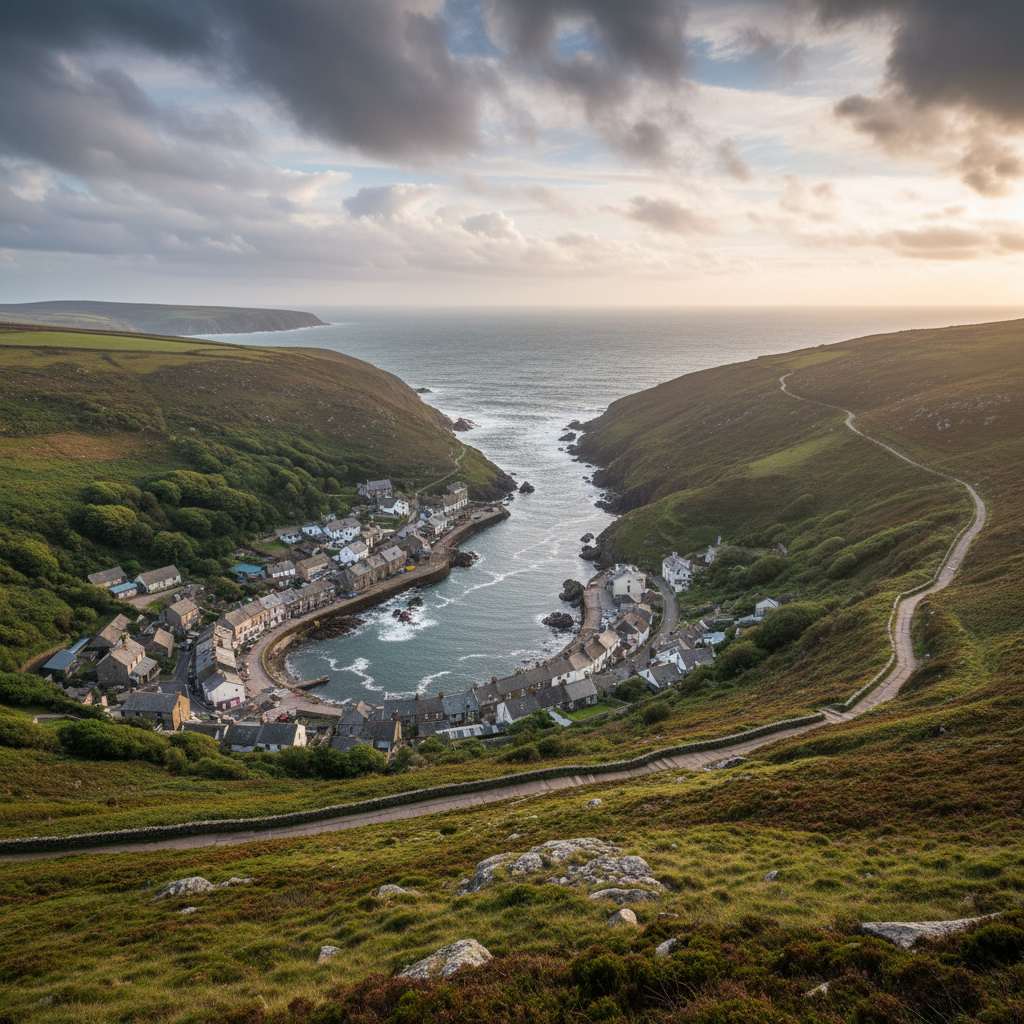
Boscastle adds harbour, folklore, geology and coast path potential to the 3moors place network.
Bossiney Cove
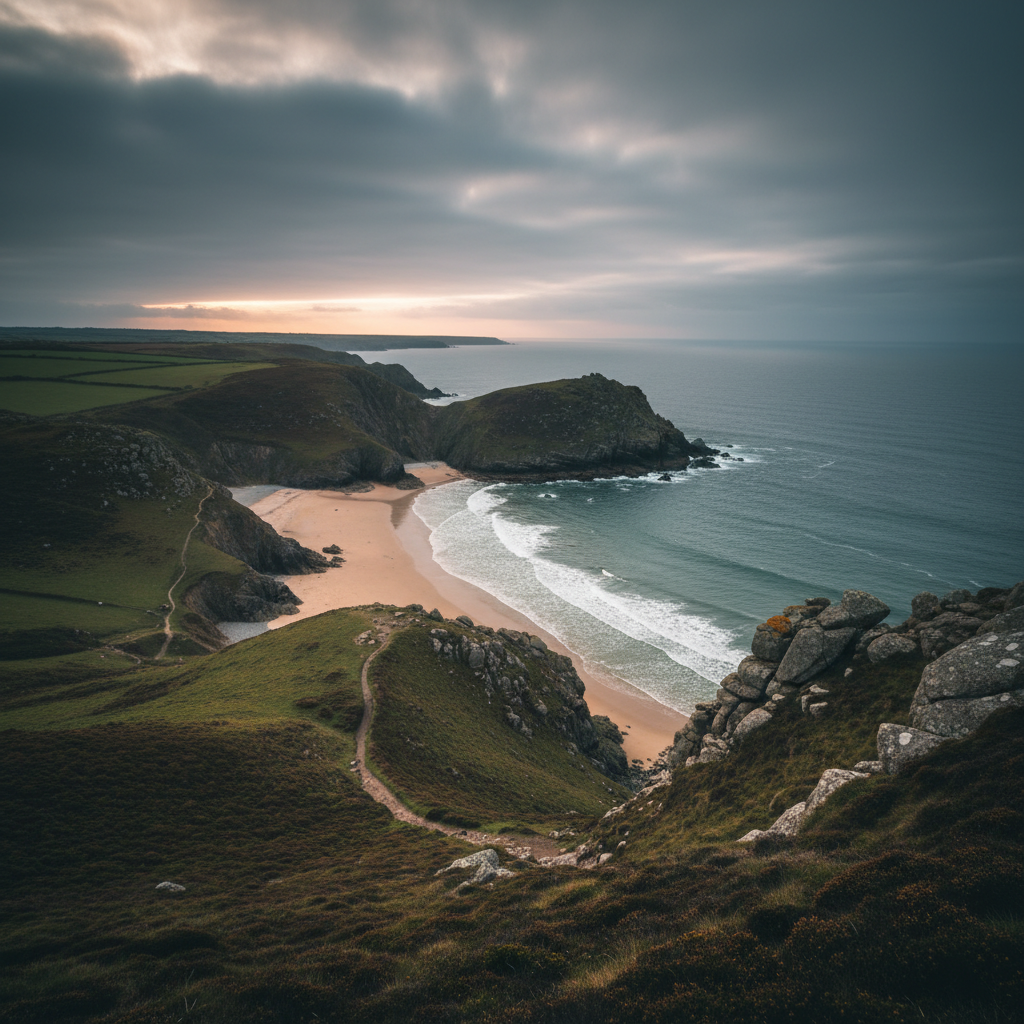
Bossiney Cove brings a wilder, less polished coastal note to the Bodmin-side 3moors map.
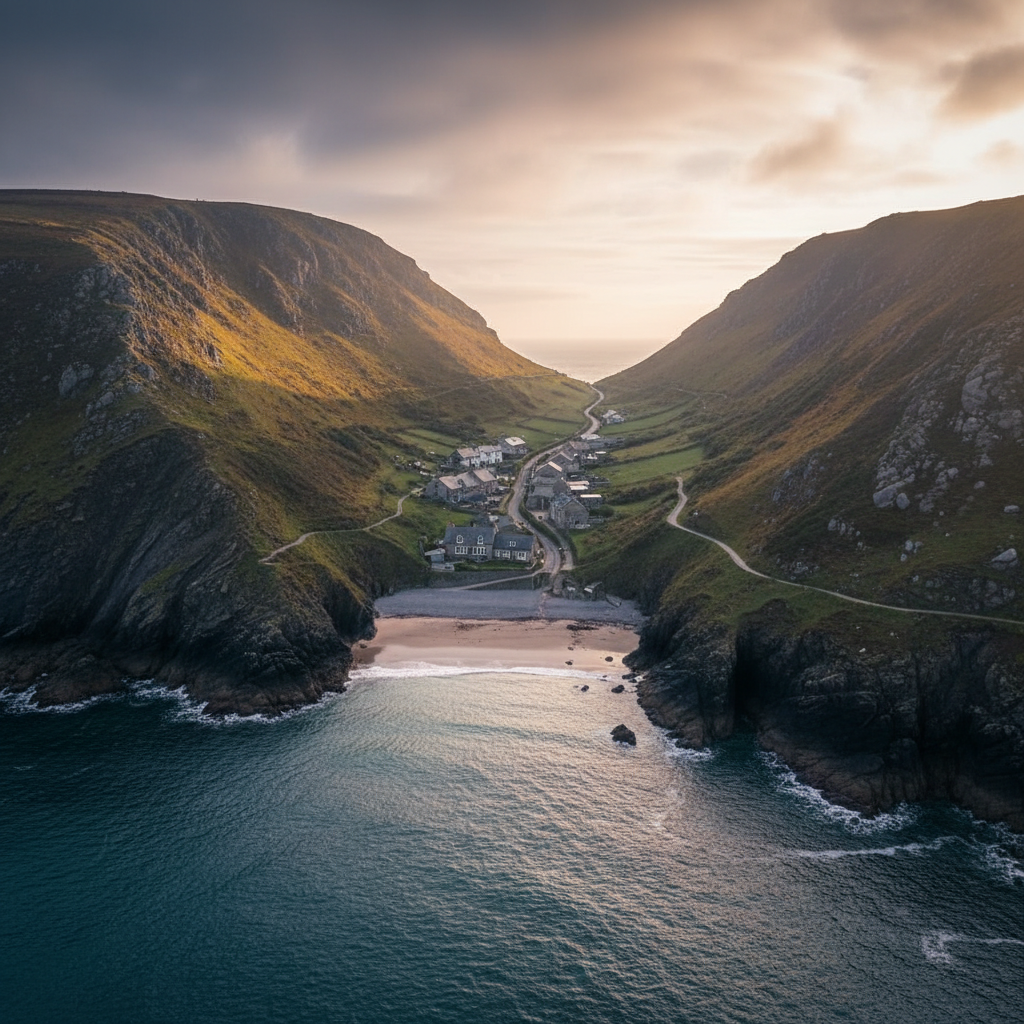
Crackington Haven
Crackington Haven works well as a quieter North Cornwall coastal place with strong walking and geology appeal.
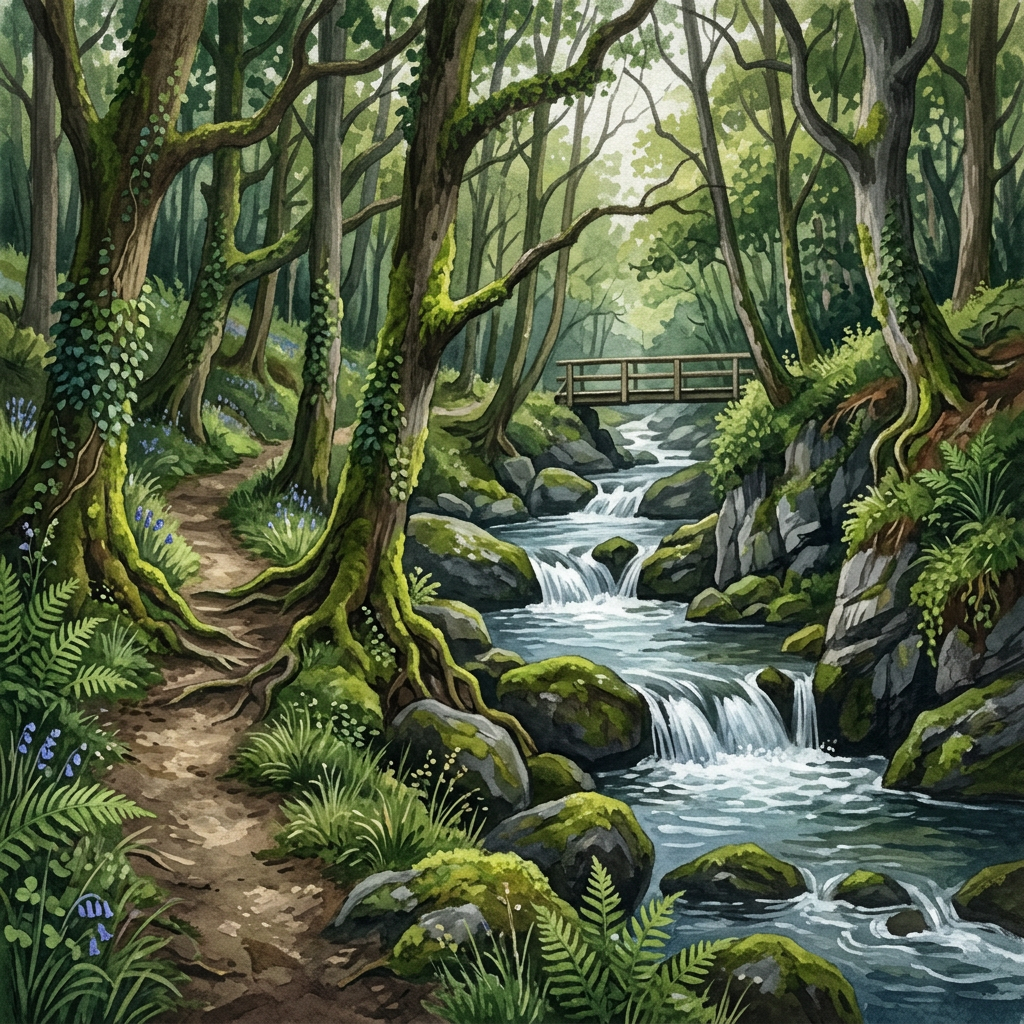
Golitha Falls
Golitha Falls offers a different side of Bodmin Moor — river, woodland and easier walking in a calm but atmospheric setting.
Join the 3moors Community for path conditions & local tips.
JoinWhy this place matters
Cadgwith — in its own right
There is a certain kind of Cornish village that has learned to be its own postcard. Cadgwith has not learned this, or has declined to. The fishermen who haul their pots and stack their creels on the foreshore are not doing so as a living museum exhibit. The singers in the pub on Friday evenings are not performing for the visitors. The local character here is not a curated version of itself for outside consumption but something that has simply continued, with the particular stubbornness that isolation and a genuine working livelihood tend to produce. What Cadgwith leaves you with, more than any specific view or walk, is a reminder that some places still have an inside. Not unfriendly, not unwelcoming, but possessed of their own gravity, their own concerns. A visitor who spends a few hours here and pays attention will catch glimpses of that interior life without ever fully entering it. That seems right. That is, in the end, what makes it worth the journey down the lane.
Explore more
Discover other places, walks, and hidden corners across Bodmin Moor.