Bodmin Moor · North Cornwall coast
Crackington Haven
A steep-sided coastal cove with dramatic cliffs and quieter atmosphere.
About
Crackington Haven
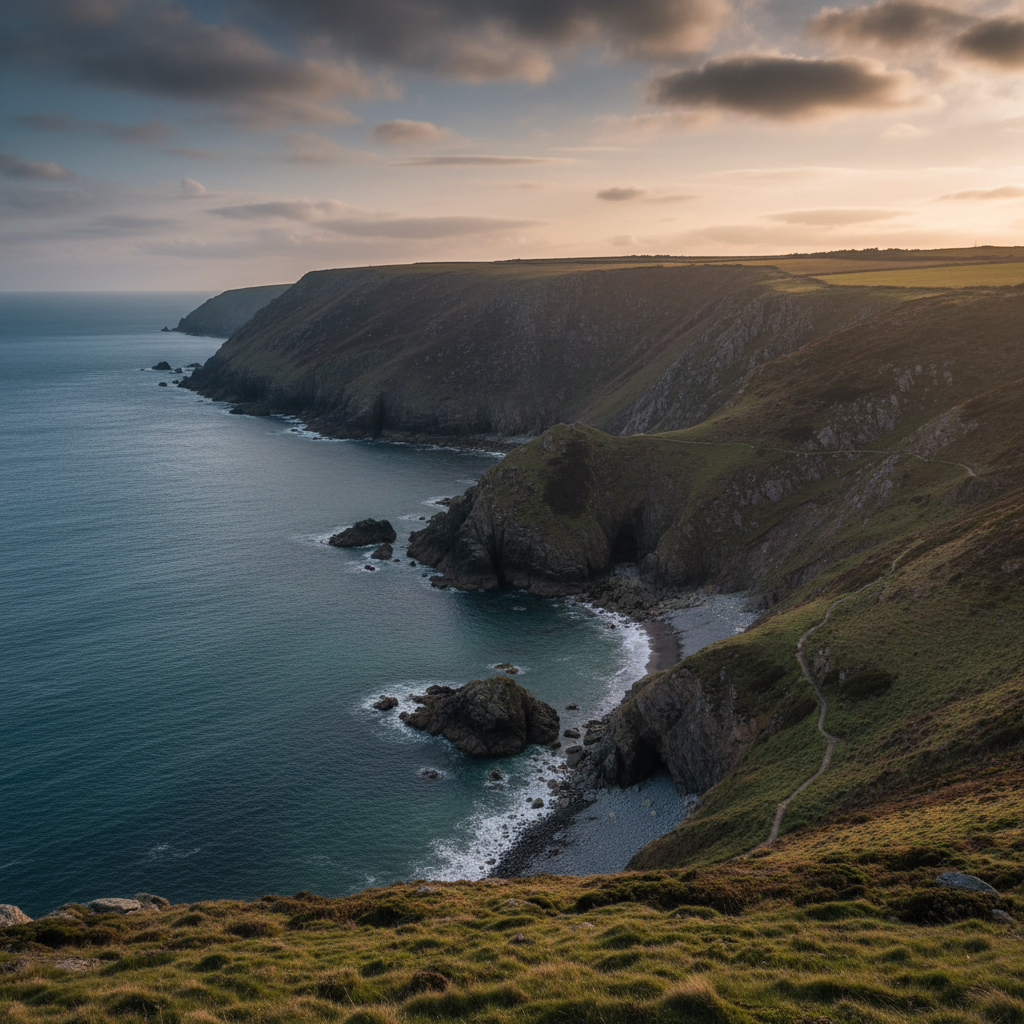
Crackington Haven sits at the foot of a deep, steep-sided valley where a small stream meets the sea on the north Cornwall coast. The cove itself is compact, flanked by some of the most contorted and dramatically folded cliff strata in the South West. These are ancient rocks, Carboniferous in age, compressed and twisted into chevron folds that geologists travel considerable distances to examine. The beach is coarse sand and grey shingle, and the surrounding cliffs rise sharply enough to keep the cove in shadow for much of the morning during winter months.
The village above the beach is modest. A pub, a small car park, a handful of cottages set back from the shore. There is no amusement arcade, no ice cream van in permanent residence, none of the commercial infrastructure that gathers around more accessible Cornish coves. That absence is not an oversight. It reflects the terrain. The roads in are narrow and winding, the valley tight, and the whole place simply does not lend itself to the machinery of mass tourism.
Wildlife is one of the better reasons to come here, and one that first-time visitors sometimes overlook in favour of the cliffs and the geology. The stretch of coast running north and south from the haven is home to peregrine falcons, which nest on the higher cliff faces and can often be seen in fast, direct flight above the headlands. In season, chough have been recorded along this stretch of the north Cornwall coast, their curved red bills and acrobatic flight distinctive against the grey rock. Seals haul out on ledges below the cliff line to the north, and the rock pools uncovered at low tide hold an unusually rich community of anemones, blennies, and small crabs.
People come to Crackington Haven to walk the cliffs, to look at the rock, and to sit on a beach that does not feel overrun. Those motivations sound modest, but the place delivers on all three with a consistency that keeps people returning.
Character
The feel of Crackington Haven
The quality that distinguishes this cove from the more visited stretches of Cornwall is how completely the season transforms it. In summer, the car park fills by mid-morning and the beach holds families and surfers. The waves here are unpredictable and can be powerful
the beach shelves in ways that make it unsuitable for inexperienced swimmers, and the surf is rarely the clean, organised swell of a south-facing beach. But by late September the numbers thin noticeably, and by October the cove begins to feel like itself again. The bracken on the valley sides turns deep rust, the light drops lower and stays golden longer in the afternoon, and the sound of the sea, always present, becomes the dominant note rather than a backdrop.
By November, visits here have a particular texture. The water turns a deeper grey-green, and on days of onshore wind the spray reaches the top of the slipway. The cliffs look rawer in winter light, the folded strata more legible without summer haze. The stream that crosses the beach runs fuller and cuts a different channel each season depending on where the shingle has been rearranged by autumn storms. That rearrangement is part of the character of the place. The beach is never quite the same twice. Pebbles appear and disappear
new exposures of rock emerge after a heavy swell
the line where sand meets shingle shifts.
There is something in that instability that suits the broader feel of the coast here. This is not a managed or groomed environment. The cliffs erode, paths occasionally close, and the sea does what it will. That resistance to tidying is exactly what gives Crackington Haven its particular atmosphere.
First-hand visit
Keith's Take
Something about the folded rock on the south cliff face made me stop longer than I had planned, working out which layer connected to which, while the fulmars circled overhead without any apparent interest in my confusion.
The shingle drags differently here than on a sandy beach. That sound, a slow, grinding draw as each wave pulls back, is the thing that stays with you after a few visits, more than the cliffs or the rock pools or the view from the headland. It is a sound that belongs to this particular combination of coarse sediment and steep foreshore, and it has a rhythm that changes subtly depending on the size of the swell. Regular visitors learn to read something from it before they have even descended to the beach.
What becomes apparent over time is that the cove has distinct daily and tidal moods that first-time visitors rarely catch. An early-morning low tide in autumn, with the sun not yet above the valley sides, shows the rock pools at their most undisturbed and the boulder field to the north fully exposed. By mid-morning the light reaches the southern cliff face and the folds in the Carboniferous shale become three-dimensional in a way they simply are not in flat, overcast light. The tide turning in the afternoon brings different wave behaviour across the shingle and moves the seabirds. None of this is dramatic. It rewards the kind of attention that takes a second or third visit to develop.
My own connection with Crackington Haven came about in a slightly different way. Back in the late 1980s, when I was running my cleaning business, my wife and I were asked to look after a bungalow in the village while the owners were working abroad. It sat high on one of the steepest parts of the hillside, looking straight out across the open sea. Reaching the front door always felt like an expedition in itself. Parking was never easy, and the climb up what seemed like a million steps could leave you wondering whether the job was worth it. Then you would turn around and see the view, and suddenly it all made sense.
The bungalow itself felt like stepping back in time. It had barely been altered for years and was packed from floor to ceiling with beautiful antiques. Dusting them all was a job and a half, requiring far more care than speed, and every room seemed to hold another collection of treasures. Once the work was finished, my wife and I would often wander down to the beach. I never came here as a holidaymaker, never came to swim or spend the day in the sun. Instead, I knew Crackington Haven in those quiet moments after work, when the beach was often empty, the air fresh, and the sound of the sea filled the cove.
Perhaps that is why the place has always stayed with me. My memories are tied less to the dramatic geology than to ordinary days spent working above the bay and walking down to the shore afterwards. Even now, after all these years, I realise there is something still unfinished about that relationship. I have visited many times, yet I have never really experienced Crackington Haven as a day out in its own right. One day, I think I owe myself the chance to come back, leave the work behind, and simply enjoy the place for what it is.
Keith's Take — a first-hand account from the 3moors team
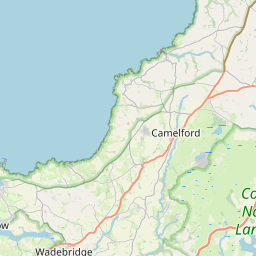
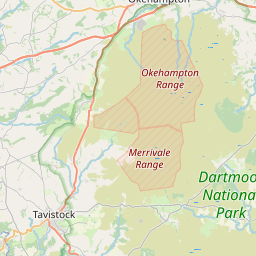
Map & Getting Here
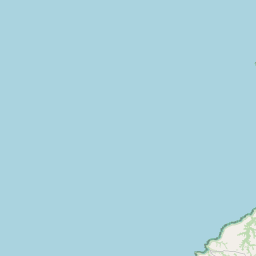
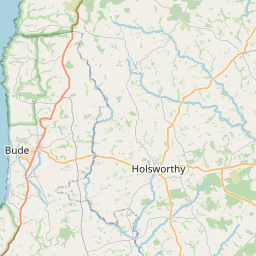
Getting to Crackington Haven



What to expect
A natural way to spend time here
The approach from the car park is brief but immediately clarifying. The valley sides close in as you descend the last few metres to the beach, and the cove reveals itself all at once rather than gradually. The beach itself runs perhaps 200 metres at low tide, with the stream crossing it towards the southern end. The shingle is noisy underfoot. At the base of the cliffs to the north, large boulders have fallen and settled into the sea, making progress along the foreshore slow and requiring some care over wet rock.
At low water, the rock pools to the north of the beach reward close attention. There is a smell here that is specific to this kind of exposed, shingle-edged shore: salt, kelp drying on warm rock, and something faintly mineral from the shales themselves. Fulmars use the updrafts above the cliff tops and can be watched gliding without apparent effort for long periods. The sound of the sea changes depending on where you stand. On the shingle it is a deep, rolling drag. Against the boulder field to the north it becomes something more percussive.
The place rewards a measured pace and a willingness to stay still. The visitors who seem to get the most from it are not those who walk the cliff path and return within the hour, but those who sit on the upper beach for a while and let the place settle around them. The light shifts here more noticeably than on a wide, south-facing bay. Patches of brightness move across the cliff face, and the water colour changes from one quarter-hour to the next.
What makes it stand out
What makes Crackington Haven special
The geology is the most specific and distinctive thing about this place. The Crackington Formation, a sequence of interbedded shales and sandstones laid down in deep water around 300 million years ago, is named after this cove. The rock has been folded and faulted under enormous pressure, and the results are visible in cross-section along the cliff faces on both sides of the cove. Standing on the beach and looking south, the folds are close enough to touch. They are not subtle. Some run in tight chevrons only a metre or two across
others sweep in broad curves across an entire cliff face. Geologists use the term ductile deformation. To anyone else, it looks like something vast pressed the rock sideways and kept pressing.
What also distinguishes Crackington Haven from similar north Cornwall coves is the absence of commercial noise. There are places on this coastline where the natural drama of the cliffs competes for attention with ice cream signs and surf hire boards. Here, the infrastructure remains minimal. That is partly a function of limited space and awkward access, but it means the physical experience of the cove has not been softened or intermediated. The rock, the water, and the cliffs are the things that occupy the eye and the mind.
Don't miss
Things to see and do
Examine the folded cliff strata at the south end of the beach at low tide, where the chevron patterns are close enough to trace with your hand.
Watch the fulmars working the updraft above the northern headland on any day with a westerly wind.
Follow the stream to where it cuts across the lower beach and note how its course varies from visit to visit.
Walk north along the coast path to the first prominent headland for an elevated view back into the cove and down the cliff face.
Check the boulder field at the base of the north cliff at low water for rock pools with an unusually high density of beadlet anemones.
Scan the cliff face to the south in the late afternoon when peregrines are more likely to be active above the nesting ledges.
Stay on the upper beach as the tide turns and watch how the wave pattern changes as more shingle is uncovered.
Look seaward from the headland in calm conditions for grey seals resting on the lower ledges below the cliff line to the north.
Walks from here
Getting out from Crackington Haven
The South West Coast Path runs through the cove and offers clear walking in both directions. Heading north, the path climbs steeply out of the valley and follows the cliff edge towards High Cliff, which at around 223 metres is among the highest points on the Cornish coast. The views from that section of path are extensive and the exposure to wind is considerable. The route continues towards Boscastle, roughly five miles from Crackington Haven, making for a full half-day walk if transport can be arranged at the far end.
South from the cove, the path climbs to the cliff top above Cambeak, a prominent rocky headland that provides a strong vantage point looking back into the cove. From there the path continues towards St Gennys and eventually Widemouth Bay, though most day walkers turn back at Cambeak or at the next cove south, which provides a natural resting point. The terrain on both stretches is exposed, with some steep ascents and descents. Paths can be muddy after rain and require proper footwear.
For those wanting something shorter, the valley immediately behind the cove can be followed upstream on foot for a mile or so, passing through mixed woodland alongside the stream. This route is sheltered and low, and makes a reasonable alternative when the cliff tops are in cloud or the wind is too strong for comfort on the exposed headlands.
Good to know
Before you go
The car park at Crackington Haven is small and fills quickly on summer weekends. Arriving before nine in the morning or after four in the afternoon makes a meaningful difference during July and August. Outside those months, it is rarely a problem. The beach is not safe for inexperienced swimmers and is not patrolled by lifeguards during most of the year
the surf can be deceptive, with strong lateral currents on certain tidal states.
The coast path sections north and south of the cove can be slippery after prolonged rain, particularly on the descents. Walking poles are useful on the steeper stretches. The pub in the village serves food, but hours vary by season and it is worth checking before planning a visit around a meal. Mobile signal in the valley is unreliable. Carry a physical map or download the relevant OS section before setting out.
Across the seasons: Summer brings the most visitors, though even at its busiest Crackington Haven is quieter than comparable coves on the north Cornish coast. The sea is at its warmest in August and September, and the longer days allow the cliff faces to be seen in full light from the beach in a way that the low winter sun does not permit. Wildlife watchers will find the rock pools most rewarding during the lower spring and neap tides of late summer and early autumn. The transition from September into October is perhaps the most interesting period for the coast itself. The tourist season thins, the bracken on the valley sides deepens towards copper and ochre, and the cove becomes measurably calmer. Late October and November bring the first of the Atlantic storms, which can leave the beach in an entirely different configuration within a single weekend. Those who visit shortly after a storm will often find new exposures of shale and sandstone, freshly revealed along the cliff base. Winter visits are possible and have their own rewards: the geology is more legible in the clean, low light, and the cliff-nesting birds are more visible without the leaf cover that screens parts of the cliff face in summer. But the paths can be treacherous after sustained rainfall, and the car park and pub may have reduced or suspended services. Spring brings returning seabirds to the cliff ledges and is worth timing to coincide with the lower tides that open up the northern rock pools fully.
Local weather
Weather near Crackington Haven
Overcast
Today
Met Office forecast · updated every 30 min
Practical info
Practical info
There is a small National Trust car park in the village, which fills quickly on summer weekends and bank holidays. Spaces are limited, and arriving before 10am on busy days is advisable. There is little alternative parking nearby, and roadside stopping on the narrow lanes leading down to the haven is strongly discouraged. Out of season, the car park is rarely full.
A small café operates in the village, though opening hours vary considerably by season and it is worth checking ahead before relying on it. Public toilets are available near the car park. There are no shops, no fuel, and no visitor centre of any kind. Those planning a longer walk should bring their own food and water.
The coastal path above Crackington Haven involves steep gradients in both directions, with some sections that become slippery after rain. The cliff paths are exposed and uneven underfoot, and sturdy footwear is strongly recommended. Sections of the South West Coast Path here are not suitable for pushchairs. In wet or windy conditions, some of the higher cliff edges require care.
varies
Explore nearby
Places nearby
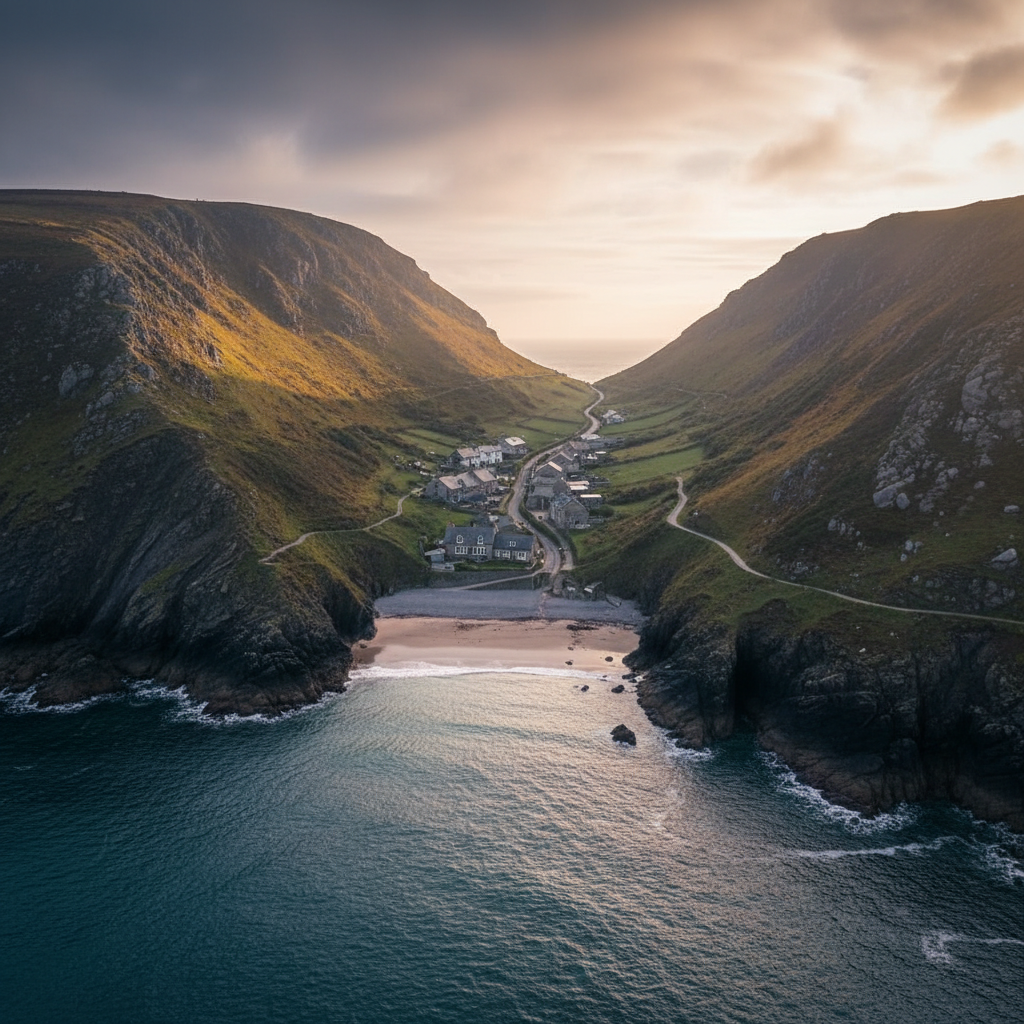
Crackington Haven
Crackington Haven works well as a quieter North Cornwall coastal place with strong walking and geology appeal.
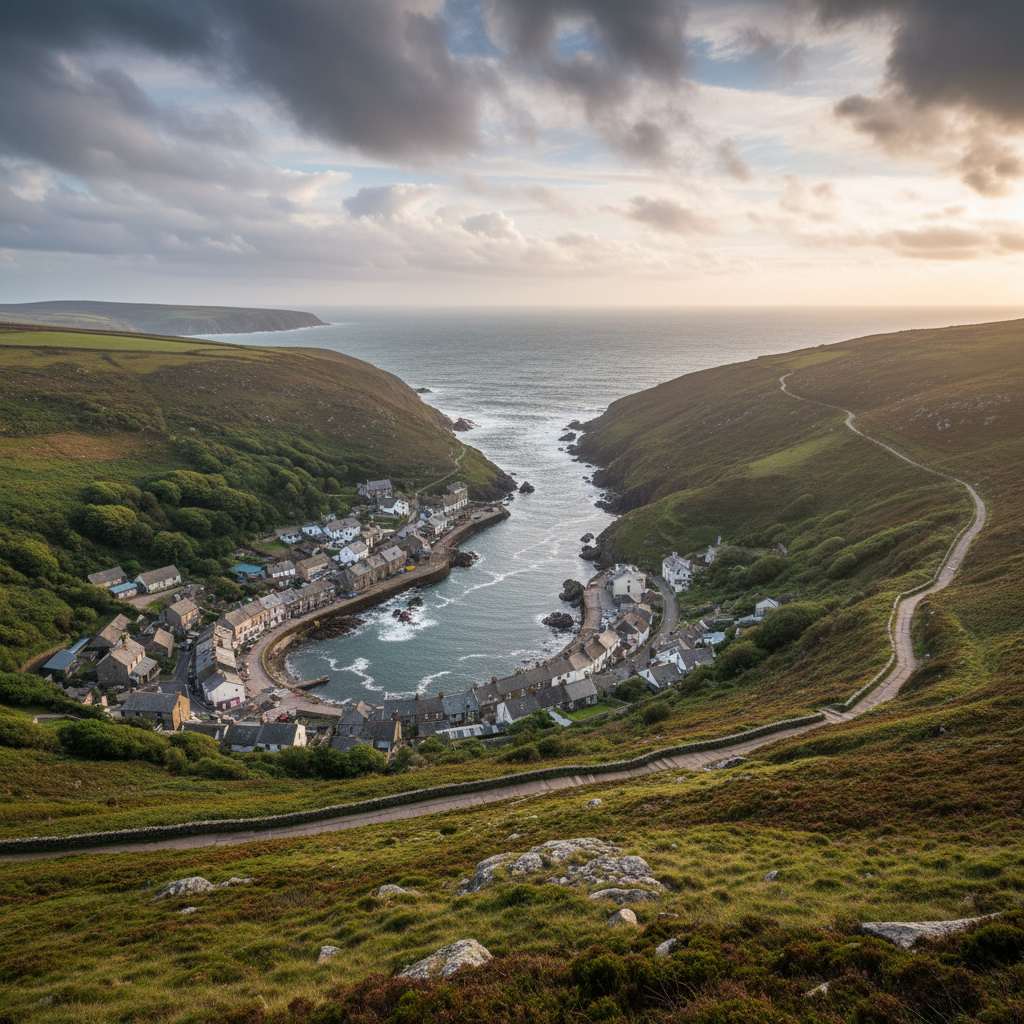
Boscastle
Boscastle adds harbour, folklore, geology and coast path potential to the 3moors place network.
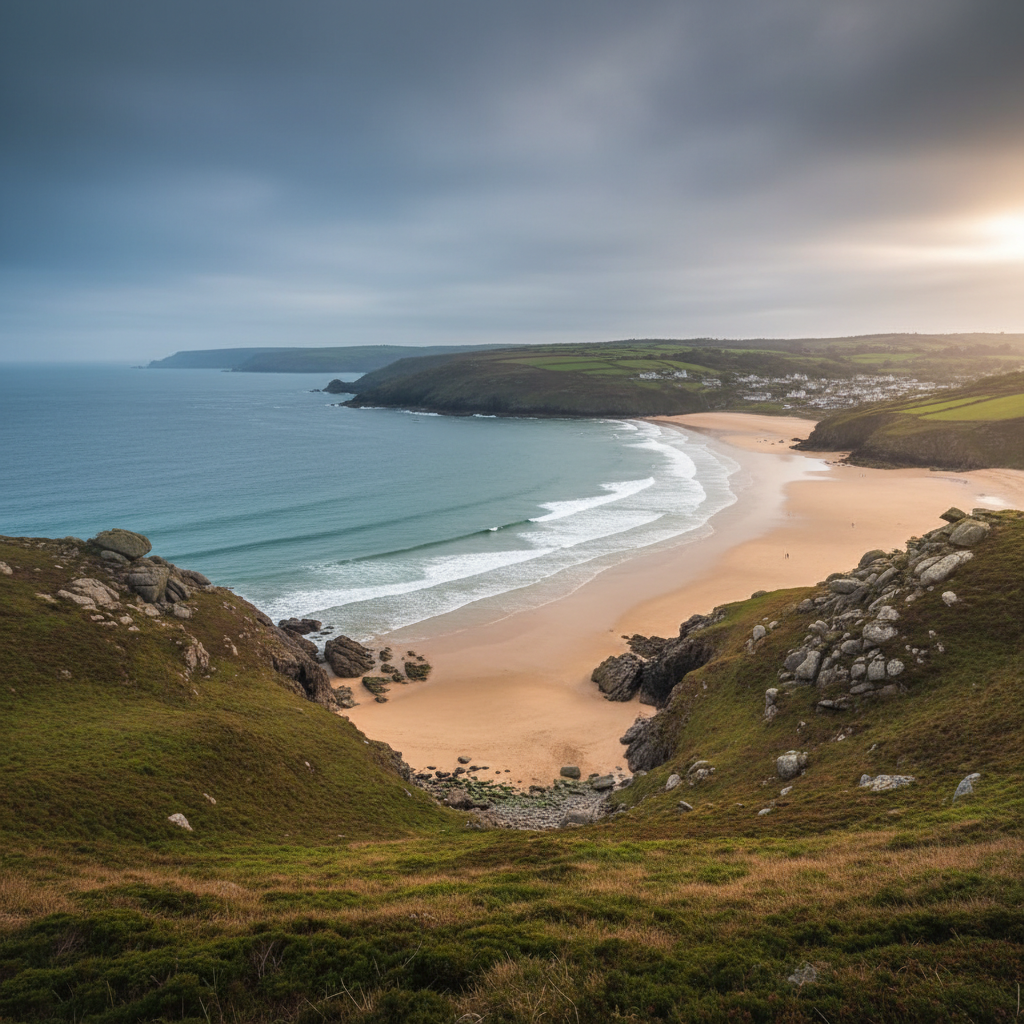
Mawgan Porth
Mawgan Porth offers a calmer alternative to busier surf beaches nearby.
Perranporth
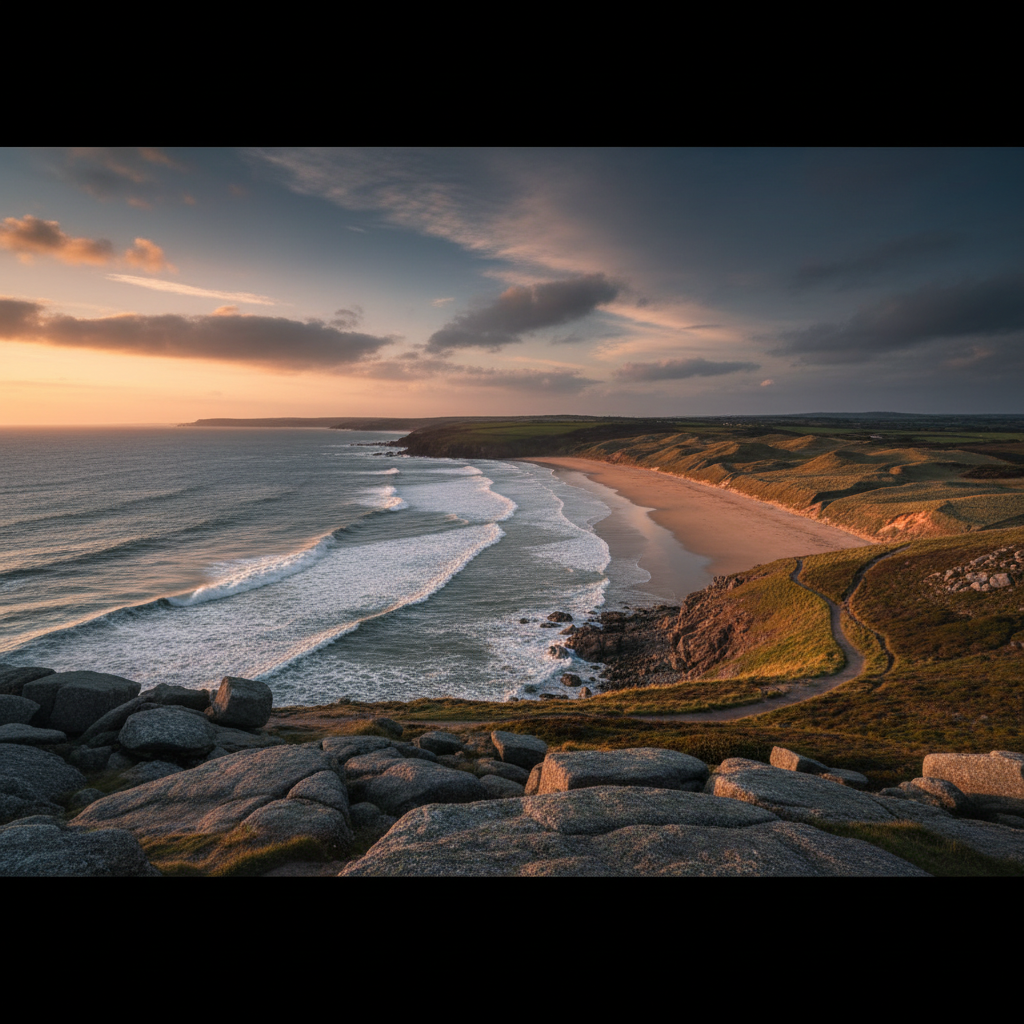
Perranporth combines huge coastal space, dramatic sunsets and easy access to North Cornwall walking.
Join the 3moors Community for path conditions & local tips.
JoinWhy this place matters
Crackington Haven — in its own right
There are places on the coast that hold people at a comfortable distance without ever quite explaining why. Crackington Haven is one of them. Something in its scale, the steep valley closing it off on three sides, the narrow roads, the small car park, the lack of facilities that invite extended or passive stay, all of it conspires to make extended solitude here feel less like an achievement and more like the default condition of the place. You are rarely entirely alone on the beach, but even in the company of others the cove has a way of distributing people across its space so that each small group feels separate from the next. That quality of separateness is not manufactured. It follows naturally from the terrain and the limited development. For those who find that kind of solitude restorative rather than merely empty, Crackington Haven offers something that is becoming rarer on the Cornish coast: a place where the sea and the cliffs remain the primary event, and where the surrounding quiet is deep enough to actually notice them.
Explore more
Discover other places, walks, and hidden corners across Bodmin Moor.