
Bodmin Moor · North Cornwall coast
Mawgan Porth
A broad sandy bay framed by cliffs and quieter North Cornwall scenery.
About
Mawgan Porth
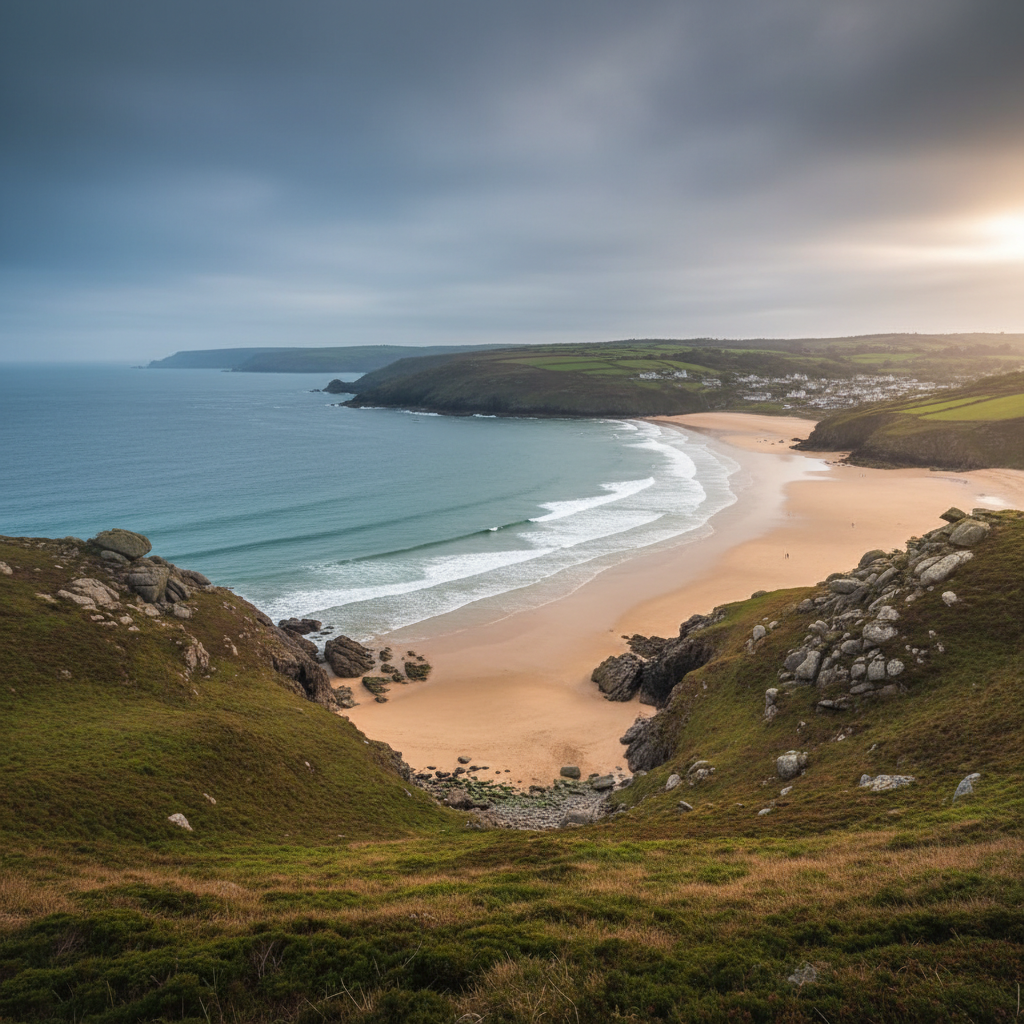
Mawgan Porth sits at the northern end of a wide, arc-shaped bay on Cornwall's Atlantic coast, a few miles north of Newquay and south of Bedruthan Steps. The valley of the River Menalhyl opens here onto the beach, and the village gathers itself quietly at the bottom of the valley: a handful of buildings, a car park, a café, the road ending at the sand. There is no harbour, no pier, no real centre to speak of. The beach is the point.
The bay faces north-west, which means it catches the full movement of Atlantic weather. On clear days the light on the water is specific and particular, a cold-bright quality that belongs to this stretch of coast more than to the sheltered coves further south. On overcast afternoons the sea takes on a steely blue-green, and the cliffs at each end of the bay hold their colour differently depending on the cloud. This is a beach that rewards attention across the hours, not just a glance.
People visit Mawgan Porth for the beach, and the beach alone is sufficient reason. But the place also changes more dramatically across the year than most coastal spots in Cornwall, and that transformation is part of its character. In July and August it fills steadily with families and surf learners. By late September the crowds thin, the quality of light shifts to something lower and more golden, and the bay becomes a different place. In winter it is occasionally deserted entirely, with only the sound of surf and the movement of jackdaws along the clifftops.
The surrounding landscape is not dramatic in the way of the headlands further north. The cliffs are moderate, the valley gentle, the village modest. But this restraint is itself a quality. Mawgan Porth does not compete with the grander set pieces of the Cornish coast. It offers a broad, well-proportioned bay with good sand and reliable surf, in a setting that has so far resisted the intensity of development that has overtaken some of its neighbours.
Character
The feel of Mawgan Porth
The village is small enough that it does not impose itself on the beach. A row of low buildings backs the car park, and the dunes and stream mouth mark the edge between land and shore. In high summer the beach absorbs the numbers reasonably well, given its width, but it is the shoulder seasons that reveal the place's actual character. Come in May before the school holidays or in October after them, and Mawgan Porth offers something rarer on this stretch of coast: genuine solitude within easy reach of a public road.
There is a particular quality to being alone on a wide sandy beach in good weather. The sense of scale shifts. The bay seems larger than it did in August, the cliffs more present, the sea less decorative and more purposeful. You become aware of small things: a tern working along the surf line, the way the stream fans out across the sand before it meets the tide, the colour difference between wet and dry sand on a bright afternoon. This is the version of Mawgan Porth that regular visitors tend to seek out, and it is worth planning a visit around.
The cliffs at each end of the bay are made of dark Devonian slate, streaked with quartz and worn by weather into broken shelves and ledges. They do not rise to any great height, but they frame the beach in a way that gives it definition and encloses the space without crowding it. At low tide the rocks at the base of the southern headland reveal small pools, and it is possible to walk around the foot of the cliffs when conditions allow.
First-hand visit
Keith's Take
The bay is wider than you remember it being, and the tide was already turning by the time I thought to check.
A curlew called once from somewhere above the southern headland and then was gone, swallowed by the sound of the surf. That is the kind of detail Mawgan Porth gives you if you are patient with it: a single specific thing against the background of the sea, present for a moment and then replaced by the next wave.
What regular visitors learn about this bay is that the two hours before low tide are different from any other time of day here. The sand dries out in front of you as the water retreats, and the beach achieves a width that first-timers do not expect from the approach. The rock platforms emerge along the southern headland. The stream mouth reshapes itself across the sand. The whole bay rearranges quietly, without announcement, while people sit on towels above the tide line and read or watch their children in the shallows. Most of them do not notice the transformation happening. The ones who do tend to be back the following year.
There is also the matter of the late afternoon light, which comes at the bay from a particular angle in the summer months and turns the cliffs briefly into something warmer and more layered than they appear at midday. I have not found a way to predict exactly when this happens. It depends on cloud, on the time of year, on where you are sitting. But it does happen, and once you have seen it once you find yourself angling your visits around the possibility of seeing it again.
Keith's Take — a first-hand account from the 3moors team
Map & Getting Here
Getting to Mawgan Porth
What to expect
A natural way to spend time here
The path from the car park to the beach is short and direct, dropping slightly to the stream crossing before opening onto the sand. There is no dramatic reveal, no cliff path descent with a sudden view below. The bay presents itself plainly and all at once as you step past the last building. What you see first is width: a generous arc of sand, the water moving steadily at its far edge, the headlands low on either side.
Close to the water, the sound of the surf is constant and has a particular texture here. The beach shelves gently enough that waves break in long, rolling lines rather than dumping sharply, and the noise is more of a sustained rush than a percussive crash. On a moderate swell day this becomes a reliable background that quickly settles into something you stop noticing consciously, though it is still there, pacing the time spent on the beach.
The best approach to Mawgan Porth is an unhurried one. This is not a place that rewards rushing from car to sea and back. Arrive with time to walk the length of the beach at low tide, to examine the rocks at either end, to watch the surf for a while before entering. The place has a measured pace of its own, and visitors who match it tend to leave with more than those who treat it as a quick stop on the coastal drive.
What makes it stand out
What makes Mawgan Porth special
What distinguishes Mawgan Porth from the beaches immediately to the south is not a single feature but an absence of several. There is no surf school infrastructure dominating the foreshore. There are no beach hut rows, no seasonal fairground energy, no branded beach bars. The provision here is modest: the café, the car park, the beach. For visitors who find Fistral or Perranporth too organised, too populous, or too orientated around commercial surf culture, Mawgan Porth offers a functional alternative that asks rather less of you.
The beach itself is notably wide at low tide, and the sand is coarse enough to feel firm underfoot without being uncomfortable. The surf is consistent and manageable, better suited to body-boarding and swimming than to experienced surfers seeking performance waves, though the bay does produce good conditions after westerly swell. The stream that runs down the valley creates a shallow lagoon near the beach entrance that is a practical benefit in summer: children paddle in it safely while adults sit nearby. It is a detail that makes the beach work well for families in a practical, unplanned way.
Don't miss
Things to see and do
Walk the full length of the beach at low tide when the sand is firm and the width of the bay becomes properly apparent.
Watch the stream mouth where it spreads across the sand: the current shifts daily and the pattern it makes changes with each tide.
At low water, work your way around the base of the southern headland and check the rock pools in the slate ledges for blennies and small crabs.
Sit above the beach on the southern cliff path in the late afternoon and watch the light change on the water as the sun drops towards the west.
Look north along the cliff tops for the outline of Bedruthan Steps on clear days: the stack shapes are visible from a distance.
Bring a wetsuit and body-board if the swell is running: the breaking waves here are well-suited to it and the beach tends to be less crowded than Fistral even in mid-summer.
In the early morning, before most visitors arrive, check the tideline for sea glass and shell fragments: the beach turns over its material regularly and there is usually something worth stopping for.
Walks from here
Getting out from Mawgan Porth
The most obvious route from Mawgan Porth is northward along the South West Coast Path, which climbs from the northern end of the bay onto the cliff top and follows the headland towards Bedruthan Steps. The path here is well-maintained and the terrain is moderate rather than strenuous, though it does rise and fall with the cliff profile. Bedruthan is roughly two miles north, and the walk takes around forty-five minutes at a patient pace. The views back over Mawgan Porth from the first headland are among the better perspectives on the bay.
Southward from the beach the Coast Path climbs to Griffin's Point and then continues towards Watergate Bay, a longer stretch that passes above more exposed cliff sections and gives wider views out to sea. This direction tends to be quieter in terms of foot traffic. Walkers who prefer a circular return can follow lanes inland through the parish of St Mawgan, dropping back down the valley past the old mill buildings to the beach car park, a route of around four to five miles in total. The valley inland is green and sheltered, noticeably different in character from the exposed coast, and the contrast between the two is worth making the circuit for.
Good to know
Before you go
The car park at Mawgan Porth fills quickly on summer weekends, particularly between mid-morning and early afternoon. Arriving before ten or after three is a practical improvement, and during school holidays the difference between those windows and mid-day can be considerable. The beach itself is patrolled by lifeguards during the summer season, with designated swim zones. Outside those months it is unpatrolled, and the surf can be strong enough to require care.
The café at the beach is open during the main season and provides reliable basic provision. For anything beyond that, the nearest town is Newquay, around six miles south. Dogs are restricted to a section of the beach during summer months
check current seasonal rules before visiting if that matters to your plans. The beach is accessible without significant difficulty for most visitors, though the car park surface and approach are unpaved in places.
Across the seasons: Mawgan Porth in June, before the school holidays, is close to ideal: the sea temperature is approaching comfortable, the sand is not yet overrun, and the evenings are long enough to stay past the best of the afternoon light. July and August bring more people and more noise, and the beach loses some of its ease during those weeks, though it never quite becomes the managed spectacle of Fistral. September is worth serious consideration: the Atlantic swell tends to build, the light goes lower and warmer in tone, and the visitor numbers drop off noticeably after the first week of the month. By late October the clifftop vegetation is browning and the prevailing winds have turned the sea to a deeper, darker colour. The beach in this condition is not uncomfortable if you are dressed for it, and there is something specific to the sound of a winter Atlantic surf on an empty Cornish beach that is not available in any other season. Winter visits require preparation and a tolerance for cold, but the scale and stillness of the place in those months is a different experience from the summer version, and not a lesser one. Spring arrivals before Easter will find the beach in good condition after winter, with clean sand and the clifftop path flowers coming through. The water is cold enough to require a wetsuit until at least May, and often into June, but the combination of mild air and cool sea is manageable for most purposes. Avoid bank holiday weekends in spring if the aim is quietness: they draw significant numbers even when the season is officially yet to start.
Practical info
Practical info
There is a pay-and-display car park at the beach itself, operated seasonally and likely to fill quickly on summer weekends. Arriving before 10am in July and August gives the best chance of a space without circling. On-street parking in the village is limited and can cause friction with residents during peak periods. Outside the main summer season, parking is considerably easier and sometimes free, depending on current tariff arrangements.
The beach car park area has public toilets, though these may be closed or reduced in service outside the summer months. A small number of food and drink options operate in the village, but the offer is modest compared to larger coastal resorts nearby. There is no surf hire or lifeguard-level infrastructure on the scale of Newquay. Visitors planning a full day should come prepared, particularly in spring and autumn.
The beach itself is reached by a short, manageable descent and is largely flat once you reach the sand. The cliff paths to either side are more uneven and can become slippery after rain, so firm footwear is advisable if you plan to walk beyond the bay. The coastal path sections here are exposed to south-westerly weather and offer little shelter in strong onshore winds. The overall access to the bay is easy, but the surrounding paths ask for more attention underfoot.
varies
Explore nearby
Places nearby
Boscastle
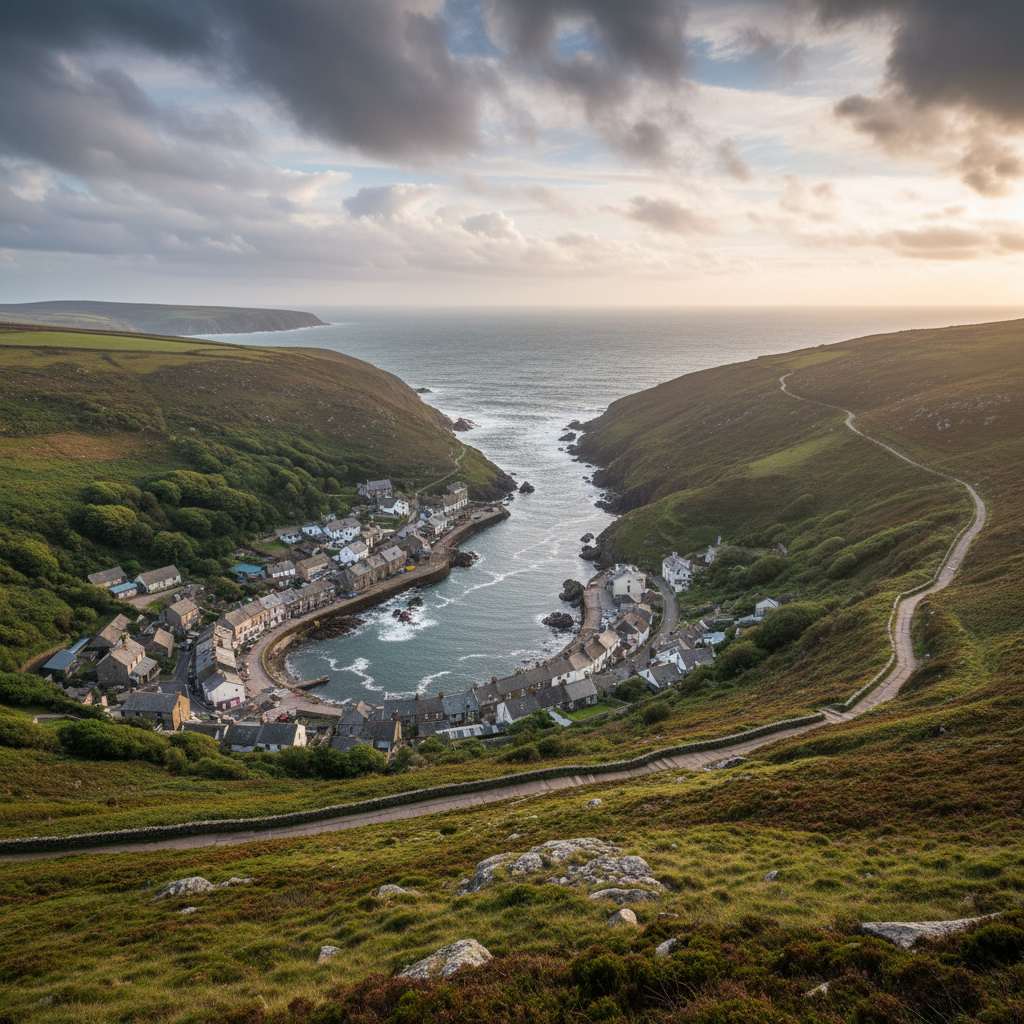
Boscastle adds harbour, folklore, geology and coast path potential to the 3moors place network.
Bossiney Cove
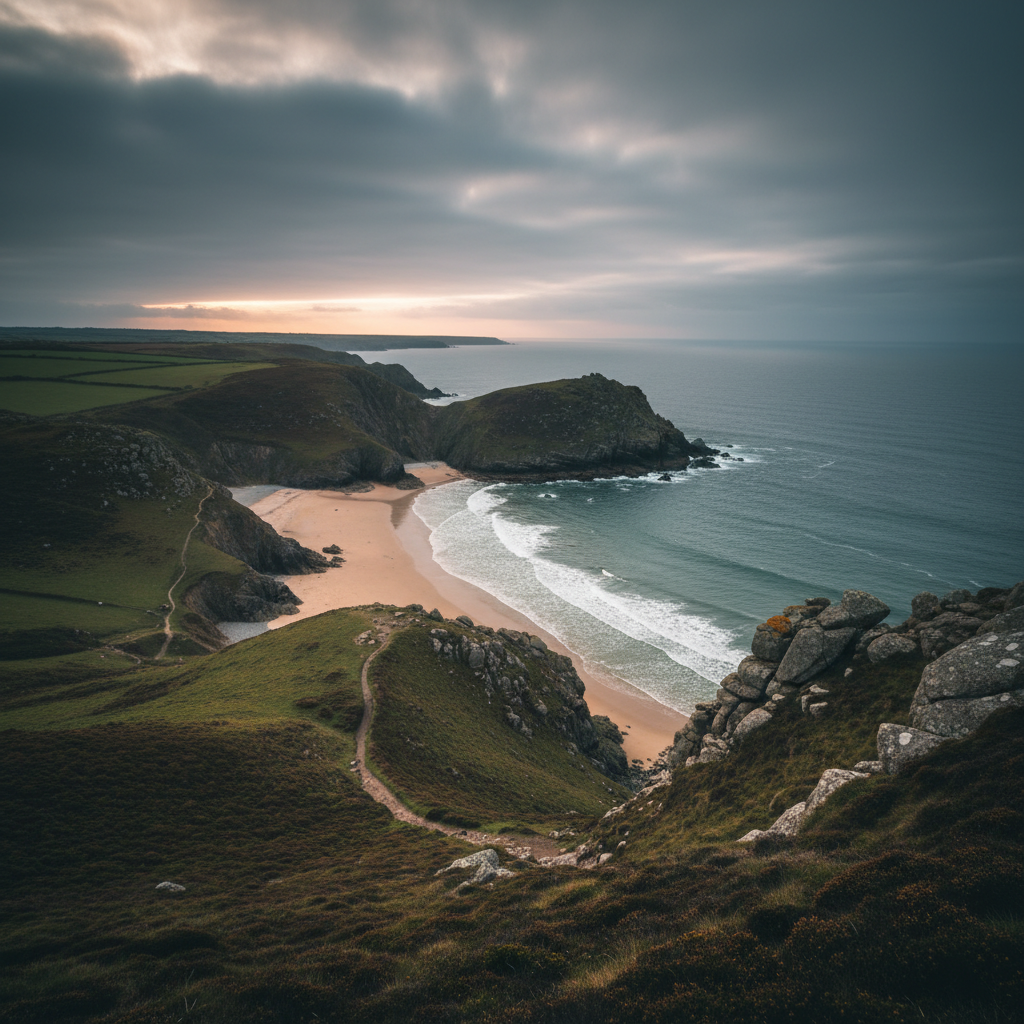
Bossiney Cove brings a wilder, less polished coastal note to the Bodmin-side 3moors map.
Crackington Haven
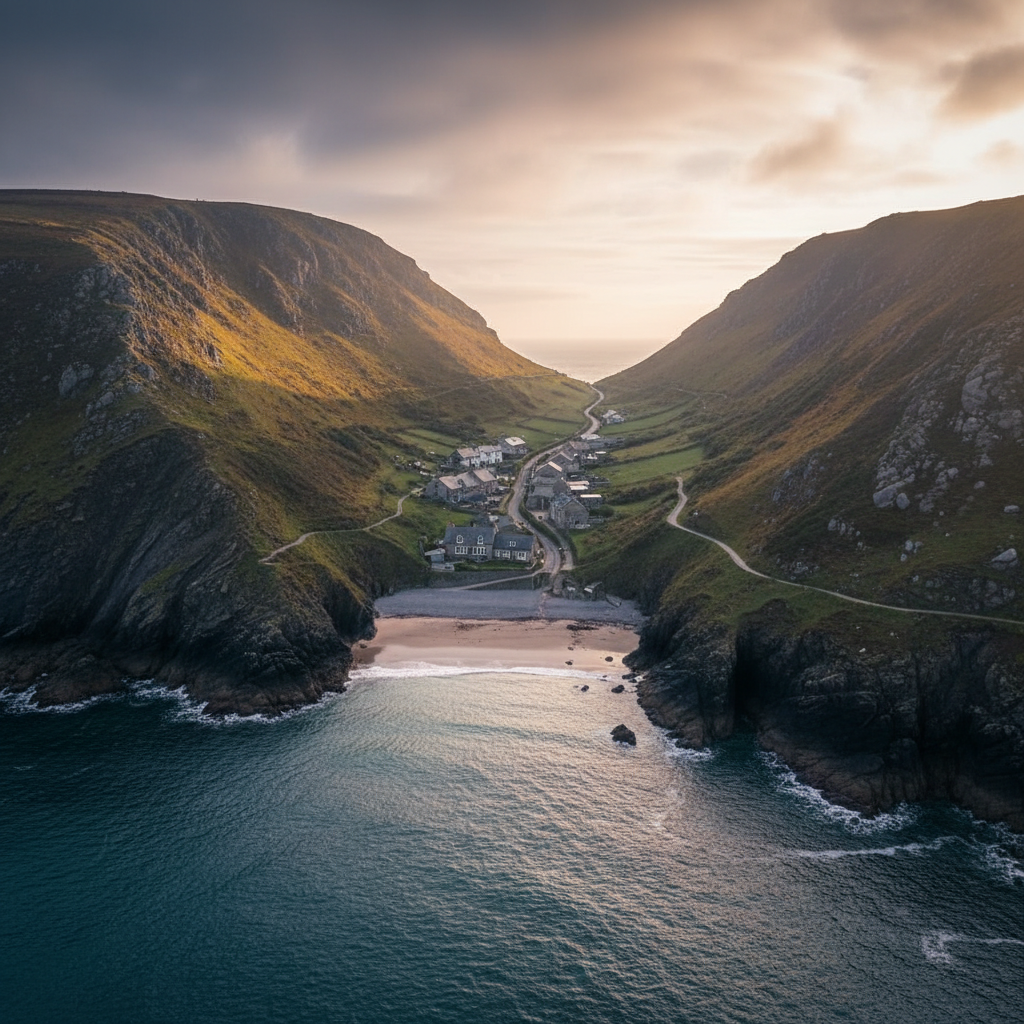
Crackington Haven works well as a quieter North Cornwall coastal place with strong walking and geology appeal.
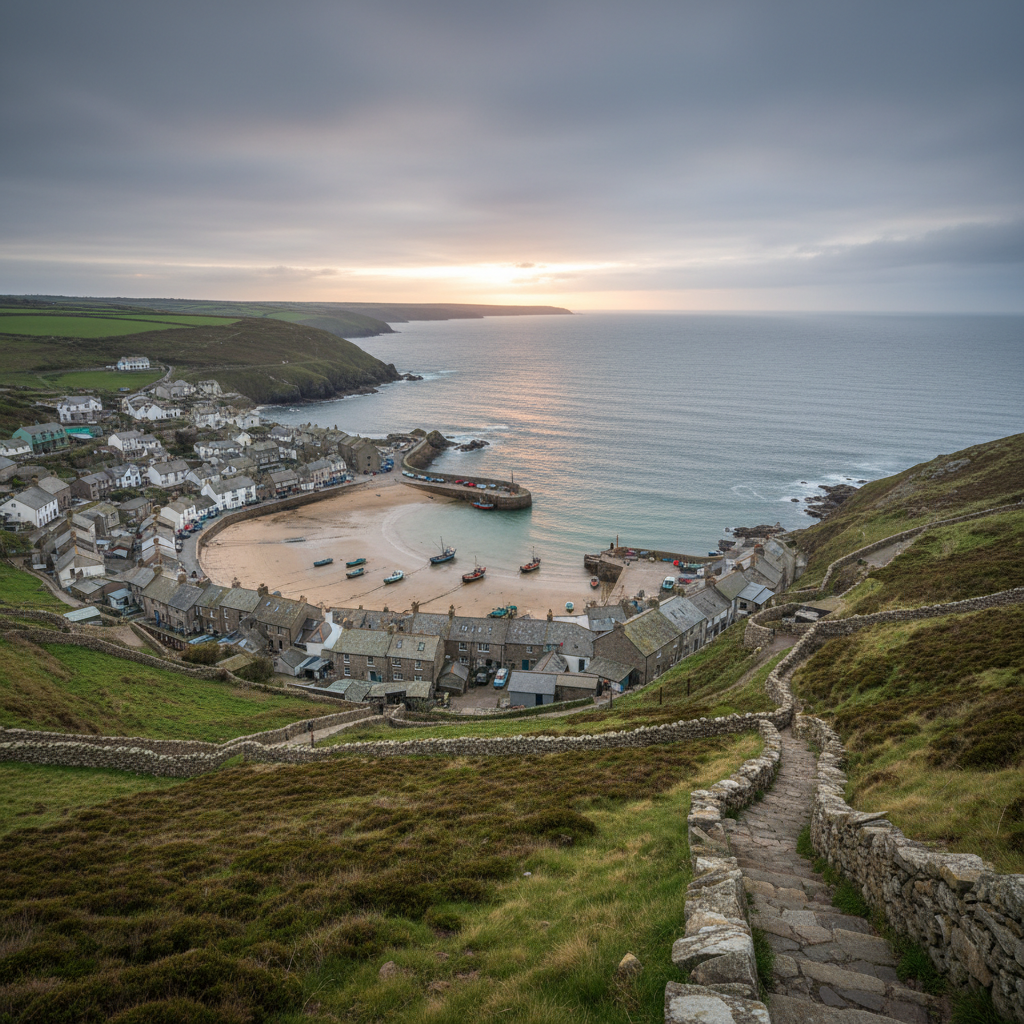
Port Isaac
Port Isaac gives 3moors a strong visitor-facing coastal village with walking, food, harbour and cultural appeal.
Join the 3moors Community for path conditions & local tips.
JoinWhy this place matters
Mawgan Porth — in its own right
There is a rhythm to Mawgan Porth that only becomes clear after several visits. The tides dictate more here than at more developed beaches, where infrastructure and activity fill the time regardless of what the sea is doing. At Mawgan Porth the beach simply changes shape twice a day, revealing or swallowing the lower sand, exposing or covering the rocks, altering the whole geometry of the bay. Visitors who pay attention to the tide tables tend to get more from the place than those who arrive at a fixed time and find either a diminished strip of sand or an expanse they had not expected. That attentiveness is, in the end, what the place asks of you. Nothing demanding, nothing that requires specialist knowledge. Just the willingness to work with what the tide and the light and the weather are doing on the day you happen to be there. Mawgan Porth does not perform for its visitors. It proceeds at its own pace, and the best moments here are the ones that come from waiting for them rather than arranging them.
Explore more
Discover other places, walks, and hidden corners across Bodmin Moor.