
Exmoor · Central Exmoor
Exford
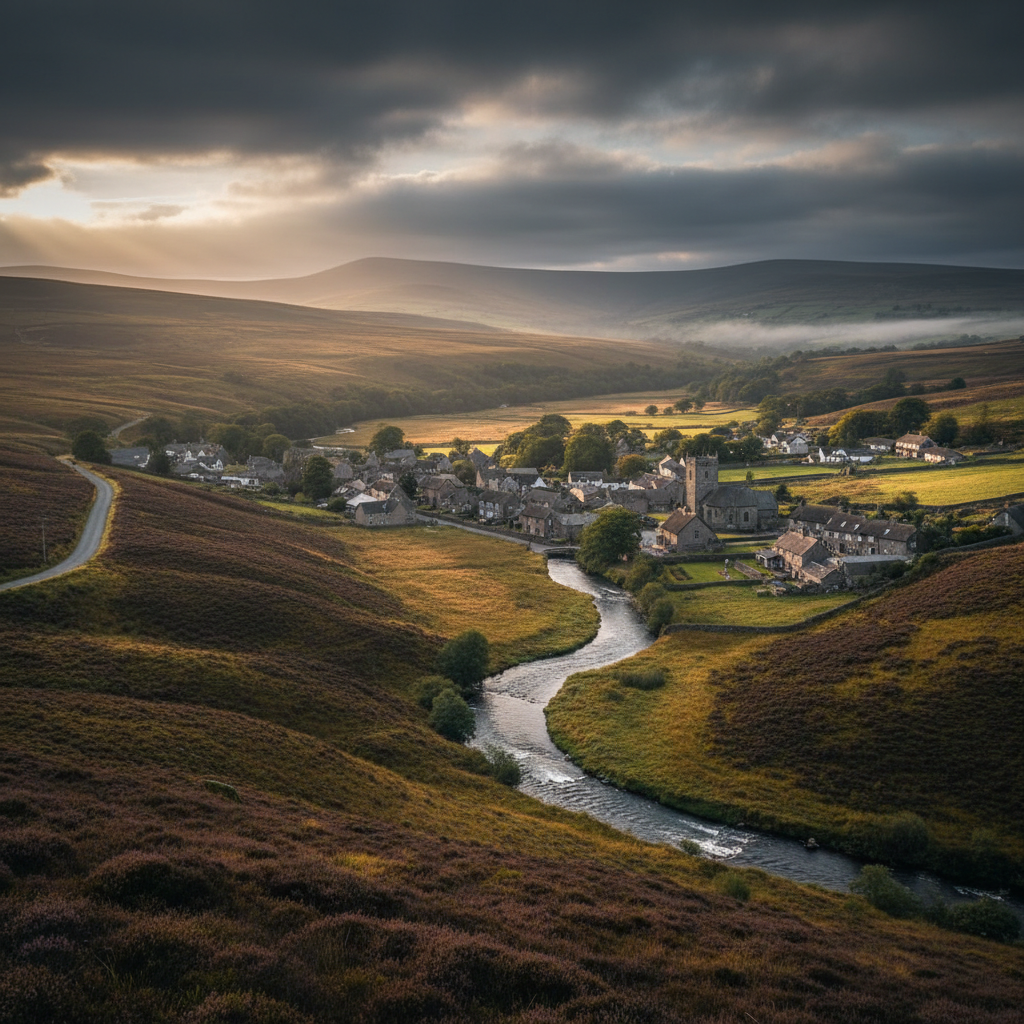
A classic Exmoor village surrounded by open hills, river valleys and moorland.
About
Exford
Exford sits in the bowl of the Exe valley at almost the precise centre of Exmoor, a position that makes it feel less like a gateway to the moor and more like a part of it. The village is arranged around a broad green, with the River Exe running nearby and open hill country rising in every direction within a short walk of the houses. It is not a market town or a coastal settlement
it has no particular industry or monument to draw visitors in. What it has is location, and the rural life that location has shaped over centuries.
The land around Exford has been farmed and grazed for a very long time. Red deer move through the combes, and the local farming calendar still turns on livestock and the seasons in ways that feel unchanged in their essential rhythm. The village has a working quality that many moorland settlements have quietly lost. You notice it in small ways: a trailer parked on the lane, fields that are clearly managed rather than merely decorative, conversations in the pub that are not about walking routes.
People come to Exford primarily to walk. The surrounding hills offer access to some of the best open moorland on Exmoor, and the village provides everything a walking base needs: a pub, a small shop, accommodation in various forms, and a green where you can lace your boots in the morning light. It is a practical place, and that practicality is part of its character rather than a limitation of it.
Character
The feel of Exford
The green at the centre of Exford is wide enough to feel generous without being grand. The church of St Mary Magdalene stands at one edge of the village, its tower visible from several of the approach roads, and the Crown Hotel occupies a position on the green that makes it the natural social centre of the settlement. Neither building is remarkable in isolation, but together with the surrounding cottages and the slope of the valley behind them, they give Exford a coherence that feels arrived at rather than designed.
What defines the atmosphere here, more than anything architectural, is the quietness. Not the absence of life, but a particular kind of stillness that belongs to places where the day has a shape and people move through it without urgency. Mid-morning, after the walkers have headed out, the green can be almost entirely still. A dog waits outside the shop. A car pulls slowly around the bend. The river, just out of sight, makes its presence known as a low and continuous sound beneath everything else. It is the kind of quiet that requires no special conditions to find
it is simply the default register of the place.
There is no sense that Exford is performing itself for visitors, which is perhaps the most significant thing to say about its character. The village exists on its own terms. The pub serves people who live here as naturally as it serves people who have walked fifteen miles to reach it, and the rhythm of the place accommodates both without any visible effort.
Map & Getting Here
Getting to Exford
What to expect
A natural way to spend time here
The village reveals itself quickly, because it is not large. From the green you can see the church, the pub, the lane that drops towards the river, and the hill that rises above the southern edge of the settlement. There is no long approach, no gradual unfolding of scale
Exford simply appears as you come down into the valley, contained and specific, framed by the hills on either side.
Pause near the river and the sensory texture of the place shifts. The Exe here is narrow and fast-moving, running over stones in a way that produces a sound more like white noise than the measured pace of lowland water. In spring, the bankside growth is dense and green
in autumn, leaves collect in the eddies and the water runs darker after rain. Dippers are regularly seen working the current, and the occasional grey heron stands motionless in the shallows with the patience of something that has been doing this far longer than anyone watching.
The most rewarding approach to Exford is an unhurried one. It is not a place that gives itself up to a quick circuit
the atmosphere is better absorbed by sitting with a coffee outside the pub, watching the green in the middle of the day, or taking the time to walk the lane by the river before heading up onto the hill. Visitors who treat it as a tick on a moorland itinerary will find little to hold them. Those who settle into its pace, even briefly, tend to understand why it has the reputation it does.
What makes it stand out
What makes Exford special
What separates Exford from other Exmoor villages of similar scale is its position. Dulverton sits at the edge of the moor, Porlock at the coastal fringe
Exford is inside the moor in a way that is immediately felt rather than merely noted on a map. Step out of the village in almost any direction and within ten minutes the ground opens, the hedgerows fall away, and the horizon becomes a long line of moorland sky. That kind of direct, unmediated access to open country is not something every moorland village can honestly claim.
There is also something worth noting in what Exford does not have. It has no tearoom with a queue out the door, no craft gallery, no themed attraction. Visitors who arrive expecting a polished experience may find it underwhelming. Those who arrive looking for a place to sleep, eat well enough, and walk on genuine open moorland will find it precisely sufficient. That sufficiency, arrived at without apparent effort or commercial calculation, is the thing that keeps people returning year after year.
Don't miss
Things to see and do
Follow the River Exe downstream from the village, keeping to the wooded bank where the path narrows between roots and stone.
Watch for dippers from the bridge over the Exe, particularly in the slower reaches where the current shelves over flat rock.
Walk up onto Winsford Hill from the southern edge of the village and turn back to look at Exford lying in the valley below, which is when its central position becomes genuinely clear.
Visit the church of St Mary Magdalene and take a moment with the churchyard, which looks across the valley to open hill.
Have a drink at the Crown in the early evening, when the walkers have come back in and the bar has the easy quality of a room full of people who have spent the day outdoors.
Take the lane towards Simonsbath in the morning before the road gets any traffic, when the combes on either side are still in shadow and the light is horizontal across the upper moors.
Look for red deer on the hillsides above the village in the early morning or at dusk, when they move out of the combes and onto the open ground.
Walks from here
Getting out from Exford
Exford is one of the best-placed walking bases on Exmoor, and the routes available from the village green cover a wide range of distances and terrain. The most immediate option is to follow the Exe valley itself, either upstream towards the open moor at Exe Head or downstream through the wooded combes towards Winsford and beyond. Both directions are waymarked and manageable in ordinary walking footwear, though the riverside paths can be muddy after prolonged rain.
For those wanting open moorland, the ascent to Winsford Hill via the lane south of the village is direct and rewarding. The summit plateau gives long views in every direction, including north towards the Bristol Channel on clear days, and connects to a network of bridleways that allow circular routes of varying length back to the village. The Dunkery Beacon ridge is also accessible from Exford, though it involves a longer approach and a more sustained climb
most walkers allow a full day for this and return via Horner Wood or the ridge above Cloutsham.
The Two Moors Way passes through Exford, providing a long-distance walking connection south to Dartmoor and north towards the coast at Lynmouth. Even for those not walking the full route, following sections of it out from the village and returning cross-country makes for satisfying half-day walks that quickly reach genuinely open ground.
Good to know
Before you go
Exford has limited parking, and the lanes into the village are narrow in places. Arriving earlier in the day avoids most of the congestion that can build on summer weekends. The village shop carries basics but is not a full provisions stop
if you are planning a multi-day stay and cooking for yourself, stocking up in Dulverton or Minehead before arriving is sensible. Mobile signal in the valley is unreliable, and this should be factored into any navigation planning if you are walking on the higher moors.
The Crown Hotel is the main food and accommodation option in the village and is well regarded for its straightforward cooking. It is worth booking ahead for evening meals during busy periods, particularly in summer and over the school holiday weeks in late October. The riverside paths can flood quickly after heavy rain and should be treated with appropriate caution in winter months.
Across the seasons: Late spring is the quietest time to visit in terms of visitor numbers, and also one of the most visually particular: the valley fills with new growth quickly, the hillside bracken is still low enough to walk through without effort, and the Exe runs full and clear. The light in May and early June has a quality that the summer haze tends to flatten, and the days are long enough to take the high ground without needing to rush back. Autumn shifts the character of the place noticeably. By late October, the bracken on the surrounding hills has turned the colour of old copper, and the wooded combes along the Exe are briefly very beautiful as the oak and ash come into colour before the leaves fall. This is also the red deer rut, and stags can sometimes be heard from the village itself on still mornings. It is worth noting that October half-term brings a sharp increase in visitor numbers, and the village loses some of its characteristic stillness for that week. Winter is honest and worth considering for those prepared for it. The high moors above Exford can carry snow into March, and the lanes can ice overnight with little warning. But the village in February, with the hills empty and the pub lit against the dark, has a quality that is entirely its own and quite different from anything the summer months offer.
Practical info
Practical info
Exford has a small public car park near the village green, which is the most reliable place to leave a vehicle. Space is limited, particularly on summer weekends and during the hunting season when the village sees more visitors. On-street parking exists but is informal and shared with residents, so arrive early or expect to wait. Do not assume overflow parking elsewhere in the village without checking locally first.
The village has a pub, a hotel, and a small number of local services that have historically included a shop, though provision can change and it is worth checking ahead. Public toilets are available near the car park. There are no visitor centre facilities or staffed information points. If you are planning a longer day out on the moor, carry everything you need rather than relying on resupply in the village.
The village itself sits in a sheltered valley and is easy to move around on foot. The surrounding moorland rises steeply in places, and paths can become very muddy after rain, particularly on the open hillsides above the Exe valley. Waterproof boots are advisable for any walking beyond the village green, even in summer. Weather on central Exmoor changes quickly, and the higher ground above Exford is exposed to wind and low cloud.
varies
Explore nearby
Places nearby
Bossington
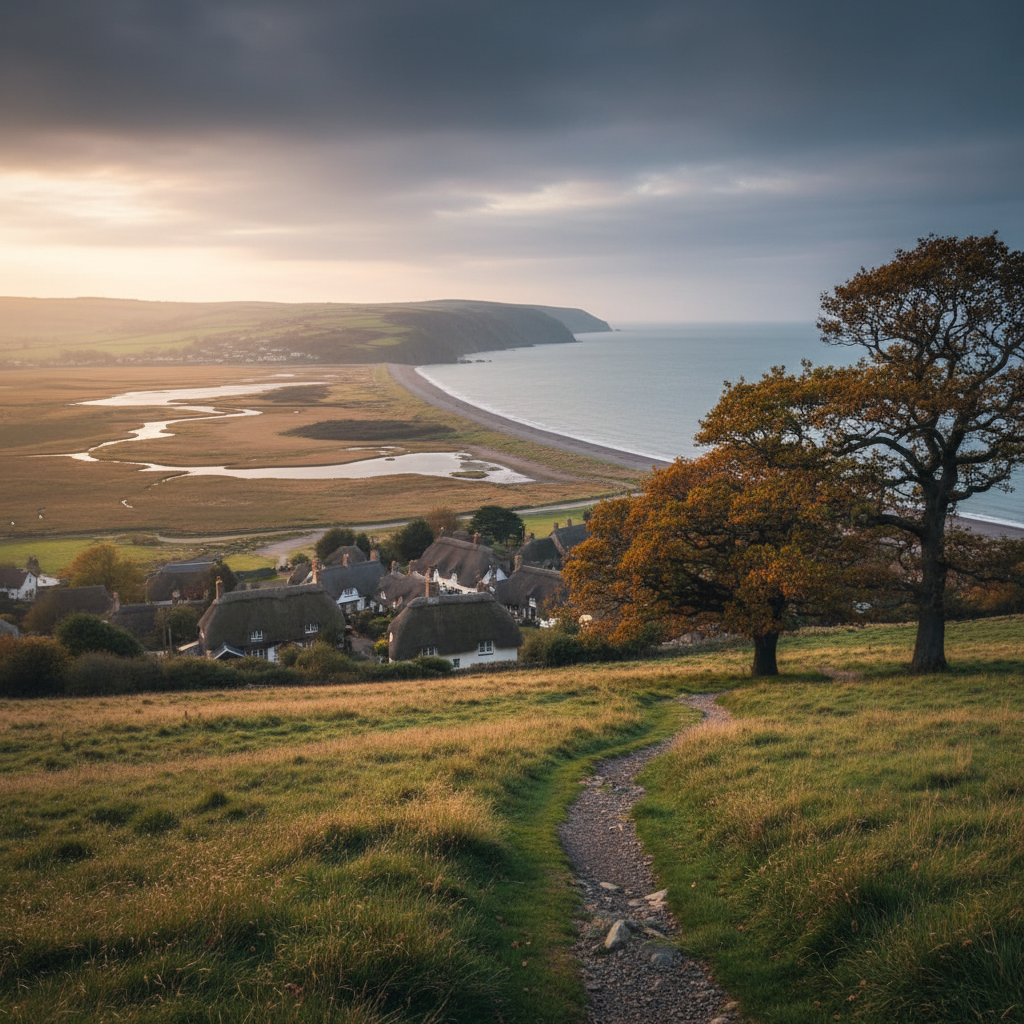
Bossington offers a softer Exmoor coastal stop, with village character, marshland, beach and good walking links.
Heddon Valley
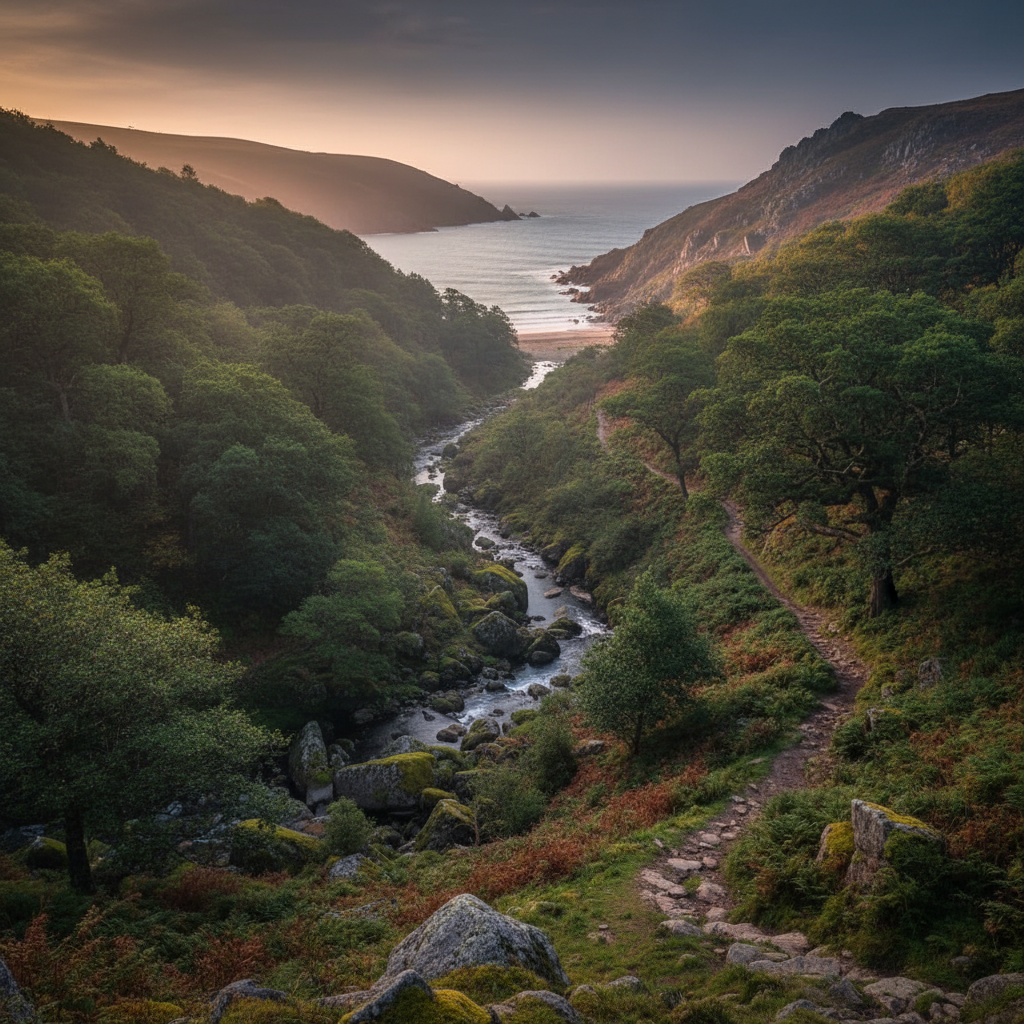
Heddon Valley is one of Exmoor’s best coast-and-combe places, combining woodland, river and sea-edge walking.
Porlock Weir
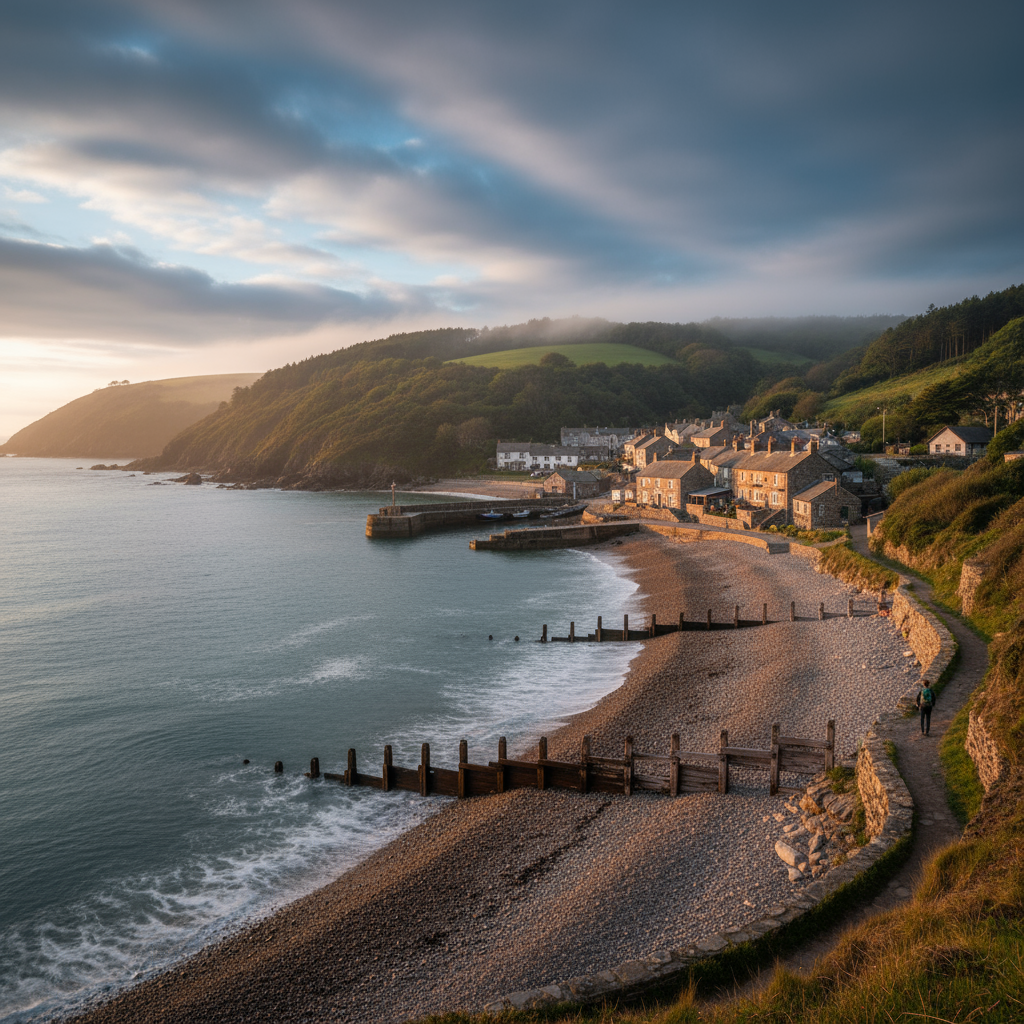
Porlock Weir adds harbour character, coastal walking and one of Exmoor’s most atmospheric sea-edge stops.
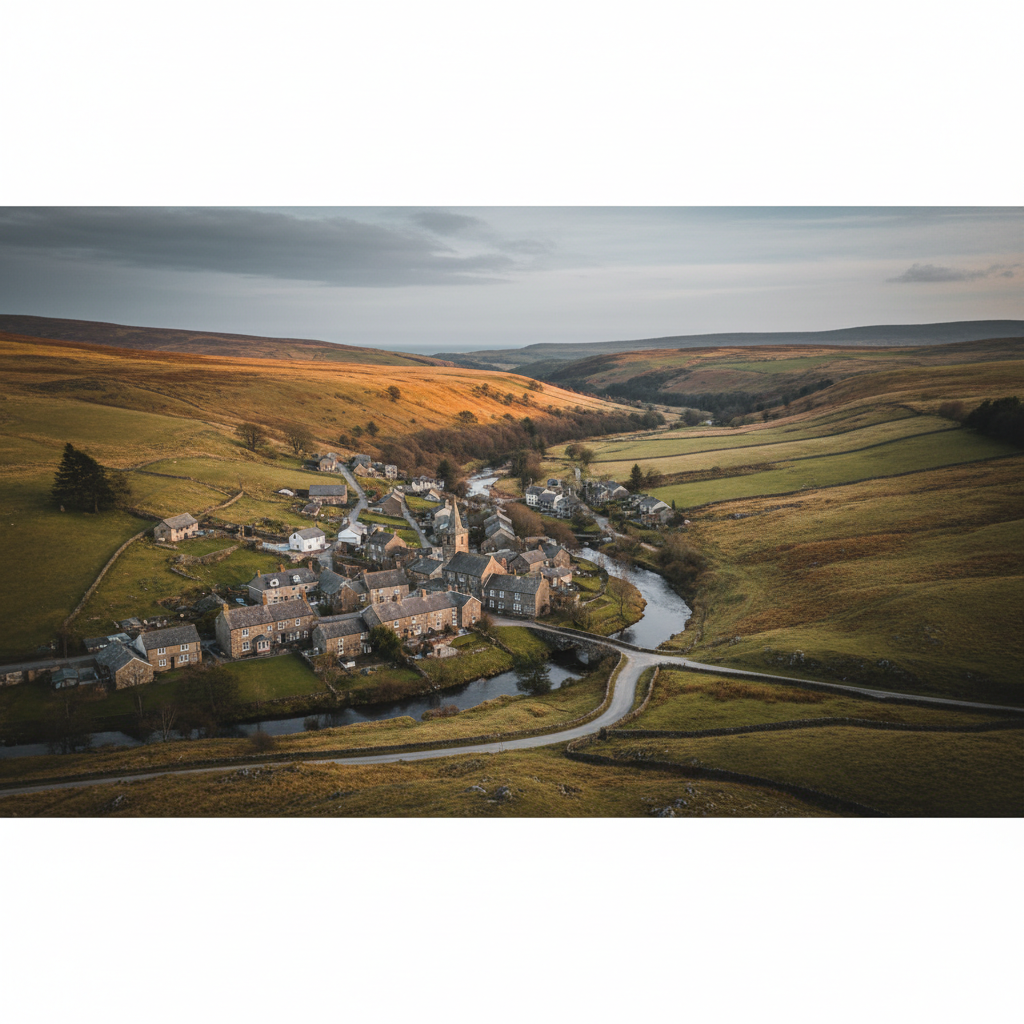
Exford
Exford combines village character with direct access to central Exmoor walking.
Join the 3moors Community for path conditions & local tips.
JoinWhy this place matters
Exford — in its own right
Exford is the kind of place that reveals its value not immediately, but gradually, as the shape of a stay there becomes clear. The green, the river, the pub, the hills: none of these are remarkable in isolation. What matters is the relationship between them, and the way a community has organised itself around a landscape that is genuinely demanding and genuinely generous in equal measure. The people who return to Exford repeatedly tend not to talk about it in terms of scenery or itineraries. They talk about it in terms of how it felt to be there, and that feeling has something to do with community in its oldest and least sentimentalised sense: a group of people and a place that have reached an arrangement, and into which a careful visitor can, for a day or a week, quietly settle.