Bodmin Moor · Lizard Peninsula
Lizard Point
The southernmost point of mainland Britain with dramatic cliffs and ocean views.
About
Lizard Point
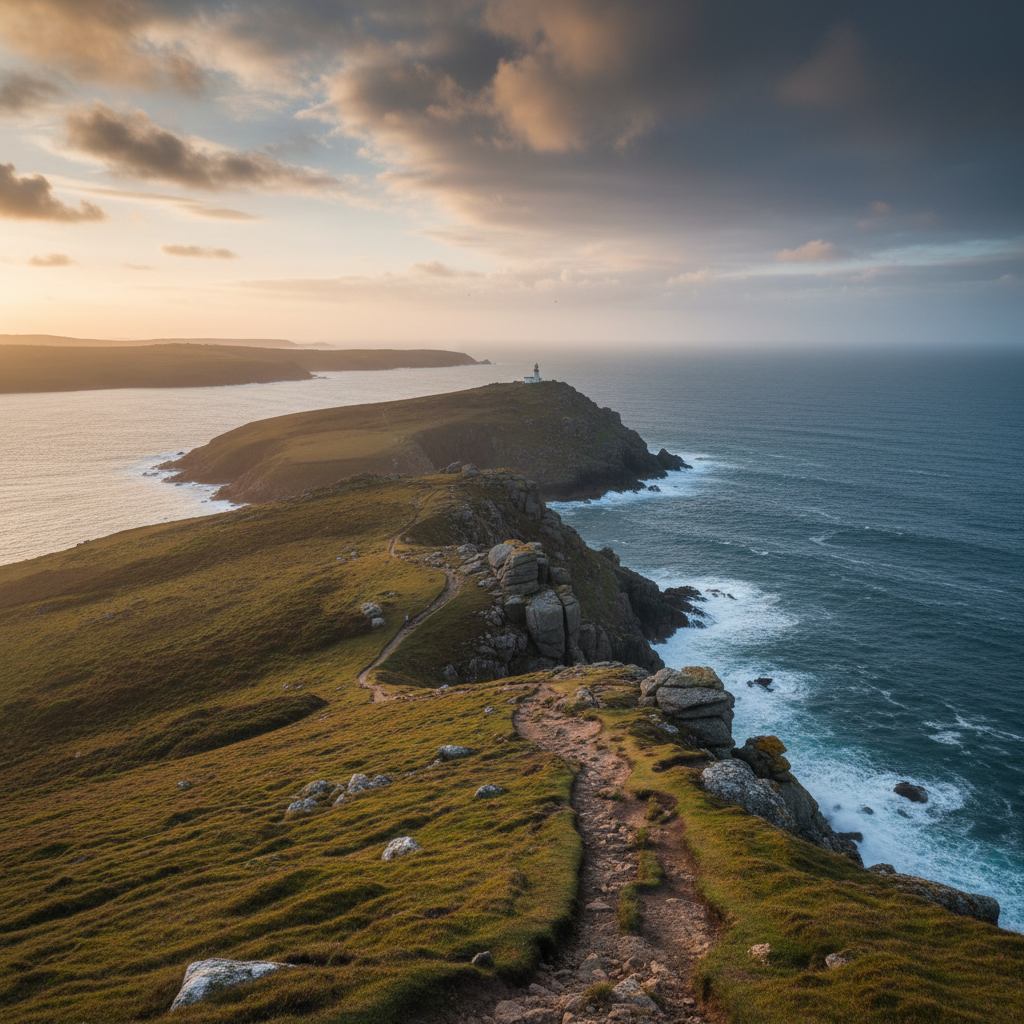
Lizard Point sits at the southernmost tip of mainland Britain, a fact that gives it a particular weight even before you arrive. The land here tapers to a hard, rocky conclusion, with the Atlantic pressing in from three sides and the horizon sitting lower than it seems it should. People come partly for the geography, the simple satisfaction of standing at the end of something, but those who linger tend to find something less easily named.
The Lizard Peninsula as a whole has a character distinct from the rest of Cornwall. The rock underfoot is serpentinite, an unusual greenish-grey stone that weathers in ways you don't see elsewhere, and the heathland behind the cliffs carries rare plants that have no business surviving in such exposed conditions. Lizard Point itself is the sharpest expression of all this: a place stripped back to essentials by wind, salt and geological accident.
Visitors arrive at a small cluster of buildings, a café, a lighthouse visible from the approach, a few craft shops of varying ambition, but the human infrastructure feels temporary against the scale of the cliffs and the sea below. The cove to the east, Polpeor, adds a small harbour note to proceedings, though it's rarely busy. Most of what draws people here lies at the edges, where the land simply stops.
Wildlife is a serious draw. The cliffs and the waters below support a range of seabirds, and grey seals are regularly seen in the coves and around the base of the point. On clear days the sea itself performs, colours shifting between deep Atlantic blue and the turquoise of shallower inshore water. On rougher days it's something else entirely: white water, noise, the horizon lost in spray.
Character
The feel of Lizard Point
There is a finality to Lizard Point that other headlands don't quite achieve. It isn't simply dramatic coastline, Cornwall has plenty of that — it's the combination of geographical extremity with genuine ecological strangeness. The serpentine rock gives the cliffs a mottled, almost reptilian surface, greenish and smooth in places, fractured in others. The light falls differently here, or seems to, partly because the sky is present on so many sides.
The mood shifts considerably with the weather, more so than at inland places. On a clear summer morning it can feel almost Mediterranean, the sea calm and brilliantly lit, visitors relaxed on the headland grass. Within hours, if the wind arrives from the south-west, the same spot becomes something harder and more demanding, spray reaching the cliff tops, the sound of the ocean becoming the dominant fact of the place. That variability is part of its character. It doesn't hold a single mood for long.
There's also a quiet sense of human history woven into the rock and the paths. The lighthouse, in continuous operation since the eighteenth century, is a reminder that this point has been a hazard to shipping for as long as ships have rounded it. The lifeboat station, the watch positions cut into the headland, the names of the coves, these accumulate into something that feels lived-in rather than merely scenic.
First-hand visit
Keith's Take
You come for the geography and stay for something harder to name — the specific quality of light and wind and geological strangeness that makes this particular edge of Britain feel like nowhere else.
The first thing that registers, walking out from the village, is the sky, there is simply more of it than seems usual, the horizon line lower and the sense of exposure arriving before the sea itself comes into view. By the time you reach the headland proper, the lighthouse ahead and the Atlantic opening up on three sides, something in the body adjusts. The ground feels final underfoot.
I've visited in several seasons and several weathers, and the place that stays with me is not the calm summer version — pleasant as that is — but a November morning when the swell was running hard from the south-west and the spray was reaching the path. The sound was more physical than acoustic, the kind of noise that occupies the chest rather than just the ears. The cliffs below were invisible in the whitewater, and the horizon was lost. That version of Lizard Point feels like the true one, even if it's not the most comfortable.
What lingers afterward is the colour of the rock. Serpentinite weathers to something between green and grey, and in wet conditions it takes on a depth that photographs don't capture honestly. The paths cut through it, the cliffs expose it in section, and if you pick up a loose piece, which you will, it sits in the hand with more presence than you expect. It's a detail, but it's the kind of detail that makes a place specific rather than generic. Lizard Point has that quality throughout: it is not interchangeable with anywhere else.
Keith's Take — a first-hand account from the 3moors team
Map & Getting Here
Getting to Lizard Point
What to expect
A natural way to spend time here
The approach to Lizard Point from the village of Lizard is short, a matter of minutes on foot, and the path opens onto a flat headland with the sea presenting itself in a broad arc. The lighthouse is immediately present, a working structure rather than a heritage centrepiece, and the cliff edge is accessible along worn paths that require reasonable care but no special equipment. The scale is not overwhelming
it's a human-sized place, even on the days when the Atlantic makes its presence strongly felt.
The sounds are layered. Wind is the constant, varying in pitch with the topography, funnelling through gaps in the rocks, flattening against open ground. Beneath it, the sea: a continuous low register broken by the percussion of swells against the base of the cliffs. Seabirds add intermittent calls. In summer there are usually other visitors, but the headland is large enough and the paths divergent enough that solitude is available if you want it, particularly if you walk east or west along the cliff path.
The café near the lighthouse serves reliably and without pretension. The serpentine workshop nearby sells objects made from the local stone, some of them genuinely handsome. These feel like honest local enterprises rather than tourist installations. Neither is the reason to come, but neither is a reason to avoid the place.
What makes it stand out
What makes Lizard Point special
The southernmost point claim is real and verifiable, and it does lend the place a mild frisson that purely aesthetic headlands can't manufacture. But what actually distinguishes Lizard Point from other dramatic Cornish coastlines is the geology. Serpentinite, the rock that forms much of the Lizard Peninsula, is rare at the surface in Britain, and it creates an environment unusual enough to support plant communities found nowhere else in the country. You may not notice this unless you're looking for it, but the heathland immediately behind the clifftops has a quality that feels slightly foreign, as though you've moved latitude.
The combination of exposure and ecology matters. The Cornish heath that dominates the Lizard plateau blooms in late summer in shades of purple and pink that are hard to photograph honestly. The choughs, red-billed, red-legged corvids that were absent from Cornwall for decades before recolonising, are now regularly seen on and around the headland. Their presence has a particular significance to those who know the backstory, though they're striking enough as birds without it.
Honestly, the views are not always the most spectacular on the Cornish coast — there are more vertigo-inducing cliff drops elsewhere, and more theatrical rock formations. What Lizard Point offers is the feeling of genuine edge: geographical, meteorological and ecological. It's a place where different systems meet, and that convergence gives it an atmosphere that more conventionally picturesque spots often lack.
Don't miss
Things to see and do
Walk the cliff path east toward Housel Bay and Church Cove for quieter ground and good seabird observation points.
Watch for grey seals from the headland, particularly in the coves below, they haul out with some regularity.
Look for choughs along the clifftop vegetation edges
their calls are distinctive once learned.
Visit the serpentine workshop to see the local rock worked into objects, it gives context to the geology underfoot.
Walk to the lighthouse perimeter for unobstructed views south and west across open Atlantic water.
Check the small cove at Polpeor at low tide for rock pool exploration and a closer perspective on the cliff base.
On clear days, scan the horizon for passing shipping and, occasionally, basking sharks offshore in summer months.
Walks from here
Getting out from Lizard Point
The South West Coast Path passes directly through Lizard Point, making it a natural hub for coastal walks in either direction. Heading east, the path drops into Housel Bay, a sheltered cove with a hotel above it that has been there long enough to feel part of the landscape — before continuing to Church Cove and the village of Cadgwith, a working fishing village with a character distinct from the tourist coastal settlements. This eastern stretch is roughly four miles to Cadgwith and can be walked comfortably in a morning, returning either the same way or via inland paths and lanes.
West from the point, the coast path moves toward Kynance Cove, perhaps the most photographed location on the Lizard Peninsula, about two miles distant. The path here is more undulating, passing above small beaches and through patches of coastal heath. A circuit combining both directions with the inland path back through Lizard village is achievable in a half-day and gives a reasonable cross-section of what the peninsula offers: cliff, cove, heath and a working village that hasn't entirely given itself over to tourism.
For shorter walks, the headland itself rewards unhurried exploration on its network of informal paths. The ground is uneven in places and the cliff edge should be respected, but there's no requirement to commit to longer routes. Even a thirty-minute circuit of the immediate headland provides a satisfying sense of place.
Good to know
Before you go
The car park at Lizard village is the practical starting point for most visits, and in high summer it fills early. Arriving before ten in the morning or after four in the afternoon avoids the worst of the seasonal congestion. The walk from the village to the point is short enough that the car park location is rarely a significant inconvenience. Dogs are welcome on the paths but should be kept close to the cliff edge and during seabird nesting season, roughly April through July.
The wind on exposed headlands like this can be significantly stronger than conditions inland suggest. A layer that seems unnecessary when you set out earns its place on the coast. The paths to the cliff edge are maintained but uneven in places, and footwear with grip is sensible. Mobile signal is variable
if you're navigating by phone, download the relevant section of map before you arrive.
Across the seasons: Summer brings the most visitors and, on fair days, the most immediately rewarding light, the sea colours at their most vivid, the heathland in flower, the wildlife active. It also brings the most company, and the car park and café can feel crowded in July and August. The experience is still worthwhile, but the contemplative quality of the place is harder to access on a busy August afternoon. Spring and early autumn are arguably the more interesting seasons for those with a specific interest in wildlife or botany. The Cornish heath blooms from late July into September, but the rarer plants on the serpentine grassland are better seen in May and June. Migrant birds pass through in spring and autumn, making the headland of interest to birdwatchers beyond the resident species. Grey seals are present year-round but perhaps more consistently visible in autumn and winter. Winter visits are not for everyone, but they offer a Lizard Point that operates at full intensity, the Atlantic in its serious moods, the light low and lateral, the paths largely empty. The café keeps reduced hours and some facilities close, but the place itself is entirely accessible. There is an argument that this is when the headland is most honestly itself: the geometry of land and sea undistracted by anything else.
Practical info
Practical info
A National Trust car park sits close to the point at Lizard village, and is typically the most practical option for visitors. Space can be limited during peak summer months, so arriving early in the morning is advisable. On busier days, overflow parking in the village itself may be necessary, and narrow lanes approaching the headland are not well suited to large vehicles.
There are public toilets near the car park, and a small café operates seasonally close to the point, though opening hours and availability should be checked before relying on them. The lighthouse visitor centre may offer limited indoor facilities depending on the season. Beyond these, expect little else; this is a working headland rather than a managed visitor attraction.
The clifftop paths around Lizard Point are generally well-defined but can be uneven and exposed, with some sections running close to unfenced cliff edges that demand care and attention. Wind exposure here can be severe and often catches visitors off guard, even in summer — a windproof layer is worth carrying regardless of forecast. The terrain underfoot is rocky in places, and sturdy footwear is strongly recommended. Navigation is relatively straightforward given the coastal context, but sea mist can close in quickly and reduce visibility along the cliffs.
varies
Explore nearby
Places nearby
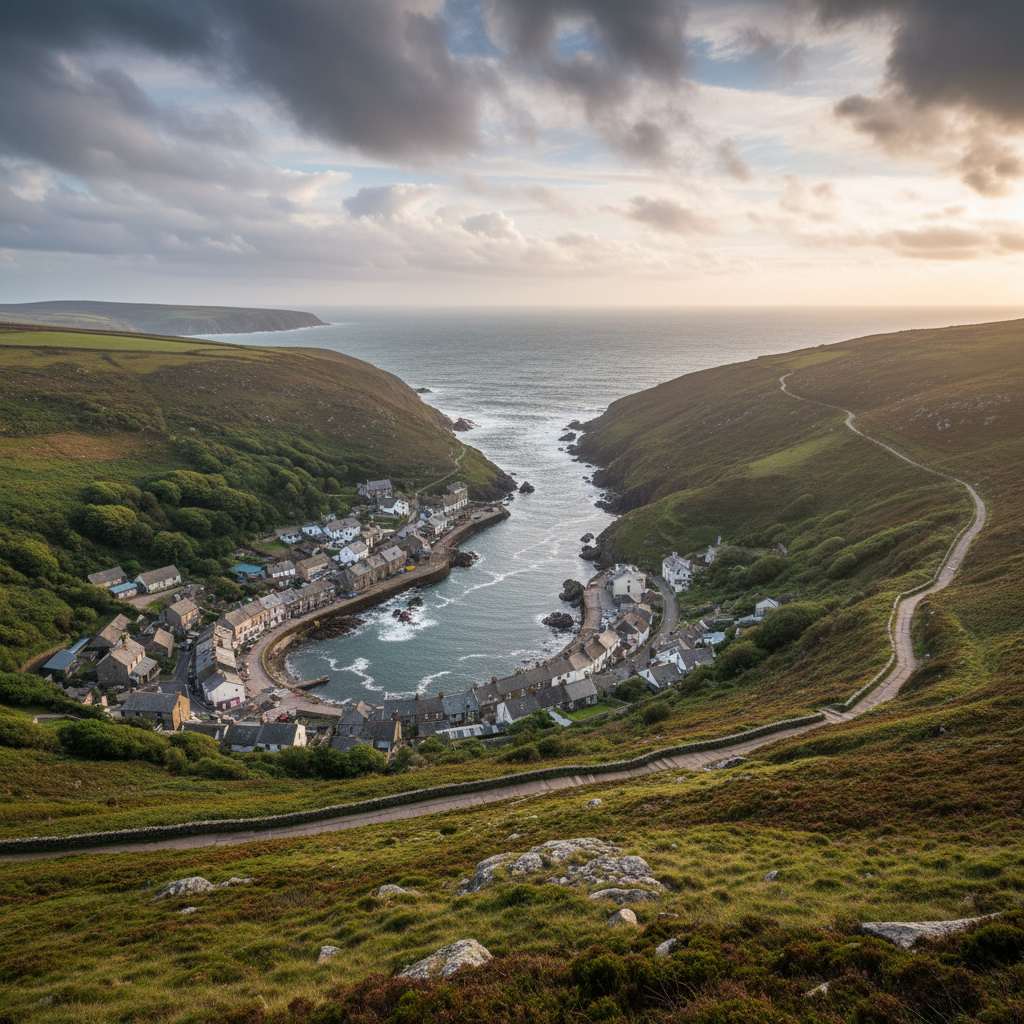
Boscastle
Boscastle adds harbour, folklore, geology and coast path potential to the 3moors place network.
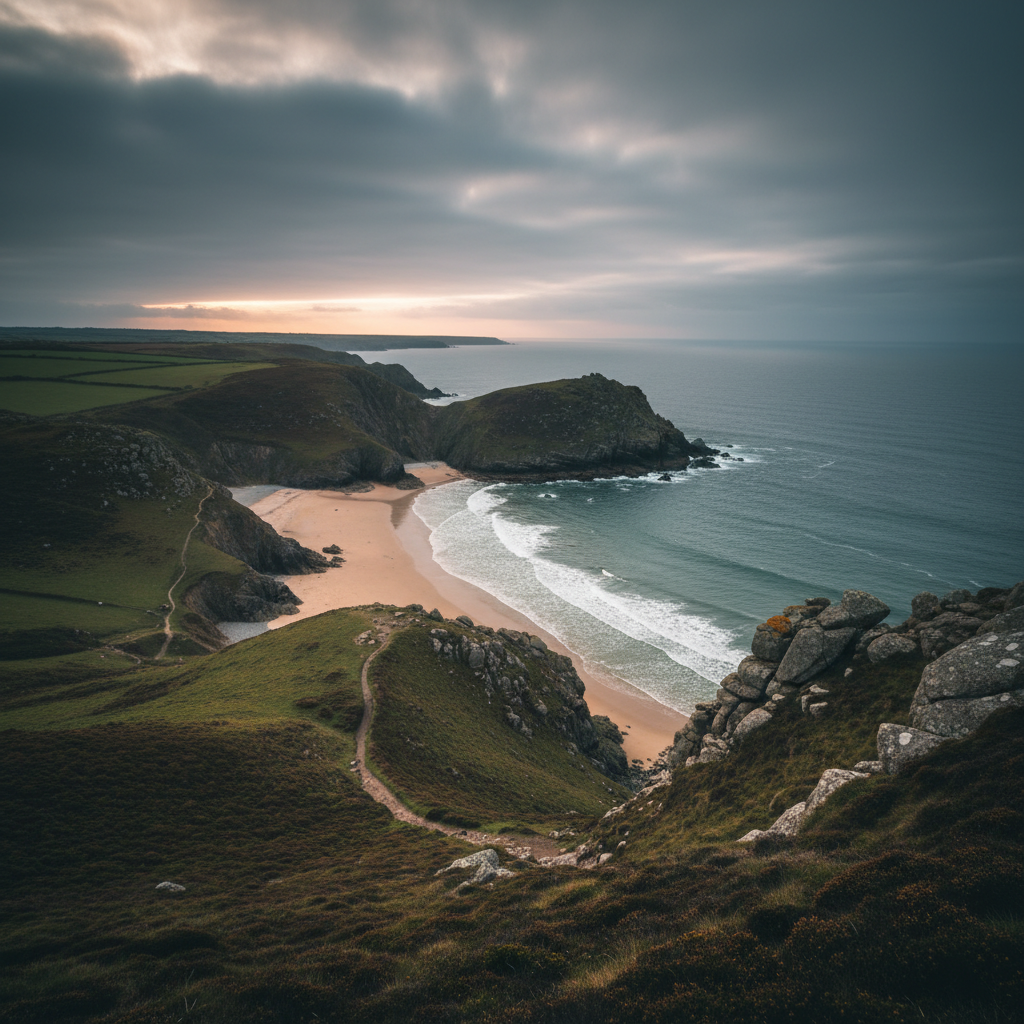
Bossiney Cove
Bossiney Cove brings a wilder, less polished coastal note to the Bodmin-side 3moors map.
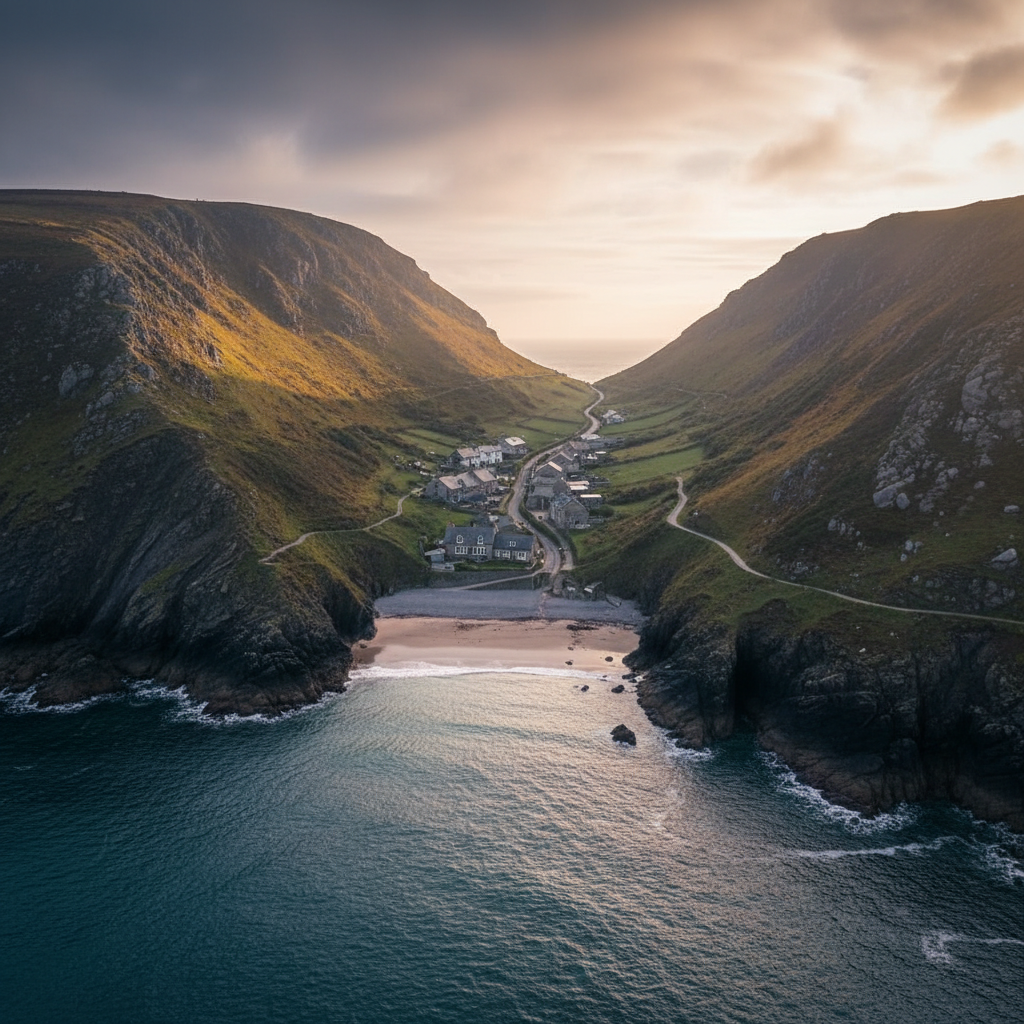
Crackington Haven
Crackington Haven works well as a quieter North Cornwall coastal place with strong walking and geology appeal.
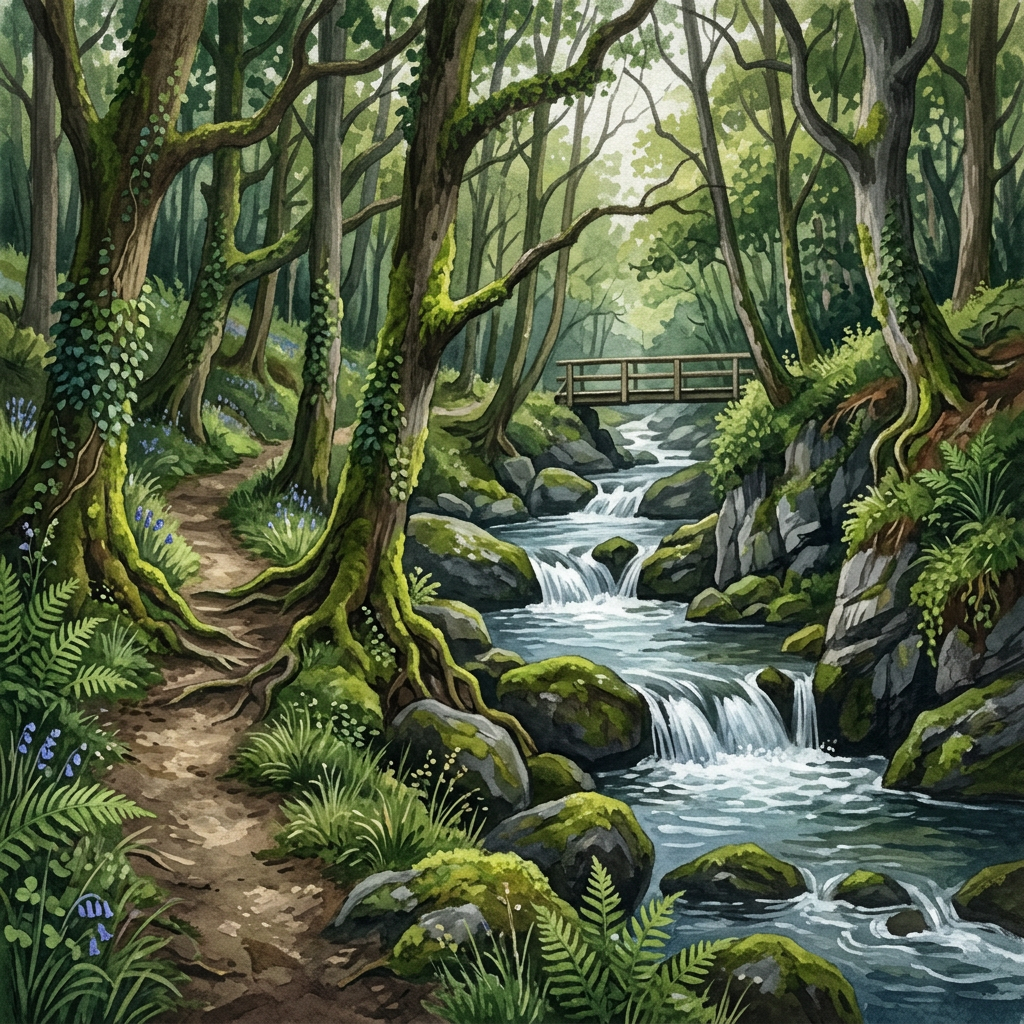
Golitha Falls
Golitha Falls offers a different side of Bodmin Moor — river, woodland and easier walking in a calm but atmospheric setting.
Join the 3moors Community for path conditions & local tips.
JoinWhy this place matters
Lizard Point — in its own right
What Lizard Point leaves you with is a version of perspective that's hard to manufacture elsewhere. Standing at the southernmost point of the mainland, even knowing that the designation is cartographic, that the ocean doesn't recognise the distinction, produces something real. The scale of the Atlantic from here is not notional. It is present, audible, occasionally spray-delivered. The place has been a landmark for ships and a destination for travellers long enough that the paths are worn deep. It rewards the visitor who doesn't rush it, who sits long enough to let the weather change once, who looks at the rock as well as the horizon. It is not the most dramatic headland in Britain, nor the most remote. But it is at the end of something, and that quality, the sense of having arrived at a conclusion — is not easily found.
Explore more
Discover other places, walks, and hidden corners across Bodmin Moor.