Exmoor · North Exmoor coast
Lynton
A dramatic hilltop town overlooking steep cliffs and the Bristol Channel.
About
Lynton
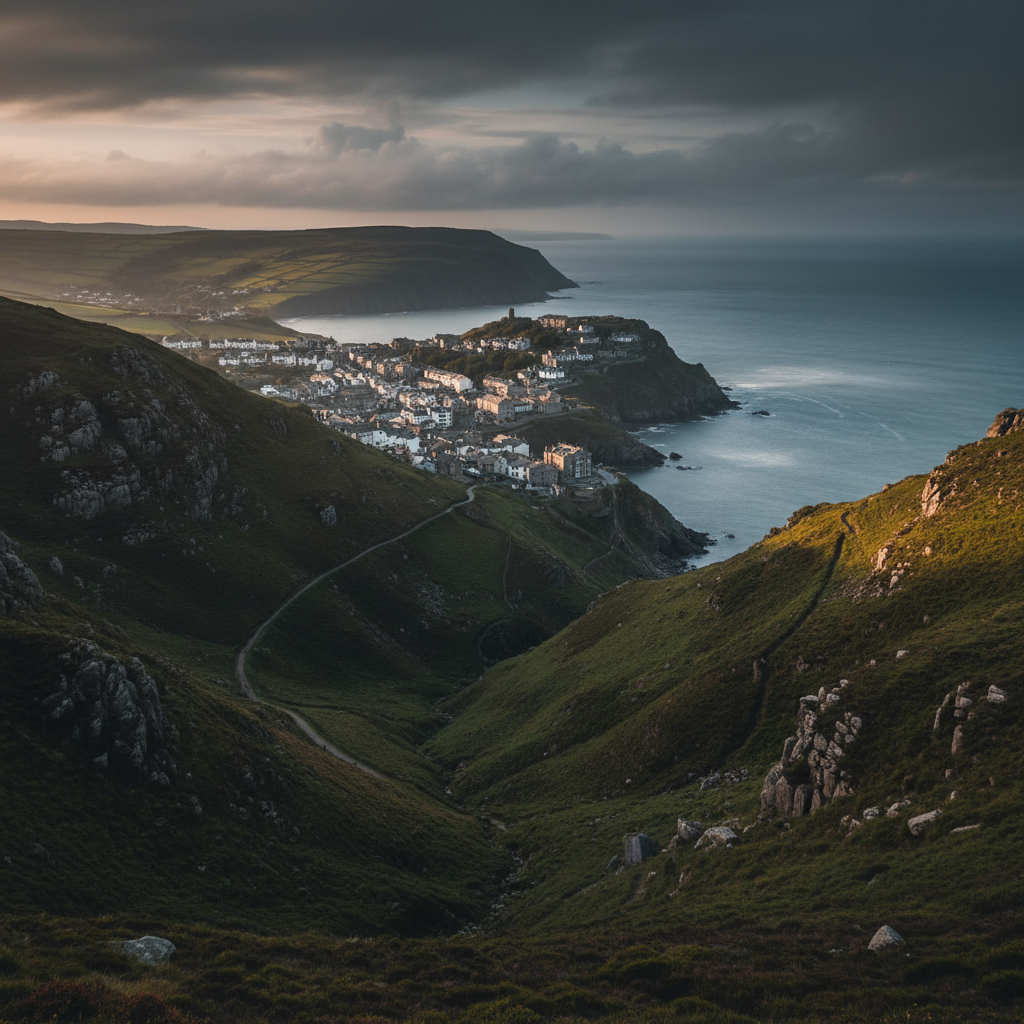
Lynton sits high on the cliffs above the Bristol Channel, a Victorian hill town that grew around the tourist trade and has never quite lost its air of genteel ambition. The town occupies a ridge position that gives it commanding views in almost every direction — out over the water to Wales on clear days, down into the wooded gorge of the East Lyn River, and west along a coastline of extraordinary drama. It is not a large place, but it carries itself with a certain confidence born of its setting.
People come to Lynton primarily for the walks. The Valley of Rocks lies just to the west, the coastal path runs in both directions along clifftops that rank among the most spectacular in southern England, and the steep descent to Lynmouth — its twin village far below — is itself a piece of theatre. The cliff railway that connects the two has operated since the 1890s and remains one of the more curious and practical pieces of Victorian engineering still in working use.
The town itself has the character of a Victorian resort built with optimism and left to mature quietly. There are hotels, a scattering of cafés and shops, a town hall with a clock tower, and streets that feel slightly formal against the wildness pressing in from every side. Visitors tend to use Lynton as a base rather than a destination in itself, though the views from the edges of town are reason enough to linger.
Exmoor surrounds it. The high moor lies inland, open and windswept, while the coast drops away in a series of heathered slopes and wooded combes. The interplay of moorland, cliff and sea gives this corner of Exmoor a particular intensity that other parts of the national park — fine as they are — do not quite replicate. Lynton is well placed at the centre of it.
Character
The feel of Lynton
There is something slightly suspended about Lynton, as though the town paused mid-development sometime around 1910 and decided it was comfortable enough where it was. The Victorian and Edwardian architecture sits intact along the main streets — solid, unhurried, built to impress visitors who arrived by carriage and later by charabanc. Today's visitors arrive by car on narrow roads and feel, for a moment, that they have overshot modernity.
The real character of the place, though, is determined less by its buildings than by its position. Stand at any of the natural viewpoints on the town's edge and the scale of what surrounds it becomes clear. The cliffs fall hundreds of feet to the sea. The moor rises behind. The woodland fills the valley below. Lynton occupies a narrow shelf between wild things, and that tension — between the neat town and the enormous landscape — gives it an atmosphere unlike anywhere else on Exmoor.
It is quieter than its reputation might suggest, except in the height of summer. On an autumn morning, with mist sitting in the valley and the sea glittering beyond the clifftops, it can feel genuinely remote despite its facilities. That combination of accessibility and wildness is not easily found.
First-hand visit
Keith's Take
Perched high above the Bristol Channel on a ridge between moor and sea, Lynton offers something rarer than most coastal towns: genuine drama in all directions.
On a clear day, the view from the cliff-edge paths above Lynton can stop you mid-stride. The Bristol Channel spreads out below, the Welsh hills are a faint blue line on the horizon, and the cliffs curve away east and west in a sequence of headlands that seems to belong to a larger landscape than this corner of Devon. The town behind you, with its Victorian guesthouses and clock tower, feels briefly improbable — a drawing-room placed at the edge of something enormous.
The valley below tells a different story. Lynmouth lies tucked at the foot of the gorge, small and sheltered, its river running to the sea past the harbour. The relationship between the two settlements — one elevated and exposed, one low and enclosed — captures something essential about how this coast is built. Height and depth, openness and shelter, exist in close and dramatic proximity.
In autumn, when the light drops low and the bracken on the surrounding slopes turns copper and rust, the whole scene takes on a quality that is harder to capture than to feel. The paths are quieter, the air is sharper, and the landscape settles into its own rhythms. This is when Exmoor's coast is at its most itself.
Keith's Take — a first-hand account from the 3moors team
Map & Getting Here
Getting to Lynton
What to expect
A natural way to spend time here
Lynton is a functioning small town rather than a visitor attraction, and arriving here feels different from arriving at a managed site or a car park with a waymarked trail. There are streets, a post office, places to eat, and the general texture of a working community. The visitor infrastructure is real but not overwhelming — this is not a honeypot in the more pressured sense, though summer weekends can bring significant numbers.
The access to walks is immediate. Within five or ten minutes of parking, a visitor can be on the coastal path heading east towards Foreland Point, descending to Lynmouth by the cliff railway or on foot, or heading west towards the Valley of Rocks. The transitions between town and open landscape are abrupt and satisfying. There is little in the way of build-up.
Conditions change quickly here, as they do across Exmoor's coast. The cliff tops are fully exposed to Atlantic weather and what starts as a pleasant morning walk can turn cold and wet with little warning. Layers and waterproofs are sensible regardless of forecast. The paths are generally well-maintained but steep in places, and some sections involve significant ascent and descent over rocky or rooty ground.
What makes it stand out
What makes Lynton special
What separates Lynton from other coastal settlements on Exmoor is the sheer verticality of its setting. Most coastal villages in the south-west sit at sea level, sheltered in coves or tucked behind harbour walls. Lynton is perched above all of that — the sea is visible but not adjacent, the beaches accessible only by descent, the whole relationship with the coast mediated by height and effort. This gives it a different quality of drama.
The link to Lynmouth below adds another dimension. The two settlements function as a single place in practical terms — Lynmouth has the harbour, the river, the lower cafés and guesthouses
Lynton has the views, the cliff railway terminus, and the access to the high coast path. Moving between them by the water-powered railway, or on foot down the steep path through the woods, is itself part of the experience of being here.
The proximity to the Valley of Rocks — a dry valley running parallel to the coast, studded with weathered rock formations and open to the sky — means that Lynton offers something genuinely unusual within a short walk of its streets. There are few places in England where you can step from a Victorian high street into a landscape that looks, in certain lights, almost otherworldly.
Don't miss
Things to see and do
Ride the Victorian water-powered cliff railway between Lynton and Lynmouth.
Walk west from the town to the Valley of Rocks and its distinctive weathered tors.
Follow the coastal path east towards Foreland Point for open clifftop walking above the Bristol Channel.
Descend to Lynmouth on foot through steep wooded paths and look back up at the cliff face.
Explore the East Lyn River valley upstream from Lynmouth for riverside woodland walking.
Visit the town hall and surrounding streets to observe the intact Victorian resort architecture.
Look out over the Bristol Channel from the cliff-edge viewpoints on the town's western side.
Scan the sea and sky from elevated points — this coastline is good for soaring birds and, occasionally, cetaceans offshore.
Walks from here
Getting out from Lynton
The coastal path is the natural spine of any walking from Lynton. Heading east, it climbs onto exposed clifftops above the town and works its way along the coast towards Countisbury and Foreland Point, Exmoor's northernmost tip. The path here is dramatic and demanding in places, with steep ground and significant drops to the left. It rewards the effort with views that on clear days extend across the channel to the Welsh coast.
To the west, the path leads quickly into the Valley of Rocks — a route that can be extended as far as Heddon's Mouth and beyond for those with more time and energy. The valley itself is worth the short walk from town even for those not continuing further
the rock formations and open character of the landscape are striking and quite unlike the wooded combes that dominate much of this coastline.
A natural circuit for many visitors combines the coastal path in one direction with the descent to Lynmouth and the return via the cliff railway — or vice versa. The descent through the woods to Lynmouth on foot is steep but manageable and passes through attractive mixed woodland above the gorge. Returning by the railway saves the legs and offers a different perspective on the cliff. It is a practical and satisfying loop for a half-day.
Good to know
Before you go
The roads into Lynton are narrow and can be slow in summer. Arriving early in the day, especially in July and August, avoids the worst of the congestion and gives the best chance of finding parking without a long wait. The cliff railway operates seasonally — check current opening times before planning a visit that depends on it.
Weather on this stretch of coast can be markedly different from conditions reported for inland Exmoor or coastal Devon more broadly. The clifftops are exposed and the temperature drops quickly in wind or rain. Even on fine days, carrying waterproofs and an extra layer is advisable. Walking boots rather than trainers are recommended for any of the longer coastal routes, where the ground can be uneven and wet in all seasons.
Across the seasons: Late spring and early autumn are generally the best times to visit Lynton. The light in May and September is often excellent for the clifftop scenery, the heather on the surrounding moor is at its best in late August, and visitor numbers are lower than in July and August. The coastal path can be walked comfortably in most months, though winter brings shorter days and exposed conditions. Summer brings the largest visitor numbers and the most reliable weather, but also the most pressure on parking and the narrowest roads. Weekends in July and August can feel busy by Exmoor standards, though the landscape quickly absorbs walkers once they are away from the town. Early morning visits in summer are rewarding — mist often sits in the valley below and the light on the sea is clean before midday haze develops. Winter has its own character here. The town is quieter, the views on clear days can be extraordinary, and the cliff railway may not be operating. Some cafés and guesthouses close or reduce hours between November and March. Walking the coastal path in winter requires good preparation and an awareness of early darkness, but those who come find a very different and often intensely atmospheric place.
Practical info
Practical info
Parking in Lynton is available within the town but space is limited and fills quickly during summer months and school holidays. Check local parking information before travelling during peak periods. Approaching on the narrow roads that serve the town requires care, particularly when passing oncoming traffic. Arriving early in the day gives the best chance of straightforward parking.
Lynton has a reasonable range of facilities for a small town, including cafés, pubs, guesthouses, a post office and independent shops. Public toilets are available in the town. Lynmouth below offers additional options including riverside cafés and a harbour. The cliff railway connecting the two is a paid service operating seasonally.
The town itself is navigable on foot, though its position on a steep ridge means some streets involve significant gradients. Coastal path routes from Lynton are moderate to strenuous, with steep ascents and descents, exposed clifftops and sometimes rough or rooty surfaces. Use designated paths in poor visibility, particularly near cliff edges. The descent to Lynmouth on foot is steep and can be slippery in wet conditions.
varies
Explore nearby
Places nearby
Bossington
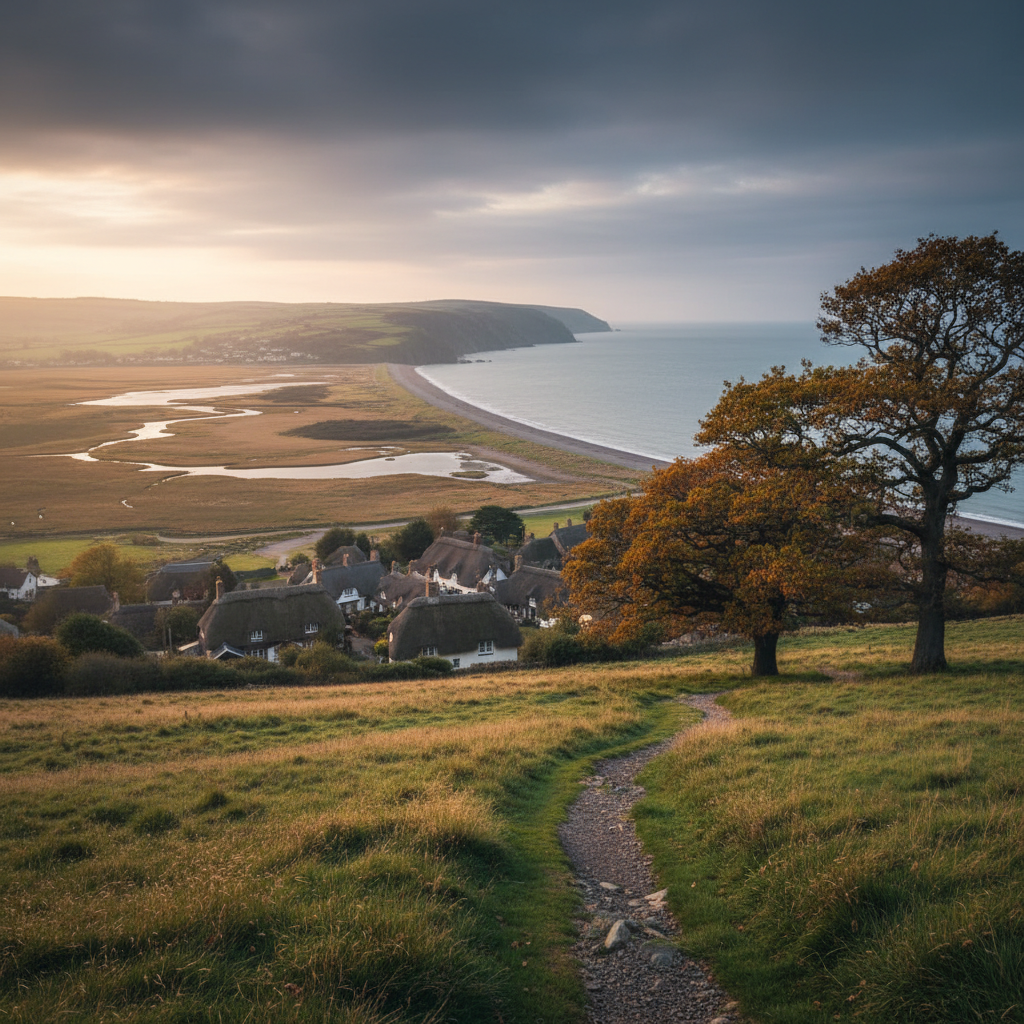
Bossington offers a softer Exmoor coastal stop, with village character, marshland, beach and good walking links.
Heddon Valley
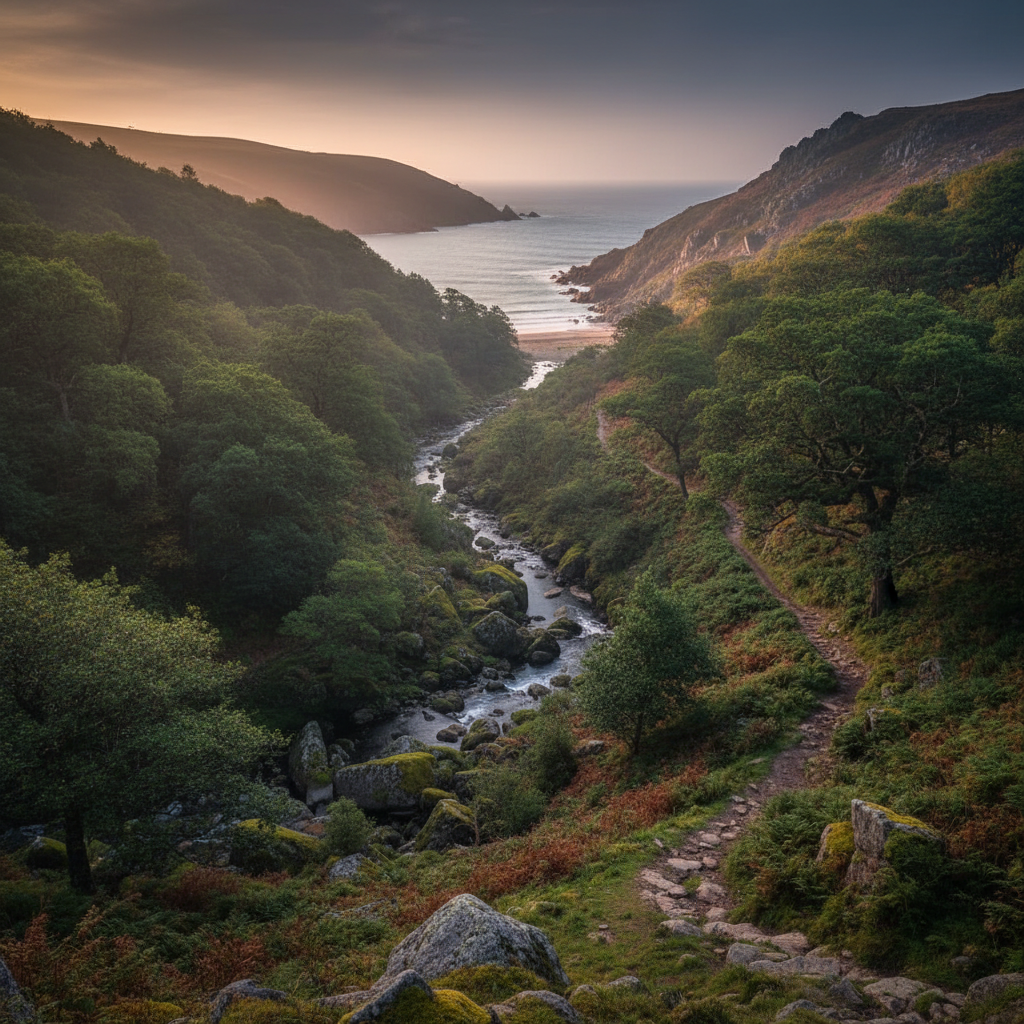
Heddon Valley is one of Exmoor’s best coast-and-combe places, combining woodland, river and sea-edge walking.
Porlock Weir
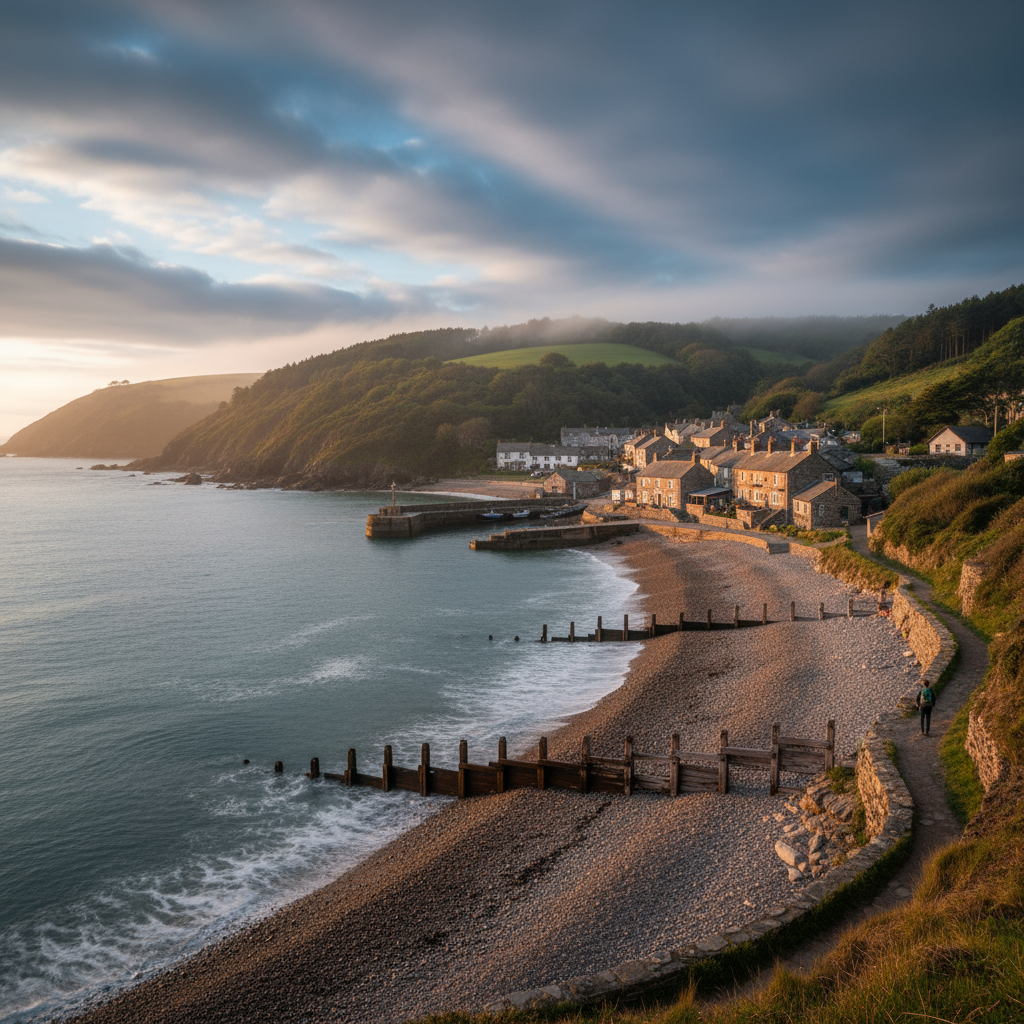
Porlock Weir adds harbour character, coastal walking and one of Exmoor’s most atmospheric sea-edge stops.
Combe Martin
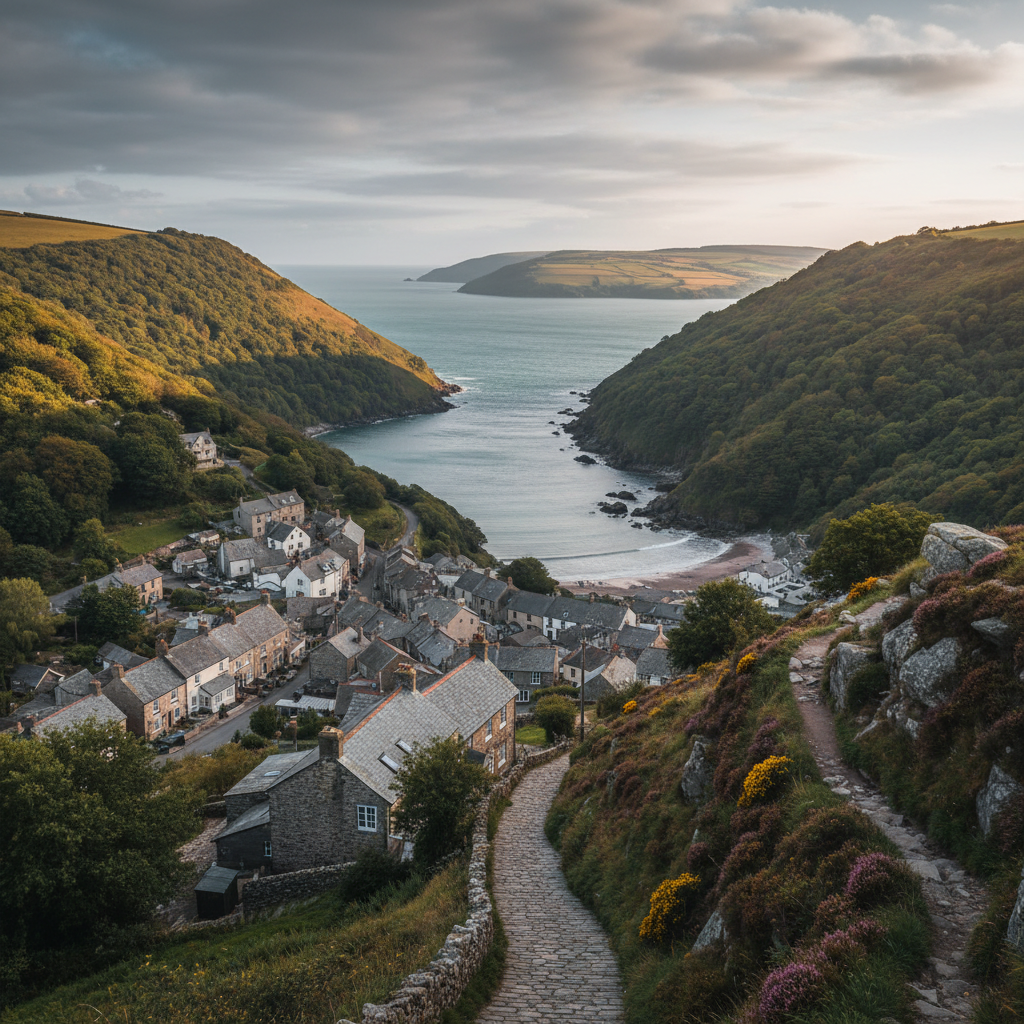
A useful base for combining beach time, cliff walks and Exmoor exploration.
Join the 3moors Community for path conditions & local tips.
JoinWhy this place matters
Lynton — in its own right
Lynton earns its reputation not through any single feature but through the cumulative effect of its position — a town perched improbably above cliffs, with the sea before it and the moor behind, offering access to walking country that is among the finest in southern England. It is not showy about any of this. It simply sits where it sits and lets the landscape speak. For those who want to understand the particular character of Exmoor's northern coast — its scale, its drama, its combination of openness and shelter — Lynton is a natural place to start. The walks go in all directions. The views change with every weather system. There is always a reason to stay a little longer than planned.