
Exmoor · North Exmoor coast
Combe Martin
A long coastal village with steep wooded hillsides and easy access to Exmoor’s coastline.
About
Combe Martin
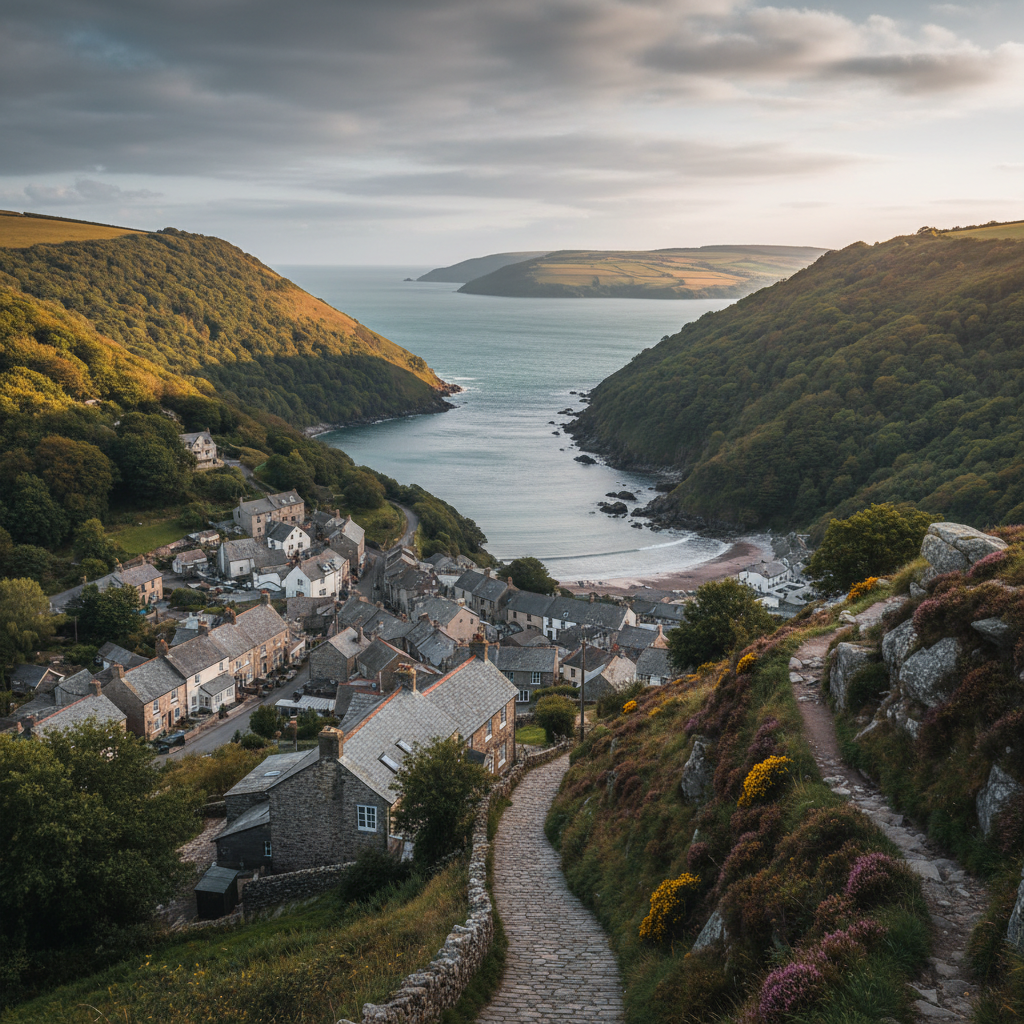
Combe Martin sits at the bottom of one of the longest village streets in England, pressed into a narrow combe that runs down from the high ground of Exmoor's northern edge to a small shingle and sand beach where the Bristol Channel opens wide and grey. The valley is steep on both sides, wooded with oak and ash, and the stream that runs through it follows the same line as the road, the houses, and the gardens that cascade down the hillside. This is not a place that announces itself. You arrive by degrees, the village unfolding in sections as the road descends.
The setting means Combe Martin responds to the seasons more visibly than most coastal villages. In late spring the wooded sides of the combe fill with blossom and new leaf, and the light that reaches the valley floor is green and filtered. By late October the same slopes are amber and copper, the canopy thinning to let in a harder, lower light. In winter, when the visitors have gone, the village contracts to something much quieter, and the sea at the end of the street takes on a pewter quality that has nothing to do with leisure.
People come here for the beach, which is manageable and sheltered relative to the more exposed stretches further along the North Devon coast. They come for the walking, which connects quickly to the South West Coast Path and from there to the full drama of Exmoor's sea cliffs. And some come simply because the village feels navigable. It has what it needs, and little more, and that balance suits a certain kind of visitor very well.
The wider area belongs to the Exmoor National Park, and the coast above the village is National Trust land. The combination means the surrounding landscape is largely intact: no sprawl, no development on the clifftops, no interruption to the skyline. The beach itself is accessible at most states of tide, though the character of the cove shifts noticeably as the water moves in and out.
Character
The feel of Combe Martin
The village street gives Combe Martin a linear quality that most coastal settlements lack. From the top of the valley to the sea is a considerable distance, and walking the length of it passes through several different versions of the same place: residential, then commercial in a low-key way, then car park and slipway, then shingle. The transition is gradual rather than sudden, which gives the village a drawn-out, unhurried quality that suits the pace of most visits here.
What the combe geography creates, almost incidentally, is a degree of solitude that is unusual for a village with a beach. The steep sides absorb sound. On a weekday morning in early September, the valley can feel genuinely private. Sound carries oddly in enclosed spaces, and here it is most often birdsong from the wooded slopes and the occasional call from the stream below, rather than traffic or voices. That quality does not survive peak summer, but it returns quickly once the school holidays end, and for most of the year Combe Martin is a place where you can think.
The beach at the bottom of the village is small enough that it never loses its cove-like character, even when it has visitors on it. The water colour shifts with weather and season: green-grey in overcast conditions, a surprising pale blue on clear days when the channel is calm. The cliffs on either side are reddish-brown sandstone, and they hold the light in the late afternoon in a way that makes the cove feel warmer than the temperature would suggest.
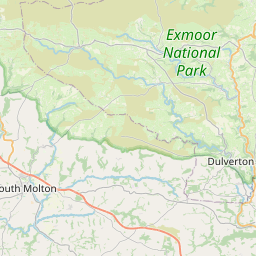
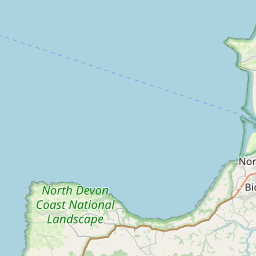
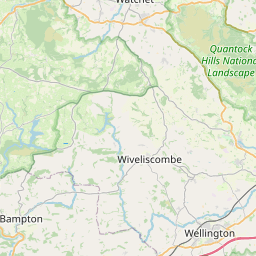
Map & Getting Here
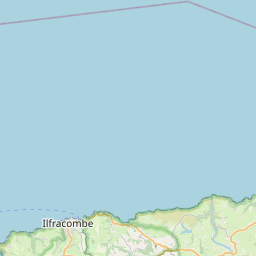
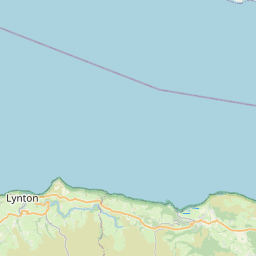
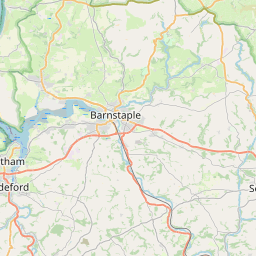
Getting to Combe Martin



What to expect
A natural way to spend time here
The walk down through the village to the cove takes longer than you expect, which is itself informative. The street is narrow and the pavement uneven in places, and you pass houses with front gardens that drop steeply to the road, and others where the ground floor sits below street level. The stream appears and disappears beside you. By the time you reach the slipway, you have already read something of how this place is put together.
At the beach, the shingle registers differently underfoot depending on where the tide has left it: compacted and firm near the waterline, loose and effortful further up. The smell is salt and kelp and, at low tide, the particular mineral sharpness of exposed rock. The sandstone cliffs either side are close enough to feel enclosing in a reassuring rather than oppressive way, and the sound of the water changes as the waves meet the different surfaces: shingle, then sand, then rock.
The place rewards patience more than activity. Sitting with the cove at half tide and watching the waterline shift, noting the small details of rock pool life, or simply tracking the cloud shadow across the channel is how most of the time here seems to get spent, and how it is best spent. Those who arrive with a plan tend to abandon it before long.
What makes it stand out
What makes Combe Martin special
What distinguishes Combe Martin from the more visited stretches of North Devon coast is the transition it offers between two kinds of landscape within a single short visit. The beach is genuine and accessible, but it is also the mouth of a wooded valley that climbs directly onto the open moor. Within half an hour of leaving the shore you can be on high ground with views across the Bristol Channel to Wales. That range, compressed into a small area, is not easily found elsewhere on this coast.
The other particular quality is the village's unshowiness. There is no harbour built for Instagram, no row of pastel-painted houses, no prominent seafood restaurant with a queue outside. Combe Martin is a working settlement that happens to have a beach at one end. The buildings along the street are varied and largely unpretentious, the pubs are local in character, and the general atmosphere resists the curation that has overtaken some comparable places on the Devon and Cornwall coasts. It is distinctive partly because of what it has not become.
Don't miss
Things to see and do
Walk the South West Coast Path westward from the village towards Watermouth for the first views back along the combe from the clifftop.
At low tide, work your way around the base of the eastern cliffs to the rock pools beyond the main beach.
Look for grey herons fishing in the stream that runs through the village, particularly in the quieter months.
Take the steep lane up through the wooded hillside on the eastern side of the combe for a view down over the rooftops to the sea.
Watch the light on the Bristol Channel in the hour before sunset, when the water shifts from grey to something almost copper.
Follow the stream upstream from the village car park to where the valley narrows and the trees close in overhead.
Check the tide table before planning a long walk along the base of the cliffs, and go early when the sand is still wet and firm.
Sit at the top of the slipway on a weekday morning in September and count how few people pass.
Walks from here
Getting out from Combe Martin
The South West Coast Path runs through Combe Martin and connects the village to two very different directions. Heading west towards Ilfracombe, the path climbs steeply from the village onto the clifftop and follows a switchbacking route with sustained views across the channel. The terrain is rough in places and the ascent from the beach is unambiguous, but the reward is a long, high traverse with the sea below and open moorland rising behind. The full section to Ilfracombe is around five miles and takes the better part of three hours at a measured pace.
Heading east from Combe Martin, the coast path moves through National Trust land towards Great Hangman, which is one of the highest sea cliffs in England and one of the most dramatic viewpoints on the Exmoor coast. The walking here is more exposed and the terrain less forgiving, but the route is well-marked and the effort is proportionate to what it delivers. A return loop is possible via the high moorland above, bringing you back down into the head of the combe through open grassland before the woodland reasserts itself on the descent. Allow a full half-day and carry water.
Good to know
Before you go
Parking in Combe Martin is limited and the main car park at the beach fills early on fine summer days. Arriving before ten in the morning is the most reliable strategy in July and August. The village street is not suited to large vehicles, and manoeuvring at the lower end can be time-consuming. Dogs are permitted on the beach outside the main summer season, and the village generally has a dog-friendly character, though it is worth checking seasonal restrictions at the beach itself before planning accordingly.
The tidal range in the Bristol Channel is substantial, and what appears as a generous sandy beach at low tide becomes a much reduced shingle strip at high water. Checking tide times is genuinely useful here, not merely precautionary. The cliff walks above the village are well-maintained but can be slippery after rain, and the descent routes back into the combe are steep enough to require care. Walking poles are not excessive on the Great Hangman route.
Across the seasons: Combe Martin in June and July is a different proposition from the same place in March or November. The peak summer weeks bring enough visitors to fill the car park and animate the beach, but the village absorbs them without obvious strain, and the coast path above is rarely crowded even on fine days. The wooded sides of the combe are at their densest in high summer, which deepens the feeling of enclosure in the valley and makes the sudden opening onto the clifftop more arresting by contrast. The clearest period for coastal walking is typically late April through early June, when the light is long, the crowds are thin, and the vegetation on the cliff path is fresh rather than overgrown. Autumn brings its own logic: the bracken on the upper slopes turns from October, and the lower woodland follows through November in shades that make the combe worth walking even in poor weather. The sea in autumn tends to be more volatile, the channel rougher and the light more dramatic, which suits the coast path better than the beach. Winter visits require intention rather than impulse. The beach offers little shelter in westerly weather, and some of the cliff paths become genuinely hazardous after sustained rain. But the village in January or February, lit at dusk with the channel visible at the end of the street, has a self-contained quality that is entirely its own.
Local weather
Weather near Combe Martin
Cloudy
Today
Met Office forecast · updated every 30 min
Practical info
Practical info
There is a main public car park near the village centre, but spaces fill quickly in summer, particularly on sunny weekends when the beach draws visitors from across the region. The village street is long and narrow, and roadside parking is limited and often contested by residents and passing traffic alike. Arriving early in the morning or later in the afternoon gives a noticeably better chance of finding a space without frustration. Do not rely on finding overflow or informal parking nearby without checking current provision before you travel.
The village has a reasonable spread of everyday facilities for a coastal settlement of its size, including a pub, a small number of shops, and public toilets near the beach end of the main street. Facilities are more limited outside the summer season, and some businesses close or reduce hours from autumn onwards. There is no visitor centre as such. Those planning longer walks onto the coast path or onto Exmoor should carry food and water, as resupply options thin out quickly once you leave the village.
The main beach and lower village are easy to reach on foot, with no significant gradient at that level. The coast path heading in either direction from Combe Martin rises steeply through woodland and onto exposed clifftops, and some sections can become slippery after rain. Sturdy footwear is advisable for anything beyond the beach and lower paths. The cliff sections are open to prevailing westerly weather and can feel considerably wilder in wind and low cloud than the sheltered valley below suggests.
varies
Explore nearby
Places nearby

Ilfracombe
Ilfracombe combines working harbour character with strong coastal scenery and access to Exmoor’s western edge.
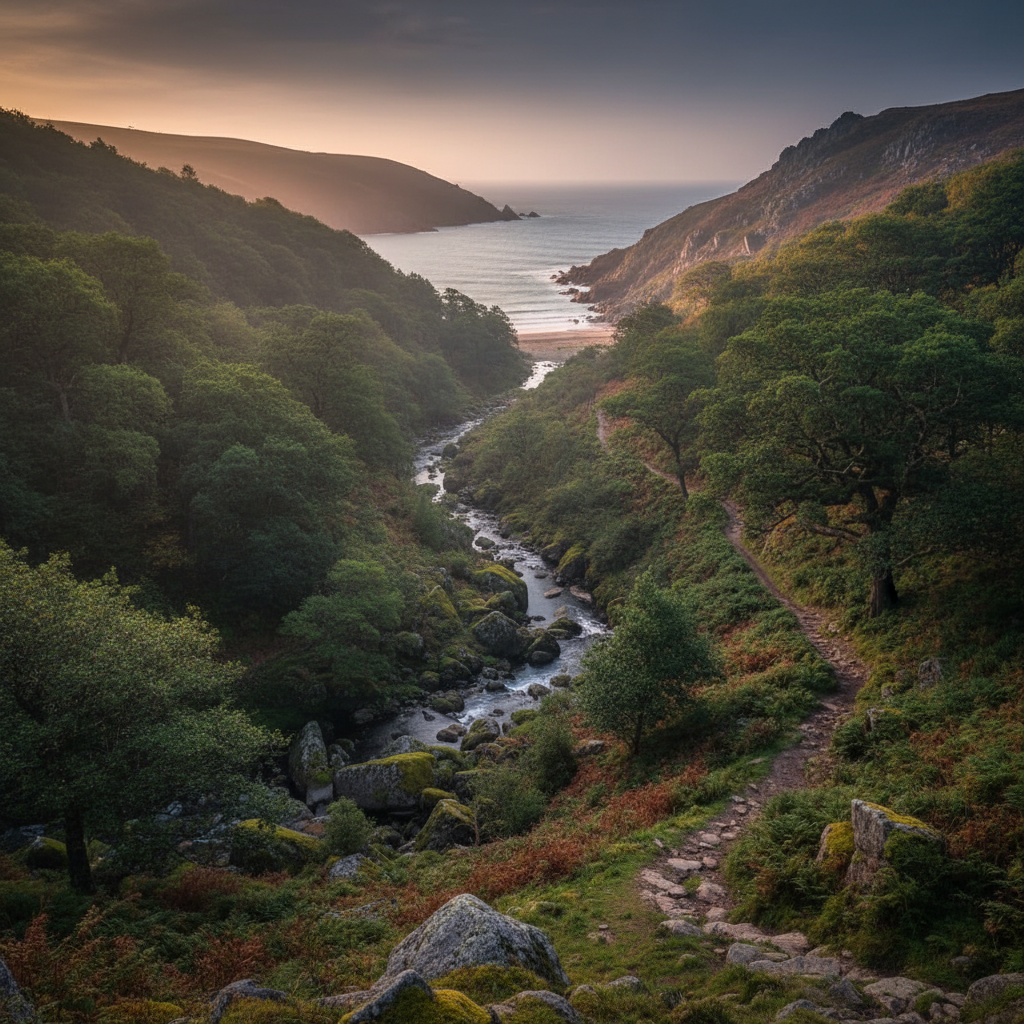
Heddon Valley
Heddon Valley is one of Exmoor’s best coast-and-combe places, combining woodland, river and sea-edge walking.
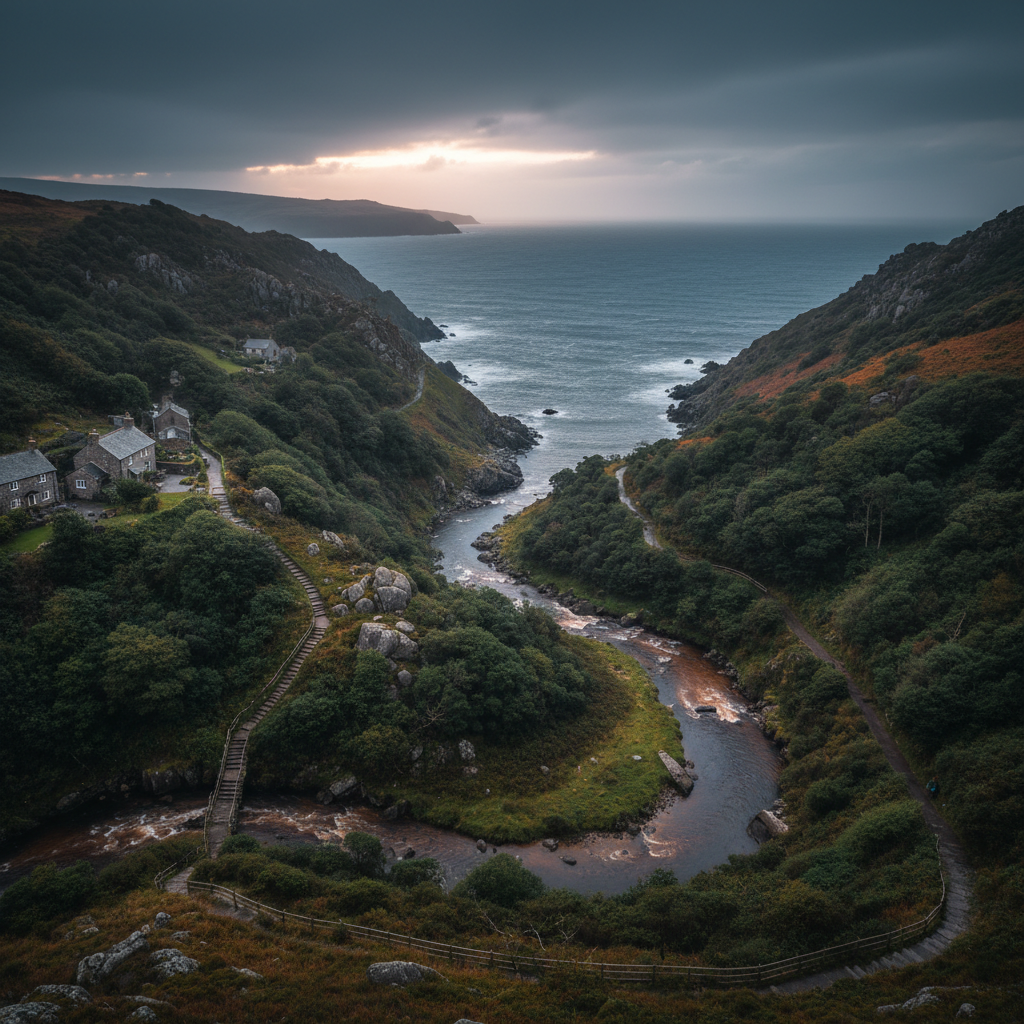
Lynbridge
Lynbridge gives immediate access to some of Exmoor’s most dramatic coastal landscapes.

Lynton
Lynton combines strong coastal scenery with access to Exmoor’s best-known walks.
Join the 3moors Community for path conditions & local tips.
JoinWhy this place matters
Combe Martin — in its own right
What stays with you about Combe Martin is not any single view or moment but the rhythm of the place, the way the village is pulled between the high moor behind it and the tidal sea at its feet. The tide governs more than the beach. It sets the timing of walks, adjusts the available sand, determines whether you linger or press on. Living alongside that rhythm, even briefly, tends to reorganise a visit in ways that a more managed destination would not allow. You arrive with a plan and find yourself working to a different schedule, one set by water and light rather than opening hours. That quality is easy to miss if you only come for a day in August. But return in a quieter month, stay long enough for the tide to turn twice, and Combe Martin reveals itself as a place with genuine depth beneath its modest surface.