
Exmoor · North Exmoor
Malmsmead
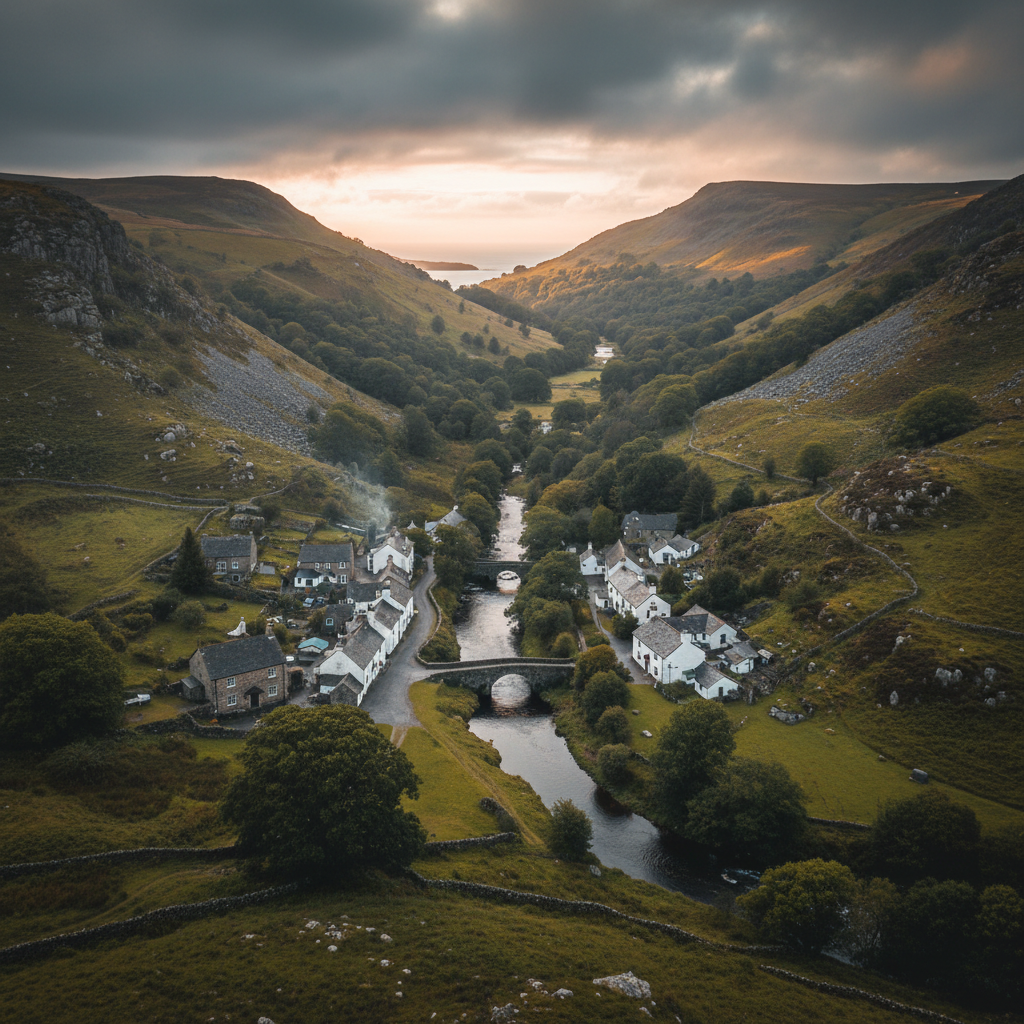
A tiny riverside settlement surrounded by wooded valleys and steep coastal combes.
About
Malmsmead
Malmsmead sits at the meeting point of Badgworthy Water and Oare Water, folded into a steep-sided combe on the northern edge of Exmoor. It is barely a hamlet in the conventional sense: a handful of buildings, a ford, a small bridge, and a farm track disappearing up into the oak woodland above. The scale is intimate to the point of feeling accidental, as though the place settled here simply because the valley floor allowed it.
The surrounding landscape does most of the talking. Wooded valleys press in close on all sides, and the hills rise sharply to open moorland above the treeline. This is a corner of Exmoor where the pastoral and the wild exist in close negotiation, with grazing land giving way to bracken and heather within a short climb. The rural life here is not decorative. The farm buildings are working structures, the tracks carry vehicles as well as walkers, and the rhythms of the valley follow the land and the livestock rather than the visitor calendar.
Most people arrive because Malmsmead sits at the heart of Doone Country, the landscape associated with R. D. Blackmore's novel Lorna Doone, published in 1869. Badgworthy Valley, which runs south from the hamlet, is the most commonly cited location for the fictional Doone settlements, and a small nature centre near the ford acknowledges that literary connection directly. The association draws visitors, but the valley absorbs them quietly. It is too tucked-in, and the walking too purposeful, for the place to ever feel overrun.
The ford itself is a useful marker of the hamlet's character. Vehicles occasionally test it, walkers cross on stepping stones alongside, and the water moves quickly over flat stone regardless of who is watching. It is a working crossing, not a picturesque amenity, and that distinction holds for Malmsmead as a whole.
Character
The feel of Malmsmead
There is a quality of stillness at Malmsmead that is not the same as emptiness. The valley carries sound well: water over stone, wind moving through the upper canopy, the occasional call of a bird from the far bank. But these sounds do not accumulate into noise. They settle into the background, and the place holds them without effort. This is quietness of a particular kind, the sort that comes from a landscape that has not been managed for visitors and does not feel the need to perform.
The built fabric of the hamlet is sparse enough that the natural setting reasserts itself at every turn. Stone walls follow the watercourse. The bridge is low and functional. Trees lean over both banks of the river, and in wet weather the whole valley floor takes on a damp, moss-green quality that makes the buildings seem incidental. There is no village green, no pub, no church to organise the space. Malmsmead is not a community in the institutional sense. It is more like a pause in the valley, a place where people and paths converge briefly before moving on.
That absence of the conventional village apparatus is, in its way, part of what the place offers. Visitors who arrive expecting a settlement find instead a river, a ford, a car park tucked into the trees, and a track leading into open country. The adjustment takes a moment, but it is the right kind of surprise.
Map & Getting Here
Getting to Malmsmead
What to expect
A natural way to spend time here
The car park at Malmsmead is small and fills on warm weekends, but the hamlet beyond it takes only a few minutes to pass through. You cross the bridge or use the stepping stones beside the ford, note the farm buildings and the nature centre on the far side, and then the valley path begins. The transition is matter-of-fact, without ceremony.
Once the path turns south along Badgworthy Water, the sounds change. The ford and the car park fall away behind a bend, and what remains is the river running over a stony bed, wood pigeons somewhere up in the oak canopy, and the underfoot texture shifting between dry leaf litter and patches of mud depending on recent weather. In late spring the air along the valley floor carries that particular green-water smell of fast-moving streams through deciduous woodland, clean and slightly cold even on warm days.
This is a place that rewards a patient approach. Moving slowly along the riverside path, stopping to watch the water rather than pressing on toward a fixed objective, tends to reveal more: a dipper working the current, a narrow side stream entering from the hillside, the way the light falls differently once the canopy opens. Malmsmead is a starting point, not a destination in itself, and visitors who treat it that way tend to leave with more than those who arrive with a firm plan.
What makes it stand out
What makes Malmsmead special
What distinguishes Malmsmead from other Exmoor access points is the immediacy of its transition from arrival to landscape. There is almost no intermediate zone. Within a few minutes of leaving the car park, the valley narrows, the path follows the water closely, and the sense of being inside the landscape rather than on its edge becomes pronounced. Comparable starting points on Exmoor tend to involve a walk through a village, a road crossing, a climb before anything opens up. Here, the immersion is near-instant.
The Badgworthy Water valley also has a particular character that sets it apart from the better-known combes of the north coast. The woodland is predominantly sessile oak, and in the upper reaches it thins into open moorland with long sight lines across the valley. The transition from enclosed, damp woodland to exposed upland happens gradually enough to feel earned. The river itself is reliable company throughout, audible if not always visible, and the path never strays so far from it that the sound disappears entirely.
Don't miss
Things to see and do
Cross the ford on the stepping stones rather than the bridge, and take a moment to watch the water level and speed before moving on.
Follow Badgworthy Water south along the valley path as far as the ruins of the medieval village, a mile or so upstream, where the landscape opens and the moorland begins to take over.
Watch for dippers from the bridge at the hamlet, particularly in the early morning when the river is less disturbed.
Climb the steep path out of the valley on the eastern side to reach the open ridge above the treeline, where the view back down into the combe is worth the effort.
Look for the carved Lorna Doone memorial stone near the nature centre, a modest and slightly weathered marker that sits more comfortably here than a grander monument would.
Walk the valley floor in both directions from the hamlet: south into Badgworthy and north toward Oare, two distinct characters in the same watercourse.
Pause at the wider reaches of the river where the current slows and the water becomes transparent enough to see the streambed clearly in the afternoon light.
Walks from here
Getting out from Malmsmead
The primary walk from Malmsmead follows Badgworthy Water south through the valley that carries most of the Doone Country association. The path is clear and well-used, keeping close to the river for most of its length. After roughly a mile the woodland begins to thin and the valley opens into rougher grazing and moorland, with the ruins of a medieval hamlet visible on the valley floor. From here, walkers can continue south to Cloud Farm and beyond toward the higher moor, or loop back via the western ridge for a different perspective on the descent.
Northward, a quieter and less frequented path follows Oare Water downstream toward Oare itself, a small settlement with a church notable for its association with the Blackmore novel. This is a gentler walk than the Badgworthy route, lower and more sheltered, with the river running through pasture rather than woodland for much of the distance. The return can be made along the same bank or, with some route-finding, along the higher ground to the east. Together, the two valleys offer a natural figure-of-eight circuit for those with a full day available, though the terrain on the upper sections warrants appropriate footwear and clothing.
Good to know
Before you go
The car park at Malmsmead is small and access involves narrow lanes from multiple directions. Arriving before ten on summer mornings or after four in the afternoon avoids the period when the car park is most likely to be full. There is a small honesty-box charge for parking. The ford is passable by most vehicles in normal conditions, but after sustained rain the water level rises and the crossing becomes inadvisable
the bridge alongside is always available to walkers.
The valley paths are generally clear but can be muddy in the lower sections throughout the wetter months. Waterproof footwear is worth having from October through April. There is a small farm-based refreshment point near the hamlet which operates seasonally
opening hours vary and it is not reliable enough to plan around. Carry water and food for any walk extending beyond the immediate valley floor.
Across the seasons: Late spring brings the valley floor to its most visually dense state. The sessile oaks come into leaf through April and May, and the woodland floor carries bluebells in the sheltered sections closest to the river. The water level is usually manageable after the winter, and the path surfaces have begun to dry. This is the most rewarding time for the Badgworthy walk, when the enclosed quality of the valley feels lush rather than oppressive. Autumn is the other strong season. By late October the oak canopy turns copper and rust, and the contrast between the warm woodland colour and the cold light on the water is worth the journey in itself. The bracken on the upper slopes goes through amber and brown in sequence across October and into November, and the moor above the valley takes on the particular quality of light that low sun and open ground produce. Visitor numbers drop significantly after the school holiday period, and the valley recovers its usual composure. Midwinter and early spring are for the prepared and the purposeful. The paths can be heavily waterlogged in January and February, the light fades early, and the valley feels genuinely remote in poor weather. That is not a reason to avoid it, but it is a reason to arrive with the right kit and a realistic plan. The river in full winter flow is a different proposition from the accessible summer stream, and worth seeing on its own terms.
Practical info
Practical info
Parking at Malmsmead is extremely limited. There is a small National Park car park near the ford, but it fills quickly in summer and at weekends, and there is no overflow provision. The lanes leading into the hamlet are narrow and unsuitable for roadside parking without blocking access for farm traffic and residents. Arriving early, particularly outside the main summer season, gives the best chance of finding a space.
Malmsmead has very few visitor facilities. Lorna Doone Farm, the tea room beside the ford, has historically provided light refreshments and is the only on-site facility of note, though opening hours vary by season and it is worth checking before visiting. There are no public toilets, no shops, and no fuel. Visitors should come self-sufficient, particularly if planning a longer walk into the surrounding valley.
The hamlet itself sits at the bottom of a steep valley and the immediate lane access involves gradual descents that can be slippery after rain. Walks from Malmsmead into Badgworthy Water and the surrounding combes involve uneven, often muddy terrain, and some sections follow narrow paths along stream banks. Waterproof boots are strongly advised in any season. The wooded valley sides can be sheltered, but exposed sections higher on the ridge are a different proposition in poor weather.
varies
Explore nearby
Places nearby
Bossington
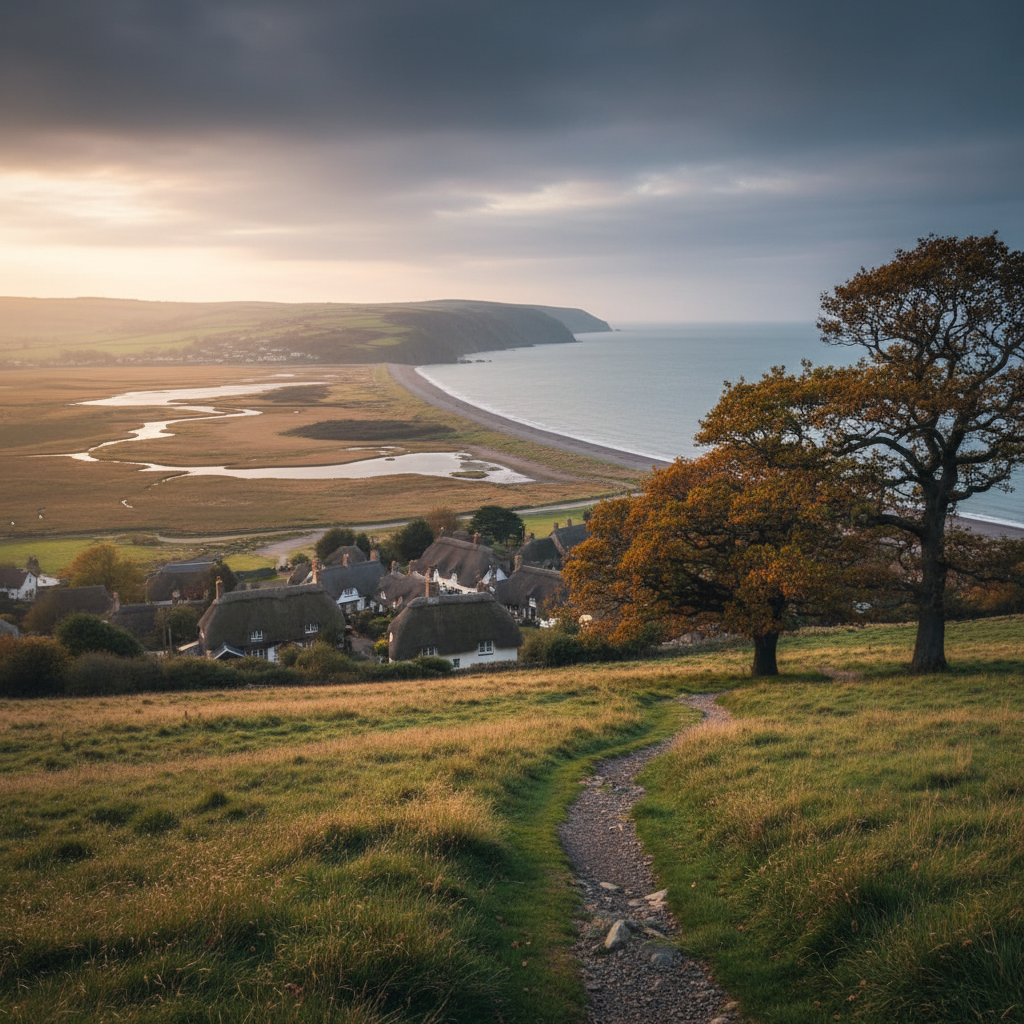
Bossington offers a softer Exmoor coastal stop, with village character, marshland, beach and good walking links.
Heddon Valley
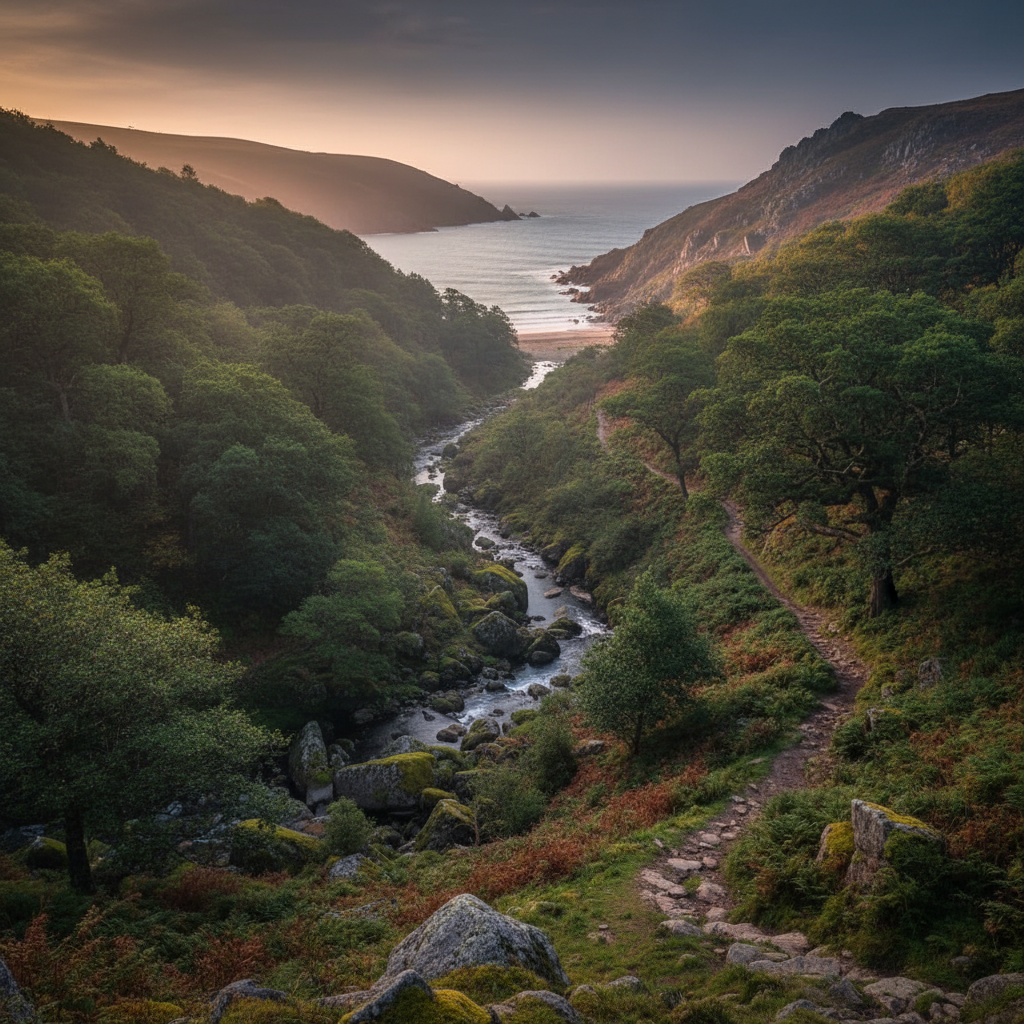
Heddon Valley is one of Exmoor’s best coast-and-combe places, combining woodland, river and sea-edge walking.
Porlock Weir
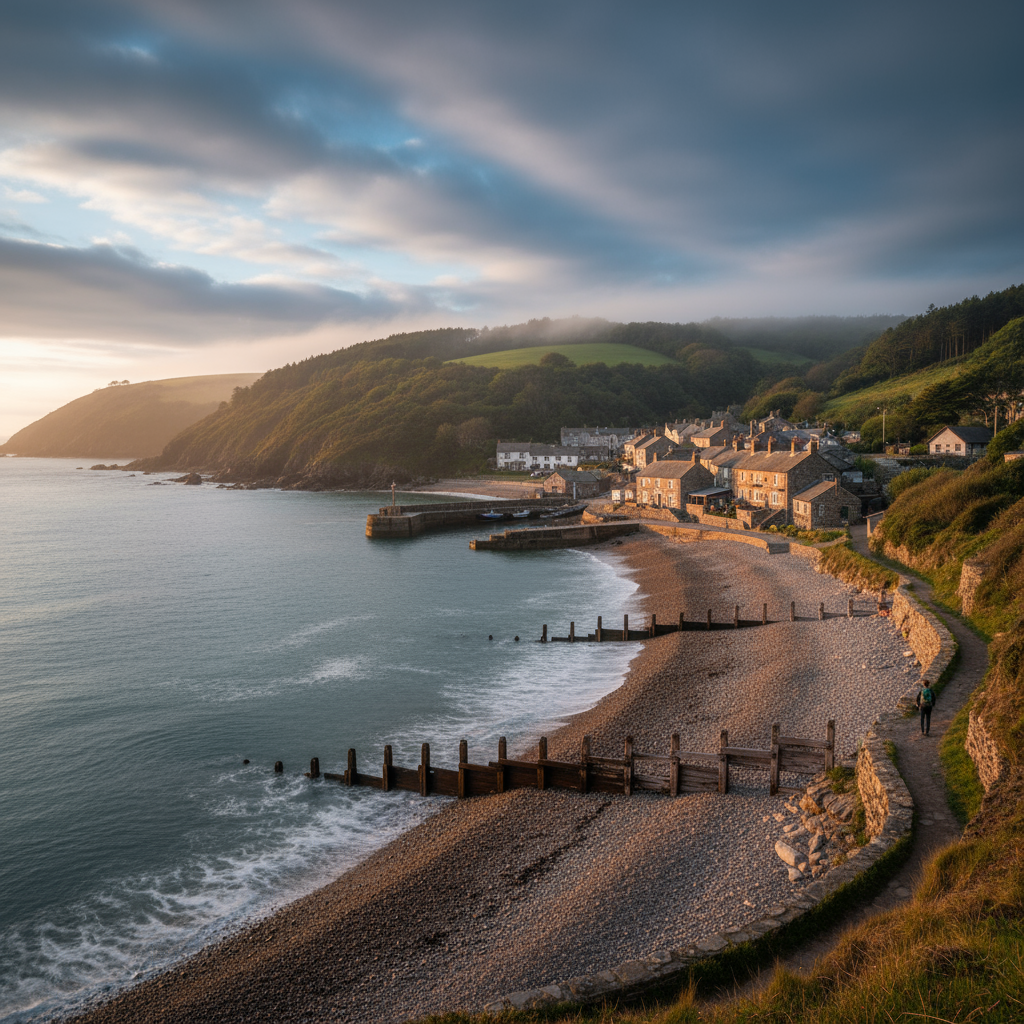
Porlock Weir adds harbour character, coastal walking and one of Exmoor’s most atmospheric sea-edge stops.
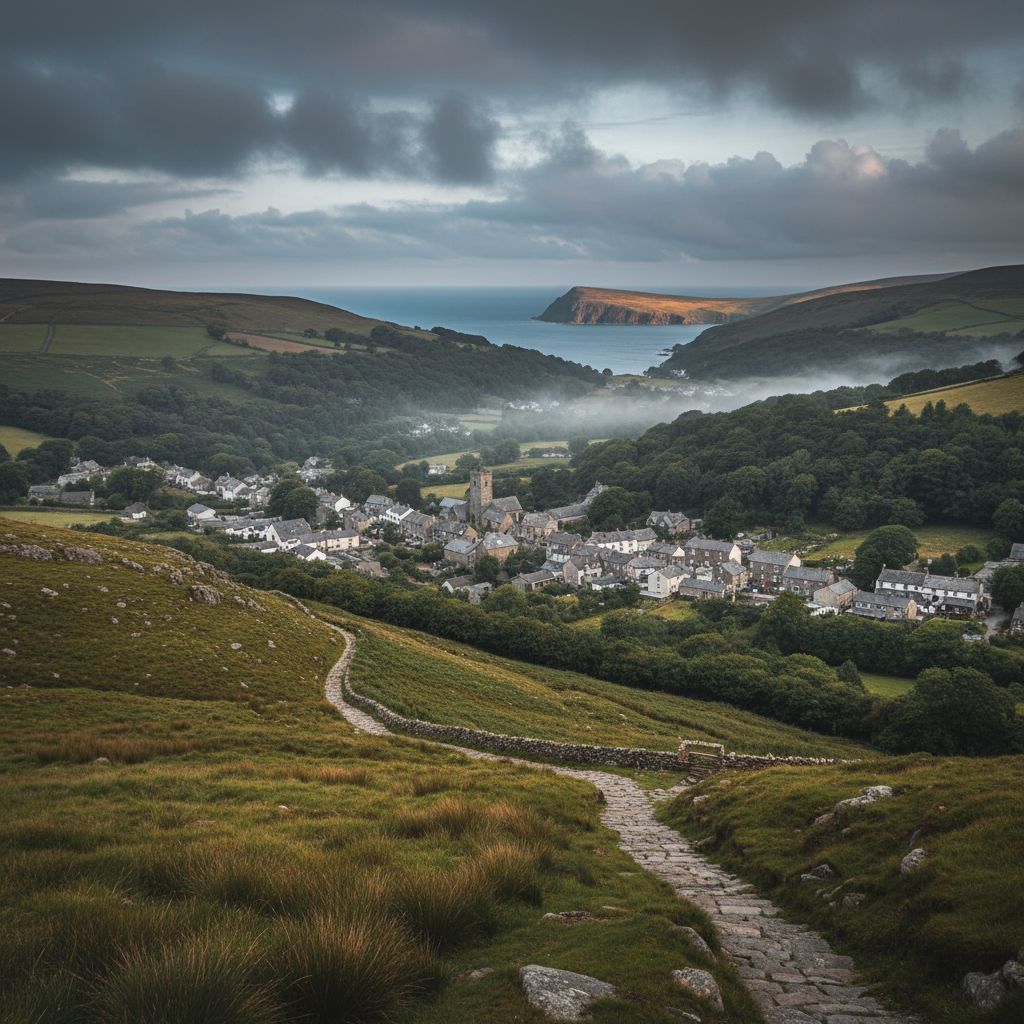
Parracombe
Parracombe combines quiet village atmosphere with excellent coast and valley walking nearby.
Join the 3moors Community for path conditions & local tips.
JoinWhy this place matters
Malmsmead — in its own right
Malmsmead does not sustain an obvious community in the way that a village with a pub and a school and a post office might. What it holds instead is something more scattered and more durable: the farm families who work the surrounding land, the walkers who return year after year, the small network of people for whom this corner of Exmoor functions as a working place rather than a visitor experience. That quiet continuity is felt rather than seen. It is in the well-used state of the footbridges, the worn line of the path along the riverbank, the small courtesies exchanged at the ford between those who know the valley and those encountering it for the first time. What Malmsmead leaves you with, ultimately, is a sense of proportion. The valley is not grand. The hamlet is not picturesque in the managed sense. But the relationship between the narrow strip of human settlement and the landscape that surrounds and absorbs it has a coherence that is harder to find than it looks. Places like this persist because they have never needed to be anything other than what they are.