Exmoor · North Exmoor
Parracombe
A peaceful Exmoor village close to wooded combes and high coastal scenery.
About
Parracombe
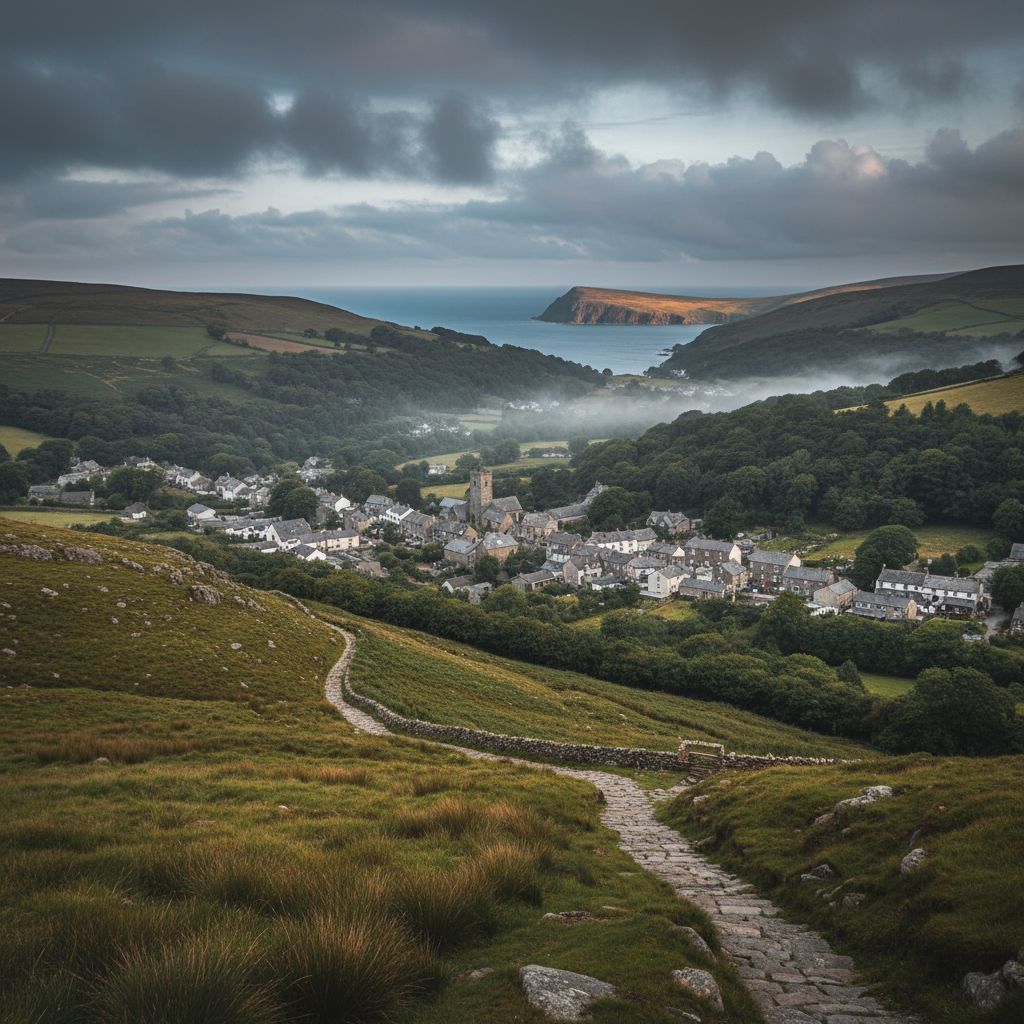
Parracombe sits in a hollow of North Exmoor, tucked into the valley of the River Heddon a mile or two south of the Bristol Channel coast. The village is not on the way to anywhere in particular, which goes some way to explaining its character. The hills press in closely on either side, the lanes are narrow, and the sense of arriving somewhere self-contained and considered is immediate.
The landscape here works through contrast. Within a short distance you move between deep, oak-lined combes, open heather moorland, and the high coastal plateau that looks north across the water toward Wales. Parracombe occupies the middle ground between these different worlds, connected to each by footpath and lane but fully belonging to none of them. It is a village of the valley, shaped by the Heddon and by the sheltered ground that made settlement here practical long before roads made anywhere else accessible.
What draws people to Parracombe is rarely one fixed thing. Walkers come for the proximity to the Heddon Valley and the coastal path above Heddon's Mouth. Others come because they have been coming for years, returning to the same rented cottage in late spring or early autumn with the particular quiet purpose of people who have found what they needed and see no reason to look further. The village accommodates both without making much of either.
The seasonal rhythm of Parracombe is one of its distinguishing qualities. The village does not announce its changes with fanfare. In March the hazel catkins soften the hedgerows before the leaves come. By May the combes are dense and loud with bird sound. July and August bring a brief, benign bustle. By October the bracken has rusted to copper and the village is largely its own again. Those who know it across these shifts understand the place in a way that a single visit cannot quite replicate.
Character
The feel of Parracombe
The village arranges itself without obvious intention. There is no formal green, no picture-postcard centrepiece that announces itself as the thing to look at. Instead, Parracombe accumulates quietly: a cluster of stone-built houses along the lane, the Fox and Goose pub sitting solidly at the centre of village life, a post office that has served as a small and reliable anchor, and the Church of St Petrock up on higher ground above the main settlement, watching over the valley with the composed authority of a building that has been there a very long time.
Rural life here is not performed for visitors. The farms working the land around the village are active rather than decorative, and the rhythms they generate are the actual rhythms of the place. Tractors move through the lanes in their own time. Gates are left as you find them. Dogs are known by name in the pub. This is not the managed rural of a heritage site but something more functional and less self-conscious: a community that has continued to organise itself around agriculture, around the pub, around the school run, and around the habits of people who have stayed put.
The Fox and Goose is the social hinge of the place. It is not a gastropub repositioned for tourist trade, nor a scrubbed heritage interior. It is a pub in the older sense, a place where the farming community and the walking community sit in roughly the same room and where the conversation is local in tone even when the faces are not. The fact that it exists and persists in a village of this size says something real about the character of the community that has kept it going.
First-hand visit
Keith's Take
The old church on the slope above the village holds something that is difficult to name precisely, a sense of time passing at a different rate, and the walk back down to the valley always takes longer than it should.
A blackbird was working the hedgerow by the lane when I stopped to look at the church gate, pulling at something in the leaf litter with the focused, unhurried confidence of a bird that has never been disturbed here. That is the thing about Parracombe that takes a visit or two to properly register: the wildlife here behaves as though it is not being watched, which means the village is genuinely calm rather than merely quiet in appearance.
Regular visitors to the area tend to develop a particular habit with this place. They stop here between walks rather than walking from here, using the pub or the lane outside the old church as a point of reorientation, a place to sit with a coffee or a half-pint and let the morning's route arrange itself in their minds. The village sustains that kind of use without complaint. There is no pressure to move on, no implied expectation that you have come to spend money or to photograph something. On a Tuesday in September it is quite possible to be the only person sitting outside the Fox and Goose, watching the lane, with nothing particular being demanded of you.
What I have noticed across several visits is that the village looks slightly different depending on where you have come from and what time of day it is. Arriving from the high moor in the afternoon, when the light is beginning to settle and the valley is already in partial shadow, Parracombe looks contained and complete. Arriving from the coast on a bright morning, it looks tucked away, almost hidden. Neither impression is wrong. The village has the quality of a place that absorbs whatever you bring to it and returns something measured and particular in exchange.
Keith's Take — a first-hand account from the 3moors team
Map & Getting Here
Getting to Parracombe
What to expect
A natural way to spend time here
The village resolves itself quickly on foot. A slow circuit takes perhaps twenty minutes: past the pub, up toward the old church, back down by the lane that follows the contour of the hillside. Nothing is far. The proportions are those of a place built for people moving on foot or horseback, and the modern visitor finds this comfortable in ways that are difficult to articulate precisely. The scale simply fits.
In the combes below the village, the sound is almost entirely natural. The Heddon runs over stone with a low, continuous note that fills the valley bottom. In spring, the wood warblers and redstarts arrive in the oak woodland and the competing birdsong becomes briefly overwhelming in the best sense of that word. On a still morning, with the mist still sitting in the lower ground, the air carries the particular smell of damp moss and old leaves that belongs to enclosed valley woodland and nowhere else.
The place rewards a patient approach. Those who park and walk immediately toward a fixed destination will experience Parracombe as a junction point rather than a place in itself. Those who take twenty minutes first, who sit outside the pub or walk up to look at the old church, who let the village settle around them before setting off, tend to come away with a clearer sense of what they found.
What makes it stand out
What makes Parracombe special
What separates Parracombe from other small Exmoor villages of comparable size is the presence of Parracombe Old Church, also known as Christ Church, which stands a short walk from the main settlement on a slope above the valley. The church is largely unrestored and has been in the care of the Churches Conservation Trust for many years. Inside, the plain box pews, the musicians' gallery, and the uneven plasterwork survive in the kind of undisturbed condition that most parish churches lost to Victorian improvement. John Ruskin is said to have campaigned for its preservation in the nineteenth century, and the building remains as close to a genuine working interior from the pre-Victorian church as you are likely to find anywhere in the West Country. It rewards a patient look.
The village is also notable for what it does not have. There is no tearoom, no gift shop, no organised visitor trail. The infrastructure of tourism is minimal. This is not because Parracombe has been overlooked but because it has remained genuinely functional as a rural settlement rather than adapting itself to accommodate the visitor economy. For those who find the more polished Exmoor villages faintly exhausting in high summer, that absence is itself a kind of distinction.
Don't miss
Things to see and do
Visit Christ Church (the old church) on the slope above the village and take time with the interior, which is one of the most genuinely unaltered in the South West.
Follow the lane down into the Heddon Valley and pick up the riverside path toward Heddon's Mouth, where the river meets the sea in a steep-sided, wooded gorge.
Watch for dippers along the Heddon where the current is fast and the stones are exposed, particularly in early morning.
Walk the high ground above Parracombe toward Martinhoe Common for open views across the channel and along the coast.
Sit outside the Fox and Goose on a quiet weekday and watch the village conduct its own business for a while before deciding where to walk.
Look closely at the hedgerow oaks along the lane toward Woody Bay, which show the distinctive wind-shaped form of trees that have grown under coastal exposure rather than in sheltered ground.
In late afternoon, take the path that climbs south out of the village toward the higher moor and turn around to see the valley below in low light.
Walks from here
Getting out from Parracombe
The most immediately rewarding walk from Parracombe heads west and down into the Heddon Valley, following the river all the way to Heddon's Mouth. The path descends through sessile oak woodland, keeping close to the river, and arrives at the coast after roughly two miles. The return by the same route is not a repetition, the light and the sound being different on the upstream leg, and the walk sits comfortably within a half-day without feeling rushed. A variation returns via the coastal path east toward the Woody Bay road, adding height and open cliff scenery before dropping back through the lanes.
For those wanting higher ground, a route south out of the village connects with the open moorland above Parracombe Common, where the walking becomes broader and the views extend south toward the higher Exmoor plateau. This terrain is more exposed and the paths less enclosed, offering a different quality of experience from the valley walks. The transition from the sheltered combe to the open hill happens quickly and the contrast is one of the pleasures of the area. The Two Moors Way passes within reach of Parracombe, offering longer-distance possibilities for those planning multi-day routes.
Good to know
Before you go
Parracombe has limited facilities. The Fox and Goose is the only pub in the village and it is worth checking opening times before planning a visit around it, particularly midweek in the off-season. There is no dedicated visitor car park
parking is on the lane and requires consideration for residents and passing farm traffic. Arriving by mid-morning on a summer weekend is generally uncomplicated, but the lanes approaching from the A39 are narrow enough that two vehicles meeting requires patience and a passing place.
Christ Church (the old church) is not always open, though the Churches Conservation Trust generally keeps it accessible during daylight hours. The condition of valley paths can be wet underfoot at any time of year and is particularly so after rain. Waterproof footwear is worthwhile rather than optional even in summer.
Across the seasons: Spring arrives early in the sheltered valley. By April the oak woodland is coming into leaf and the first migrants have returned to the combes. Late April and early May are perhaps the finest time to walk the Heddon Valley, when the woodland is still relatively open and the birdsong is at its most concentrated. The village itself is unhurried at this time of year and the paths carry few other walkers. July and August bring more activity to the lanes. The Heddon Valley walks become popular and the car parking at nearby Heddon's Mouth becomes a practical concern for those visiting later in the day. Parracombe itself remains calmer than the coastal locations nearby and functions as a quieter base from which to reach busier spots early. October is worth considering seriously. The bracken on the high ground above the village turns a deep copper-orange by mid-month, the oak woodland holds some colour of its own, and the milder days of early autumn can produce remarkable clarity of light on the channel. The village retreats into its off-season character by late October, the lanes are largely empty, and the pub takes on its winter depth. For those comfortable with shorter days and the possibility of mist in the valley, this is a rewarding time to be here.
Practical info
Practical info
Parracombe has no dedicated visitor car park. Limited roadside space exists near the centre of the village, but this is shared with residents and can fill quickly, particularly at weekends. Drivers should pull fully off the road and avoid blocking field gates or private entrances. If the village is full, the road verges on the approach from the A39 sometimes offer a careful option, though conditions underfoot vary.
Parracombe has a pub (the Fox and Goose) which has historically offered food and drink, though opening hours should be checked before visiting. There are no public toilets in the village, no café, and no visitor information point. Stock up on supplies before arriving if you are planning a longer day in the area.
The village sits in a valley and is easy to walk around, but the surrounding countryside involves steep combes and uneven ground typical of North Exmoor. Footpaths can become muddy and slippery after rain, particularly on shaded valley tracks under tree cover. Waterproof footwear is advisable for anything beyond the village lanes. The descent into and out of Heddon Valley nearby is notably steep in places.
varies
Explore nearby
Places nearby
Bossington
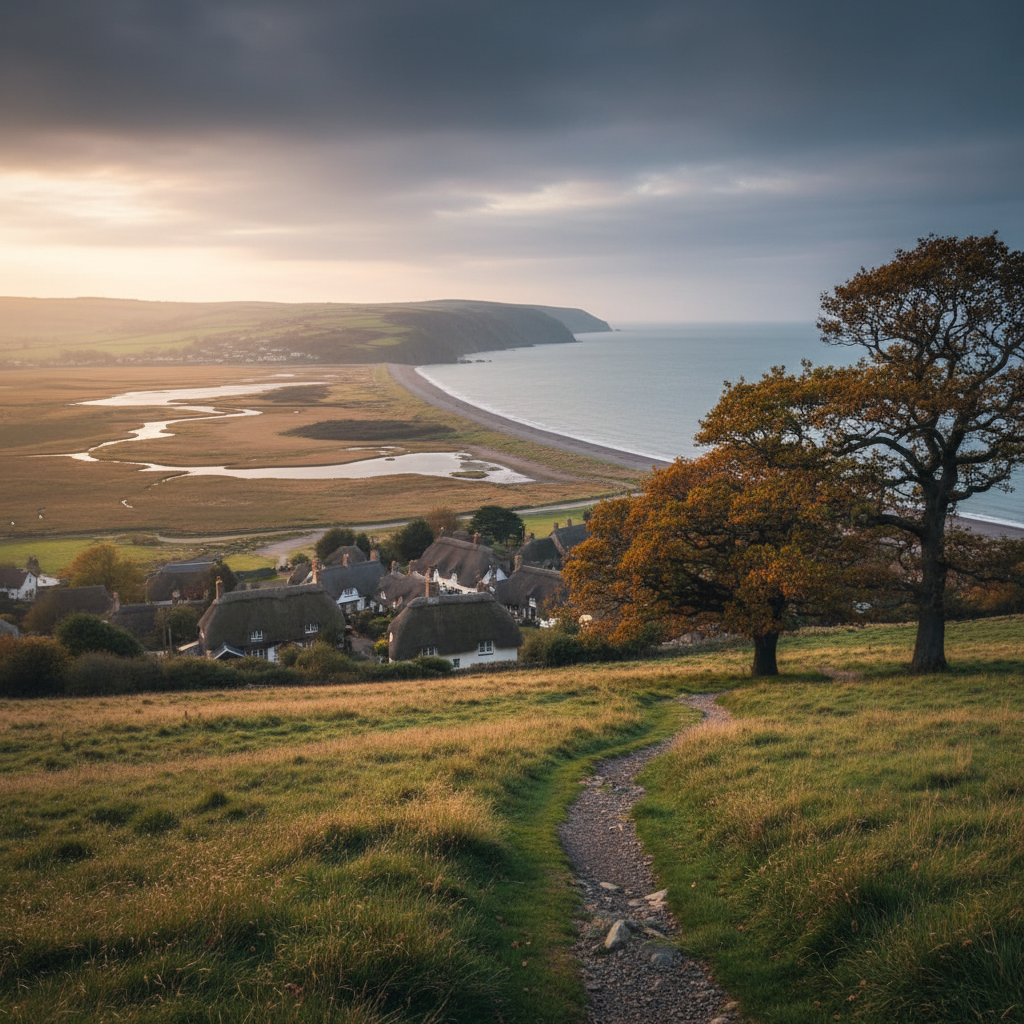
Bossington offers a softer Exmoor coastal stop, with village character, marshland, beach and good walking links.
Heddon Valley
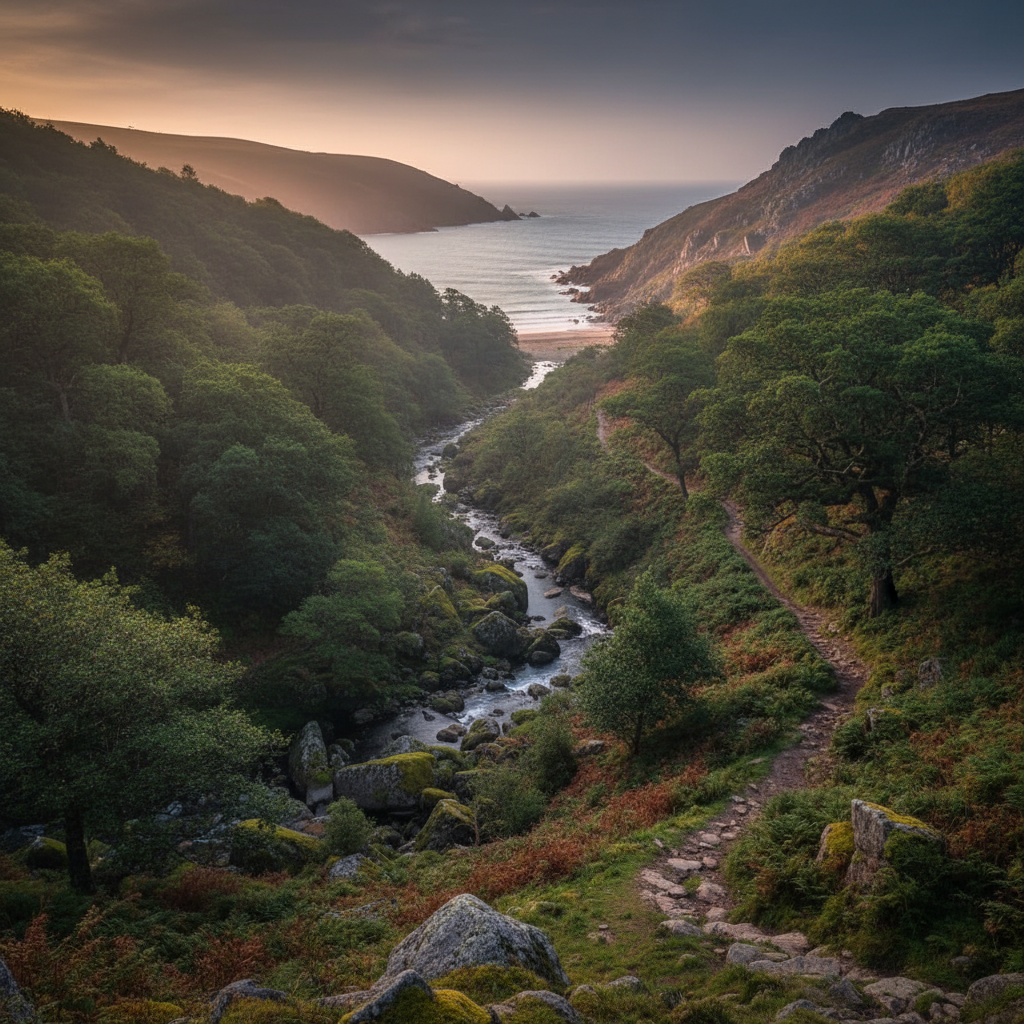
Heddon Valley is one of Exmoor’s best coast-and-combe places, combining woodland, river and sea-edge walking.
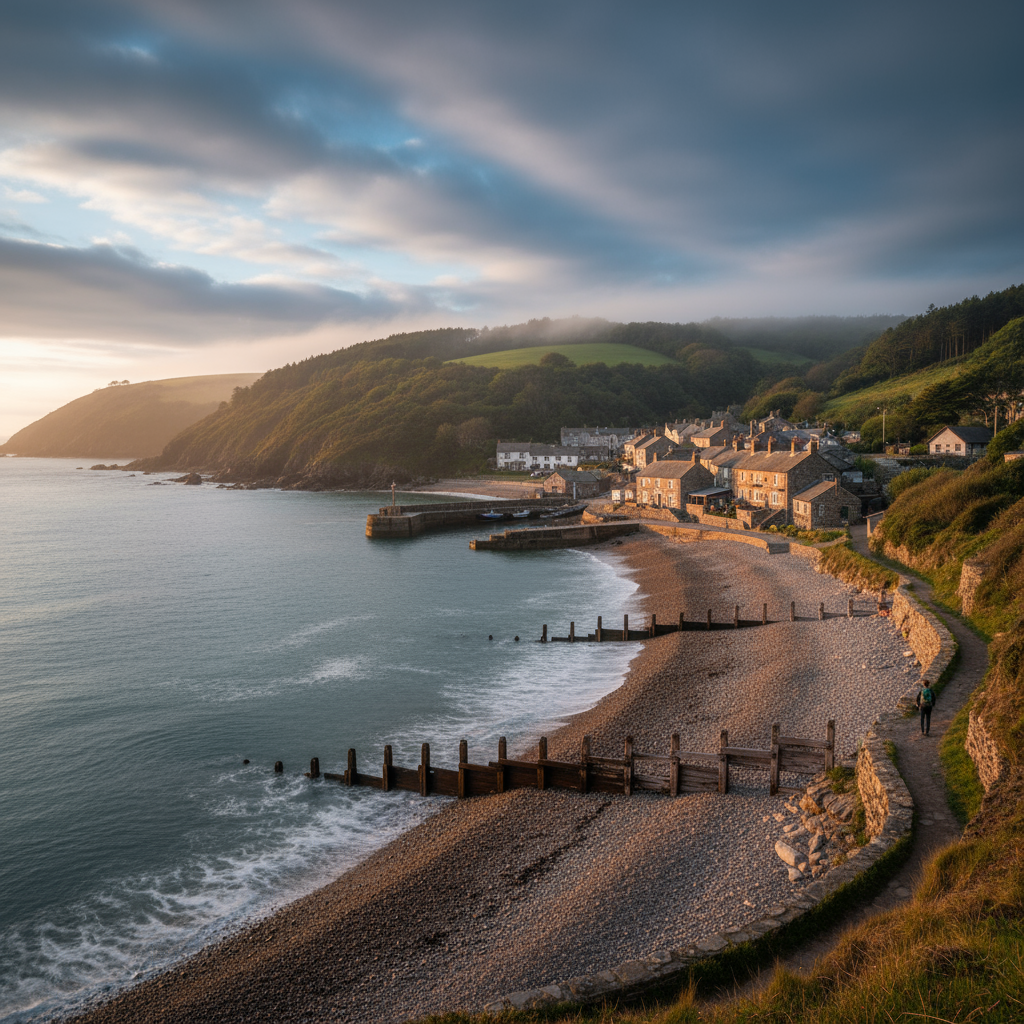
Porlock Weir
Porlock Weir adds harbour character, coastal walking and one of Exmoor’s most atmospheric sea-edge stops.
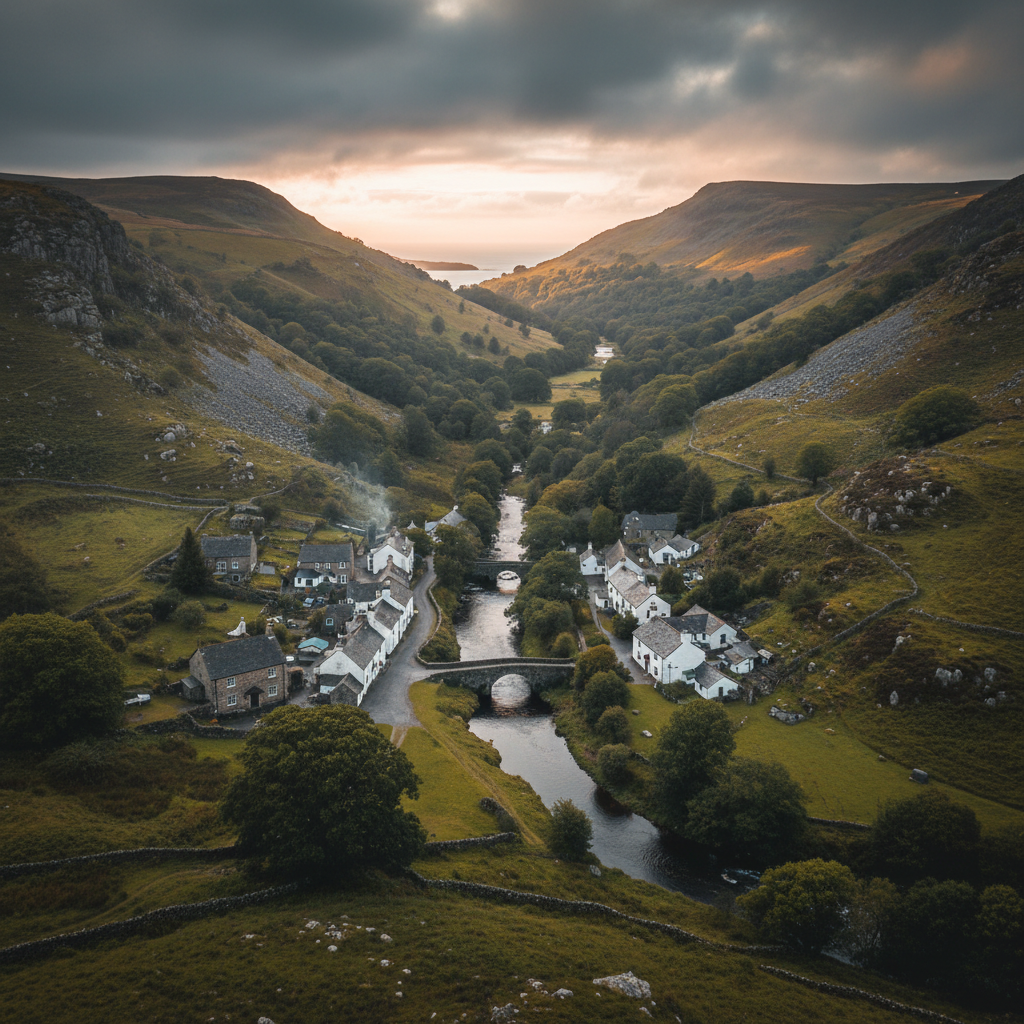
Malmsmead
Malmsmead feels deeply tucked into one of Exmoor’s most atmospheric landscapes.
Join the 3moors Community for path conditions & local tips.
JoinWhy this place matters
Parracombe — in its own right
Parracombe is the kind of place that does not insist on itself. It offers no single spectacle, no moment that announces itself as the point of the visit. What it offers instead is the particular satisfaction of a place that has remained coherent: a village that still functions as a village, in a landscape that has not been arranged for looking at but simply continues to exist on its own terms. The quietness here is not emptiness. It is the low-level presence of a community going about its business, of birds in the hedgerows, of river sound carrying up through the valley. Those who find that kind of stillness restorative rather than dull will understand why certain people keep returning to Parracombe across the years, not because it changes but because it consistently does not.