Dartmoor · East Dartmoor
Manaton
A peaceful village close to tors, woodland and eastern Dartmoor routes.
About
Manaton
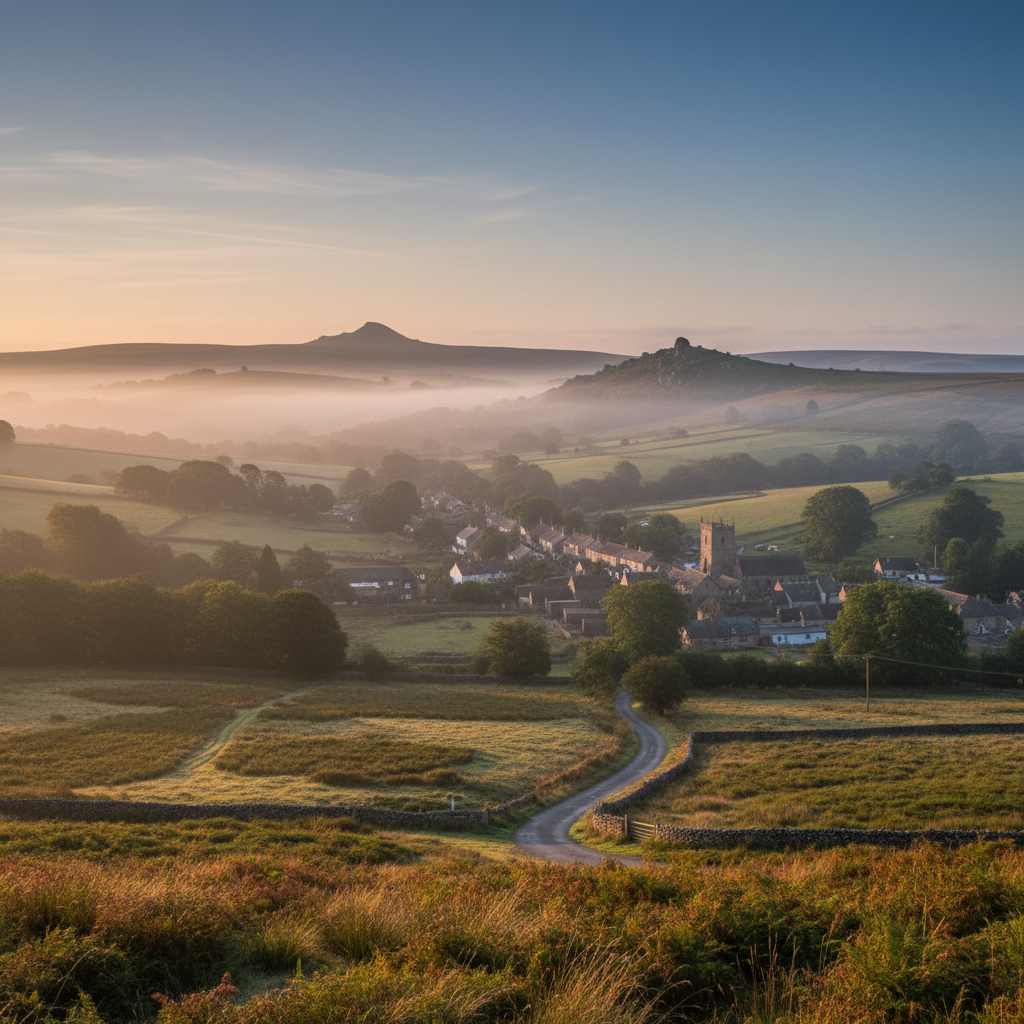
Manaton sits on the eastern edge of Dartmoor, tucked into a fold of land between Hayne Down and the wooded valley of the Becka Brook. It is not a place you pass through by accident. The road into the village narrows and winds before arriving at a modest green, a granite church, and a cluster of stone cottages that have the look of a settlement that has been quietly getting on with things for several centuries. There is no shop, no tearoom, no particular reason to stop unless you already know why you have come.
What draws people here is a combination of things that are hard to find together: genuine countryside calm, walking access to some of Dartmoor's most varied eastern landscapes, and a village that has not been softened or tidied up for visitors. The character is unmistakably local. The church of St Winifred, sitting above the green, is used and cared for by people who live here. The pub, the Kestor Inn, serves the community as much as it serves walkers arriving muddy from the moor.
Manaton's local character is embedded in its geography. It is just far enough from the main tourist circuits to retain a rhythm shaped by its residents rather than its visitors. Dogs are exercised on the green in the mornings. Vehicles that look like they have been used for actual farm work park outside the pub. The village green sees the same faces most days, and that continuity is visible even to a stranger.
For those who arrive knowing what Dartmoor's eastern reaches have to offer, Manaton is a natural base. Bowerman's Nose, Hound Tor, Becky Falls, and the long ridgeline above Lustleigh Cleave are all within reasonable walking distance. The village green serves as a quiet staging point, unhurried and unpretentious, before or after the landscape takes over.
Character
The feel of Manaton
The green at Manaton is not large, but it holds the village together in the way that greens in these moorland settlements often do. The church anchors one end, the pub the other, and in between there is enough open space for the place to breathe without feeling exposed. The buildings around it are predominantly granite, low-roofed, and built close to the ground in the way that Dartmoor architecture tends to be, as though settling into the hillside against the wind.
What is striking about Manaton across the year is how visibly the seasons move through it. In late spring the verges along the lanes in are thick with cow parsley and the bracken on the surrounding hillsides is an intense, almost aggressive green. By August the moor above is purple with heather and the light through the oak woodland in the valleys below has that dense, heavy quality particular to high summer in this part of Devon. Come October and the whole eastern valley turns: the oaks go amber, the bracken copper, and the village sits in the middle of it like a still point inside a slow fire. Winter strips it all back, and the village in January is its most austere self, the granite grey and the green quiet, the church closed most days and the pub the only lit thing on a dark afternoon.
This seasonal rhythm is not incidental to Manaton. It is, in many ways, what the place is. The village does not have a high season in the way that more visitor-facing settlements do. It simply responds to what is happening on the moor around it, and that attentiveness to the natural calendar gives it a grounded quality that is not easily manufactured.
First-hand visit
Keith's Take
The green was empty when I got there, which turned out to be exactly the right amount of Manaton to begin with.
A jackdaw on the church wall, watching. Not alarmed, not performing, just occupying the top of the granite gatepost the way jackdaws do when they have decided a place belongs to them. That was what caught my attention first: not the church itself, not the view across the green, but the particular stillness of a bird that was entirely at ease.
Manaton has that quality in the place itself. Whatever busyness exists elsewhere on this part of Dartmoor, the village green operates at a different frequency. The church of St Winifred sits above it with the plain confidence of a building that has not had to justify its presence for several hundred years. The pub is visible from the green without dominating it. Nothing is competing for your attention in the way that things compete in more visitor-conscious places.
I noticed, later, that I had been standing near the gate for several minutes without moving or intending to. The jackdaw had gone. The green was still. There was the faint sound of something mechanical from a farm building somewhere behind the cottages, the kind of background noise that in other contexts you might not register but that here felt like part of the texture of the afternoon. It is that kind of place. The details accumulate without announcing themselves.
Keith's Take — a first-hand account from the 3moors team
Map & Getting Here
Getting to Manaton
What to expect
A natural way to spend time here
Coming into Manaton on foot or by car, the village reveals itself gradually. The lane drops from the open moorland above Hayne Down and the hedgerows close in before the green opens out ahead of you. The transition from exposed moor to sheltered village is distinct and noticeable, the kind of arrival that makes the settlement feel earned rather than simply reached.
In the valley below the village, particularly along the paths toward Becky Falls, the air changes. There is the smell of damp moss and running water, and the sound of the Becka Brook comes and goes depending on the season and rainfall. On a still day in the woods, the birdsong is layered in a way that takes a moment to separate out: great tits overhead, wrens low in the undergrowth, the occasional wood warbler in summer if you are patient and quiet enough.
Manaton rewards a measured approach. It is not a place where you tick off a list and leave. The best visits tend to involve arriving with no particular urgency, walking a route long enough to feel the landscape properly, and returning to the village with a reason to sit down. The Kestor Inn provides that reason, reliably and without fuss.
What makes it stand out
What makes Manaton special
What separates Manaton from other villages on Dartmoor's eastern fringe is its position at the junction of genuinely different landscape types. Within a twenty-minute walk you can be on open moorland, deep inside ancient oak woodland, or picking your way beside a fast moorland stream. Very few villages on this part of the moor offer that variety from a single starting point without requiring a car to reach the trailhead.
Manaton is also notable for the degree to which it has resisted the kind of gentle gentrification that affects villages within commuting distance of Exeter or Newton Abbot. There are no holiday lets advertising themselves with driftwood signs. The pub has not been rebranded. The church has not been converted into anything. This is not to romanticise austerity, but to observe that the fabric of the place remains intact in a way that is increasingly uncommon in accessible moorland villages. It looks like what it is: a working Devon village that happens to sit inside one of the country's most remarkable landscapes.
Don't miss
Things to see and do
Walk down through the woods to Becky Falls before the car park below fills up, when the path is still damp and the sound of the water carries further than it will by midday.
Climb to Bowerman's Nose from the village side and take a moment to study the actual rock formation rather than just photographing it from a distance.
Follow the path down into the Lustleigh Cleave valley and find the point where the river narrows between granite boulders.
Look carefully at the carved details on the font inside St Winifred's Church, which is thought to contain some of the oldest stonework in the area.
Sit on the village green long enough for the place to settle around you, watch who crosses it and in which direction.
In late October, take the Hayne Down path at any point in the afternoon and watch the bracken colour from above.
Order something hot at the Kestor Inn after a long circuit and take the table that looks back toward the church.
From the ridge above the village, find the point where both the Teign valley and the open moorland are simultaneously visible and stay there longer than you think you need to.
Walks from here
Getting out from Manaton
The most immediate route from the village green heads south-east through the woods toward Becky Falls, a straightforward path through mixed woodland that follows the Becka Brook downstream. It is well used but rarely crowded early in the day, and the path varies enough in terrain to stay interesting. From the falls it is possible to loop back toward the village via higher ground, extending the circuit to around four or five miles depending on the variation taken.
To the north-west, the open moorland of Hayne Down is accessible within ten minutes of leaving the village on foot. The down offers wide views across the eastern moor and connects to paths leading toward Hound Tor and Greator Rocks, both of which can be incorporated into a longer half-day route. The ground here is rougher and more exposed than the woodland walks below, so footwear matters. A full circuit taking in Bowerman's Nose from the north before returning via the lanes to Manaton is around five to six miles and involves some uneven ground but no serious ascent.
For those wanting a longer and more demanding day, the paths south toward Lustleigh Cleave and the River Bovey offer a very different character entirely: steep-sided valley, dense canopy, and river crossings that can be slippery after rain. This is one of the quieter walking destinations on the eastern moor and connects, for the well-prepared, to a broader network of paths through the Teign Valley toward Fingle Bridge.
Good to know
Before you go
Parking at Manaton is limited to the small area near the village green and fills quickly on summer weekends, particularly when Becky Falls is busy. Arriving before ten in the morning or after four in the afternoon avoids most of the congestion. The Kestor Inn keeps its own hours and it is worth checking in advance if you are planning to eat rather than simply drink, as kitchen service is not always available at all times.
Many of the paths in the valley below the village can be muddy for extended periods after rain, and the stepping stones across the Becka Brook are slippery when wet. Waterproof footwear is practical for most of the year and essential from October through March. Mobile coverage is patchy throughout this part of east Dartmoor, so downloading any maps or routes in advance is advisable rather than relying on a signal.
Across the seasons: Spring comes noticeably later to Manaton than to the lowland villages a few miles east. The valley woodland is worth visiting in late April and May when the oak canopy is just opening and the bluebells are still underneath it. The light through new leaves in the Becka valley at that time of year is a specific and particular thing, greenish and shifting, and the paths are quieter than they will be in June. Summer brings the most visitors, drawn primarily to Becky Falls rather than the village itself. The green can feel temporarily busier on August weekends, though the surrounding walks absorb people quickly and solitude is rarely more than ten minutes away on foot. The heather on Hayne Down peaks in late August and early September, and the combination of open moorland above and wooded valley below is at its most dramatic contrast during this short window. Winter is the most honest season at Manaton. The trees are bare, the green is usually empty, and the village settles into the landscape without ornament. The walks are harder going but more rewarding for it, and the sense of having the moorland largely to yourself is real rather than merely hoped for. Fog is common in the valley bottom from November through February and can turn familiar paths into something considerably less familiar, which is worth accounting for.
Practical info
Practical info
Parking in Manaton is limited and largely informal. There is a small area near the village green where visitors tend to leave cars, but spaces are few and not formally designated. Arriving early is advisable, particularly at weekends in summer when walkers set out from the village. Treat the space considerately, as the village relies on its verges and roadside areas being kept clear for residents.
Manaton has very few visitor facilities in the conventional sense. There is no petrol station, no large shop, and no public toilets that can be relied upon year-round. The Kestor Inn serves food and drink and provides a useful base for walkers, but opening hours vary by season. Come prepared with supplies, particularly if planning a full day out on the surrounding moor or in Lustleigh Cleave.
The village itself sits at a modest elevation and is easy enough to move around on foot. However, walks from Manaton into the surrounding landscape, particularly towards Hound Tor or through Becka Brook woodland, involve uneven terrain, exposed moorland stretches, and paths that become muddy and slippery after rain. Waterproof footwear is strongly recommended for anything beyond the village green. Some routes include rocky gradients that may not suit all visitors.
varies
Explore nearby
Places nearby
Haytor
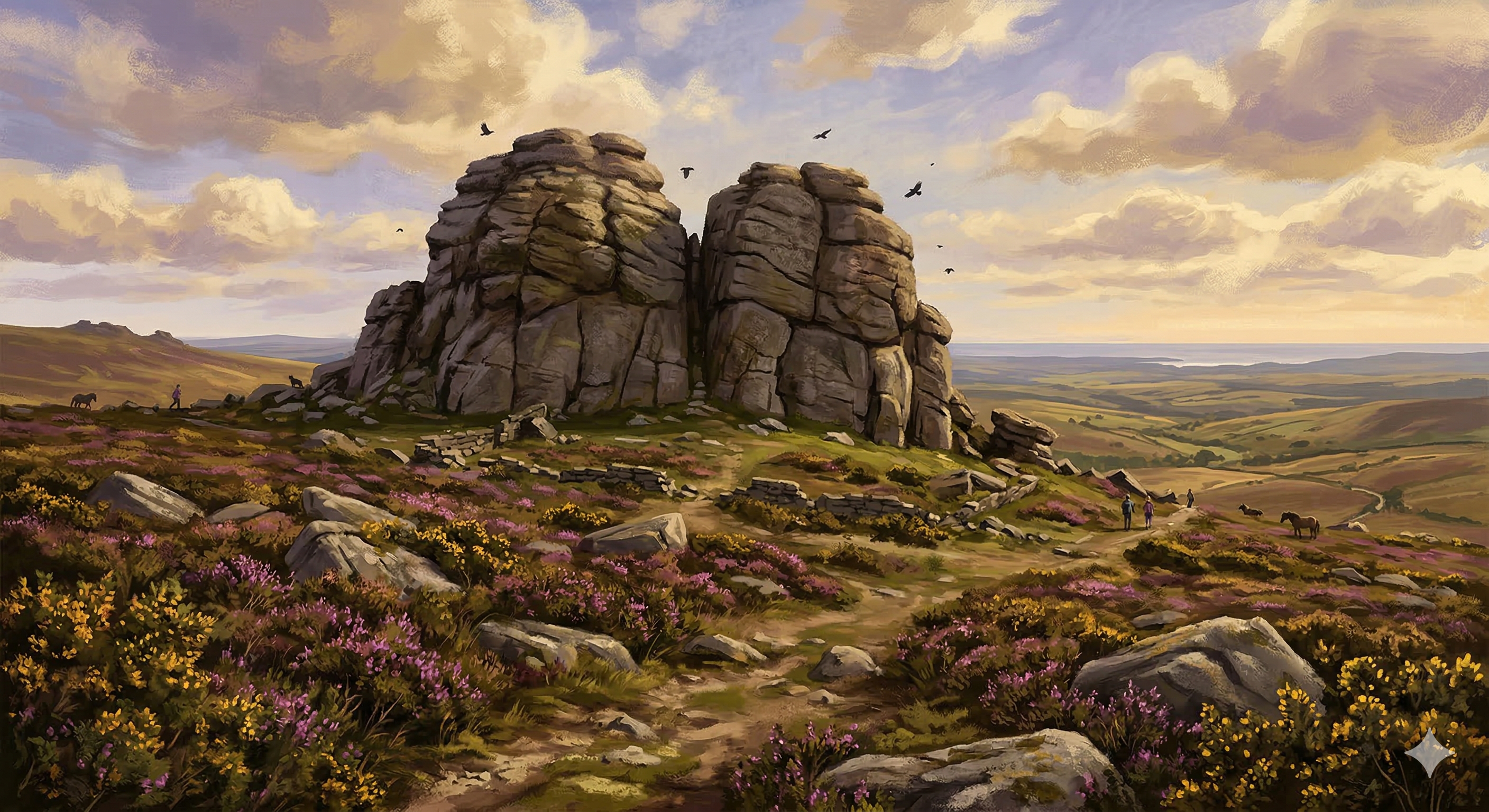
Haytor gives you one of the clearest introductions to Dartmoor — open ground, granite underfoot, and wide views almost immediately. It's a place that feels big without needing a long walk to get there.
Hound Tor
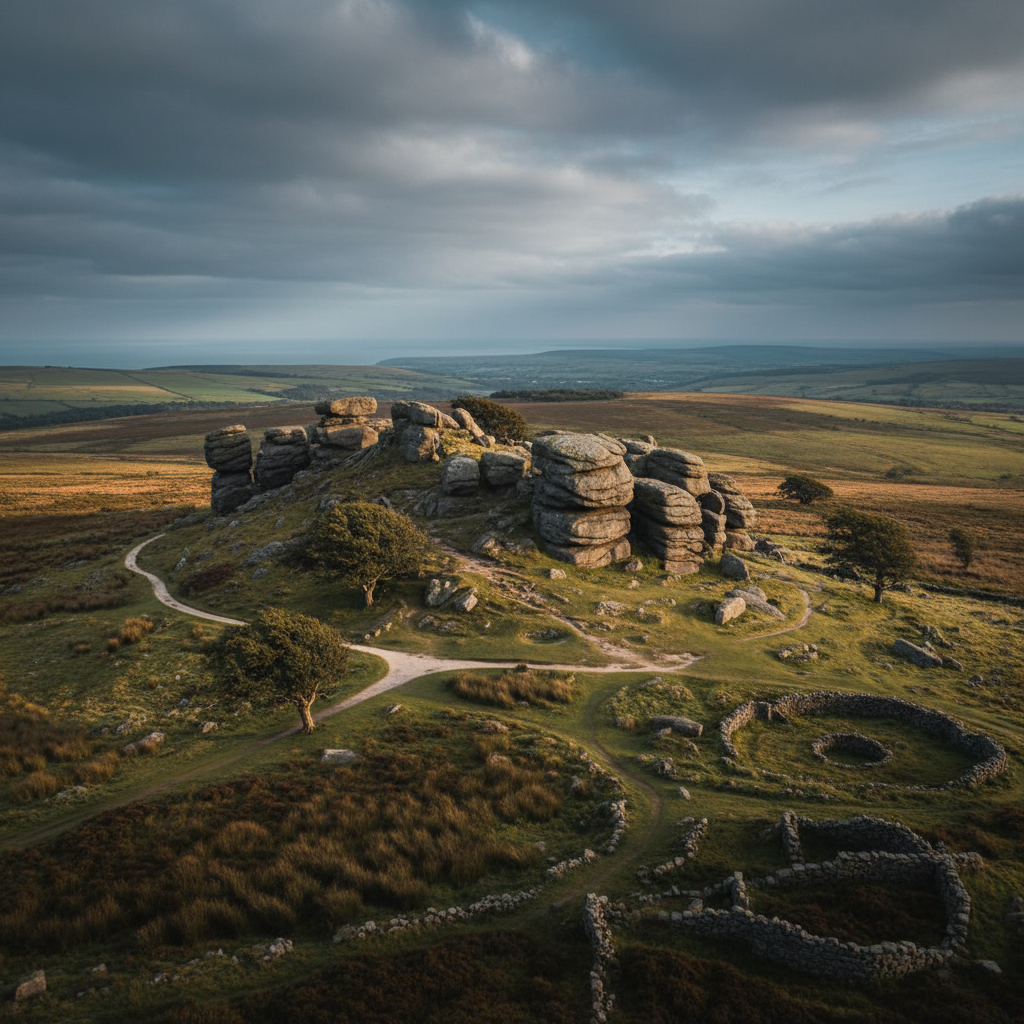
Hound Tor combines rock formations, medieval history and wide eastern moor views.
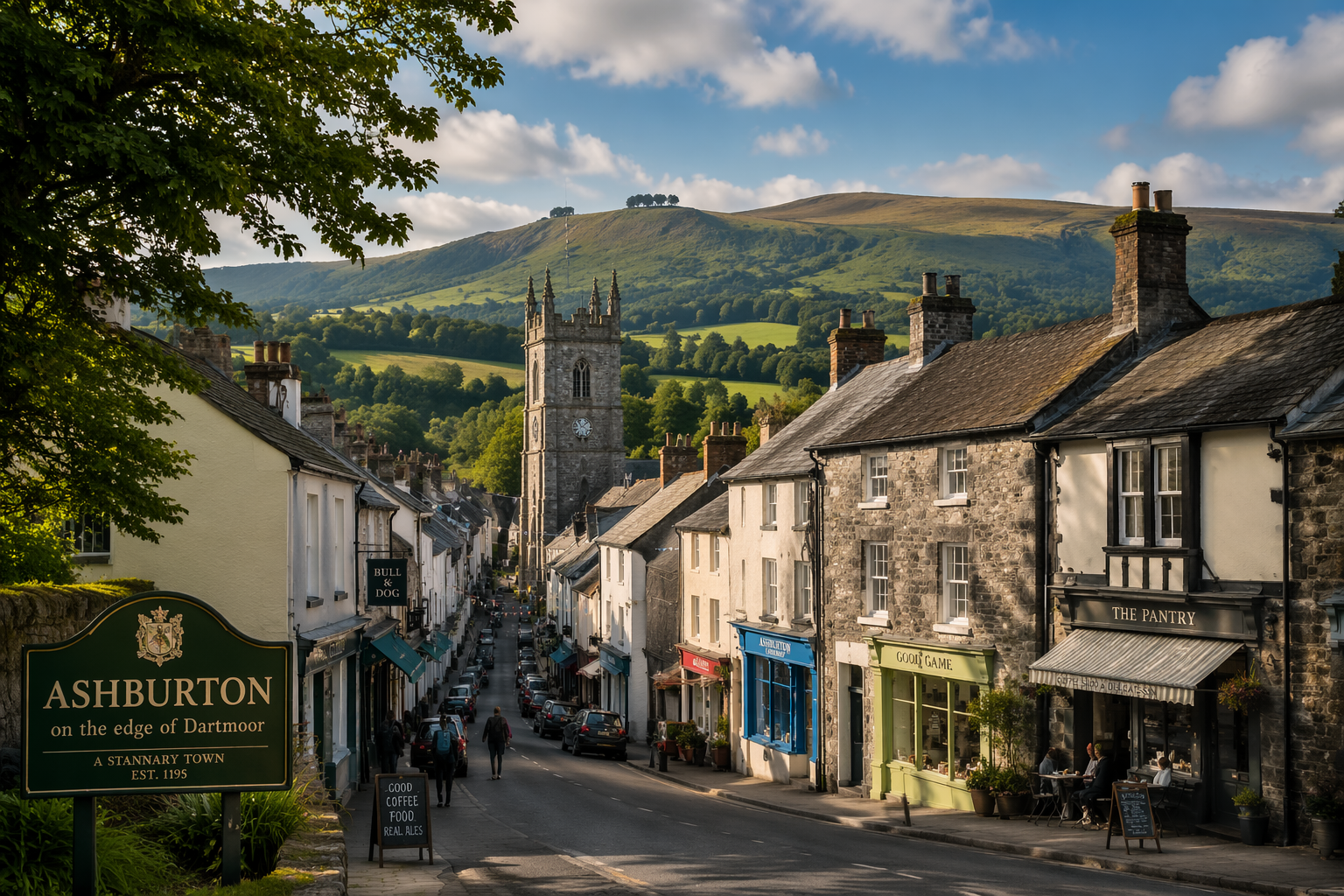
Ashburton
A lively Dartmoor-edge town combining independent shops with quick access to the moor.
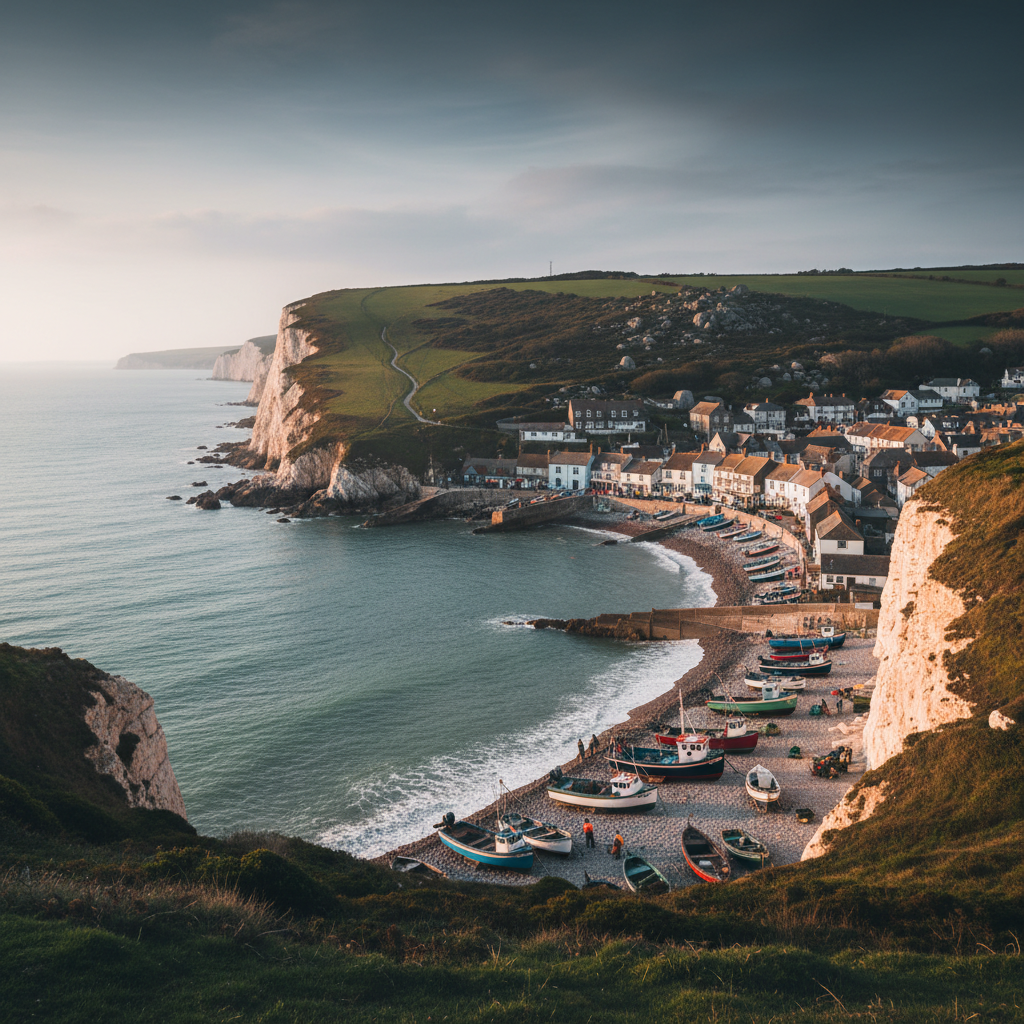
Beer
Beer combines beach atmosphere, fishing heritage and dramatic coastal scenery.
Join the 3moors Community for path conditions & local tips.
JoinWhy this place matters
Manaton — in its own right
There is something clarifying about a place that has not arranged itself around being visited. Manaton does not perform. The green is not maintained for photographs. The pub has not been designed to feel like a pub. The church is simply used, as churches in working rural communities are used, for the quiet and ordinary ceremonies of rural life. It is precisely this quality, the sense of a community absorbed in its own continuity, that makes an afternoon here feel genuinely restorative rather than merely pleasant. Rural life on the eastern moor is not picturesque in the way that the tourist literature would have it. It is practical, seasonal, and unsentimental, and Manaton reflects that honestly. What you take away, if you stay long enough to notice it, is not a view or a walk or even a meal, but a small recalibration of pace.
Explore more
Discover other places, walks, and hidden corners across Dartmoor.