Dartmoor · East Devon coast
Beer
A sheltered fishing village beneath white cliffs on the Jurassic Coast.
About
Beer
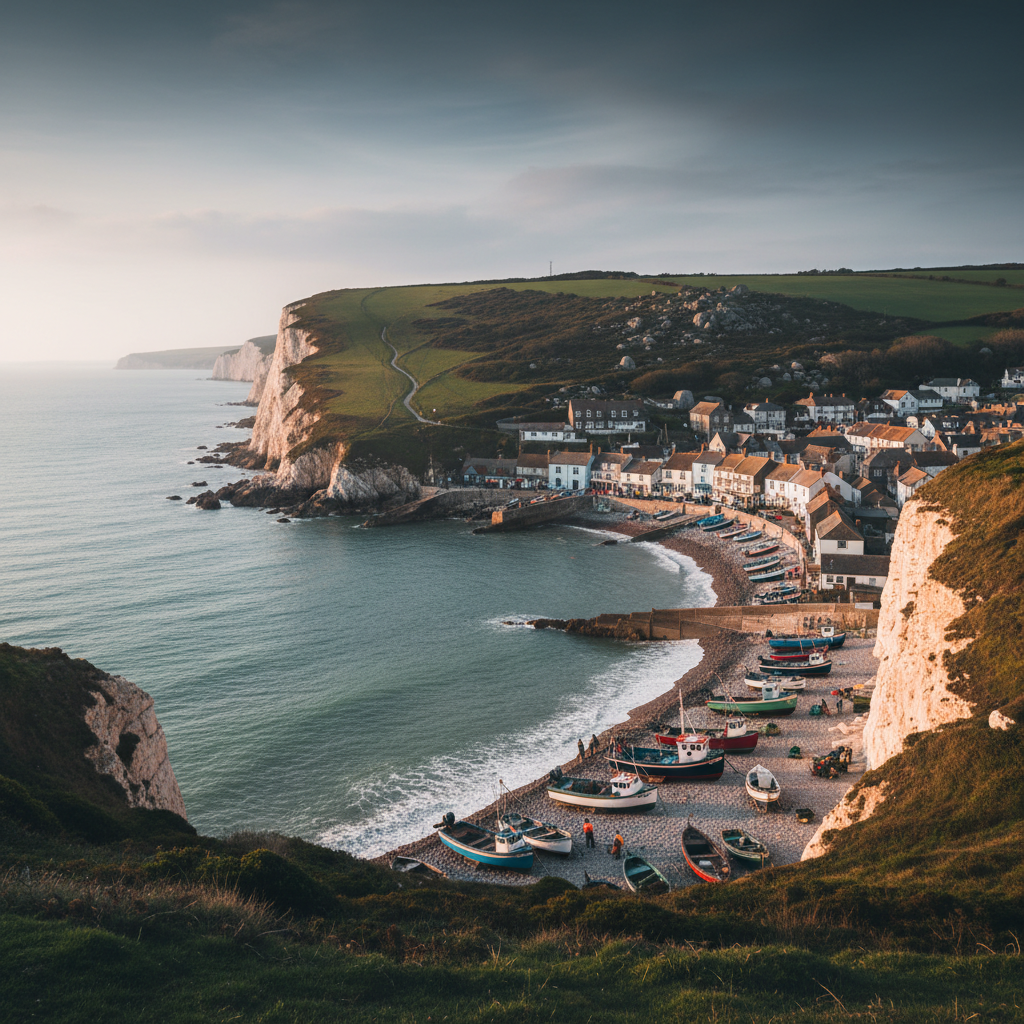
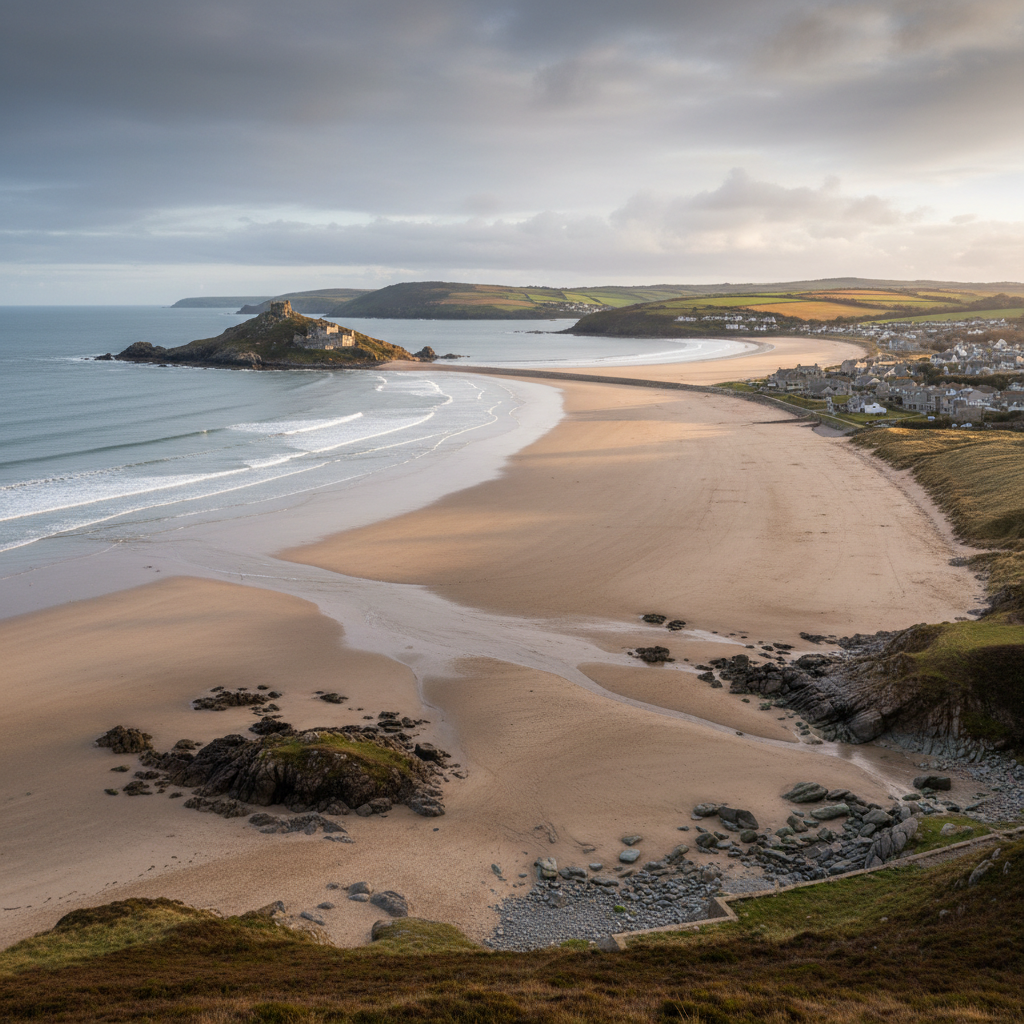
Beer sits at the foot of a steep combe on the East Devon coast, where a gap in the chalk and greensand cliffs has allowed a fishing village to grow up around a shingle beach. The cliffs on either side rise to impressive height, their white faces catching the sun and throwing it back across the water with a particular intensity. That quality of light is what most visitors notice first: not just bright, but layered, shifting with the tide and the angle of cloud, so that the sea here can appear silver in the morning and a deep, mineral green by mid-afternoon.
The village itself is compact and genuine. A single main street descends to the beach, lined with fishermen's cottages, a few pubs and a handful of small shops. Beer has not reinvented itself for visitors, which gives it a quality rare on the English coast: a sense that it is still, primarily, a place where people live and work. Boats are hauled up the shingle in the traditional way, on wooden skids, because there is no harbour wall to shelter behind. The beach is the harbour.
The Jurassic Coast designation brings a geological dimension that is easy to read directly from the cliffs. The chalk of Beer Head to the west is some of the westernmost chalk in England, a bright, almost startling material in this landscape of red Devon soil. Beer stone, a workable form of limestone quarried from the headland for centuries, was used in Exeter Cathedral and a number of other significant buildings. The place has a longer history of industry and craft than its current quietness suggests.
People come to Beer for the beach, for the cliff walks, and for something harder to name: a combination of working character and physical beauty that feels unforced. The light on the water is the constant. It changes with every hour, and it is the thing that keeps photographers returning.
Character
The feel of Beer
The beach at Beer is not a comfortable, sand-between-the-toes destination. It is shingle all the way down, steeply shelved, and the sea breaks onto it with a weight and sound that reminds you this is an open stretch of Channel coast. In calm weather the waves arrive in long, ordered lines and drag the stones back with a hollow percussion. When wind comes in from the south or south-west, the beach is genuinely exposed, and the spray carries as far as the front row of boats. The village sits behind low-level defences, but the sense of proximity to the sea is real and immediate at all times.
That exposure is not incidental to Beer's character
it is the thing that shaped it. The fishing community that built this village had to work with the sea's terms, not their own. Boats could not simply be moored and left. Everything had to be capable of being hauled clear. The wide, raked beach that results from this necessity gives the village its distinctive foreground: a broad arc of working shingle, dotted with vessels in different states of readiness, backed by net sheds and the occasional hand-painted sign advertising fresh crab. The scale of the place is intimate, but the sea in front of it is not.
This combination of shelter and exposure, of a village tucked into a cleft while the water in front of it runs open to France, gives Beer an atmospheric tension that more picturesque fishing villages sometimes lack. The charm here is not arranged. It arrives with the weather.
First-hand visit
Keith's Take
Something about the chalk cliffs catching the afternoon light made it difficult to leave when the rational part of me had already decided to go.
The sound of the shingle reached me before the sea came into view: that distinctive, two-part drag of water pulling stone back from the waterline, a sound with real weight to it, nothing like the thin rattle of a sheltered cove. By the time the beach opened out at the bottom of the street, the cliffs were already framing the view on both sides, the chalk face to the west lit with a brightness that seemed to come from inside the rock as much as from the sky above it.
What emerged as I moved along the upper bank was the particular organisation of the working beach: the boats arranged not for aesthetics but for practical sequence, the older ones with paint worn to bare wood at the waterline, the newer ones with ropes coiled tight against any slackness. The men working around them moved with the unhurried precision of people doing something they have done many times. A tractor sat with its engine running near the slipway, waiting. I found myself watching the whole foreground scene as I might watch a landscape painting, the boats and gear resolving into something arranged and purposeful in a way I had not expected.
Further west, where the beach narrowed at the foot of Beer Head, the chalk face was close enough to read in detail: the flint bands running through it in dark horizontal lines, the marks left by the winter's wave action at the base, a cave-like hollow eroded into the lower section where the sea reached at high tide. A peregrine crossed the cliff face at speed, moving along the updraft without pausing, and was gone before I had properly registered what it was. The light on the water had shifted twice since I had come down from the car park. I stayed longer than I had intended.
Keith's Take — a first-hand account from the 3moors team
Map & Getting Here
Getting to Beer
What to expect
A natural way to spend time here
The walk down from the village car park moves through the upper part of the settlement, past stone and rendered cottages, before the street narrows and the incline steepens. By the time you reach the beach, the cliffs are directly visible on both sides, framing the view out to sea in a way that feels almost theatrical. The shingle crunches underfoot with that particular double-note, a compression and a shift, that is distinct from sand and from the flat clatter of slate beaches elsewhere on this coast.
Close to the water, what registers most strongly is sound. The wave action on steep shingle produces a continuous, layered noise: the strike of water on stone, followed immediately by the long retreat of pebbles pulled back by the undertow. Gulls call above it, and on still days you can hear the knock of boats against each other on their moorings. The smell is salt and rope and diesel from the tractors used to launch the heavier craft.
The most rewarding pace here is a patient one. Sit on the upper shingle bank and let the foreground settle. Watch the light move across the water for ten minutes and you will see several different seas. Families with children tend to gravitate towards the easier, flatter section near the slipway
those wanting more room should walk south towards the base of Beer Head, where the beach thins and the cliffs begin properly.
What makes it stand out
What makes Beer special
What distinguishes Beer from comparable villages along this coast is the conjunction of geology and tradition. Beer Head to the west is the last significant chalk headland before the coast turns to the red sandstone of Devon, and the visual contrast between the white cliff face and the darker rock to the east is striking and particular to this exact location. You will not see that pairing anywhere else on the South West Coast Path.
The continued presence of a working beach fishery also sets Beer apart. Many coastal villages in Devon and Dorset have retained the aesthetic of fishing heritage while quietly losing the practice. At Beer, boats are still launched from the shingle, lobster pots are still stacked on the beach, and the catch is still sold locally. The seasonal rhythm of this trade gives the village a calendar that visitors can observe rather than merely imagine. In that sense, Beer offers something specific: access to a form of coastal life that is still, just about, current.
Don't miss
Things to see and do
Walk the South West Coast Path west from the village to Beer Head, where the chalk cliff drops sheer to the water and the view back along the coast opens up in both directions.
Look for peregrine falcons along the cliff face at Beer Head, particularly in late afternoon when they tend to hunt along the updrafts.
Watch the fishing boats being launched from the beach on their wooden skids: a method unchanged in its essentials for generations and entirely specific to beaches without harbour protection.
Buy fresh crab or lobster directly from one of the beach sellers when the boats are in, usually in the late morning after an early tide.
Sit on the upper shingle bank at low tide and observe the wave patterns on the exposed rock shelf at the base of Beer Head to the west.
Visit Beer Quarry Caves, set back from the village in the hillside, where Beer stone has been extracted since Roman times and the workings are still largely intact.
Time a visit for the hour before sunset, when the chalk cliffs to the west hold the light longest and the colour of the sea shifts through several registers before dark.
Walks from here
Getting out from Beer
The South West Coast Path runs directly through Beer in both directions, and the village is a natural staging point for walks of varying length. The most rewarding short route heads west, climbing steeply out of the village and onto the clifftop above Beer Head. The ascent is direct and earns its views quickly: within twenty minutes of leaving the beach, you are above the chalk face with an unobstructed line of sight along the coast towards Sidmouth. The path continues west to Branscombe, roughly three miles distant, where a valley drops down to another shingle beach and a return can be made by inland footpath through the Branscombe valley.
East from Beer, the path climbs more gradually towards Seaton, passing above the lower cliffs of Seaton Hole before descending to the Axe estuary. This section is less dramatic than the Beer Head route but offers good views across to the Dorset coast on clear days. The Seaton Tramway, an electric narrow-gauge railway running inland along the Axe valley, can be used to vary the return journey if a one-way walk is preferred. The full circuit from Beer to Branscombe and back via the valley takes between three and four hours at a measured pace.
Good to know
Before you go
The main car park above the village fills quickly in summer, particularly at weekends and school holidays. Arriving before ten in the morning or after four in the afternoon substantially improves the chances of finding a space without circling. The village itself is not large, and peak-season crowds are concentrated on a small area of beach and a single main street, which can make the atmosphere feel pressured between midday and mid-afternoon.
The shingle beach shelves steeply and the undertow can be strong, even in moderate conditions. This is not a beach where younger children can be left to enter the water unsupervised. The water quality is generally good, and Beer is popular with sea swimmers, but conditions change quickly when wind shifts from the south. Beer Quarry Caves require pre-booking for guided tours
checking availability before arrival is advisable in the summer months.
Across the seasons: Beer in April and May, before the summer season is properly established, offers the clearest version of what the place actually is. The light in spring is sharp and high-angled, and the chalk cliffs read brilliantly white against a sky that shifts rapidly between blue and grey. The fishing boats are active, the beach is quiet enough to move around freely, and the South West Coast Path above Beer Head is accessible without the foot traffic of midsummer. July and August bring a different place. The village is genuinely busy, the car park under pressure, and the beach crowded along its central section. This is not necessarily a reason to avoid it, but it changes the experience significantly. Those seeking the working-village quality that distinguishes Beer from more resort-oriented neighbours will find it better preserved outside the peak weeks. Autumn is worth considering seriously. From late September, the cliff vegetation takes on a drier, more muted tone, and the sea is often at its calmest in October. The light in autumn is lower and more directional than in summer, and the cliffs hold it differently, particularly in the late afternoon when the chalk at Beer Head catches a long, warm angle that summer's higher sun rarely produces. Fewer visitors, more considered light, and the fishing season still active: late September to late October is, in many respects, the most rewarding period to visit.
Practical info
Practical info
Beer has a pay-and-display car park on Fore Street at the top of the village, which is the most practical option for most visitors. It fills quickly on summer weekends and bank holidays, and arriving before 10am gives a reasonable chance of a space. Street parking in the village itself is very limited and largely reserved for residents. There is no large overflow facility nearby, so planning around quieter arrival times is worth doing.
The village has public toilets near the beach, and a reasonable selection of cafés, a pub, and a small number of shops along Fore Street. The beach itself has no formal infrastructure beyond the slipway used by working fishing boats. Facilities close down considerably outside the main season, and some cafés operate reduced hours from autumn onwards. Visitors should not expect year-round consistency in what is available.
The walk down into Beer from the car park is steep and on tarmac, and the return uphill can be demanding in warm weather, particularly for those with mobility concerns. The beach is shingle rather than sand, which makes footing uneven, especially when wet or when the tide has rearranged the stones. The coastal path sections around Beer Head involve significant gradients and exposed cliff edges. Sensible footwear is advisable even for a short visit, and cliff-edge paths should be treated with care after rain.
varies
Explore nearby
Places nearby
Branscombe
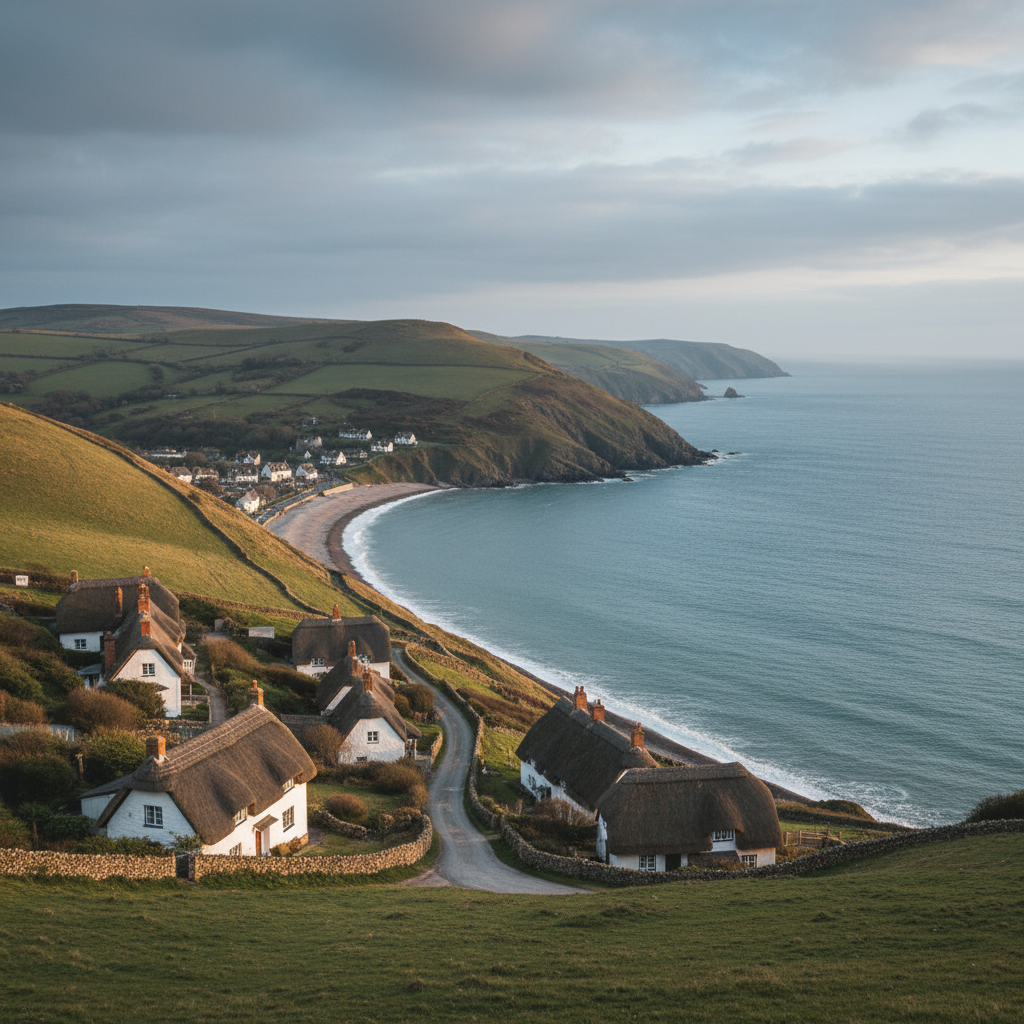
Branscombe offers a gentler, less commercial side of the Devon coast.

Ashburton
A lively Dartmoor-edge town combining independent shops with quick access to the moor.
Belstone
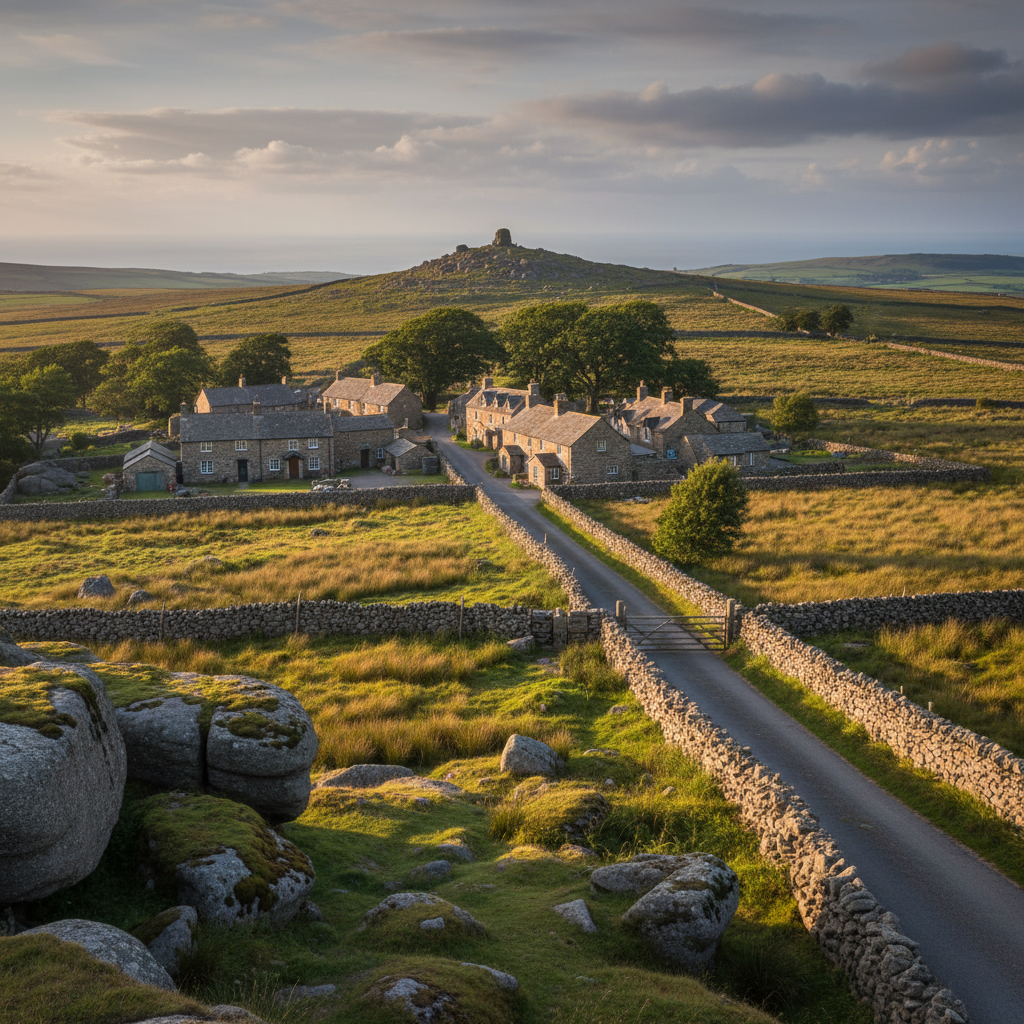
Belstone feels deeply connected to the moor, with immediate access to tors and upland walking.
Bigbury-on-Sea
Bigbury-on-Sea is an obvious coastal place for the wider 3moors South West layer, especially for family days and photography.
Join the 3moors Community for path conditions & local tips.
JoinWhy this place matters
Beer — in its own right
What Beer leaves you with, if you have paid the right kind of attention, is an awareness of how much wildlife passes through a place that can seem, on first glance, entirely given over to human use. The cliffs above the village are a nesting site for fulmars, which patrol the updrafts in long, stiff-winged glides without apparent effort. Oystercatchers pick along the tideline at the base of the cliffs where the shingle gives way to rock. Bottlenose dolphins are recorded with some regularity in the bay, usually in summer and early autumn, visible from the clifftop if you have a patient eye and the light is not working against you. This edge of East Devon sits at a latitude where northern and southern species overlap, and the mixture is audible as well as visible. Beer is, in ecological terms, a boundary place, the chalk ending here, the warmer Channel waters arriving here, the land and sea negotiating terms on a steep-shelved beach. That negotiation is continuous and worth observing closely.
Explore more
Discover other places, walks, and hidden corners across Dartmoor.