Exmoor · North Devon coast
Mortehoe
A clifftop village overlooking rugged coast and wide Atlantic views.
About
Mortehoe
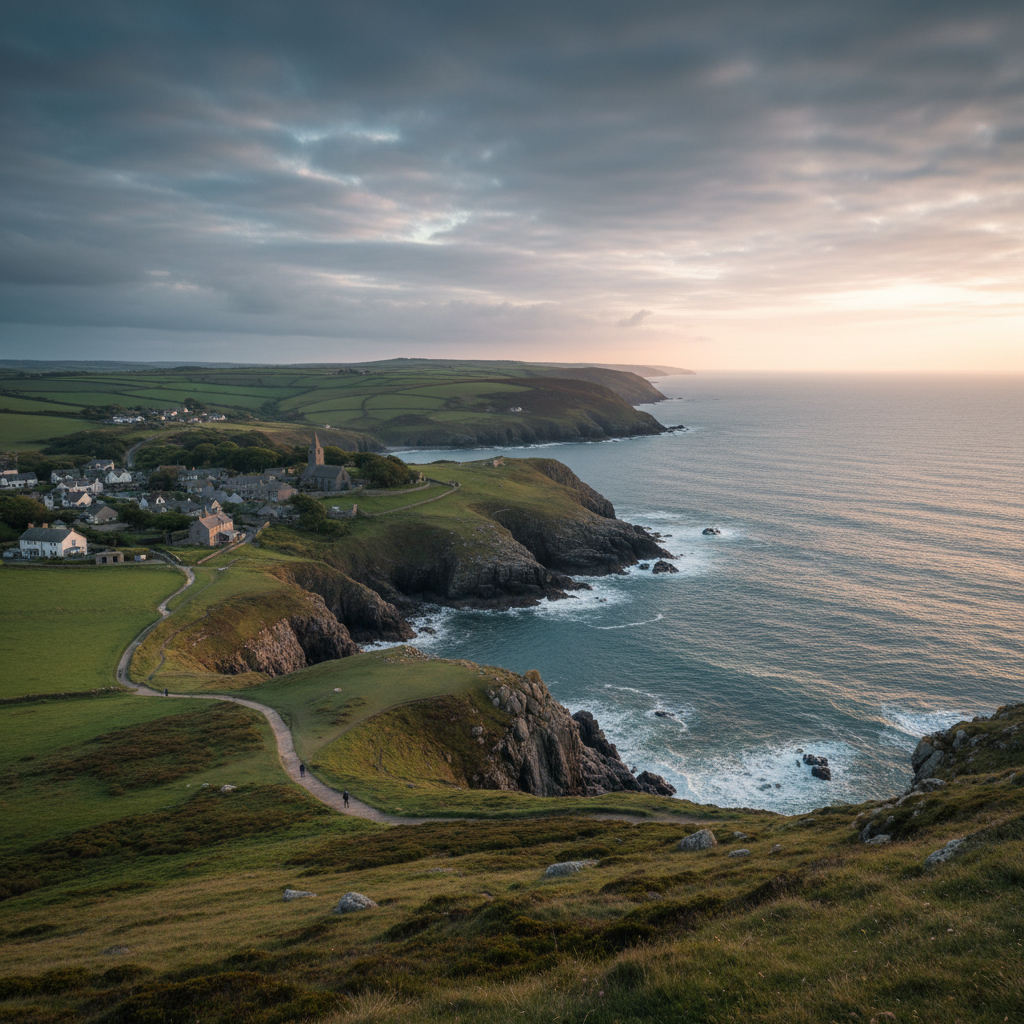
Mortehoe sits on the far western edge of North Devon, pressed up against a coastline that has little interest in being hospitable. The village occupies a slight inland hollow just behind the headland at Morte Point, sheltered enough to have kept a working community alive here for centuries, but close enough to the sea that the sound of it is never entirely absent. The land around it is pastoral in a very particular West Country way: small irregular fields bounded by banks of earth and stone, lanes that narrow suddenly, a horizon that keeps shifting between grassy ridge and open sky.
The village earns its living from agriculture and tourism in roughly equal measure, and the tension between the two gives it an honest, unvarnished quality. This is not a place that has been polished for visitors. The fields are grazed, the lanes carry farm traffic, and the pace of life here follows a rural rhythm that has more to do with tides and seasons than with visitor seasons. Sheep move across the surrounding land in the unhurried way they always have, and the lane into the village is the same lane that has always been the lane into the village.
People come to Mortehoe primarily for the coast path, which passes close enough to the village centre to make it a natural base. The path in both directions from here is as demanding and rewarding as the South West Coast Path gets, with the National Trust headland at Morte Point just a short walk to the west. But those who stay longer, or who return, find that the village itself becomes part of the reason for coming back, not just a convenient launching point.
The rural life here is not theatrical. There are no heritage displays, no information boards about how things used to be. The fields are simply still being farmed, the hedgerows are still managed, and the pace of the place is still set by the land rather than by visitor demand. It is one of the things that distinguishes Mortehoe from coastal villages that have gradually given themselves over entirely to the summer trade.
Character
The feel of Mortehoe
The built centre of Mortehoe is compact enough to take in at a glance, but it rewards a longer look. The church of St Mary Magdalene anchors the village at its highest point, a Norman foundation with later additions, its tower visible from the surrounding lanes before the rest of the settlement comes into view. Around it are houses of the usual North Devon character: rendered and painted, small-windowed against the prevailing westerlies, gardens bounded by low walls. The Chichester Arms sits close enough to the church that the two have clearly been in conversation for several centuries.
What is most distinctive about Mortehoe as a place is its quality of stillness. Not emptiness, which is different, but a genuine quietness that persists even in the summer months when the car park fills and the coast path sees regular traffic. The village centre absorbs visitors without appearing to organise itself around them. There is no main street built for browsing, no concentration of cafés and gift shops. The few facilities that exist are practical rather than performative, and the spaces between buildings retain a sense of unhurried domestic life.
This quietness is structural as much as incidental. The village is not on the way to anywhere else by road. You come here because you meant to come here, and that self-selection shapes the atmosphere considerably. Those who arrive tend to be walkers or people seeking the particular kind of restfulness that comes from a place that simply carries on being itself.
Map & Getting Here
Getting to Mortehoe
What to expect
A natural way to spend time here
The village unfolds in a matter of minutes on foot. From the car park at the edge of the settlement, the lane leads past the church and the pub in quick succession, and within a short walk the hedged footpath signs begin to appear, pointing west towards the headland or south-east towards Woolacombe. The proportions of the place are intimate rather than grand: the green is modest, the church is modest, and the whole centre of the village fits within a comfortable circuit that takes less than ten minutes to walk without any particular purpose.
What tends to arrest people, once they have slowed down enough to notice it, is the quality of the light and air at this elevation. The village sits high enough above the shore that there is usually a wind, sometimes a persistent one, carrying salt and the particular clean coldness of the Atlantic. On calmer days the sound of the sea rises up from below, present but sourceless, a low continuous texture that sits beneath everything else.
The place rewards a patient approach. Those who arrive with a clear objective, walk the headland, and leave again will have had a fine morning. Those who sit with a cup of tea and watch the lane for a while, or follow the quieter footpaths inland through the fields, tend to find that Mortehoe gives back more than the obvious. It is a place best encountered at the speed of walking rather than the speed of planning.
What makes it stand out
What makes Mortehoe special
What sets Mortehoe apart from other coastal villages on this stretch of the North Devon coast is its combination of genuine walking access and genuine village indifference to being picturesque. Croyde, to the south, has configured itself around surf culture and the weekend visitor. Combe Martin, to the east, stretches along its valley in a way that makes it feel like a place you pass through. Mortehoe does neither. It sits where it has always sat, makes no particular effort to present itself, and offers access to one of the most exposed and compelling sections of the South West Coast Path within minutes of its centre.
The headland at Morte Point, a National Trust property of open clifftop land, is reached from the village on foot without any need to drive. This matters more than it sounds. On many sections of this coast, the best walking is separated from any real settlement by a car journey. Here the two are continuous, which gives a visit to Mortehoe a coherence that is genuinely unusual. You can be in a working village and on a wild, Atlantic-facing headland within the same half-hour.
Don't miss
Things to see and do
Walk out to Morte Point on the National Trust headland in the early morning, before the day properly organises itself.
Stand at the tip of the point and look north across the Bristol Channel towards the faint outline of the Welsh coast on a clear day.
Follow the coast path east from the village to the descent into Woolacombe, noting where the path briefly narrows along the cliff edge above Lee Bay.
Take the lane south out of the village on a weekday afternoon and listen for buzzards over the fields.
Look closely at the carved stonework inside St Mary Magdalene church, particularly the medieval bench ends.
Sit outside the Chichester Arms at the end of an afternoon walk and watch the light change on the hillside to the south-east.
Walk the short loop to Bull Point lighthouse, visible from the headland path, where the fog signal station marks the northern limit of Morte Bay.
In the late afternoon, look back at the village from the coast path west of the point to see how it sits in its hollow, held between land and sea.
Walks from here
Getting out from Mortehoe
The South West Coast Path passes directly through Mortehoe, making it one of the more useful bases on this section of coast. Heading west from the village, the path crosses National Trust land to reach Morte Point in under a mile, then continues north along the cliffs towards Bull Point and, further on, Rockham Bay. This section of the path is exposed and sometimes rough underfoot but well-marked, and the views north across the channel are clear on most days. The full circuit out to Bull Point and back via the inland lanes is a manageable half-day walk.
East of the village, the path descends sharply towards Woolacombe, a walk of around two miles that involves some steep ground and a long stretch of beach at the far end. The return by the same route, climbing back up towards Mortehoe in the late afternoon, is a different experience from the outward walk, and in reasonable light it is particularly good. There are also quieter inland footpaths from the village centre that loop through the surrounding farmland, offering a complete change of character for those who have had enough of the cliff edge.
Good to know
Before you go
The car park at the edge of the village is the practical starting point for most visits and fills quickly on summer weekends, particularly in July and August. Arriving before ten in the morning or after four in the afternoon is noticeably easier. The village has limited facilities: the pub, a small number of holiday lets, and a seasonal café. Those expecting a full range of visitor services will need to plan accordingly, or drive the short distance to Woolacombe.
The coast path west of Mortehoe is exposed and should not be underestimated in poor weather. The clifftops at Morte Point are unfenced in places, and the path in both directions can be muddy and uneven after rain. Proper footwear is not optional. The name Morte Point has its origins in the number of ships that foundered on the rocks below, and the sea conditions here can change without much warning.
Across the seasons: Mortehoe in spring has a particular quality that the summer crowds tend to obscure. From late March through May, the hedgerows along the lanes begin to fill out, the fields carry a vivid temporary green, and the coast path is at its most walkable before the bracken grows high enough to crowd the edges of the trail. The light in early May, clear and low-angled, is as good as this coast offers. Midsummer brings a different village: busier, warmer, the car park stretched to its limits, the pub consistently full in the evenings. It is not unpleasant, but the rural quietness that characterises the village at other times of year becomes harder to find. Those who know Mortehoe well tend to visit in June before the school holidays begin, or in September when the mornings carry the first sharpness of autumn and the paths are significantly less crowded. Late October is worth noting specifically. The bracken on the headland turns a deep rust-orange at this time of year, the gorse continues to flower against it, and the village returns to something close to its usual pace. The days are short and the westerlies pick up, but for those willing to be out in that kind of weather, the coast at this time of year is in its most elemental state.
Practical info
Practical info
Mortehoe has a small public car park on the edge of the village, which fills quickly during summer weekends and bank holidays. There is limited on-street space, much of it effectively shared with residents, so arriving early in the day is advisable between June and September. Signage is minimal and some lanes near the church are too narrow for reversing comfortably. Out of season, parking is considerably easier and the car park is often half-empty by mid-morning.
The village has a pub and a small number of seasonal businesses, including a café, though opening hours vary considerably outside the summer months. There are public toilets near the car park, but these may be closed in winter. Visitors should not assume a full range of services will be available on any given day, particularly between October and Easter. Nearby Woolacombe, a short drive south, offers more reliable year-round provisions.
The village itself sits on reasonably level ground, but the coast path descending from Mortehoe towards Morte Point and Woolacombe involves uneven, rocky terrain with exposed gradients that require care. Cliff-edge sections can be slippery after rain, and the path surfaces vary considerably. Stout footwear with ankle support is advisable; trainers are manageable on dry days but unsuitable in wet conditions. The headland is exposed to Atlantic weather and wind speeds can be unexpectedly high even in mild seasons.
varies
Explore nearby
Places nearby
Bossington
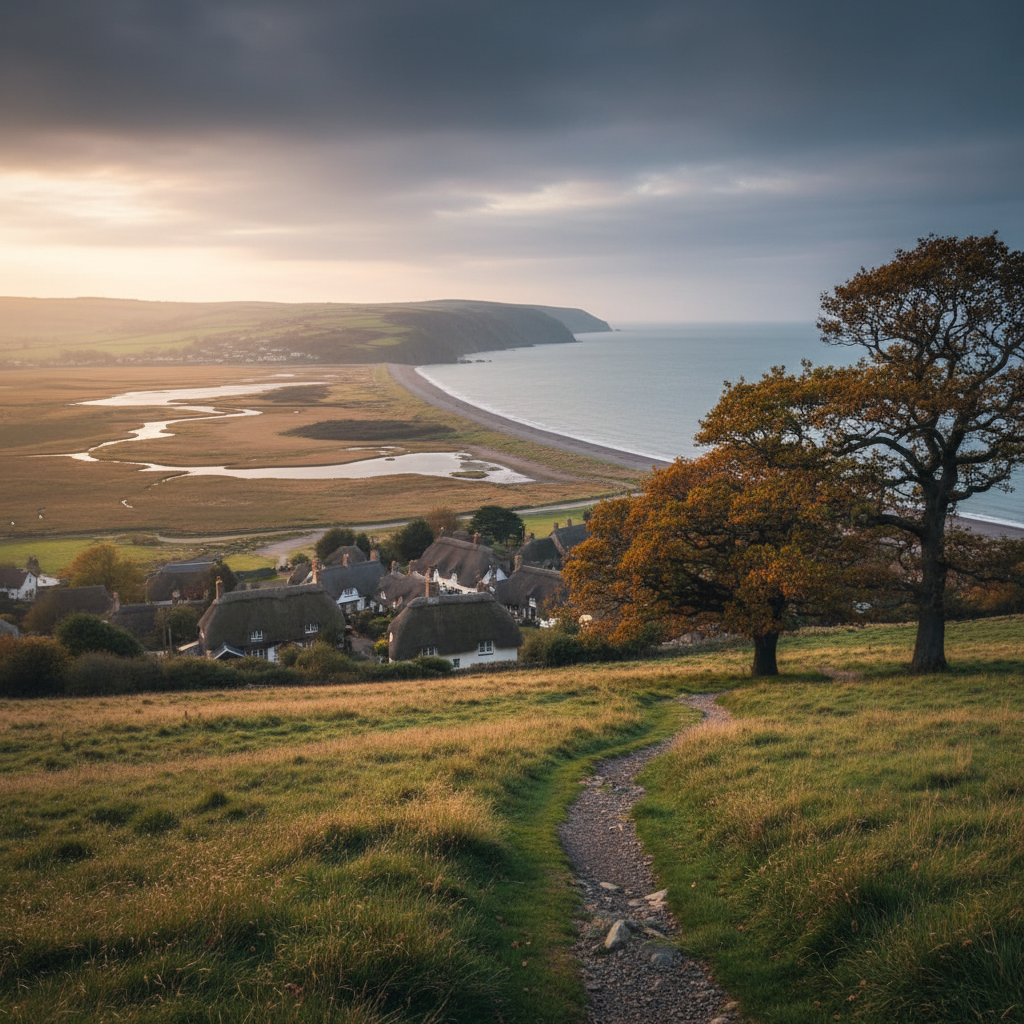
Bossington offers a softer Exmoor coastal stop, with village character, marshland, beach and good walking links.
Heddon Valley
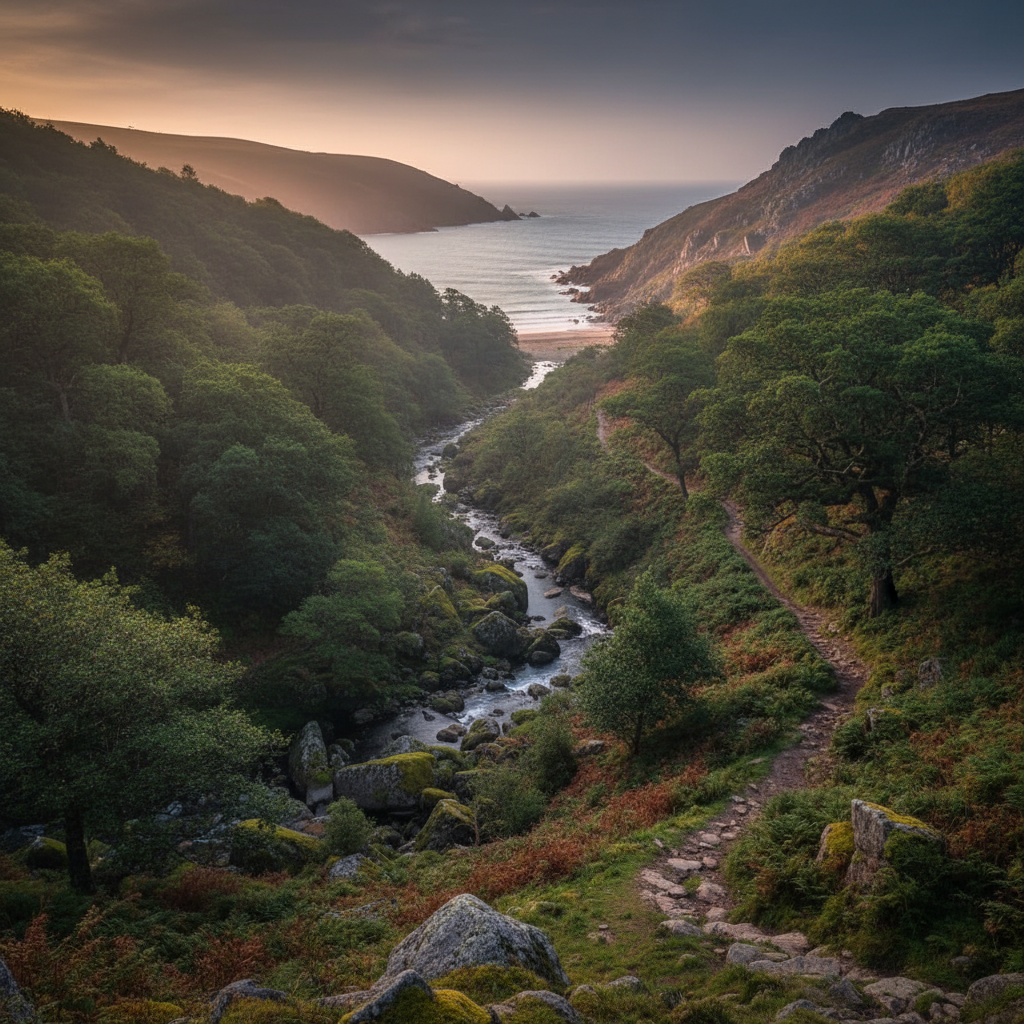
Heddon Valley is one of Exmoor’s best coast-and-combe places, combining woodland, river and sea-edge walking.
Porlock Weir
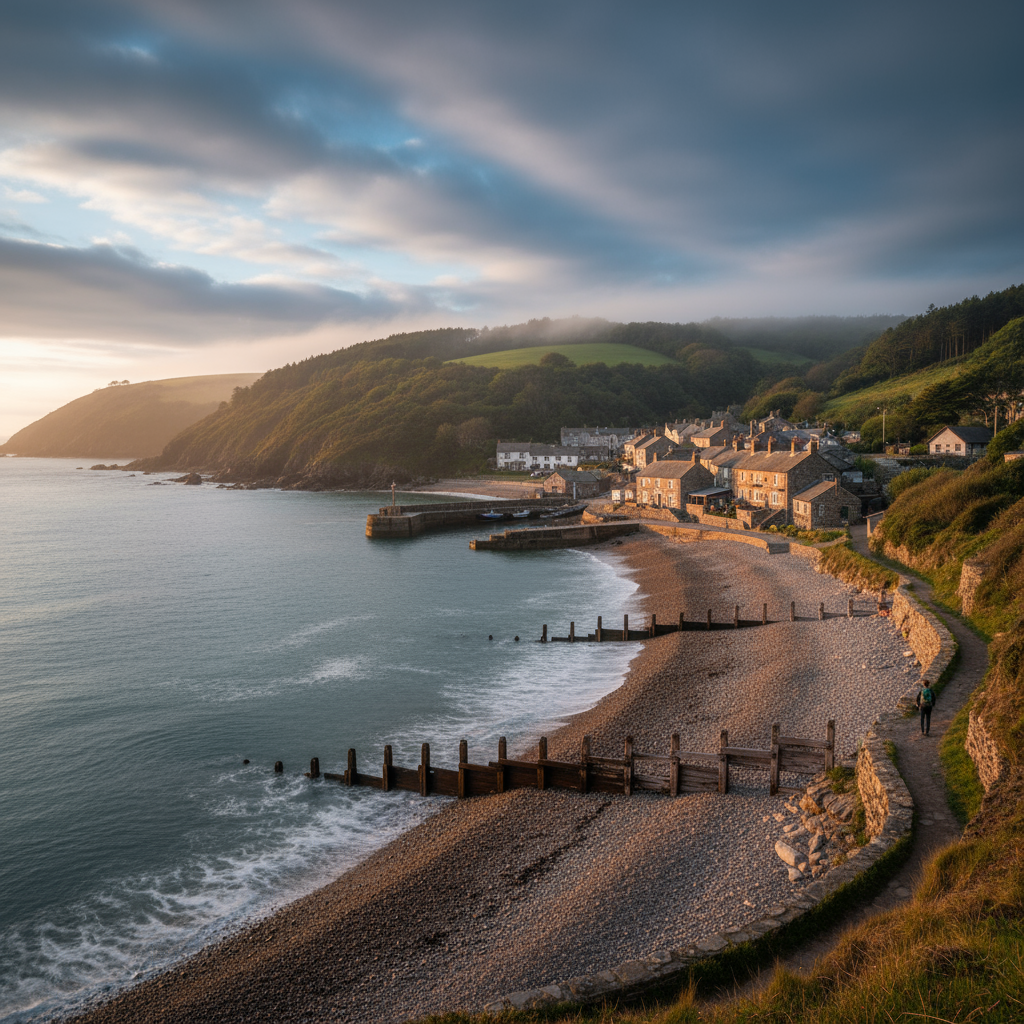
Porlock Weir adds harbour character, coastal walking and one of Exmoor’s most atmospheric sea-edge stops.
Clovelly
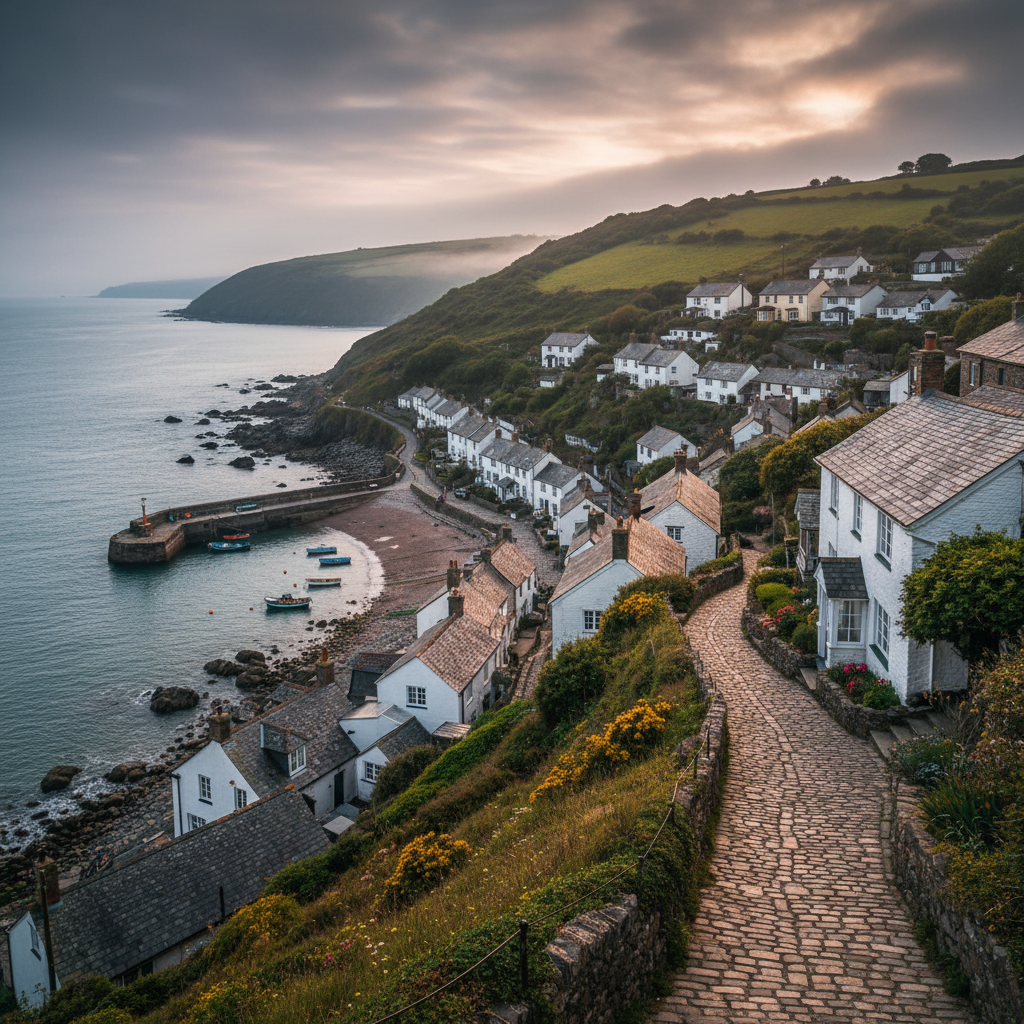
One of the South West’s most distinctive coastal villages, combining dramatic scenery, steep lanes and strong maritime atmosphere.
Join the 3moors Community for path conditions & local tips.
JoinWhy this place matters
Mortehoe — in its own right
What Mortehoe stays with you as is harder to articulate than what it offers to look at. It is a place where the community and the landscape are still genuinely connected, where the presence of other people, both residents and visitors, does not feel managed or curated. The pub is used by the people who live here as well as by those passing through, and that simple fact changes the atmosphere of an evening in a way that is difficult to manufacture and easy to notice. There is something to be said for places that have maintained a working identity alongside their visitor one, where the relationship between the two has not entirely resolved in favour of one or the other. Mortehoe has not become a museum of itself, and it has not become purely a service point for walkers. It remains, with a certain undemonstrative stubbornness, a village. That is rarer than it ought to be.