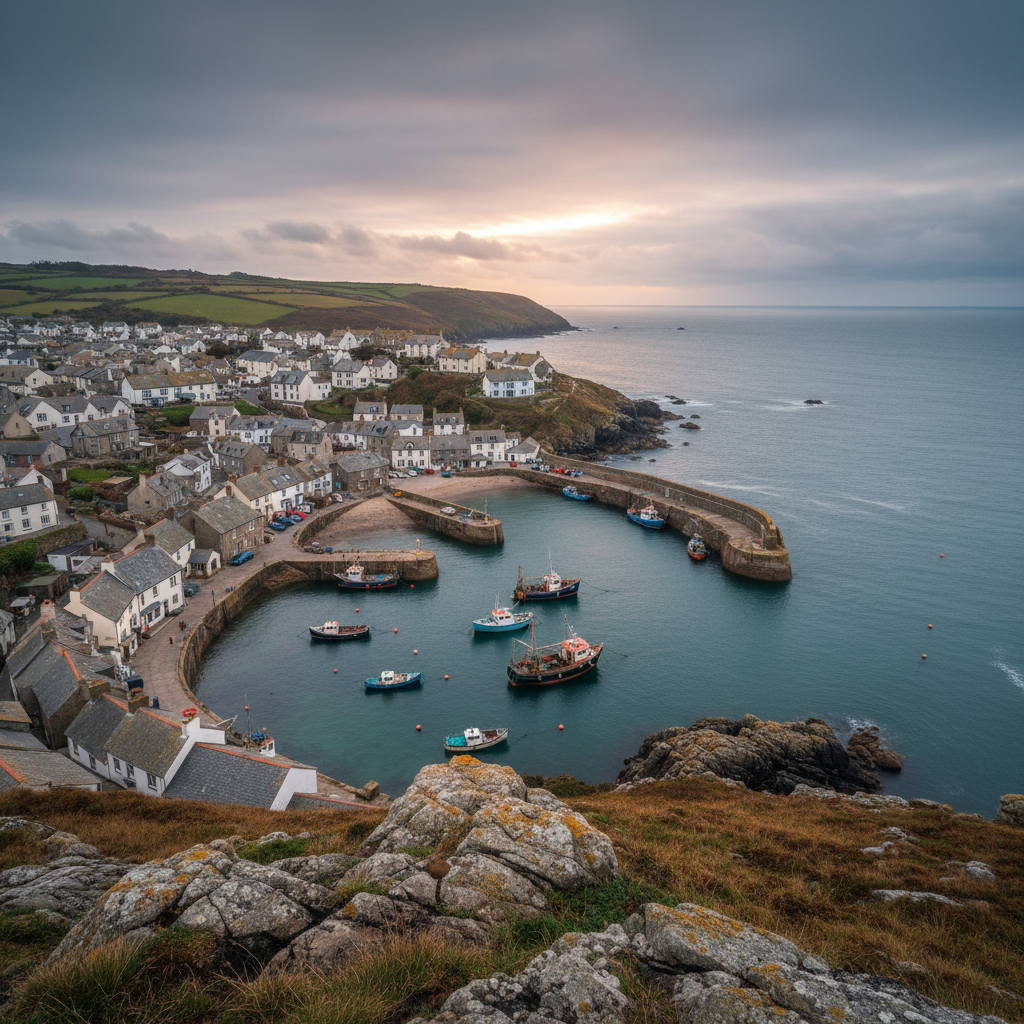
Bodmin Moor · West Cornwall coast
Mousehole
A tightly packed harbour village with deep maritime character and sheltered charm.
About
Mousehole
Mousehole sits at the southern edge of Mount's Bay, a small harbour village pressed so tightly against the Cornish coastline that the sea feels less like a backdrop and more like a landlord. The houses stack close, the lanes narrow, and the whole settlement orients itself around a granite-walled harbour that has shaped daily life here for centuries. It is not a resort town, and it does not carry itself like one. What it offers instead is a place with a coherent identity, one earned over a long history of fishing, weather, and deep familiarity with the water.
People have been arriving and departing through this harbour for longer than the village's recorded history can fully account for. Pilchards once left in barrels bound for Mediterranean ports. Fishing boats have returned through the narrow harbour entrance in conditions that would make most people reconsider the profession entirely. That rhythm of going out and coming back, of the village releasing its people to the sea and receiving them again, has given Mousehole a particular kind of gravity. You feel it most at the waterfront, where the scale of the stone walls relative to the boats inside them tells you something about the seriousness with which the place was built.
Visitors come for the atmosphere, for the photography, and for the simple experience of being somewhere that has not been rebuilt to accommodate their arrival. The lanes behind the harbour reward a patient wander. The harbour front itself, depending on the hour and the season, can be occupied by working boats, pleasure craft, or simply the reflections of walls in still water. The appeal is not complicated. This is a place that has remained itself.
Character
The feel of Mousehole
The harbour at Mousehole changes character with the tide in ways that are worth sitting with rather than glancing at. At low water, the boats settle onto the exposed sand and gravel, listing slightly, ropes slack, the smell of salt and marine growth rising from the drained walls. The sound at this point is mostly gulls and the occasional knock of a hull against stone. At high tide, the same boats float level, the water pressing close to the top of the outer wall, and the harbour becomes a different kind of space: contained, full, quietly tense with the proximity of the sea beyond the entrance.
The relationship between the village and its waterfront is one of genuine interdependence rather than scenic arrangement. The quay is not a viewing platform that happens to have boats in front of it. The buildings behind it are there because the harbour was there first, and the whole built fabric of Mousehole reflects that order of priority. Stone walls, modest doorways, window sills worn smooth: nothing here was designed to be photographed, which is precisely why it photographs so well.
There is a working quality to the light in Mousehole that changes the mood of the place across the day. Morning light hits the eastern side of the harbour wall and the granite takes on a warm, almost amber tone. By afternoon, the village falls into its own shadow and the water in the harbour becomes a darker, more opaque green. These are not incidental details. They are what the tides and the orientation of the cove produce together, and they give the village its particular, unhurried personality.
First-hand visit
Keith's Take
The harbour was the whole story from the moment the lanes opened out onto it. Everything else in the village felt like a set of directions pointing towards that water.
The sound of a mooring rope tightening against a cleat is a small, specific thing, but it was what caught my attention first as I came out onto the quayside at Mousehole. The tide was pushing in and the boats were beginning to lift, slowly, as if remembering what they were for. The granite walls of the harbour hold the water in a way that makes the whole basin feel deliberately proportioned, the kind of engineering that implies long experience of what the sea can do when it gets the upper hand.
As I moved along the quay and then out towards the end of the outer wall, the village behind me rearranged itself. From the waterfront looking back, Mousehole reads as a single dense form: pale walls, slate roofs, the occasional bright door, everything pressed together and facing the same direction. From the end of the wall looking outward, the harbour entrance is a narrow slot in the stonework and beyond it Mount's Bay opens into something much larger and less controlled. That contrast, between the order inside the harbour and the scale of what lies beyond the entrance, is what the place is built around.
I stayed longer than I had planned. Not because there was a great deal to actively do, but because the rhythm of the harbour was worth sitting with. The tide continued to rise. The boats that had been listing on the harbour floor came upright one by one. The water changed colour as the depth increased, from grey-green to something closer to black in the shadow of the walls. By the time the harbour was full and the sea was pressing at the outer wall, the whole place felt different: heavier, more serious, less like a postcard and more like what it actually is.
Keith's Take — a first-hand account from the 3moors team
Map & Getting Here
Getting to Mousehole
What to expect
A natural way to spend time here
The village arranges itself so that the harbour reveals itself gradually as you come down through the lanes rather than all at once. You pass terraced cottages set close to the pavement, a doorstep here, a cat on a windowsill there, and then the harbour opens in front of you and the scale of the granite walls becomes clear. The entrance to the harbour from the sea is narrow enough that you instinctively understand why local knowledge matters. From the quayside, looking outward, you can see the gap in the stone through which the boats pass.
The smell at the waterfront is specific: brine, rope, and something faintly vegetative from the weed on the lower sections of the harbour wall. On a warm, windless day this concentrates into something almost medicinal. When the wind picks up from the south-west, it carries a rawness that reminds you the open Atlantic is not far beyond Mount's Bay. The gulls are confident and worth watching. They are not decorative.
Mousehole rewards those who do not rush. The temptation on arrival is to photograph the harbour immediately and move on, but the place gives more to those who stay long enough to watch the water change. Find a spot on the quay, let the immediate visual impression settle, and then begin to notice the smaller things: the way a mooring line tightens as a boat shifts, the particular sound of water moving through a gap in the stonework, the habits of the people who actually use this harbour. That measured attention is what the place asks of you.
What makes it stand out
What makes Mousehole special
What distinguishes Mousehole from the broader category of picturesque Cornish fishing villages is the completeness of its enclosure. The harbour mouth is narrow, the surrounding hills close, and the village itself contained within a tight radius. There is very little visual noise, no sprawl of development visible beyond the immediate settlement, and the result is a place that feels genuinely bounded. You are aware of being inside something. That quality of containment is unusual and, for many visitors, unexpectedly affecting.
Mousehole also carries a particular story that sets it apart from comparable villages along this stretch of coast. The Penlee lifeboat disaster of December 1981, in which all eight crew members were lost attempting to rescue the crew of a stricken vessel in severe conditions, is not ancient history here. The memorial to the crew is present in the village, and the community's relationship with the sea retains a weight that is not performative. This is not a place that treats its maritime past as heritage dressing. The memory is close, and the village knows it.
Don't miss
Things to see and do
Walk the full circuit of the harbour wall at low tide when the boats are resting on the harbour floor and the scale of the stonework is most legible.
Watch the harbour entrance from the outer wall at high tide to understand exactly how narrow the gap is, and what it means to bring a vessel through it in poor visibility.
Follow the lane up from the harbour to find the Penlee lifeboat memorial and take a moment with it.
Seek out the view back down to the village from the path above the cove, where the tightly packed roofline reads as a single dense form against the water.
Sit at the quayside at dusk in summer when the light on the western wall of the harbour is at its longest and most oblique.
Look for the old fish cellars and store buildings at the harbour's edge, now adapted but still legible as the working infrastructure they once were.
Wait for a departing vessel to pass through the harbour entrance and watch how the skipper reads the gap: there is no margin for inattention.
Walks from here
Getting out from Mousehole
The South West Coast Path runs directly through Mousehole and offers two immediately rewarding directions. Heading north-east towards Newlyn takes you along a stretch of coastal path with views across Mount's Bay towards St Michael's Mount, a walk of roughly two miles on well-maintained terrain that can be comfortably done in under an hour each way. The path rises above the village quickly and the view back down over the harbour from the first headland is one of the better vantage points for understanding the settlement's geography.
Heading south-west from Mousehole, the coast path moves towards Lamorna Cove through a section of coastline that is quieter and more exposed, with granite outcrops, heather, and gorse pressing close to the path edge in places. Lamorna is approximately two and a half miles on foot. The terrain is uneven in sections and requires reasonable footwear, but the route is well-signed and the return journey can be made the same way or, in some conditions, by local bus. This stretch of path is less walked than the Mousehole to Newlyn section and has a noticeably different atmosphere as a result.
Good to know
Before you go
Mousehole draws significant visitor numbers in summer, and the harbour front and surrounding lanes become genuinely congested in July and August, particularly between mid-morning and late afternoon. Parking in the village is limited and fills early on fine days. Arriving before nine in the morning or after five in the afternoon on a summer day changes the experience substantially, particularly around the harbour. The village is compact enough that walking from any nearby parking area is straightforward.
The harbour is a working space and not a visitor attraction. Treat it accordingly. The boats and equipment on the quayside are not props. Tide times are freely available online and worth checking before a visit, since the character of the harbour shifts significantly depending on the state of the water. A visit timed to catch the transition from low to high tide, or the reverse, gives a more complete sense of how the place actually functions.
Across the seasons: Winter is arguably the most honest time to visit Mousehole. The Christmas lights for which the village is locally well-known run through December, drawing visitors on specific evenings, but outside of those dates the village is quieter and the harbour atmosphere more austere. Low winter light on granite walls and cold water in the harbour give the place a directness that summer softens. The South West Coast Path sections nearby can be muddy and require more careful footing after extended rain. Spring brings the first of the returning warmth along this sheltered section of coastline, and the harbour begins to fill with more activity from April onwards as the season opens. Late spring, before the school holidays begin, offers a period when the village is active but not overcrowded and the light is long enough in the evenings to make the harbour worthwhile well after six. Summer is the most visited and least atmospheric season, though early mornings remain quiet. Autumn, from September through October, is when the clarity of the air over Mount's Bay tends to be at its sharpest, and the coastal path walks to Newlyn and Lamorna are at their most rewarding in terms of light and absence of crowds.
Practical info
Practical info
Parking in Mousehole is genuinely limited and fills quickly in summer, particularly on weekends and during the holiday season. The main car park sits above the village and involves a short downhill walk to reach the harbour. On-street parking within the village itself is minimal and largely reserved for residents. Arriving early in the morning or later in the afternoon gives the best chance of finding a space without significant delay.
The village has a small selection of cafés, a pub, and independent shops clustered near the harbour, though opening hours vary considerably outside of summer. Public toilets are available near the harbour area. There are no large visitor centres or extensive facilities here, and the village is compact enough that most amenities are within a short walk of the quayside. Those expecting the infrastructure of a larger coastal town will need to adjust expectations.
The harbour front and main quayside are largely flat and accessible, though the narrow lanes leading down through the village can be steep and uneven underfoot. Wet weather makes some of the older stone surfaces slippery, so footwear with a grip is advisable even on what appears to be an easy visit. The coastal path sections around Mousehole involve more gradient and exposure to sea wind. No specialist equipment is needed, but leaving the immediate harbour area calls for a degree of care.
varies
Explore nearby
Places nearby
Boscastle
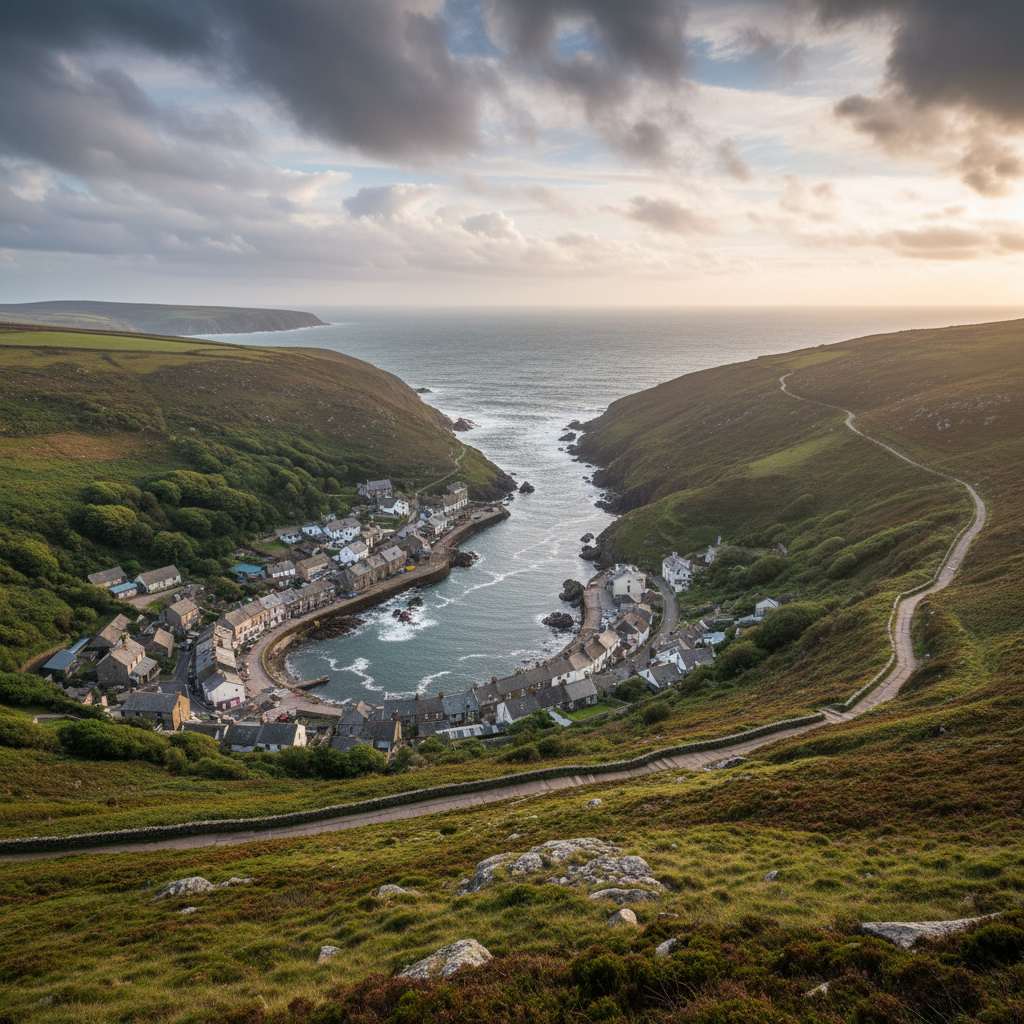
Boscastle adds harbour, folklore, geology and coast path potential to the 3moors place network.
Bossiney Cove
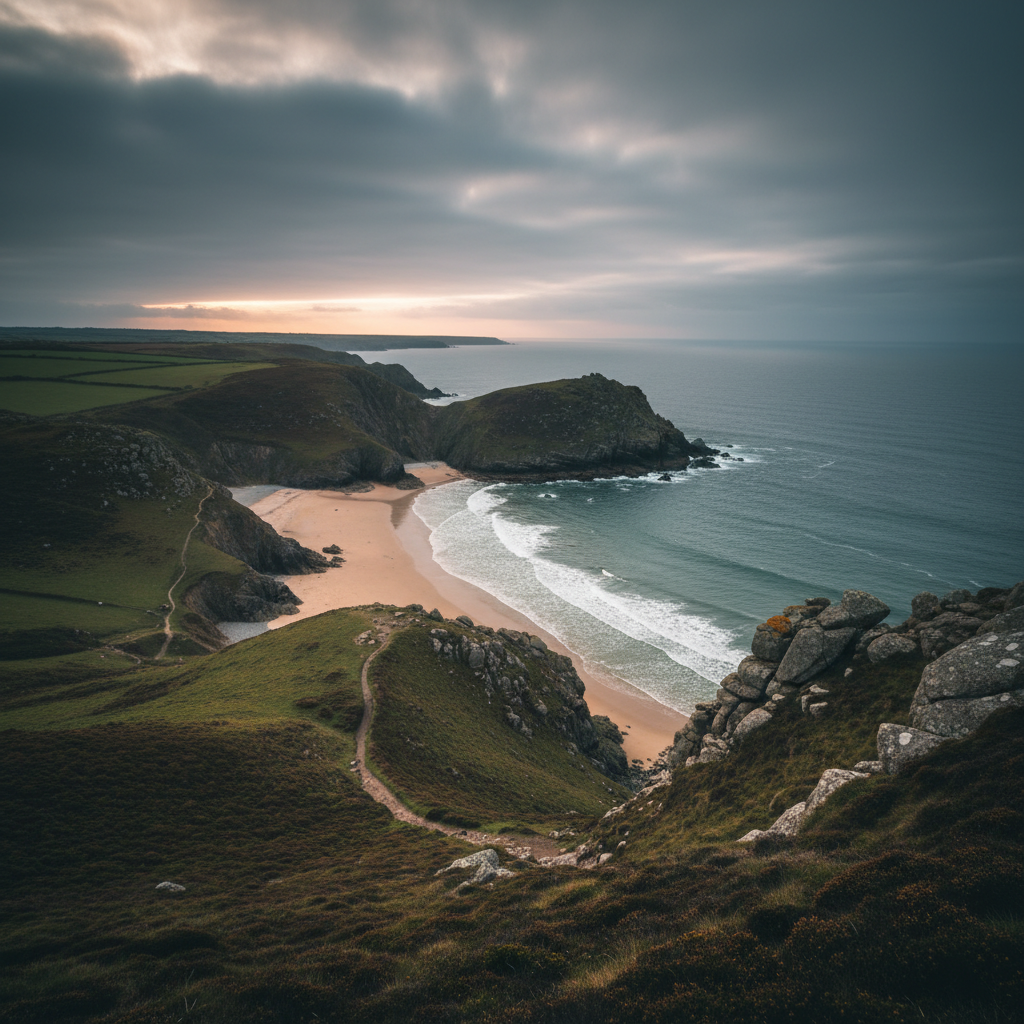
Bossiney Cove brings a wilder, less polished coastal note to the Bodmin-side 3moors map.
Crackington Haven
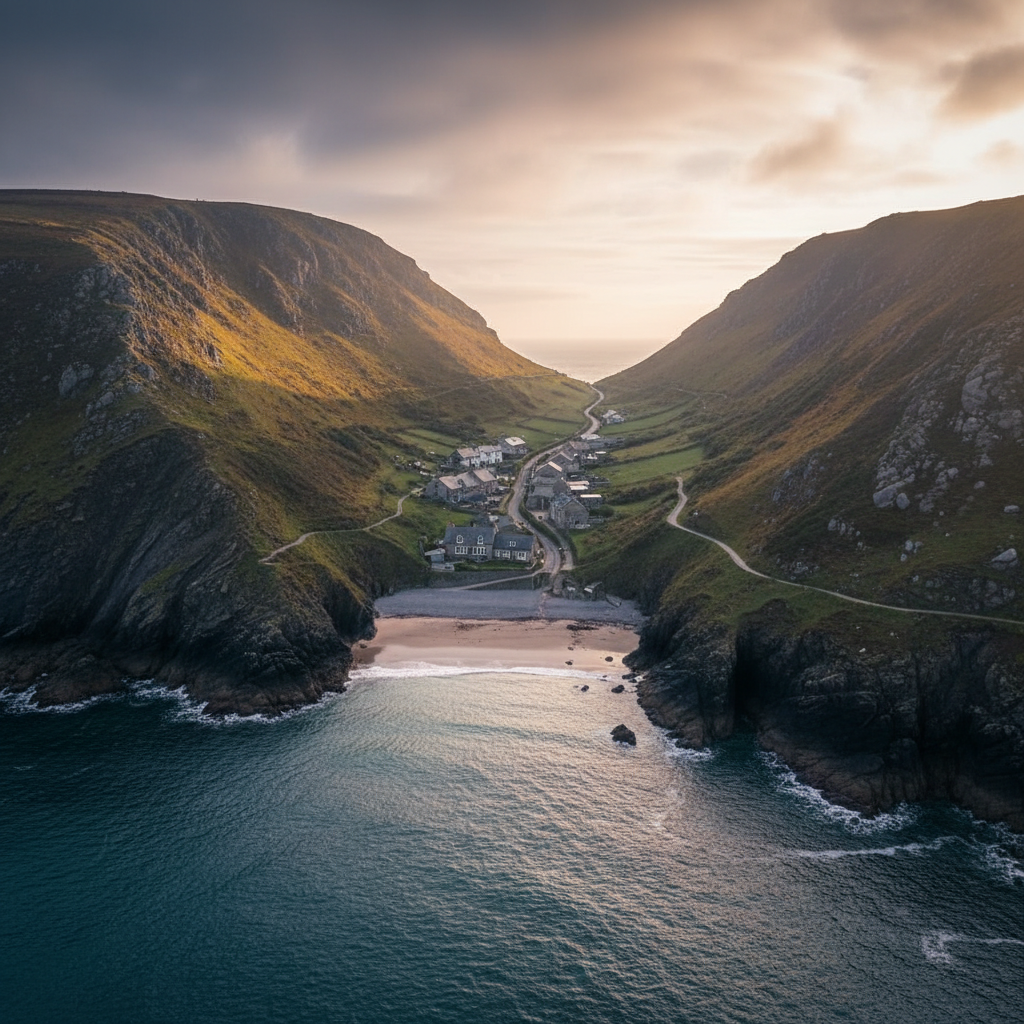
Crackington Haven works well as a quieter North Cornwall coastal place with strong walking and geology appeal.
Golitha Falls
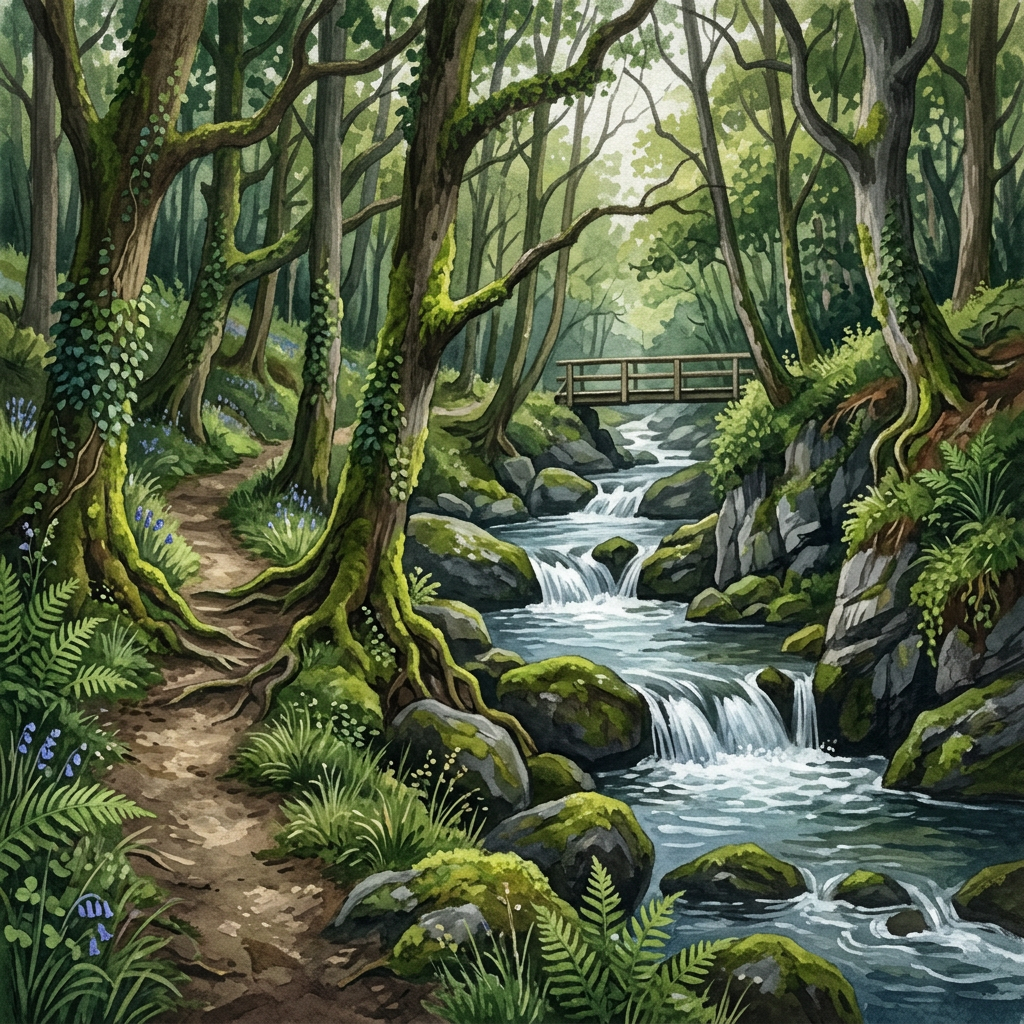
Golitha Falls offers a different side of Bodmin Moor — river, woodland and easier walking in a calm but atmospheric setting.
Join the 3moors Community for path conditions & local tips.
JoinWhy this place matters
Mousehole — in its own right
There is something instructive about the way Mousehole has remained exploreable on its own terms despite everything that coastal tourism has done to comparable places along this coast. The lanes still lead somewhere useful. The harbour is still in use. The village still has a relationship with the sea that is not primarily about leisure. Spending time here with genuine curiosity rather than simply passing through rewards you with a sense of the place's logic: why it is where it is, why it is built the way it is, and what it has asked of the people who have lived and worked inside it. That invitation to look carefully rather than just admire is what Mousehole offers most consistently. The place does not resolve into a single view or a single moment. It unfolds across time and tide and attention, and the more carefully you follow its small details, the more coherent its character becomes.
Explore more
Discover other places, walks, and hidden corners across Bodmin Moor.