Bodmin Moor · North Cornwall coast
St Agnes
A rugged former mining village above dramatic Atlantic cliffs.
About
St Agnes
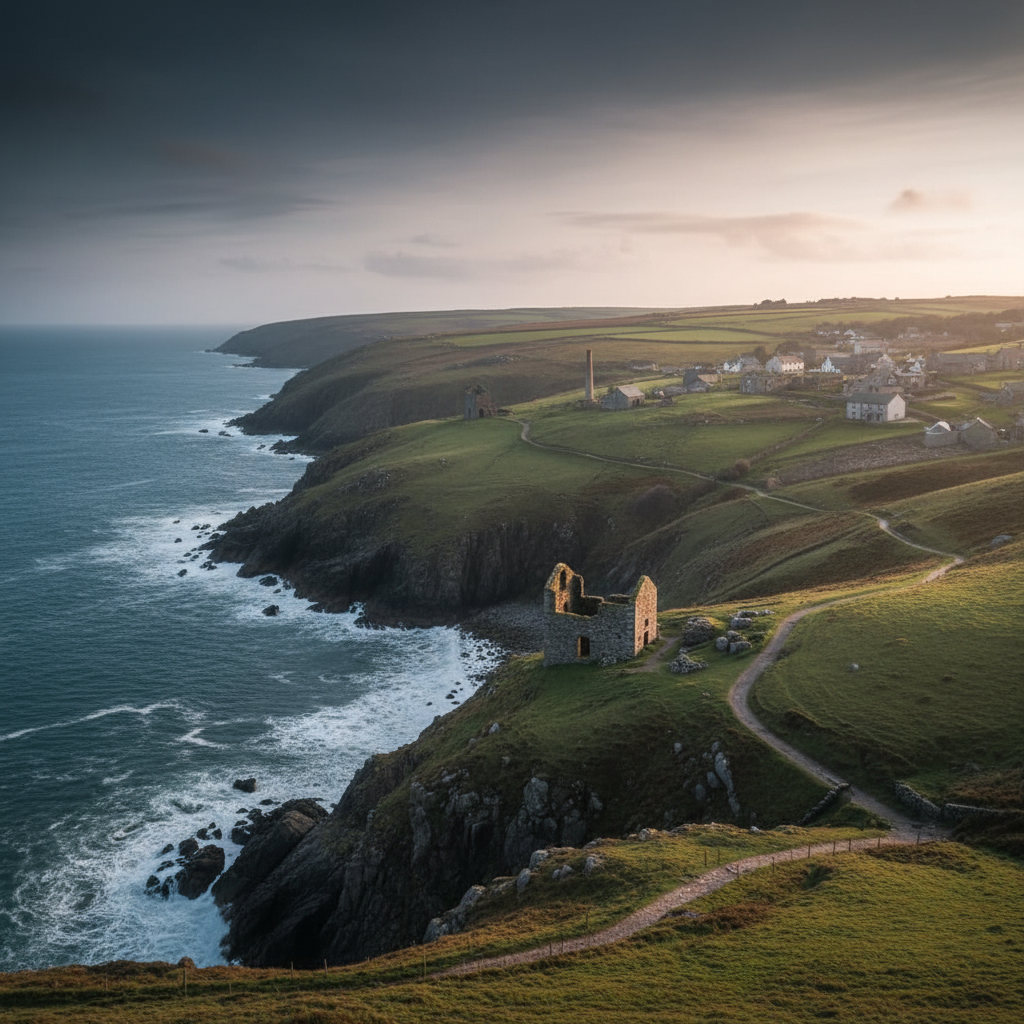
St Agnes sits above the Atlantic on the north Cornish coast, a village shaped less by tourism than by the industry that preceded it. The engine houses that punctuate the clifftops here are not decorative. They are what remains of a tin and copper mining trade that ran hard into this headland for centuries, and their silhouettes against the sea give the place a weight that most coastal villages lack. The landscape is worked and layered, and that layering is what you feel as soon as you leave the main street and follow any path downhill towards the water.
The coast path here is among the most demanding and rewarding in Cornwall. The cliffs fall steeply into the sea, and the Atlantic arrives without interruption from the west, broad and emphatic. Chapel Porth, to the south, is a narrow beach that floods entirely at high tide. Trevaunance Cove, the village's own small harbour, was repeatedly destroyed by storms across the centuries before it was finally abandoned in the early twentieth century. What remains now is a shingle beach and a memory of ambition repeatedly undone by the sea.
People come to St Agnes for the walking, the views, and a quality of remoteness that is harder to find along this stretch of coast than it once was. The village itself is compact and low-key, with a few independent businesses and a community that has not entirely reoriented itself around visitors. It is the kind of place that rewards a longer stay or an early arrival, when the car parks are quiet and the paths above the cliffs belong, for a while, to no one in particular.
That sense of solitude is not accidental. St Agnes sits on a headland that resists the kind of resort development that softened other north Cornish fishing villages. The terrain is too steep, the harbours too ruined, the cliffs too exposed. What it offers instead is space: wide open clifftop ground, the smell of gorse and salt, and a horizon that appears to recede the longer you look at it. For visitors prepared to walk and to sit with a landscape that does not perform for them, there is something here that is difficult to name but not difficult to feel.
Character
The feel of St Agnes
The village sits in a shallow valley above the coast, and its character is set by the descent rather than the arrival. The stone terraces and slate rooftops are unremarkable from the road
it is the path downward, towards Trevaunance Cove or out along the headland, that reveals what St Agnes actually is. The built village is a starting point rather than a destination, and the people who understand this tend to be the ones who get the most from the place.
What defines this stretch of coast more than its appearance is its rhythm. The tidal range here is considerable, and the sea behaves accordingly: drawing back to expose wide shelves of dark rock at low water, then pushing back in with a force that closes Chapel Porth entirely and sends spray up the cliff faces. That tidal rhythm is not merely scenic. It organises the day. Visit at the wrong state of tide and the beaches are gone, the rock pools submerged, the access paths slippery. Visit with the tide working in your favour and the coast opens up in ways that feel like a reward for paying attention. Experienced walkers learn to plan around it, and the discipline of doing so changes the quality of the visit in ways that are hard to articulate but easy to feel.
The light in the early morning, before the car parks fill, has a clarity that the midday haze often removes. The sea off St Agnes Head shifts between grey-green and a deep cold blue depending on the cloud cover, and the colours of the cliff vegetation, gorse and heather and the russet of last year's bracken, shift with it. There is a roughness to the palette here that is different from the warmer coves to the south.
First-hand visit
Keith's Take
The tide was out and the rock pools were full, and somewhere above the cliff path a stonechat was making itself heard above the wind. Something about that compression of detail, the sound, the smell of gorse, the engine house in the corner of the eye, made the whole morning feel more deliberate than I had intended.
The path turned a corner above the cove and the engine house at Wheal Coates came into view without warning, framed by sky on three sides and the sea directly below it. That sudden appearance is the defining moment of this walk: not gradual, not signposted, just a ruin against an Atlantic horizon, exactly where the mining companies left it when the ore ran out and the money stopped. What emerged from the next half mile was a growing sense of what that industry must have meant in terms of sheer physical effort: the cliff here falls away sharply, the ground is riddled with former workings, and the distance between the surface and the seabed directly below is neither comfortable nor ignorable.
Further along, the path dropped towards the head and the wind picked up off the water. The sea below was showing its full range: dark grey in the deeper channel, green over the shallower reef, white where the swell broke on the outermost rock. A pair of choughs tracked the cliff edge thirty metres below, their red bills visible even at that distance, riding the updraft with a patience that made the whole exercise look effortless. The rock pools at the base of the cliff, only accessible at the lowest tides, were occupied entirely by the sea's own timetable, and the path above them belonged to no particular era.
By the time the path curved back towards Trevaunance, the light had shifted and the cove below was holding a different colour altogether: the kind of late afternoon grey-blue that appears on this coast when the sun gets low and the sea surface flattens slightly between the swells. I had planned to be back at the car park an hour earlier. The coast had reorganised that plan without asking.
Keith's Take — a first-hand account from the 3moors team
Map & Getting Here
Getting to St Agnes
What to expect
A natural way to spend time here
The coast path south from Trevaunance Cove is narrow in places and drops steeply before climbing again to the clifftops above Wheal Coates. The surface underfoot alternates between firm track and looser ground where the path edges close to the cliff edge, and in wet weather some sections carry standing water. The path is well-worn but not always well-signed, and the terrain itself is the navigation. Follow the headland and the sea will stay in sight.
On a westerly wind, the sound on the clifftops is constant and physical: not dramatic, but present in the way that a river is present, a background against which other sounds, the alarm call of a stonechat from a gorse stem, the creak of a fence post, register with unusual clarity. The smell of gorse on a warm afternoon carries further than seems possible. These are not details you notice at first
they accumulate over the course of a walk until the walk itself feels different from anything you planned.
This is a place that rewards patience over coverage. Visitors who attempt to see both Chapel Porth and St Agnes Head in a single dash between tide windows often come away with less than those who choose one stretch and spend time with it. A flask, a tide table, and a willingness to sit on a flat rock above the sea for longer than feels strictly purposeful: these are the practical tools the coast path here responds to best.
What makes it stand out
What makes St Agnes special
What separates St Agnes from other north Cornish coastal villages is the density of its mining remains and the way those remains sit inside a working landscape rather than a preserved one. The engine houses at Wheal Coates, perched on the clifftop south of the village, are among the most photographed industrial ruins in Cornwall, but the wider mining landscape extends much further. Budding shafts, spoil heaps, and the ghost patterns of former leats and tramways are readable in the ground if you know where to look, and even if you do not, they add a texture to the clifftops that is entirely absent from the more pastoral coast to the east.
The village also sits at the edge of the St Agnes Area of Outstanding Natural Beauty, which extends inland across an unusually varied piece of country. The heathland behind the coast, particularly around St Agnes Beacon, is managed with some care, and the transition between open moorland and precipitous cliff happens quickly here, within a short walk. That compression of different landscape types into a small area means that a single morning on foot can move through environments that would take a full day to cover elsewhere on the Cornish coast.
Don't miss
Things to see and do
Walk the clifftop path south to Wheal Coates and stand beside the engine house with the sea directly below.
Check the tide before heading to Chapel Porth: at low water the beach extends wide and the rock pools are exposed
at high tide the cove disappears entirely.
Climb St Agnes Beacon for the widest possible view across the headland and back towards the moor.
Look into the smaller rock pools on the exposed shelves below the cliff path at low water, where anemones and small fish hold in the crevices.
Follow the footpath from the village down to Trevaunance Cove in the early morning before the car park fills and the beach changes character.
Find the remains of the old mine leats on the clifftop ground south of Wheal Coates, visible as shallow channels cut into the heathland.
Watch for choughs along the headland: the coast around St Agnes is one of the more reliable places in Cornwall to see them working the cliff edge.
Walks from here
Getting out from St Agnes
The most natural circuit from St Agnes begins at Trevaunance Cove and follows the coast path south along the clifftops to Chapel Porth, a distance of roughly three miles with significant ascent and descent. The path passes the engine houses at Wheal Coates midway and offers uninterrupted cliff-edge walking throughout. The return can be made inland via a network of bridleways and footpaths that cross the higher ground above the village, passing through the remnants of the wider mining landscape before dropping back into St Agnes itself. The full circuit takes between two and a half and three and a half hours depending on pace and tide-related delays at Chapel Porth.
North from Trevaunance Cove, the coast path climbs to St Agnes Head before continuing towards Perranporth. This northern stretch is less frequented than the southern route and offers longer, more exposed sections of clifftop walking with wide views across the bay. The return from St Agnes Head can be made cross-country via the lanes above Trevellas, adding variety to the circuit without significantly extending it. Those walking as far as Perranporth will need to arrange a return or retrace the route: the full distance one-way is around five miles with several significant climbs.
Good to know
Before you go
Tides are not a minor consideration at St Agnes but a practical constraint that shapes what is possible on any given visit. Chapel Porth beach is tidal and can be cut off quickly
the National Trust car park there is a useful indicator of conditions on arrival. The coast path sections above Wheal Coates can be exposed and wet after rain: boots rather than trail shoes are advisable outside the driest months. The village itself is small and car parking in the centre fills quickly on summer weekends
arriving before ten in the morning or after four in the afternoon makes a material difference.
Mobile signal on the clifftops is unreliable in places, so downloading the OS map tile for this area offline before setting out is worth the thirty seconds it takes. There are no facilities on the coast path between Trevaunance and Chapel Porth: a café operates at the Chapel Porth car park, seasonally, but its hours vary and it closes during poor weather. Carry water, particularly in warmer months when the open headland offers no shade.
Across the seasons: Autumn extends well into October on this coast, and the period from late September through to early November is among the most rewarding for walking. The bracken on the clifftops turns a deep copper-red, the gorse continues to flower in patches, and the summer visitors have largely cleared. The sea in October tends to be unsettled but clear, and the swells arriving from the Atlantic after the first autumn storms make the coast path loud and bracing in a way that is entirely different from the calm of July. Winter brings the full weight of the westerly weather to St Agnes Head, and some sections of the coast path are impassable or inadvisable in strong winds. The compensation is an emptiness and a particular quality of winter light that makes the engine houses look like something from a different century altogether. Spring is slower to arrive here than inland: the exposed position means the vegetation comes back tentatively, but by mid-April the gorse is at its most concentrated and the bird activity on the headland picks up noticeably. Summer is the period of highest footfall, and the car parks at Trevaunance Cove and Chapel Porth fill by mid-morning on fine weekends in July and August. The coast path remains excellent, but the sense of solitude that defines the place at other times of year retreats significantly during these months. Those visiting in summer should plan for early starts or late afternoon walks when the main surge of day-trippers has passed.
Practical info
Practical info
The main car park for St Agnes is situated at Trevaunance Cove, reached via a narrow lane through the village. Spaces are limited and fill quickly in summer, particularly at weekends and during school holidays. Overflow parking is sometimes available in the village, but the lanes are tight and not always signed. Arriving early in the morning is strongly advised if you plan to walk the cliff path in either direction.
Trevaunance Cove has a small number of facilities including a pub and a café, though opening hours vary seasonally and some close entirely outside the summer months. There are public toilets near the cove, but they may be locked off-season. There are no facilities on the cliff path itself, and the nearest shops are in the village. Do not assume anything will be open if you are visiting between October and March.
The South West Coast Path through St Agnes involves significant ascent and descent, with some sections crossing exposed headlands where the ground can be wet and slippery after rain. Cliff edges along this stretch are unfenced in places and demand care, particularly in strong onshore winds. Stout footwear is essential; trail shoes are a minimum, and waterproof boots are advisable in cooler months. The terrain is uneven and the gradients sustained enough that this route is not suitable for pushchairs or those with limited mobility.
varies
Explore nearby
Places nearby
Boscastle
Boscastle adds harbour, folklore, geology and coast path potential to the 3moors place network.
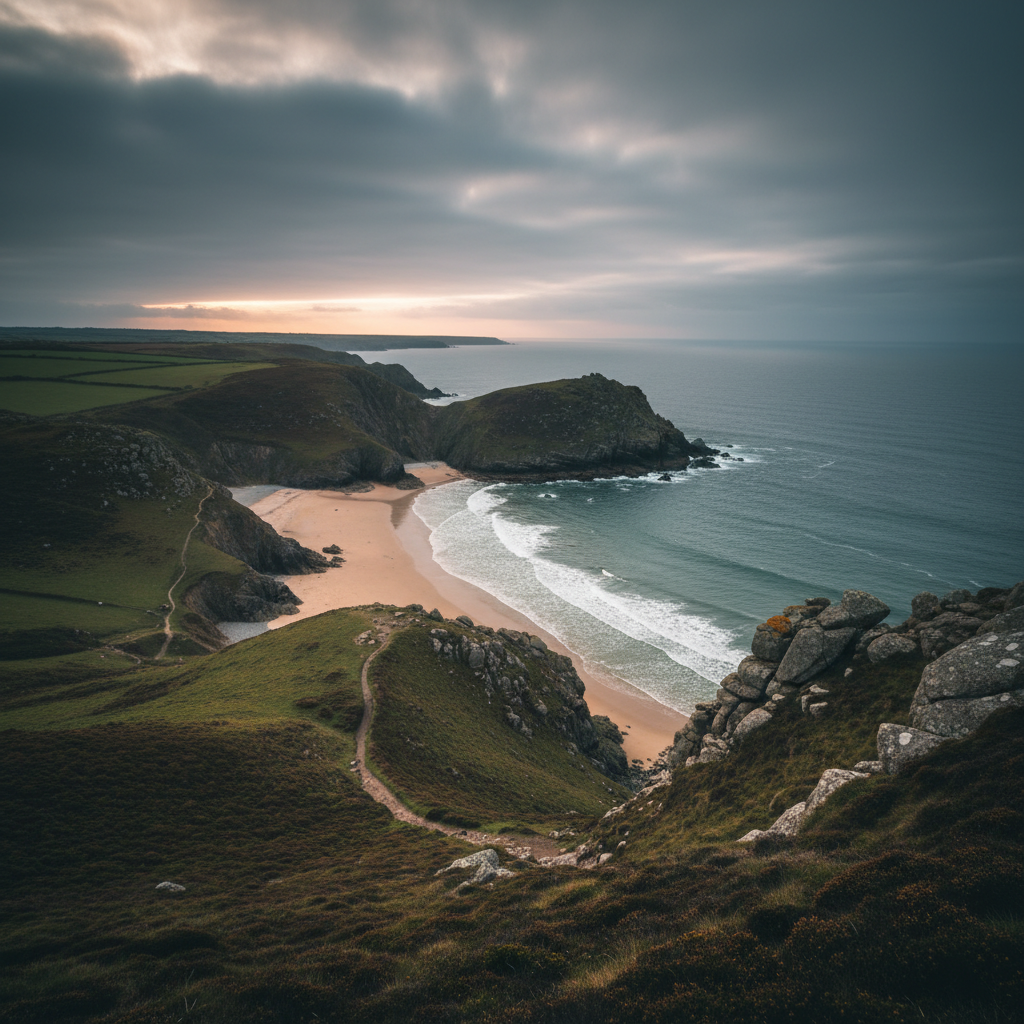
Bossiney Cove
Bossiney Cove brings a wilder, less polished coastal note to the Bodmin-side 3moors map.
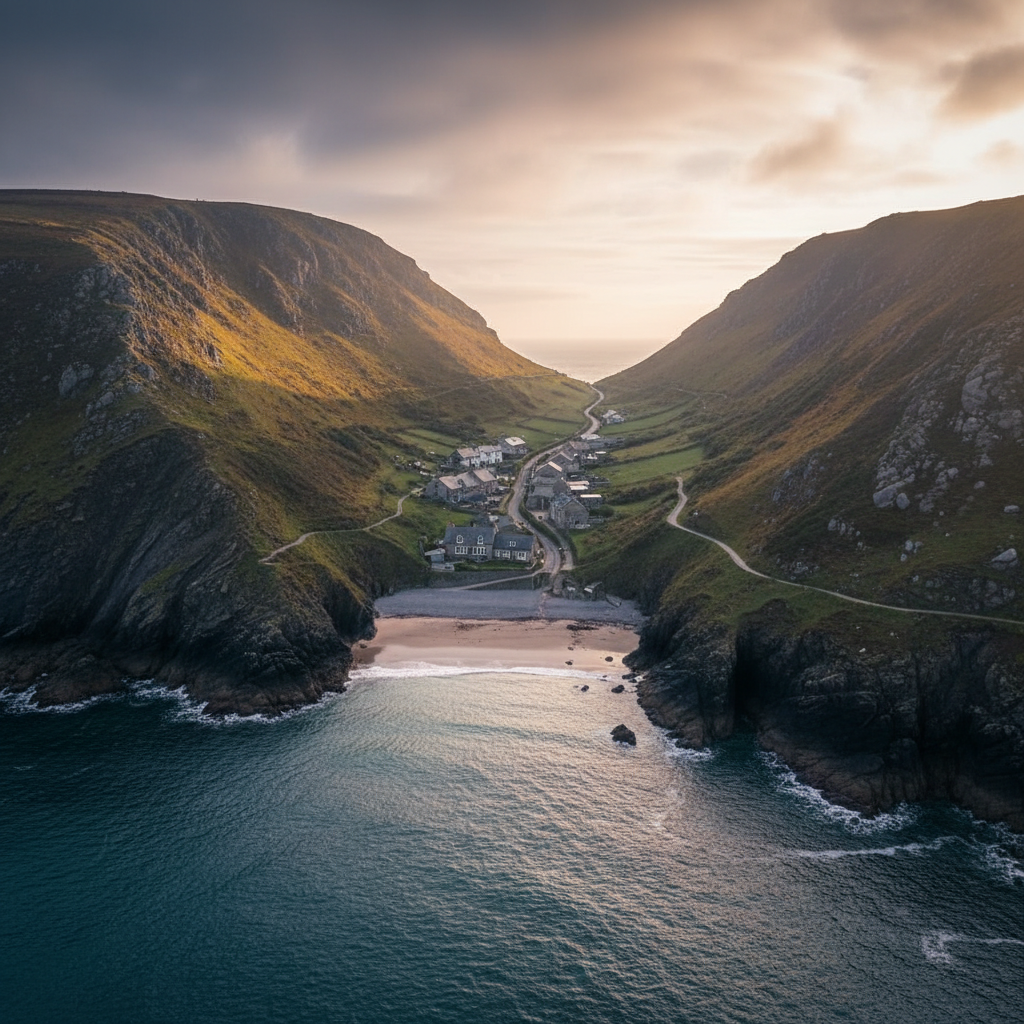
Crackington Haven
Crackington Haven works well as a quieter North Cornwall coastal place with strong walking and geology appeal.
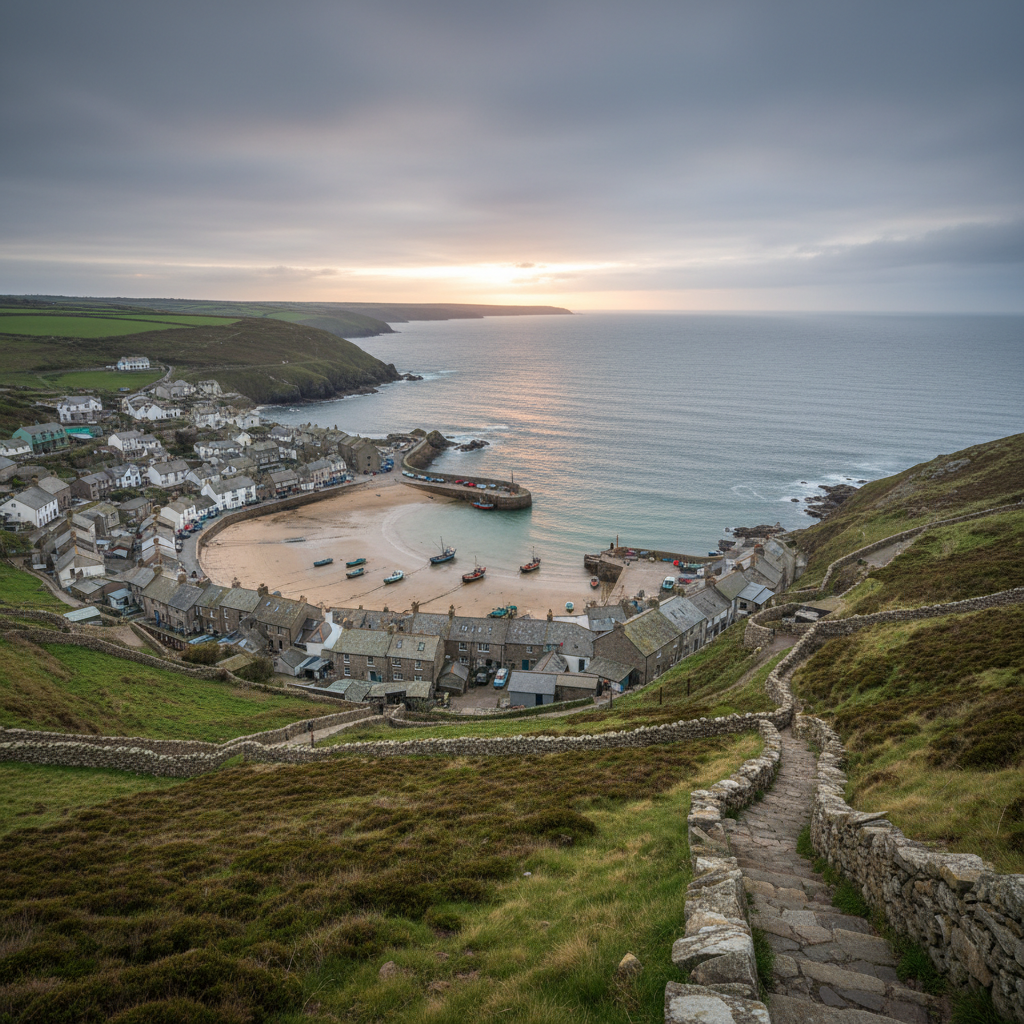
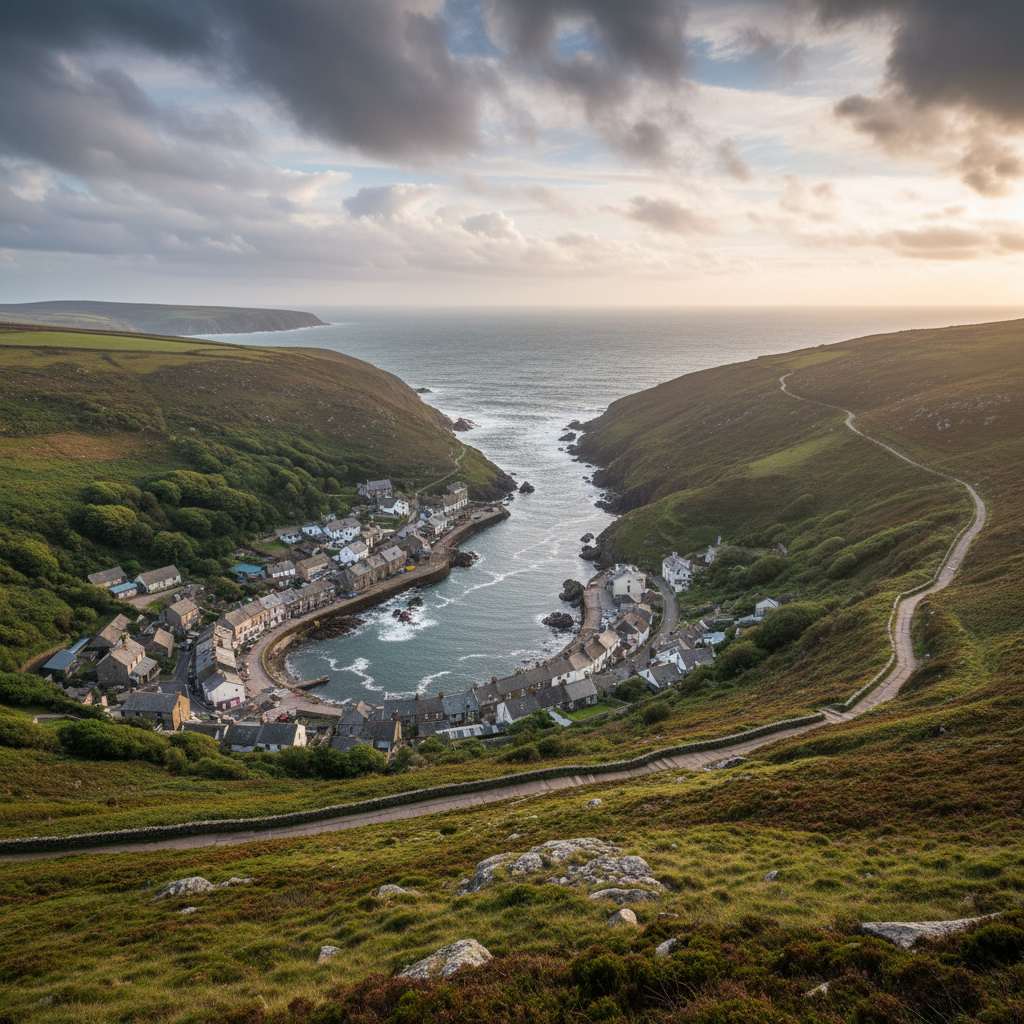
Port Isaac
Port Isaac gives 3moors a strong visitor-facing coastal village with walking, food, harbour and cultural appeal.
Join the 3moors Community for path conditions & local tips.
JoinWhy this place matters
St Agnes — in its own right
What St Agnes leaves you with is harder to account for than the sum of its parts. The engine houses are impressive. The cliff walking is among the best in Cornwall. But the thing that lingers is something less concrete: a quality of light on the water in the late afternoon, when the sun drops low enough to catch the surface of the sea at an angle that makes it look almost metallic, shifting between pewter and pale gold as the swell moves. It is the kind of light that makes it difficult to leave, not because it is beautiful in any obvious way but because it holds your attention without demanding anything from you. That quality, the capacity of this stretch of coast to offer a genuinely absorbing visual experience that requires no effort and no performance on the part of the viewer, is what separates St Agnes from the places that advertise themselves more loudly. The light on the water here does not ask to be photographed. It asks to be sat with for a few minutes longer than you planned.
Explore more
Discover other places, walks, and hidden corners across Bodmin Moor.