Bodmin Moor · West Cornwall
St Just
A rugged far-west town shaped by mining history and Atlantic weather.
About
St Just
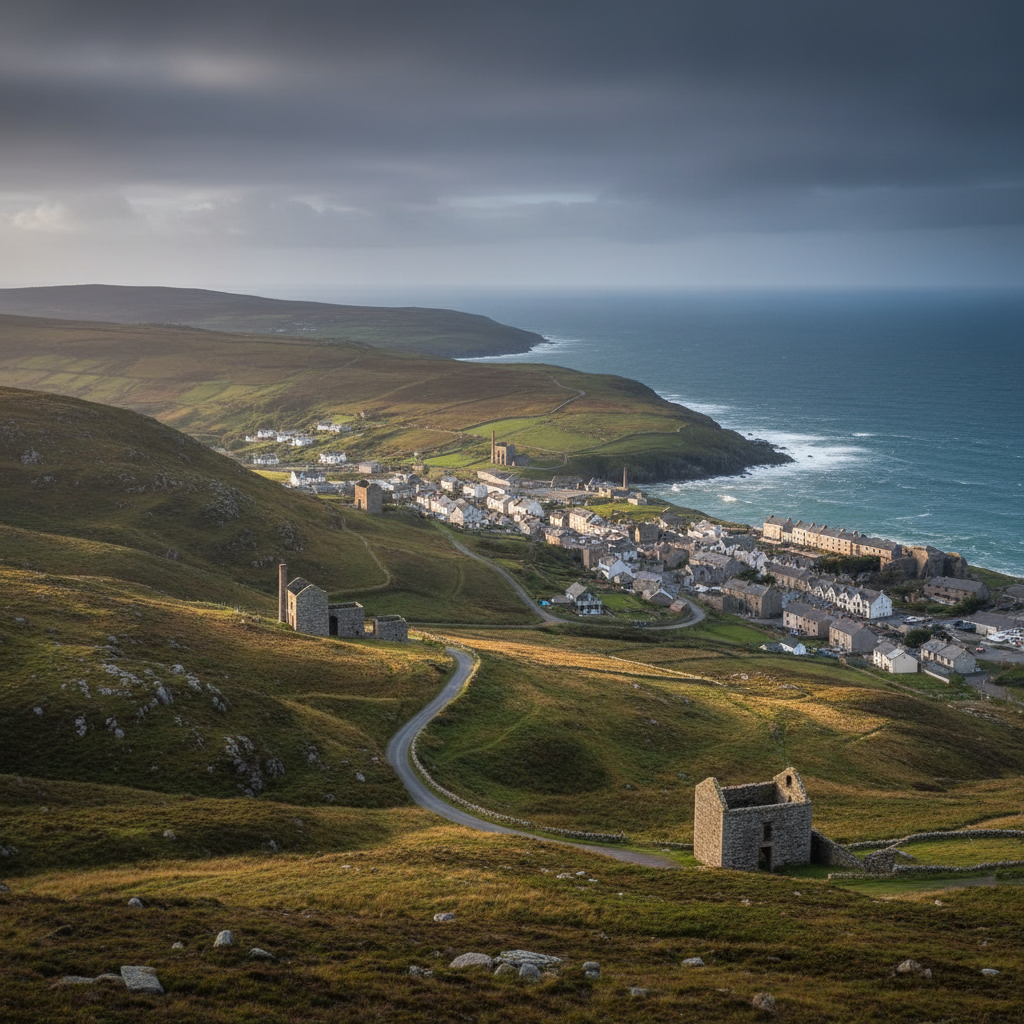
St Just sits at the far western edge of Cornwall, a few miles north of Land's End, in a landscape that feels genuinely remote even by Cornish standards. It is the westernmost town in mainland England, a fact that shapes it more than any tourist designation could. The Atlantic is never far from view, and the wind, when it comes in from the north-west, makes itself felt in every street corner and shop doorway. This is not a resort. It was not built for visitors.
The town grew around its mining industry, and that history is still legible in its bones. The granite buildings that line the market square are solid, purposeful, built to last rather than to impress. The parish church of St Just, thought to date from the fifteenth century, anchors the town both physically and socially, and the open-air Plen an Gwary, a medieval playing place used for Cornish mystery plays, sits close by as a reminder of a cultural tradition that ran deep and long. These are not heritage props. They are the accumulated evidence of a place that has always had its own strong sense of what it is.
Local identity here is not performed or curated. It is simply present. St Just has a working population, a functioning high street, a square where people stop and talk, and a sense that the town exists primarily for its residents rather than its visitors. That is, in itself, relatively unusual in this part of Cornwall, and it gives St Just a particular weight and authenticity that rewards attention.
Visitors come for the mining heritage on the nearby coast, for walking, for the engine houses at Botallack and Levant, and for the stark beauty of the Land's End peninsula. But many find, once here, that the town itself offers something beyond a useful base: a place with its own clear character, its own rhythms, and its own relationship with the landscape it sits within.
Character
The feel of St Just
The physical centre of St Just is the market square, and it behaves like one. Granite-fronted buildings face inward around a space that is practical rather than picturesque. There is a war memorial, a few benches, a modest commercial cluster of independent shops and a pub or two. The proportions feel right: neither grand nor cramped. On a clear morning, when the light comes in from the west at a low angle, the square has a stillness that takes a moment to read. On a market day, it fills with a different kind of energy, one that belongs to the place rather than to the visiting season.
The surrounding landscape presses close. The moors to the east, the coast to the west and north, the engine house skyline visible from elevated points within the town itself: St Just does not sit apart from its setting. It is embedded in it. The road that leads north out of town towards Botallack drops quickly into a working coastal landscape where the ground is rough and the horizon is wide, and that transition from town to open country happens faster here than almost anywhere on the peninsula. Exploration, in this context, feels less like a leisure activity and more like a natural extension of being in the place at all. The town effectively points outward, towards its own edges, and the walker who follows that instinct finds themselves quickly in something genuinely elemental.
There is a certain self-sufficiency to St Just that is historically earned. It was never a fishing port, never a market garden town, never reliant on tourism in the way that villages closer to the south coast became. Mining made it, and when mining ended, it adapted without reinventing itself. The result is a town that carries its past lightly but visibly, and that goes about its present life with a directness that can feel almost refreshing in a county that sometimes wears its heritage as costume.
Map & Getting Here
Getting to St Just
What to expect
A natural way to spend time here
Walking into St Just from the car park on the edge of town, you pass through a residential fringe of modest terraced housing before the streets narrow and the square opens ahead of you. The transition is unremarkable, which is itself part of the point: there is no visitor gateway, no moment where the town dresses itself up for arrival. The square simply appears, and you read it as you find it.
On the right day, with the wind coming off the Atlantic and the light shifting fast across the square, St Just has a particular quality of exposure that you feel in the skin rather than observe. The air carries salt even here, half a mile from the cliff edge, and the sound of gulls carries inland further than you might expect. These are not dramatic details. They are the background texture of being in a far-western Cornish town, and they accumulate quietly over the course of a morning.
The town rewards a measured approach. Spend time in the square before heading out to the coast. Look at the Plen an Gwary, which is easy to overlook and easy to underestimate. Find a coffee and sit with it. The impulse on arriving is often to push straight through to Botallack or Cape Cornwall, but St Just itself, given an unhurried hour, offers something that the coastal path cannot: the particular texture of a place that still functions as a real community, with all the ordinariness and occasional grace that implies.
What makes it stand out
What makes St Just special
What distinguishes St Just most clearly from other historic towns on the Land's End peninsula is the density of industrial heritage within easy walking distance of its centre. The Botallack mines sit perhaps two miles to the north-west, with their Count House and iconic cliff-edge engine houses. Levant, a short distance beyond, is a working beam engine maintained by the National Trust, thought to be the oldest in Cornwall still running on its original site. These are not reconstructions. The machinery is genuine, the shafts are real, and the landscape around them still shows the marks of what happened there. That proximity to authentic industrial history, within a short walk of a functioning town centre, is uncommon.
St Just is also notable for what it does not have. There is no harbour, no beach, no obvious draw for the bucket-and-spade visitor. This keeps the footfall honest. The people who come here have generally chosen it deliberately, which gives the town a certain quality of attention. Those looking for the sanitised version of Cornwall will not find it here. What they will find instead is a landscape that has been genuinely worked, a town that has genuinely endured, and a stretch of Atlantic coastline that remains as raw and demanding as it has ever been.
Don't miss
Things to see and do
Stand in the Plen an Gwary and consider what it was built for: a medieval open-air theatre used for Cornish mystery plays, still intact, still in occasional use, and almost entirely unannounced.
Walk north along the B3306 coast road towards Botallack and turn off at the Count House, where the cliff drops away and the engine houses cling to the rock above the sea.
At Levant, watch the beam engine run under steam on its working days, a genuinely moving piece of machinery in the original sense of that word.
Follow the coastal path south from Cape Cornwall, which lies roughly a mile west of the town, and notice how the headland changes character as the angle of the light shifts through the morning.
Look up at the rooflines of the market square buildings from different corners of the square: the variation in granite and slate is more expressive than a first glance suggests.
Seek out the independent hardware and provisions shops that still operate in the town, stocked for working people and for those who actually live here rather than pass through.
At dusk, if the weather allows, walk to any elevated ground on the western edge of town and watch the sun drop into the Atlantic: it happens fast and it happens often, and it never looks quite the same twice.
Walks from here
Getting out from St Just
The most immediate and rewarding walking from St Just follows the coastal path northward towards Botallack and the Levant mine complex. From the market square, a direct road leads to Botallack village, from which paths descend to the Count House and then to the cliff-edge engine houses. The terrain here is rough in places, with short but steep sections close to the cliff, and the path continues north to Levant and beyond to Pendeen Watch lighthouse. This stretch of coast is part of the South West Coast Path and is well-signed, though the ground can be boggy after rain.
To the south-west, Cape Cornwall is reached by a direct lane from the town and offers a short but exposed headland walk with wide views towards the Scilly Isles on a clear day. The cape itself is a compact promontory, steep-sided, with the remnant chimney of a former mine at its summit. The circuit back along the coastal path and then inland to St Just makes for a manageable two-hour walk that takes in both coastal drama and a section of the inland field paths that cross the peninsula between town and sea.
For those wanting longer days on foot, St Just sits within reach of the Land's End circuit via the coastal path, and the moorland tracks east of the town connect into a quieter network of lanes and field paths that see very little walking traffic. The ground here is rougher, less clearly signed, and more representative of the working agricultural landscape that surrounds the town on its non-coastal sides.
Good to know
Before you go
Parking in the centre of St Just is limited, and the main car park can fill on summer weekends, particularly when the coastal path is busy. Arriving before mid-morning avoids the worst of this. The town is well-served by the First Kernow bus service from Penzance, which makes it accessible without a car and offers a useful route if you want to walk a section of the coast path and return to town from a different direction.
The weather on this part of the peninsula is changeable and often more severe than forecasts suggest. Wind is the constant variable: what feels fine in St Just square can be genuinely demanding on the exposed cliff sections two miles to the north-west. A windproof layer is not optional here in any season. The coastal path north of Botallack is close to the cliff edge in several places and requires care, particularly in wet or gusty conditions.
Across the seasons: Midsummer brings the most visitors, drawn by the walking weather and the long Atlantic evenings. The town is at its most animated in July and August, and the square on a warm evening has a particular relaxed energy. But summer also brings the most pressure on parking, accommodation, and the coastal path sections around Botallack, which can feel busy in a way that is at odds with the character of the landscape. Those who know the town well tend to avoid August entirely. Late spring, from April into May, is arguably the finest time: the maritime grassland on the cliff tops is at its most vivid, the light is clear and long, the walking is good, and the town has not yet entered its visitor season. The Levant engine runs on selected days throughout the year, but opening patterns vary, and it is worth checking before making it a centrepiece of a visit. Winter on this part of the peninsula is genuine. The town goes about its business, the pubs fill with locals, and the coast path north to Botallack can be extraordinary on a clear January morning when the sea is running hard and the light is low and silver. The engine houses look their best in winter light, when the landscape around them is stripped back and the industrial logic of their position, right at the edge of workable land, right above the sea, becomes fully legible. For those prepared for the conditions, a winter visit to St Just is the least touristic and in many ways the most honest version of the place.
Practical info
Practical info
St Just has a public car park on the edge of the town square, though spaces fill quickly on market days and during summer weekends. Street parking exists on the approach roads but is largely undesignated and shared with residents. Visitors arriving by mid-morning on busy days may need to wait or return later. There is no large overflow facility, so patience is worth building into your plans.
The town square and its surrounding streets offer a reasonable range of facilities for a place of this size, including pubs, a small number of independent shops, and a post office. Public toilets are available near the square, though their opening hours can vary by season. There are no visitor centre facilities or dedicated tourist infrastructure in the way larger towns provide. If you are heading out to the coastal path afterwards, stock up on food and water before leaving the town.
St Just itself is walkable on foot without difficulty, though the streets are uneven in places and the town sits on sloping ground. Paths leading out towards the coast and the old mine workings involve steeper gradients and exposed terrain that demands proper footwear year-round. In wet weather the ground around former industrial sites becomes boggy and unstable. Atlantic weather moves in quickly from the west; even in summer, a wind layer and waterproof are worth carrying.
varies
Explore nearby
Places nearby
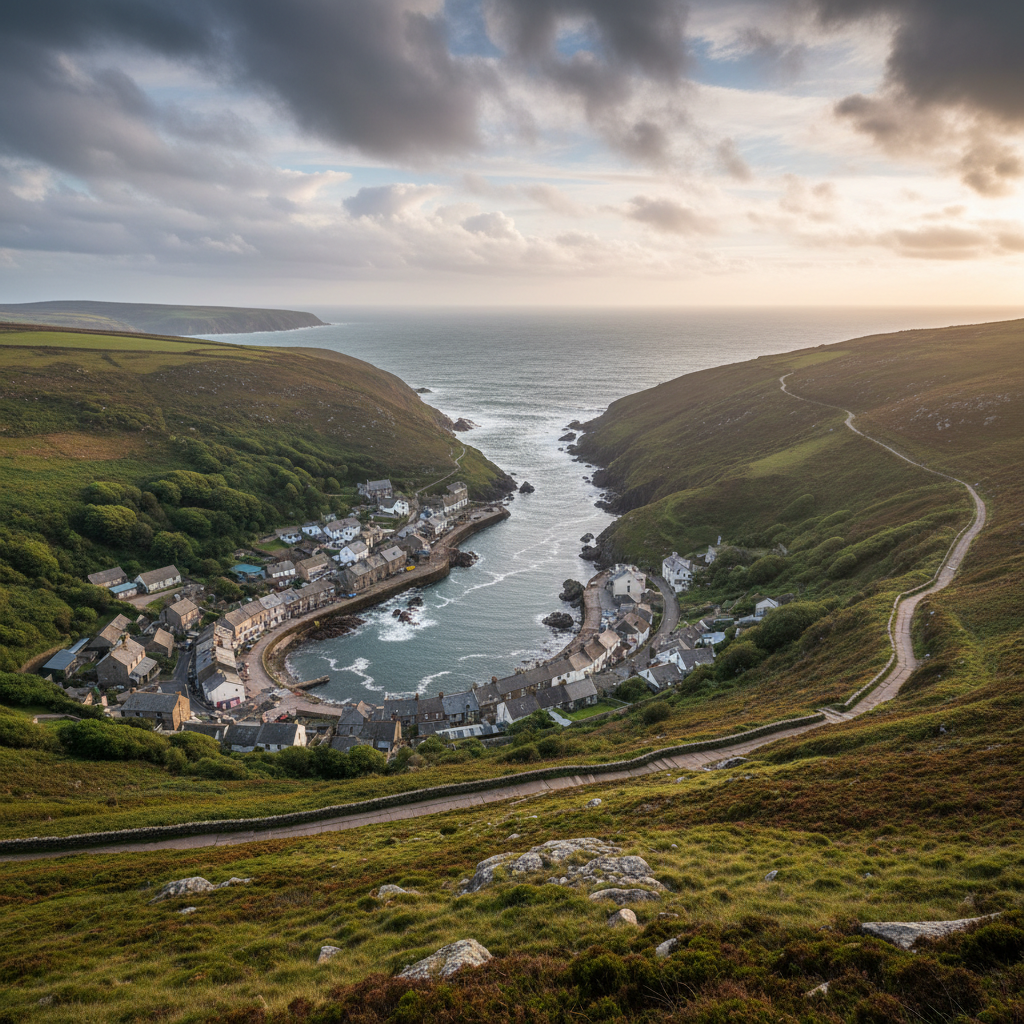
Boscastle
Boscastle adds harbour, folklore, geology and coast path potential to the 3moors place network.
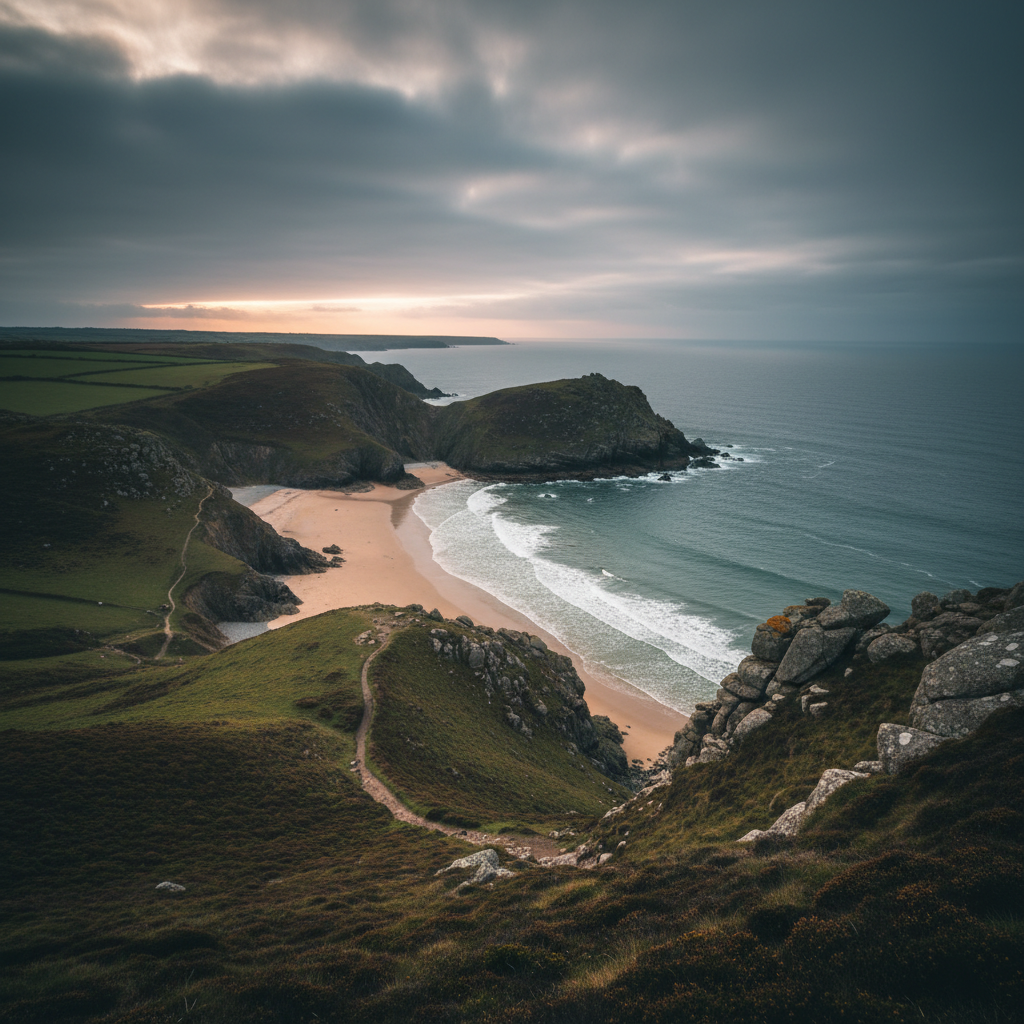
Bossiney Cove
Bossiney Cove brings a wilder, less polished coastal note to the Bodmin-side 3moors map.
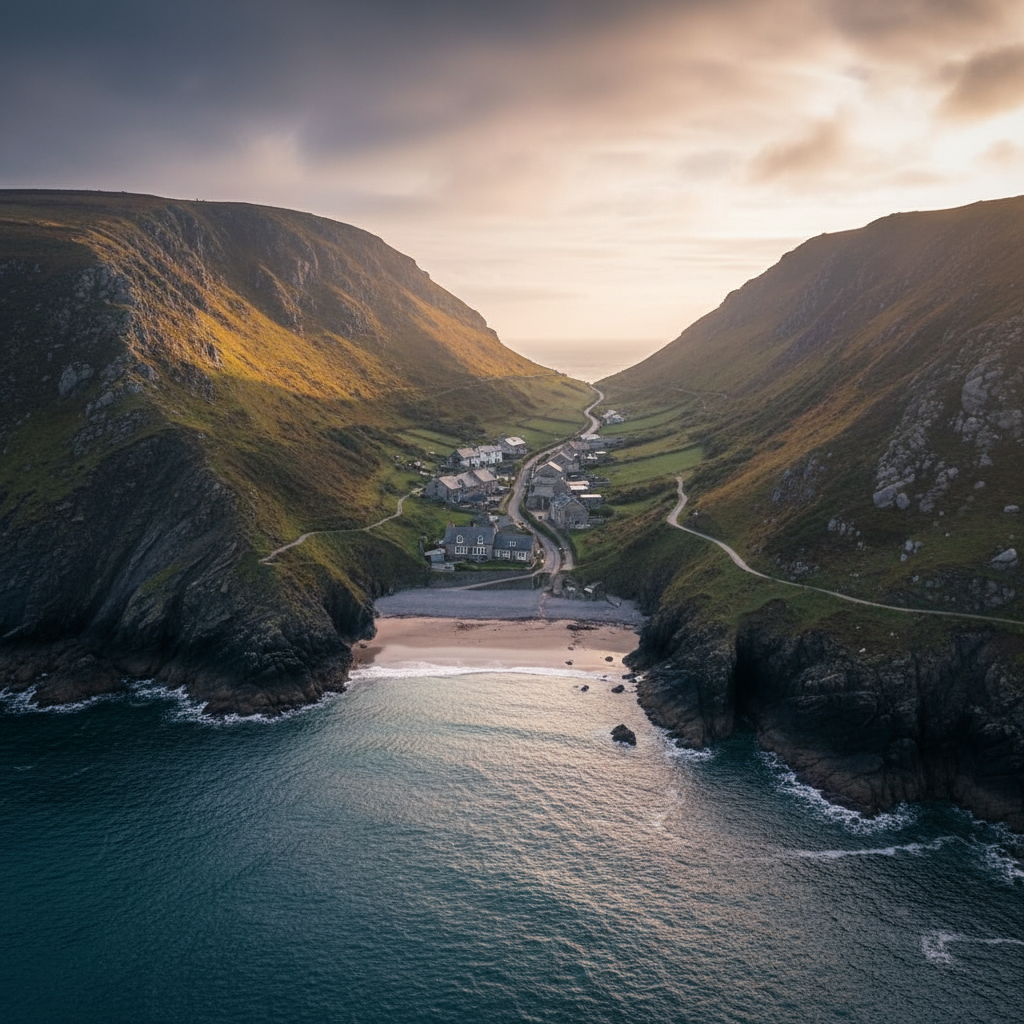
Crackington Haven
Crackington Haven works well as a quieter North Cornwall coastal place with strong walking and geology appeal.
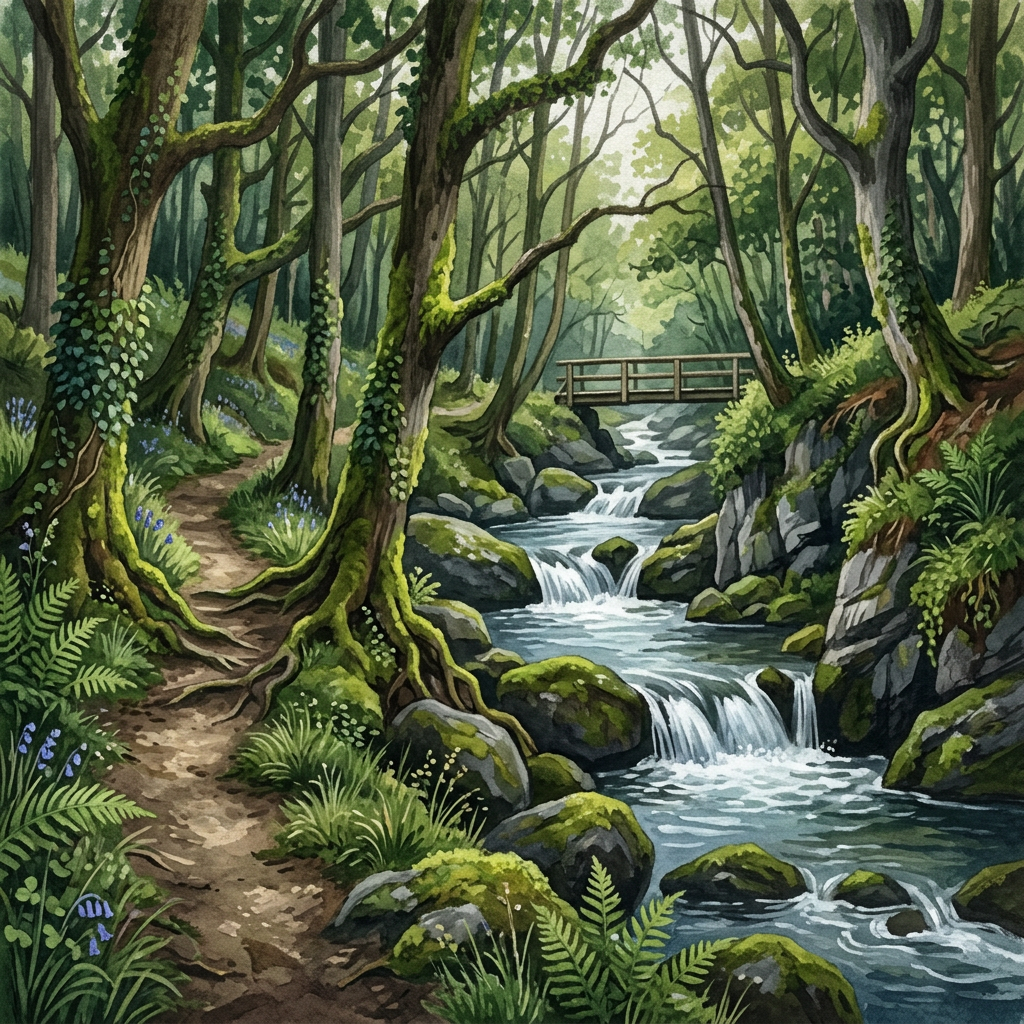
Golitha Falls
Golitha Falls offers a different side of Bodmin Moor — river, woodland and easier walking in a calm but atmospheric setting.
Join the 3moors Community for path conditions & local tips.
JoinWhy this place matters
St Just — in its own right
What St Just ultimately offers is not a transaction. There is no particular experience being packaged here, no heritage trail designed to move you smoothly from one interpreted moment to the next. The markets and trades that built this town, the mining industry, the small commerce of a working community at the edge of England, left their marks in stone and in habit, and those marks are still readable if you spend time here rather than passing through it. The square still functions as a square. People buy things, meet each other, go about their days. The engine houses on the cliff still draw those who want to understand what work at this scale and in this landscape actually looked like. The town does not explain itself. It simply continues, in its own manner and at its own pace, at the furthest westward edge of the country, with the Atlantic pressing in from one side and the old moor country rising quietly on the other.
Explore more
Discover other places, walks, and hidden corners across Bodmin Moor.