
Exmoor · South Exmoor
Winsford
A peaceful riverside village surrounded by rolling hills and quieter Exmoor country.
About
Winsford
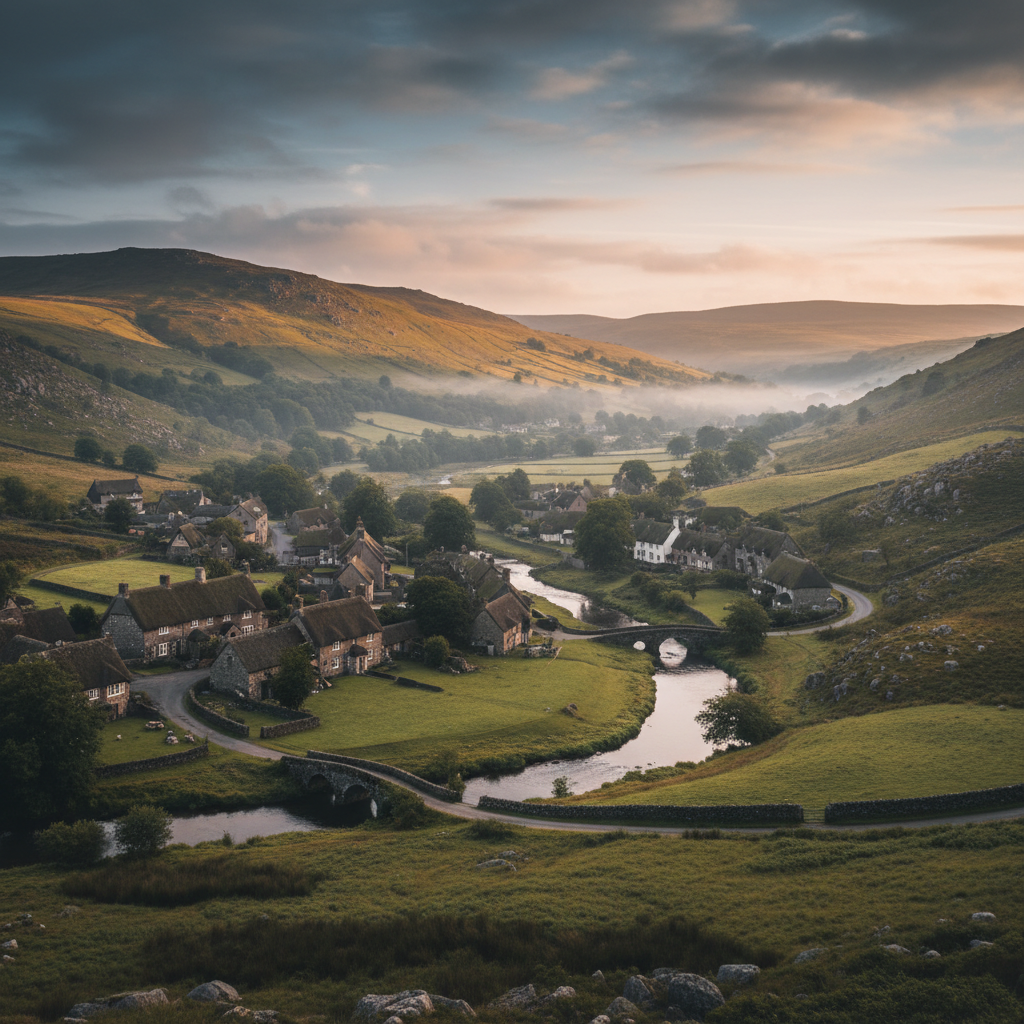
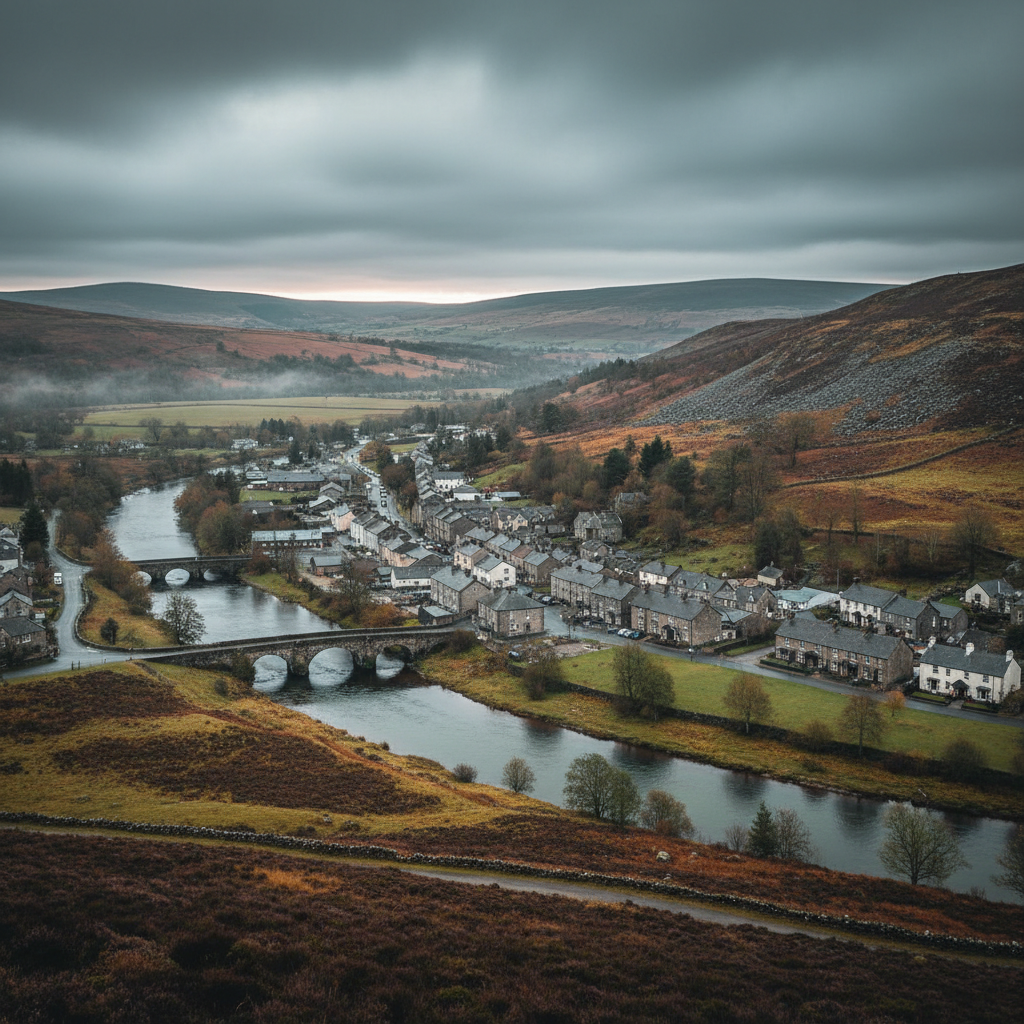
Winsford sits in a shallow valley in the southern reaches of Exmoor, where the River Exe and the Winn Brook meet beneath a scatter of oak and alder. It is not a village that announces itself. The road drops gently into it, the thatched rooftops appearing before the rest of the settlement does, and by the time you have parked and stepped out, the sound of water is already present. That constancy of running water is one of Winsford's defining qualities, a background note that shapes the whole mood of the place.
This is a village that holds itself quietly. There is no through-road urgency, no particular pull towards commerce or spectacle. The pace is set by the landscape rather than by any visitor infrastructure, and for those who notice such things, that absence becomes a kind of gift. Winsford does not perform. It simply continues, as it has done across many centuries of moorland life, in a way that feels neither curated nor self-conscious.
People come here, when they do, for the walking. The village sits at a natural starting point for routes into the lower, less-visited fringes of Exmoor, where the paths tend to be less worn and the country opens gradually rather than dramatically. It is a place that suits walkers who prefer to arrive without expectation and see what the ground offers as they go.
The surrounding hills are gentle by moorland standards. The vegetation is thicker and more varied than on the high ground to the north, with hedged lanes, riverside woodland, and open fields all within easy reach. This is Exmoor at its most pastoral, and Winsford fits that character without contradiction.
Character
The feel of Winsford
The village green at Winsford is small and slightly irregular, bounded by the brook on one side and by a mix of stone and thatched buildings on the others. The Royal Oak sits at one edge, long-established and unhurried in the way that genuine local pubs tend to be. Across the green, the church of St Mary Magdalene offers a quieter kind of anchor, its tower modest and its churchyard maintaining the particular stillness that only age and good maintenance together produce. The settlement holds together less as a planned space and more as something that accumulated organically, each element placed in response to the land and the water rather than to any formal design.
What gives Winsford its particular character is less what you can see and more what you can sense: that this is a place still shaped by the people who live in it rather than by those who pass through. The pub serves the village as much as the visitor. The church is a working parish, not a heritage exhibit. The post box, the small bridge, the cattle grid at the edge of the lane, all of these speak to a community that has functions beyond tourism and a rhythm that persists through the off-season as much as the on. That is less common than it might appear in a landscape as well-visited as Exmoor, and it gives Winsford a texture that more prominent villages in the national park have quietly lost.
The community here is small enough that its presence is felt but not intrusive. Conversations in the pub lean local. Dogs are known by name. The farmer using the lane expects you to step aside for the trailer, and does so without irritation. These are small things, but they accumulate into something that feels, over the course of a day, like genuine place rather than arranged experience.
Map & Getting Here
Getting to Winsford
What to expect
A natural way to spend time here
The village resolves itself quickly on foot. A short loop from the green takes you past the pub, across the bridge, along the brook's edge, and back around by the church in a matter of minutes, but the loop repays repeated walking at different hours. The lane surfaces vary from tarmac to packed stone to soft earth within a short distance, and the shift tells you something about how gradually this place transitions from settlement to countryside.
Listen for dippers working the stream below the road bridge. They are characteristic of this kind of clean, fast-moving water, and Winsford's brooks offer good conditions for them. In early morning, before any other visitors have arrived, the birdsong across the green can be unexpectedly dense, a layering of blackbird, wren, and wood pigeon that the surrounding oaks amplify rather than absorb.
The village rewards the visitor who arrives without an itinerary and allows the place to set the pace. Those who come with a fixed route to tick off will accomplish it efficiently and leave having seen less than they might have. Sitting outside the pub in the late afternoon, watching the light shift across the thatched ridge opposite, or simply standing on the stepping stones with the water moving cold and clear around your boots, these are the kinds of moments that accumulate into something more lasting than any particular landmark.
What makes it stand out
What makes Winsford special
What distinguishes Winsford most clearly from comparable Exmoor villages is its position just outside the main visitor circuits. Dulverton draws walkers seeking the Barle Valley. Exford sits near the moor's centre and carries the traffic that implies. Winsford, by contrast, receives fewer people than its qualities might suggest it deserves, and the effect of that is significant. The paths around it are not eroded. The pub is not routinely full by midday. The stepping stones across the Exe, one of the village's most genuinely appealing features, can often be experienced in near-solitude.
There is also the matter of those stepping stones, which are worth naming directly. They sit at the edge of the village where the Exe runs broad and shallow, and they offer something increasingly rare in well-known landscapes: a piece of simple, functional beauty that is not yet overlaid with interpretation panels or managed queuing. You cross them because the path asks you to, and the fact of crossing running water on worn stone feels, as it should, entirely ordinary and quietly satisfying.
Don't miss
Things to see and do
Cross the stepping stones across the River Exe where they sit wide and worn at the village edge, and notice how the current moves differently around each stone.
Watch from the road bridge for dippers working the lower brook in the early morning, when the light is still low and flat.
Walk the lane south from the green as far as the first field gate, where the valley opens and the hill country of southern Exmoor comes into fuller view.
Step into St Mary Magdalene to read the worn floor memorials and let your eyes adjust to the particular quality of light through old glass.
Follow the Exe upstream from the stepping stones along the riverside path, where the tree cover thickens and the sound of the water becomes the only constant.
Sit at the Royal Oak long enough to hear the shape of a conversation that has nothing to do with visiting.
Return to the green at dusk when the rooks come back to roost in the tall trees behind the church and the village draws itself inward for the evening.
Walks from here
Getting out from Winsford
The most natural walk from Winsford follows the River Exe northward along the valley floor, moving through riparian woodland before the country opens into more typical Exmoor moorland. The path is well-graded and navigable without specialist equipment in most conditions, and the transition from enclosed valley to open ground happens gradually enough that you are aware of it as it occurs. The route can be extended to Exford for those wanting a longer out-and-back, with the return either retracing the river or taking higher ground for a broader view across the southern moor.
An alternative circuit runs south and east from the village, using field paths and quiet lanes to trace a loop through the lower, hedged countryside that characterises this part of Exmoor. This is less dramatic terrain than the high ground to the north, but it offers its own rewards: the close texture of Devon hedgebanks, the movement of light across enclosed fields, the occasional wide gate that frames a longer view towards the Brendon Hills. Winsford Hill, rising to the north-west of the village, is accessible from the village on foot and provides one of the more open panoramic positions in this part of the moor, reached by a path that gains height without excessive effort.
Good to know
Before you go
Parking in Winsford is limited and the lanes approaching the village are narrow, with passing places that require some patience in summer months. Arriving in the morning, before the day-visitor movement builds, makes navigation considerably easier. The stepping stones are generally passable for much of the year but become impractical after sustained rainfall, when the Exe runs higher and faster
the road bridge offers an alternative crossing without significant detour.
The Royal Oak is the village's only food and drink option, and its hours reflect a local rhythm rather than a visitor one. Checking ahead before planning a meal or an afternoon stop is advisable, particularly outside peak season. Mobile signal across the village and surrounding lanes is inconsistent, so downloading maps before departure is a sensible precaution for anyone heading out on the longer routes.
Across the seasons: Late spring is the period when Winsford's valley setting works most fully in its favour. The riparian woodland along the Exe comes into leaf over a matter of weeks, and the combination of fresh green canopy, clear water, and settled weather makes the riverside paths particularly good. Wildflowers along the lanes are at their most varied in May and June, and the early mornings carry a quality of light that is specific to this sheltered, south-facing valley position. Autumn shifts the character of the place perceptibly. The oak canopy turns through amber and copper from mid-October, and the low afternoon sun catches the water at an angle that changes how the whole valley reads. Rainfall increases through October and November, which raises the river and makes some of the lower paths muddier than they look on the map; boots with ankle support become less optional and more necessary. Winter reduces the village to its most essential version: fewer visitors, the pub more fully itself, the hills above carrying a clean, stripped quality that is harder to perceive when the vegetation is full. Those who visit in January or February, and are prepared for the conditions, often find it one of the more honest times to be here.
Practical info
Practical info
Parking in Winsford is limited and largely informal. There is a small area near the village centre, but spaces are few and shared with residents. Arriving early, particularly at weekends or in summer, is advisable. Do not block field gates or farm tracks, and be prepared to walk a short distance if the obvious spots are taken.
Winsford has a pub, the Royal Oak Inn, which serves food and provides a reliable stopping point. There is no dedicated visitor centre, no public toilets on site that can be guaranteed year-round, and no shops beyond what the village itself offers. Visitors should come largely self-sufficient, particularly for longer walks into the surrounding countryside.
The village sits in a sheltered valley, so the immediate lanes and paths around the centre are relatively easy underfoot. Routes heading out towards the higher ground become noticeably steeper and can be very muddy after rain. Waterproof footwear is sensible even in dry spells, as valley-bottom paths alongside the River Exe can hold moisture. Gradients are modest near the village but increase as you move south and west towards open moorland.
varies
Explore nearby
Places nearby
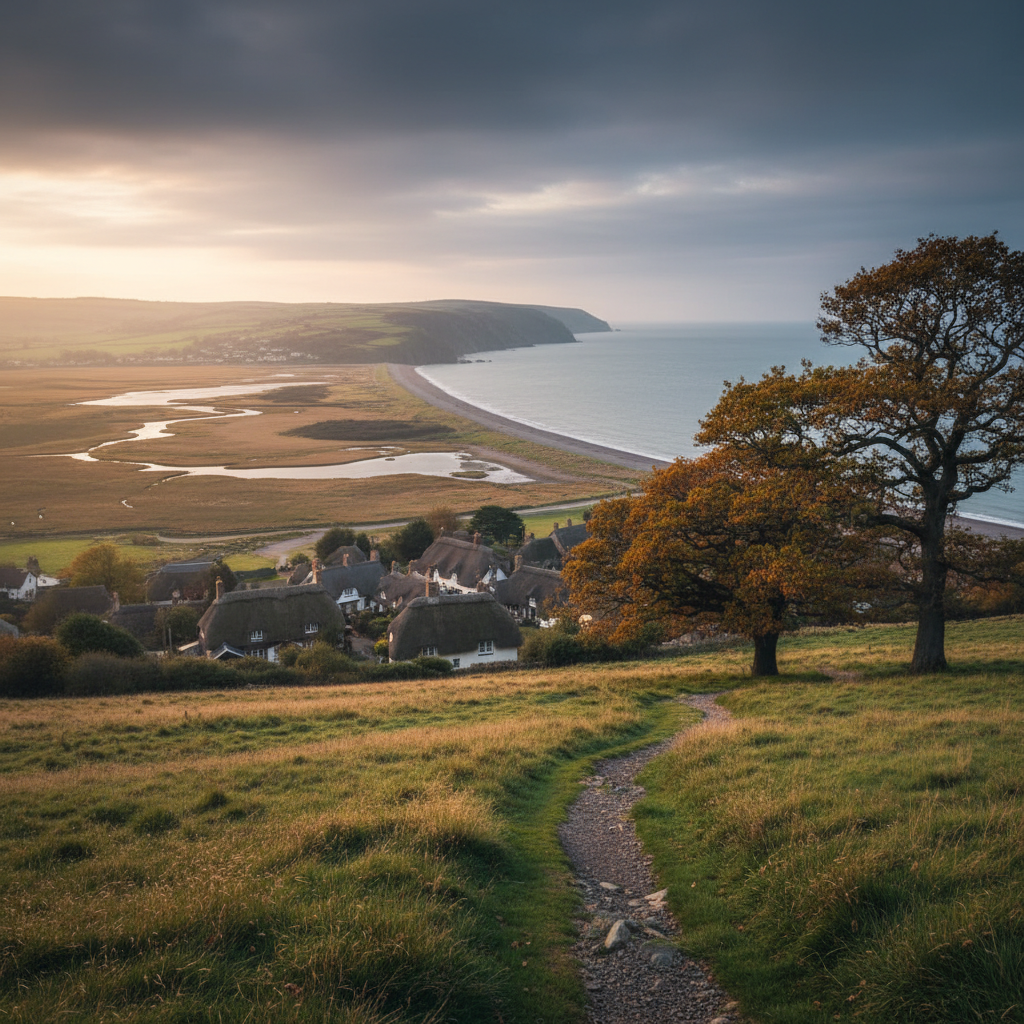
Bossington
Bossington offers a softer Exmoor coastal stop, with village character, marshland, beach and good walking links.
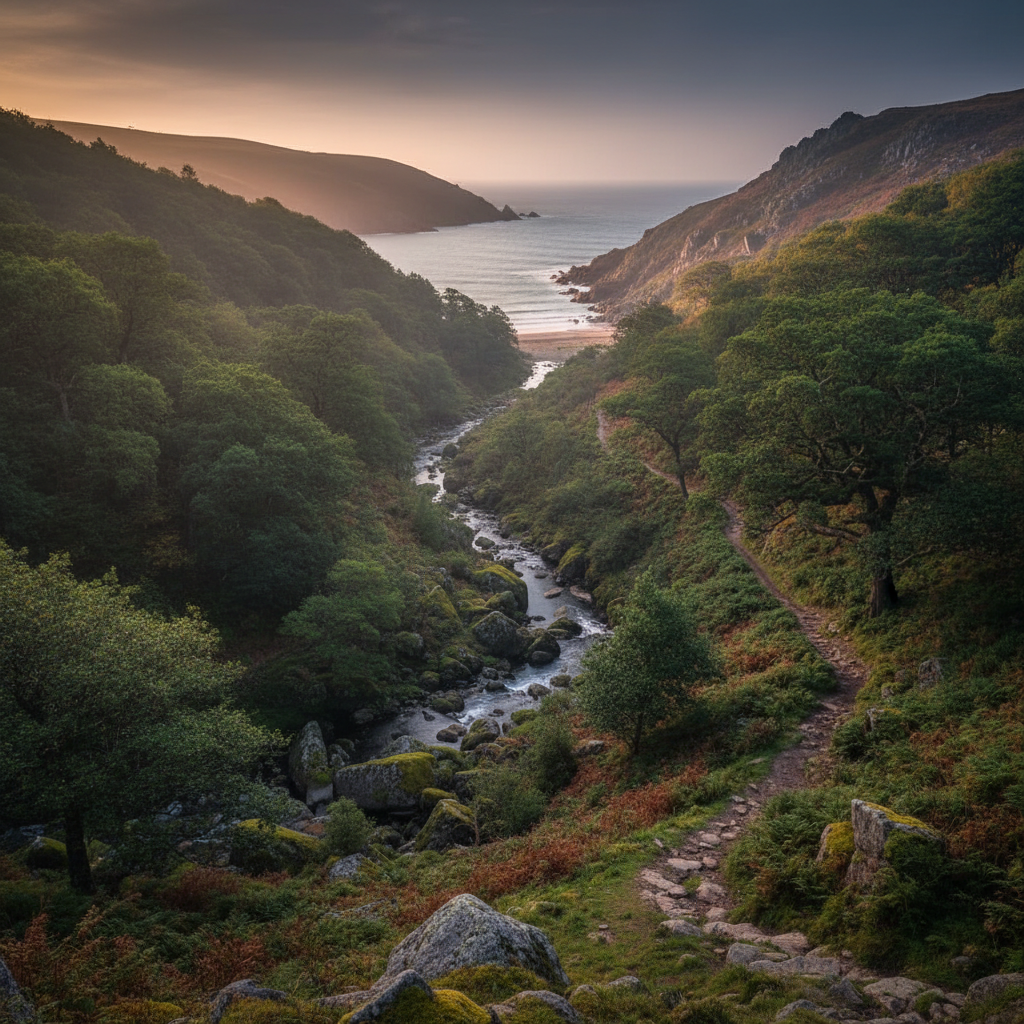
Heddon Valley
Heddon Valley is one of Exmoor’s best coast-and-combe places, combining woodland, river and sea-edge walking.
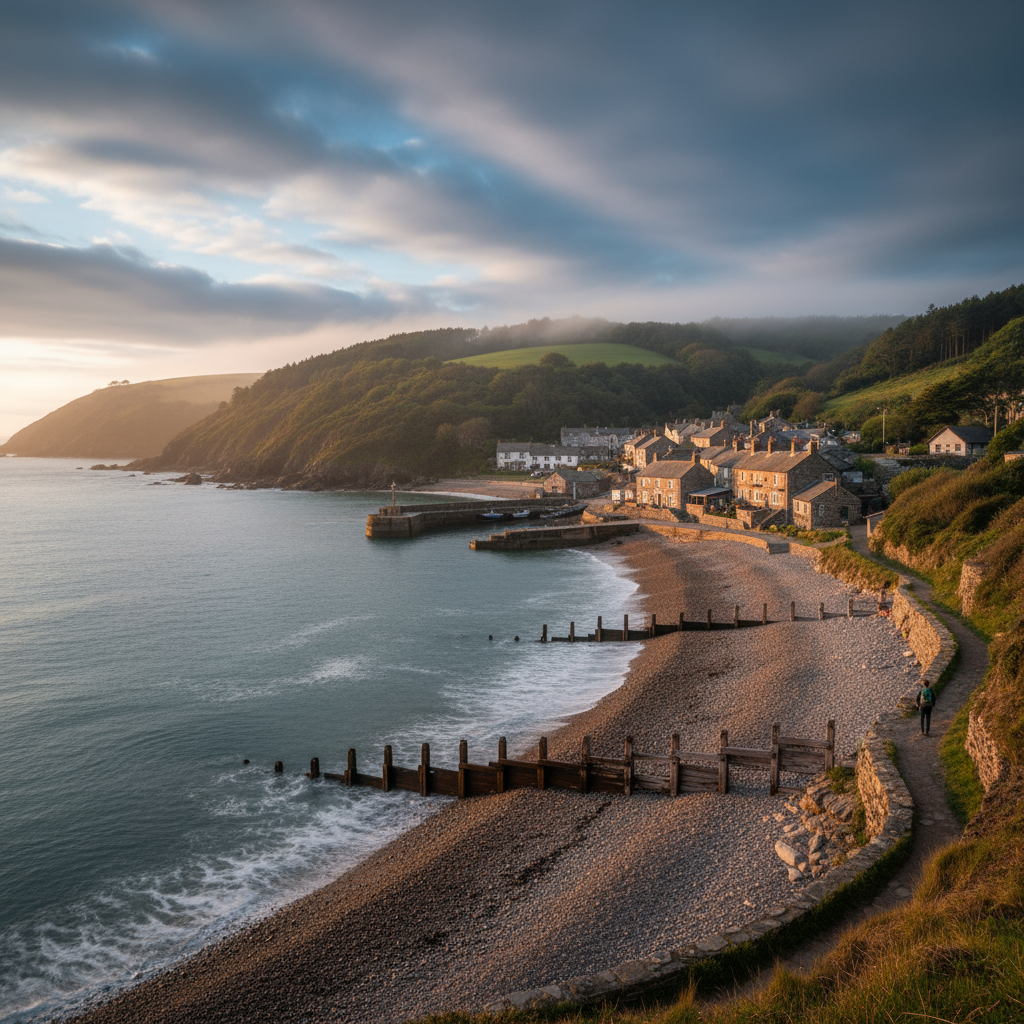
Porlock Weir
Porlock Weir adds harbour character, coastal walking and one of Exmoor’s most atmospheric sea-edge stops.
Dulverton
Dulverton combines practical facilities with attractive river and moor-edge scenery.
Join the 3moors Community for path conditions & local tips.
JoinWhy this place matters
Winsford — in its own right
What Winsford finally offers is a particular kind of relationship between a human settlement and the landscape it sits within. The valley holds the village on three sides, the hills rising close enough that the surrounding country is always present without being oppressive. On a still morning the mist can sit in the valley floor while the upper slopes are already in clear light, and for a short time the village occupies its own weather, separate from the rest of the moor above it. That containment is not a limitation. It is, in a quiet way, precisely the point. The southern reaches of Exmoor are less visited than the high ground to the north, and Winsford reflects that. It sits in country that rewards attentiveness rather than ambition, where the scale is human, the land is varied, and the experience of moving through it is cumulative rather than sudden. That is a rarer quality than it once was.