
Victorian · Dartmoor
Eylesbarrow Tin Mine
The haunting remains of one of Dartmoor’s highest and most important tin mines.
Quick facts
Why this place matters
Eylesbarrow matters because it preserves the story of Dartmoor’s mining industry in one of its starkest and most memorable settings. It shows how deeply the moor’s economy, landscape and labour history were shaped by tin.
High on the moor, industry once pushed hard against weather, remoteness and rock.
What it is
Eylesbarrow is one of Dartmoor’s most important surviving tin mine landscapes.
Why it mattered
It mattered because it helped make Dartmoor a major historic tin-producing landscape.
What you can see
Extensive ruins, shafts, spoil heaps and industrial archaeology.
The ruins are only what remains of a far larger effort.
What happened here
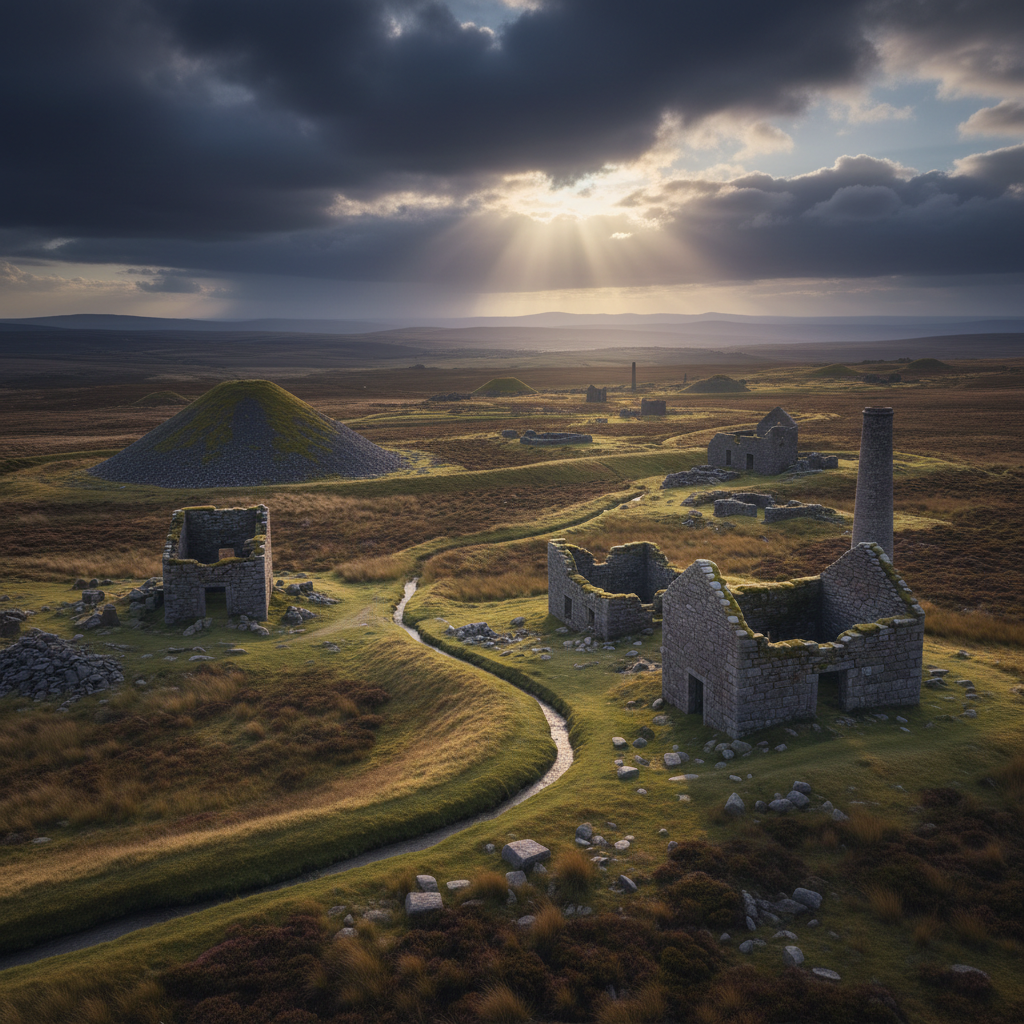
Eylesbarrow Tin Mine is one of the great industrial ruins of Dartmoor, scattered across high exposed ground where men once worked in harsh weather to extract tin. Its remains still speak of ambition, engineering and endurance.
Tin has been worked on Dartmoor for centuries, but Eylesbarrow became one of the moor’s most important later mining sites. Developed on a large scale in the 19th century, it drew on both traditional knowledge and more industrial methods.
Miners sank shafts, built engine houses and created a network of leats, tramways and working areas to extract and process ore in a difficult environment. Water was essential to the operation, and the surrounding landscape was engineered to support the mine.
This was not easy or romantic work. Conditions were harsh, the site was remote and the weather could turn quickly. Every building, channel and spoil heap speaks of labour under pressure in one of southern England’s wildest industrial landscapes.
Eventually the mine declined and was abandoned, leaving behind the broken but powerful remains seen today. Eylesbarrow now stands as one of the most atmospheric reminders of Dartmoor’s long connection to tin.
Key dates
Early modern period
Earlier tin working in the area
19th century
Major mining operations expand
Later period
Mine declines and closes
Standing here now
Standing here now, the wind moves through broken walls and across spoil heaps under a wide Dartmoor sky. The place feels lonely and exposed, and the remains make it easy to imagine how hard life and work must have been here.
What to look for
- 1Ruined engine houses and other stone building remains
- 2Spoil heaps spread across the hillside
- 3Mine shafts and working hollows, often now grassed over
- 4Leats and water channels used to power and support the mine
- 5Walls, track lines and other signs of an organised industrial site
Landscape & wider significance
The mine sits high on open moorland near the slopes of Eylesbarrow and Shell Top, in a landscape exposed to wind, rain and isolation. That exposure made work difficult, but the area also offered access to mineral-bearing ground and the water systems needed to support mining.
Leats cut across the moor show how the land was reshaped to serve the workings. Even now, the industrial remains feel tightly bound to the wider terrain.
Myths & folklore
Dartmoor mining folklore often includes stories of knockers, small underground spirits said to warn miners of danger by tapping in the rock. These tales belong to mining tradition rather than recorded fact, but they were part of the culture of working underground.
Visiting today
Reached by a long moorland walk. Ground can be rough, wet and uneven. Old mine workings may be dangerous, so keep clear of shafts, unstable edges and ruined structures. Please do not climb on the remains or remove anything from the site.
Good to know
💡 Did you know?
🎯 Try this when you visit
🤔 Think about this
Map & Directions


Related history nearby
20th Century
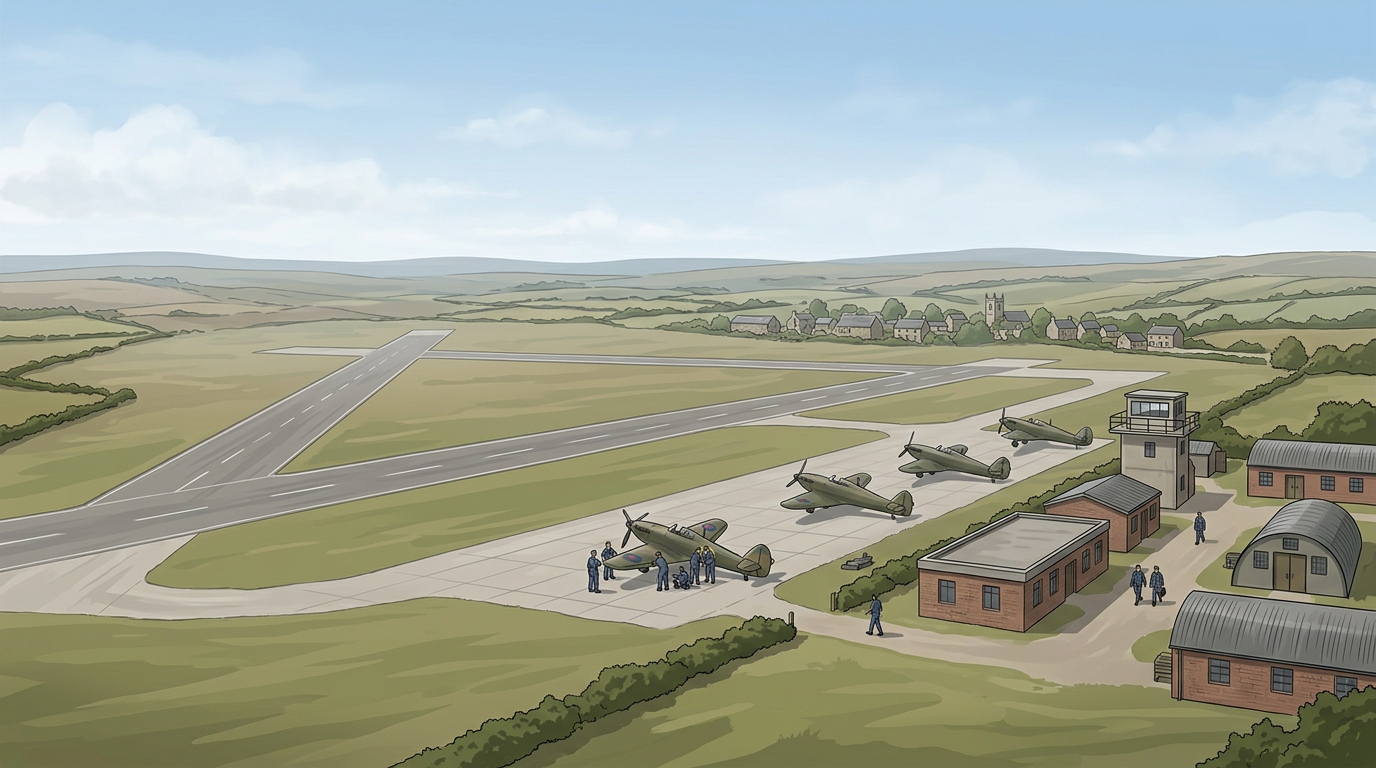
RAF Harrowbeer: Dartmoor’s WWII Airfield
A former wartime fighter airfield on the edge of Dartmoor, where cracked runways and scattered concrete still mark the landscape of the Second World War.
Victorian
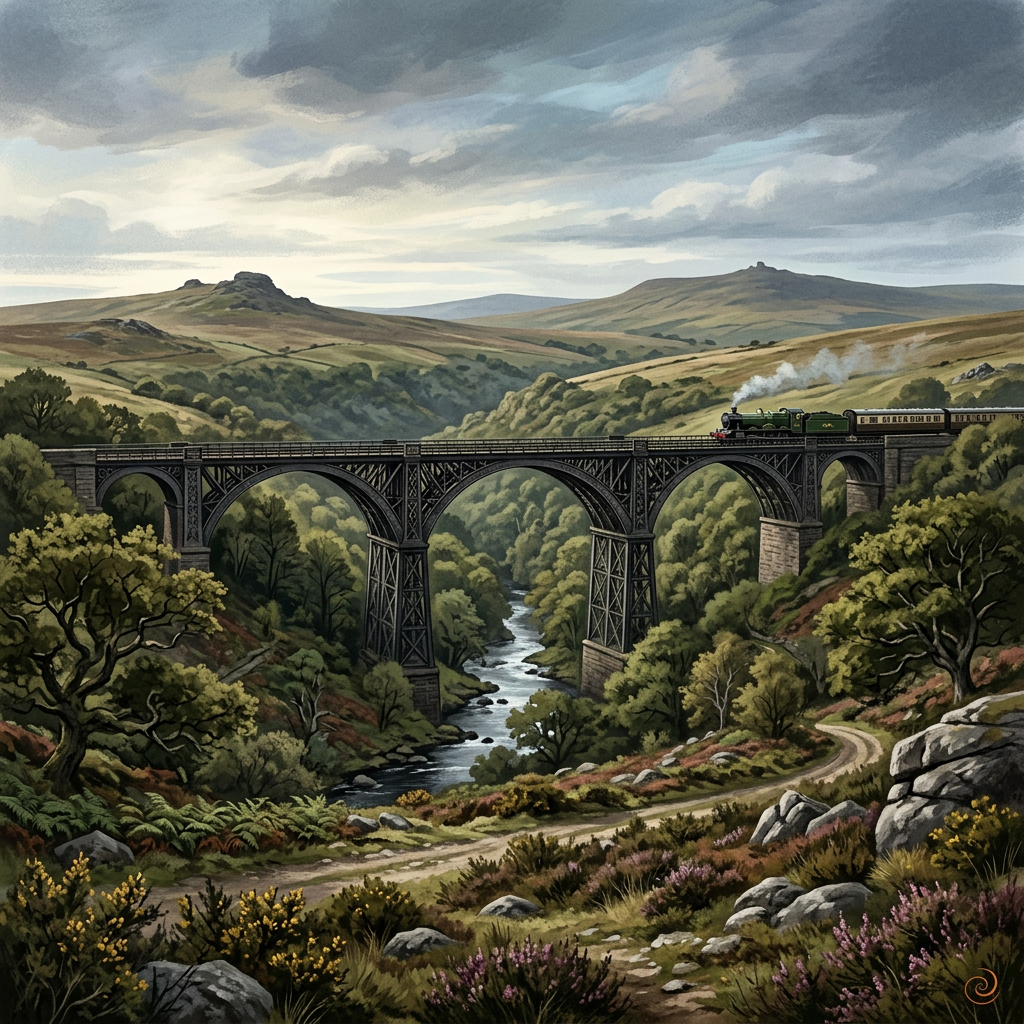
Meldon Viaduct
A spectacular Victorian viaduct spanning a deep Dartmoor-edge gorge.
Industrial
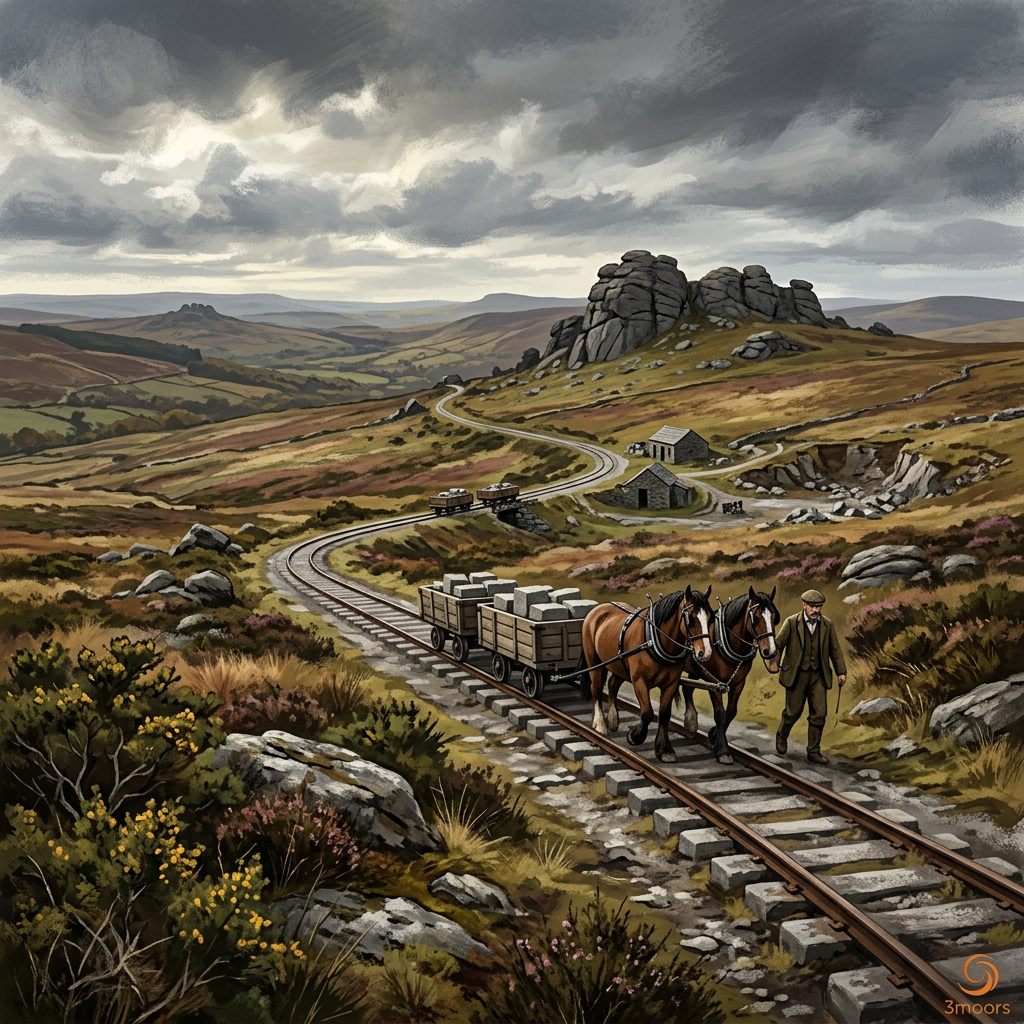
Haytor Granite Tramway
An extraordinary early industrial railway where granite rails still survive across Dartmoor.
Victorian
Morwellham Quay
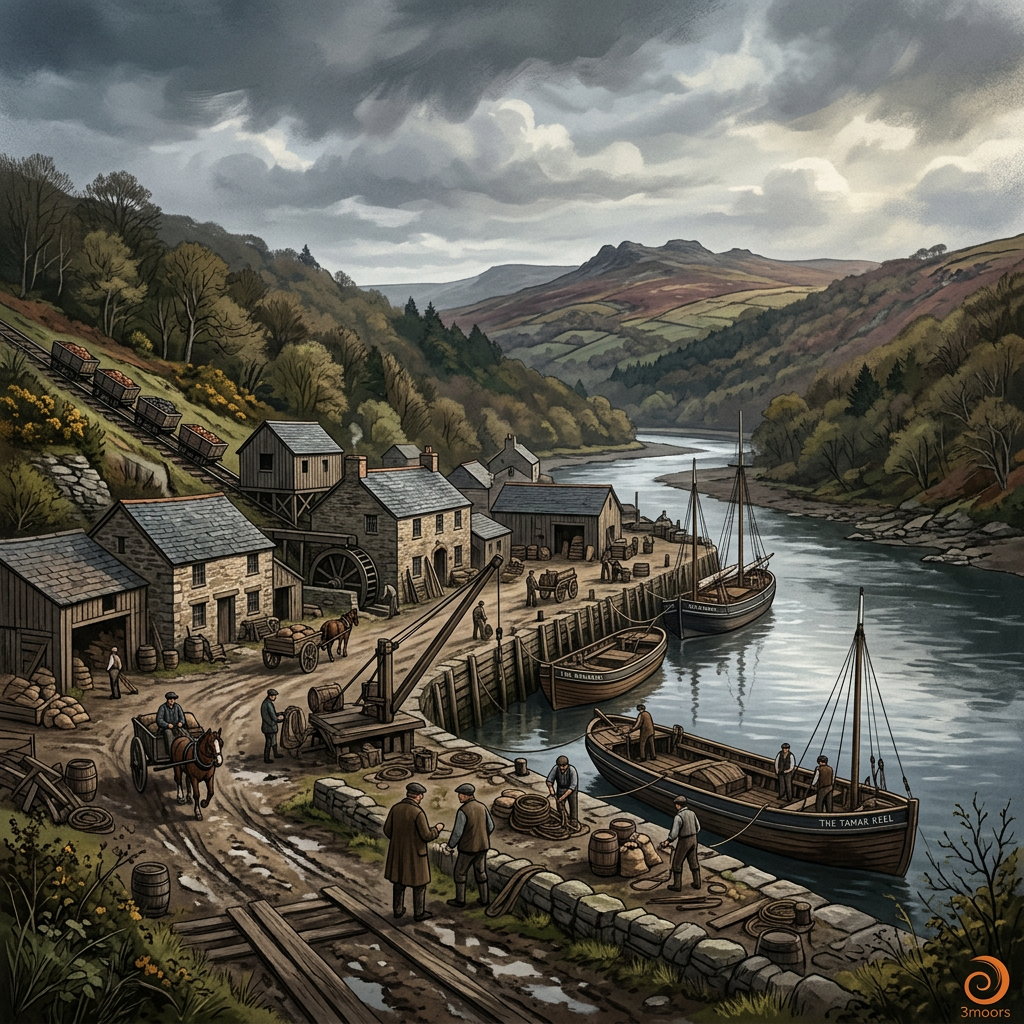
A remarkable surviving river port that carried copper, arsenic and industrial wealth from the Tamar Valley to the wider world.
Join the 3moors Community for path conditions & local tips.
JoinNearby places
Quick facts