
Industrial · Dartmoor
Haytor Granite Tramway
An extraordinary early industrial railway where granite rails still survive across Dartmoor.
Quick facts
Why this place matters
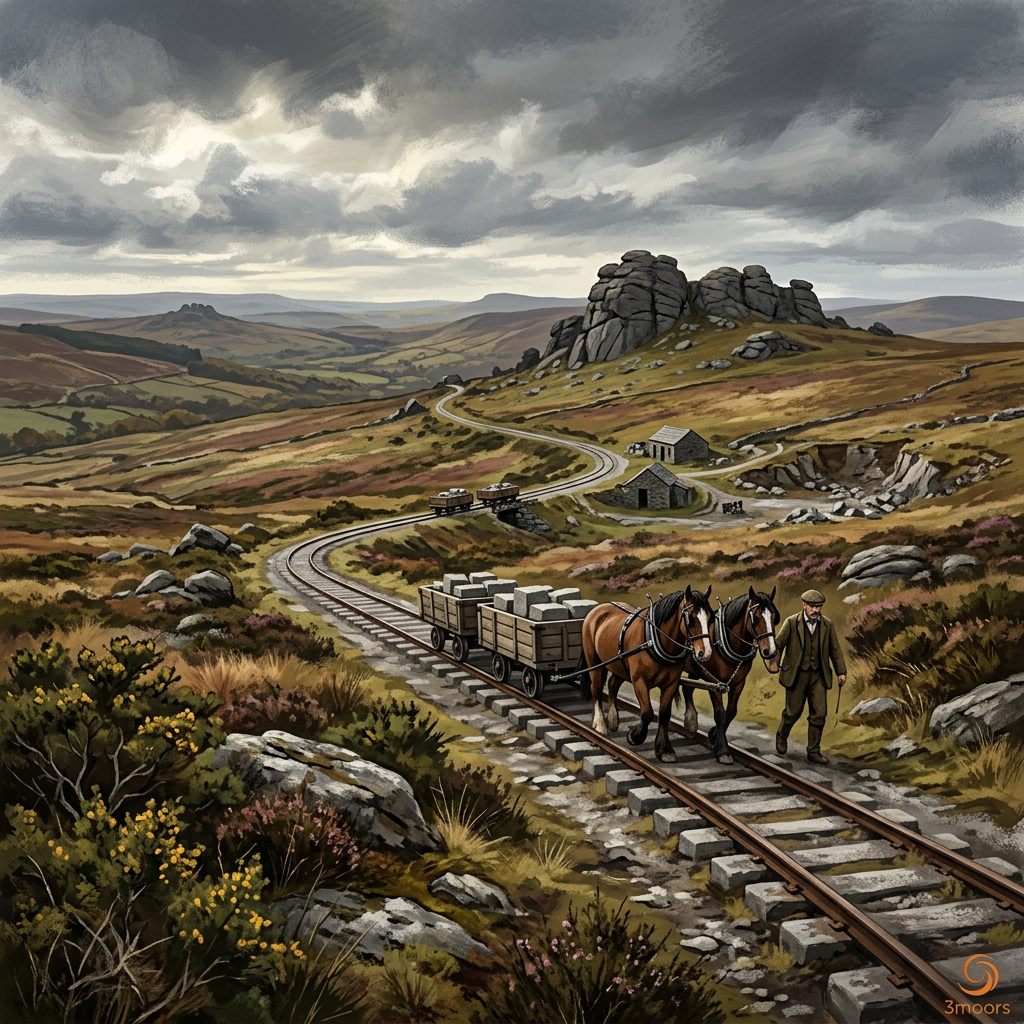
The Haytor Granite Tramway is one of Britain’s earliest purpose-built industrial railways and one of the few ever built almost entirely from stone. Constructed across the high moor in the 1820s, it was designed to move huge blocks of granite from the quarries around Haytor Down to the Stover Canal at Ventiford, where the stone could continue by barge to the sea. Unlike later iron railways, this tramway used granite rails with L-shaped edges to guide wagons. Nearly 200 years later, sections of those original stone tracks still lie across the moor — making this one of the most visible and unusual industrial archaeology sites in the South West. It tells the story of Dartmoor not just as wild landscape, but as a place of innovation, labour and industry.
What happened here
In the early 19th century, demand for strong granite grew rapidly.
Granite from Haytor Quarry was prized for use in bridges, buildings, docks and road projects. To move it efficiently off the moor, businessman George Templer commissioned the tramway around 1820.
The route stretched roughly 10 miles from the quarries to the Stover Canal at Ventiford.
Horse-drawn wagons ran along granite rails, carrying stone downhill. Returning wagons often brought coal, lime and supplies back up onto the moor.
The tramway was ingenious, but expensive to maintain. As rail technology advanced and competition increased, use declined and by the later 1800s much of it had fallen out of use.
Today, surviving sections near Haytor are among the best preserved.
Key dates
1820
Construction begins under George Templer
1820–1821
Main tramway route completed.
1820s–1850s
Granite transport flourishes.
1860s
Commercial use declines as modern railways expand.
Late 19th century
Much of the tramway abandoned.
20th century onward
Protected as an important industrial archaeology site.
What to look for
Granite rails
Track sections
Quarries nearby
Landscape & wider significance
Parking: Haytor main car park nearby.
Terrain: Mostly easy walking with uneven rocky ground.
Family friendly: Yes, with supervision.
Dog friendly: Yes, but livestock and ponies often nearby.
Best time to visit: Clear mornings or evenings when low sun highlights the stonework.
Nearby highlights: Haytor Rocks, Haytor Quarry, Hound Tor, Widecombe area.
Visiting today
Unlike many industrial sites hidden by towns or woodland, this one sits exposed in open moorland.
You can stand among ancient granite rails with sweeping views across Dartmoor and imagine horses hauling stone wagons through wind and mist.
There’s something surreal about seeing such an advanced industrial idea carved directly into a prehistoric landscape.
It’s one of those places where Dartmoor’s wild beauty and human ambition collide.
Map & Directions



Related history nearby
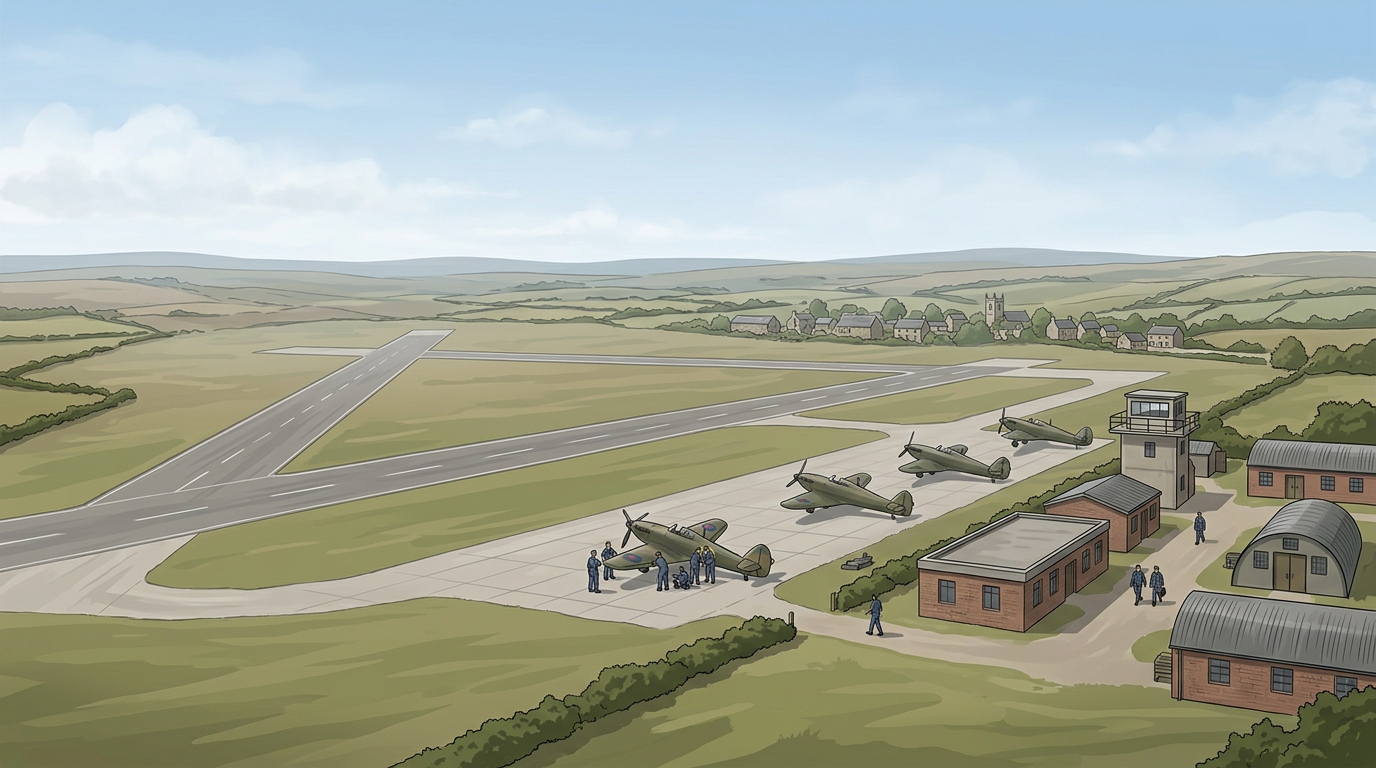
20th Century
RAF Harrowbeer: Dartmoor’s WWII Airfield
A former wartime fighter airfield on the edge of Dartmoor, where cracked runways and scattered concrete still mark the landscape of the Second World War.
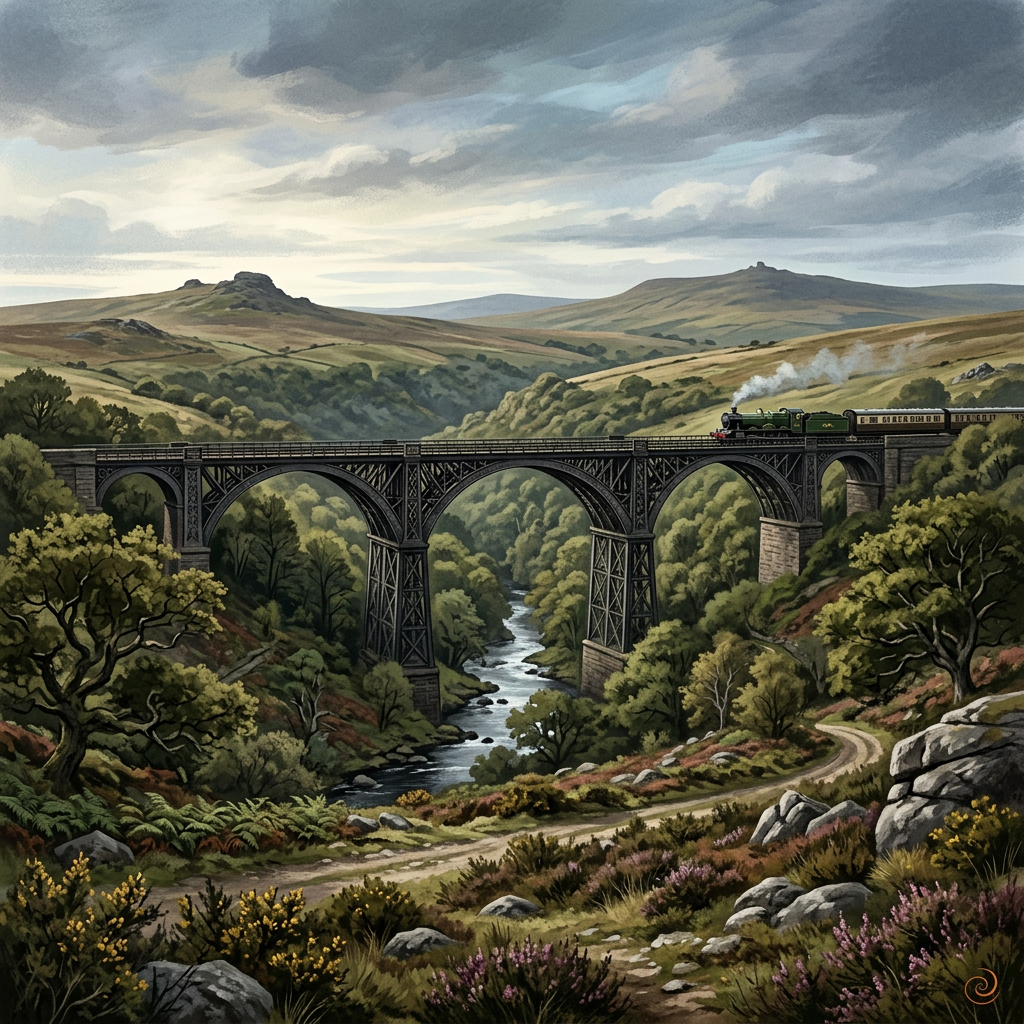
Victorian
Meldon Viaduct
A spectacular Victorian viaduct spanning a deep Dartmoor-edge gorge.
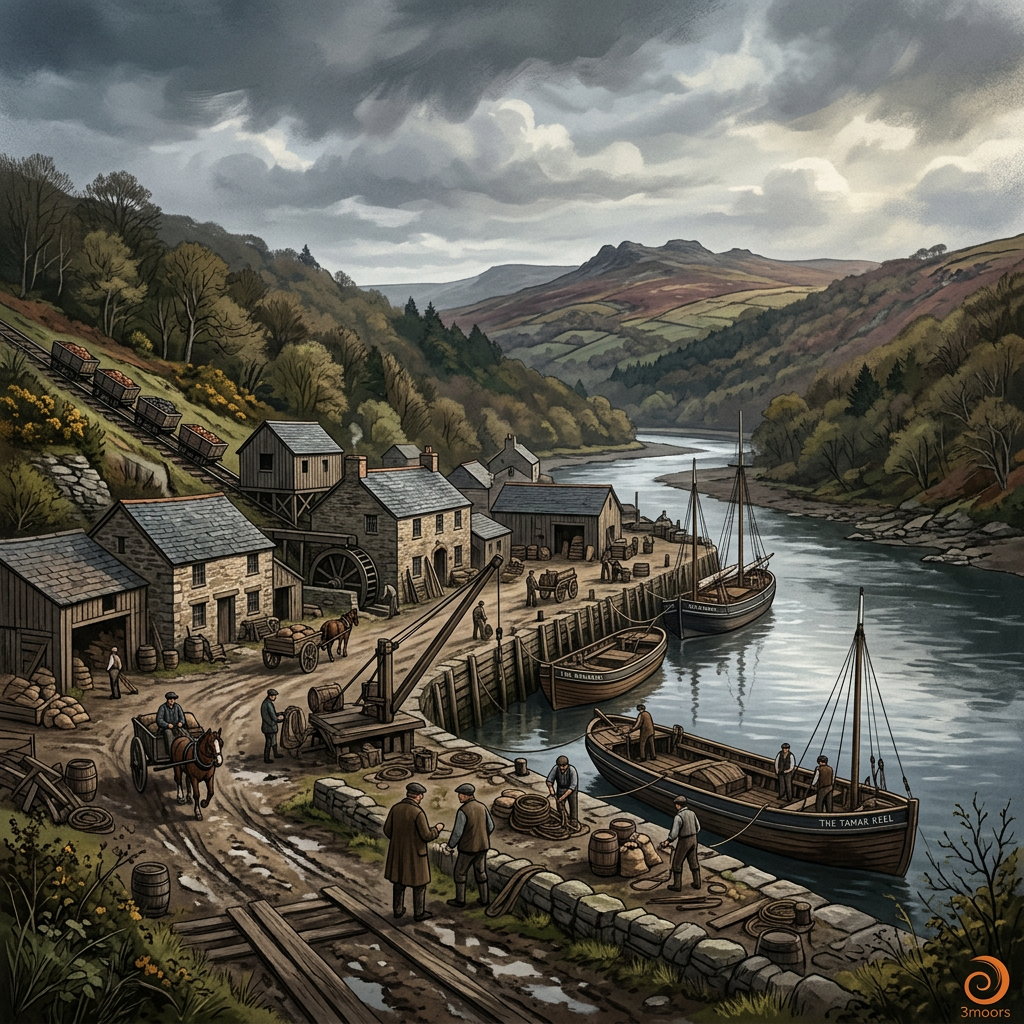
Victorian
Morwellham Quay
A remarkable surviving river port that carried copper, arsenic and industrial wealth from the Tamar Valley to the wider world.
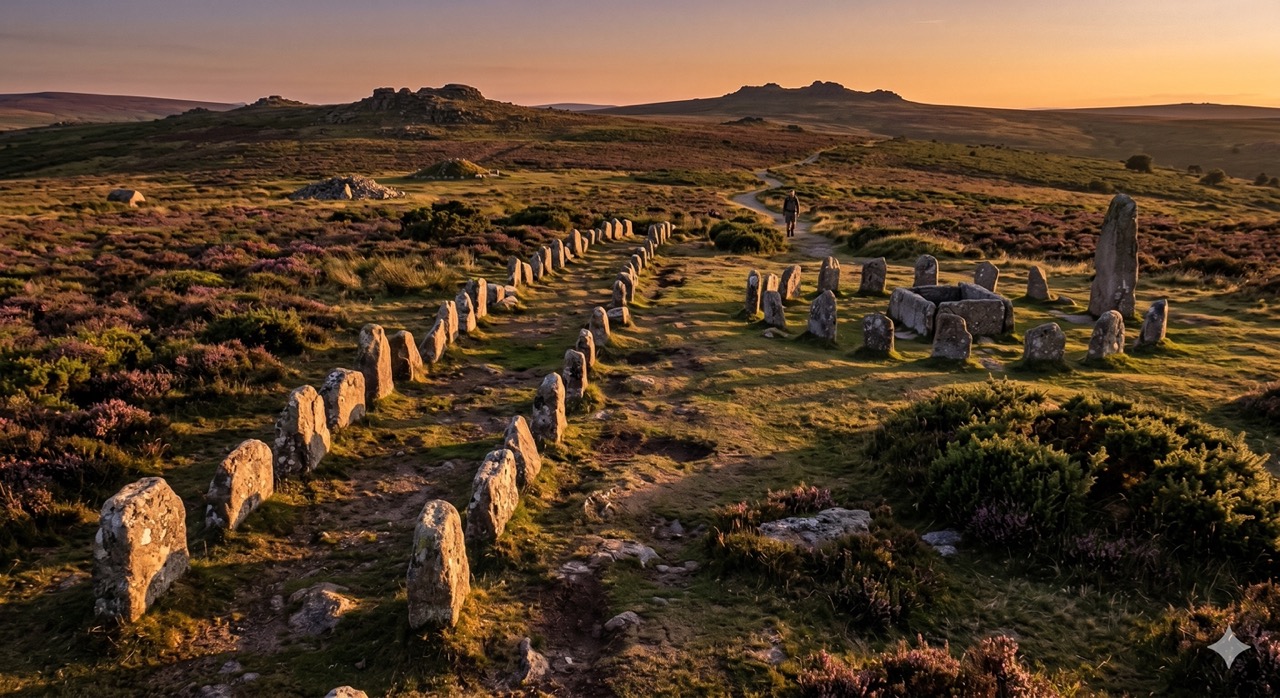
Bronze Age
Merrivale Stone Rows
One of Dartmoor's richest prehistoric landscapes, where stone rows, circles and standing stones still shape the moor.
Join the 3moors Community for path conditions & local tips.
JoinQuick facts