
Bronze Age · Dartmoor
Merrivale Stone Rows
One of Dartmoor's richest prehistoric landscapes, where stone rows, circles and standing stones still shape the moor.
Quick facts
Why this place matters
Merrivale is one of the finest places on Dartmoor to see how prehistoric monuments were set into a wider ceremonial landscape, not as isolated structures, but as connected features.
Long before written history, people set stones across this open moor for purposes still debated today. Their alignments still draw the eye across the land.
What it is
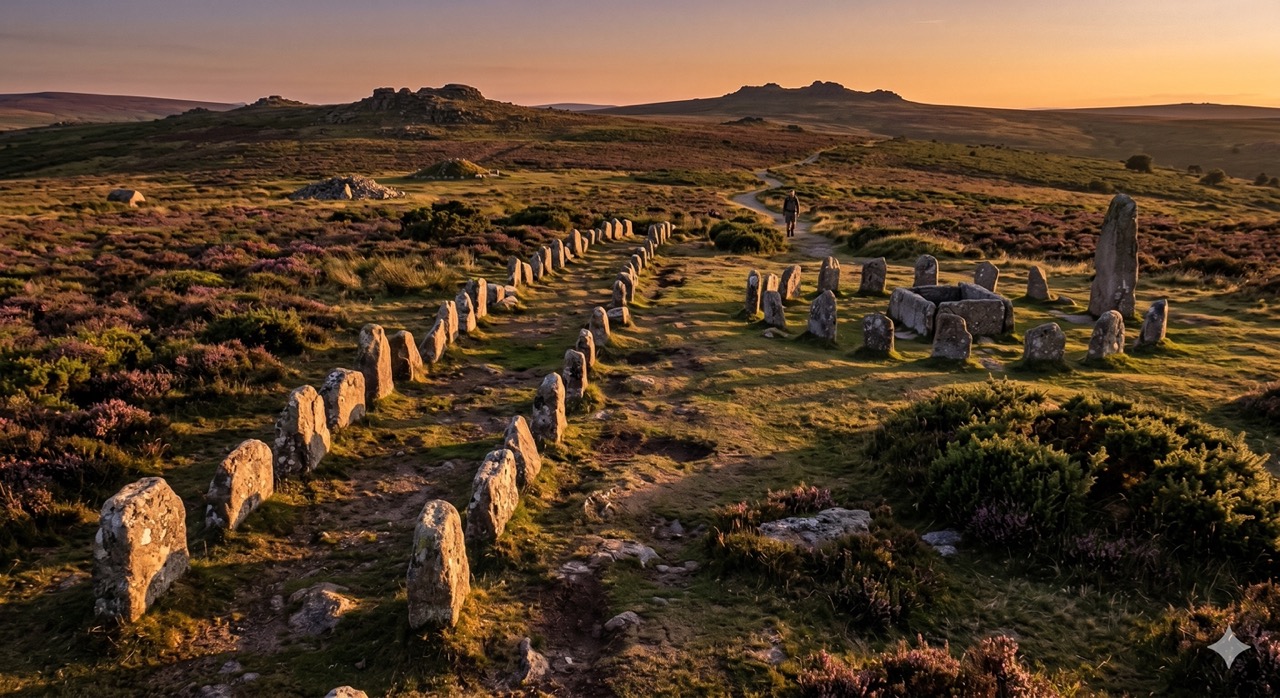
Merrivale is a Bronze Age ceremonial landscape with parallel stone rows, standing stones, circles and burial remains, all surviving in close proximity.
Why it mattered
It mattered because this was likely a place of ritual, memory or social meaning within a wider prehistoric landscape.
What you can see
Parallel stone rows, standing stones, stone circles, burial cists, ancient field boundaries, and the open moorland setting tied to the monument complex.
Few places on Dartmoor reveal prehistoric intention so clearly in the landscape.
What happened here
Merrivale is one of the finest places on Dartmoor to see how prehistoric monuments were set into a wider ceremonial landscape — not as isolated structures, but as connected features.
Merrivale was part of a wider Bronze Age landscape where people marked the moor with monuments whose meanings remain only partly understood. The stone rows, circles and burial features suggest ritual, remembrance, astronomy, territory, or some combination of these.
Rather than a single monument, Merrivale appears to have been a complex landscape used over time, where different features may have served different purposes. Its importance lies not only in individual stones, but in the relationships between them.
Later farming and changing land use altered the surrounding landscape, but much of the prehistoric pattern survived. That survival makes Merrivale unusually valuable for understanding how monuments once worked together.
Modern archaeology has refined interpretation, but much remains open to debate. That uncertainty is part of the fascination.
Today Merrivale remains one of Dartmoor's most powerful places to encounter prehistoric thought expressed in stone and landscape.
Key dates
c. 2000–1000 BC
Stone rows and associated monuments likely established
Bronze Age
Part of wider ceremonial landscape
19th century
Antiquarian recording begins
Modern archaeology
Interpretations refined
Standing here now
What strikes many visitors is how deliberately the stones seem placed in relation to each other and to the land around them. Nothing feels random. Lines, spacing and alignment pull the eye outward across the moor. Even without certainty about purpose, the place still carries intention.
What to look for
- 1Differences in the two main stone rows
- 2The relationship between standing stones and circles
- 3Subtle low features that may mark burial remains
- 4Nearby field boundaries showing later use of the same landscape
- 5How the rows align across the moor
Landscape & wider significance
Merrivale sits within broad open moorland where visibility, alignment and horizon may all have mattered.
The setting is not background.
It is part of the monument.
Myths & folklore
Like many Dartmoor stone monuments, Merrivale has attracted stories linking the stones to ancient rites and lost meanings.
But its real mystery lies in how much survives, and how much remains unresolved.
Visiting today
Best visited in good visibility, when the wider alignments across the landscape are easier to appreciate.
Combine with nearby prehistoric sites if possible.
Allow time to walk beyond the obvious stones.
Good to know
💡 Did you know?
🎯 Try this when you visit
🤔 Think about this
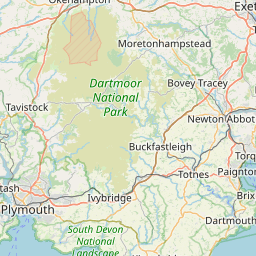
Map & Directions



Related history nearby
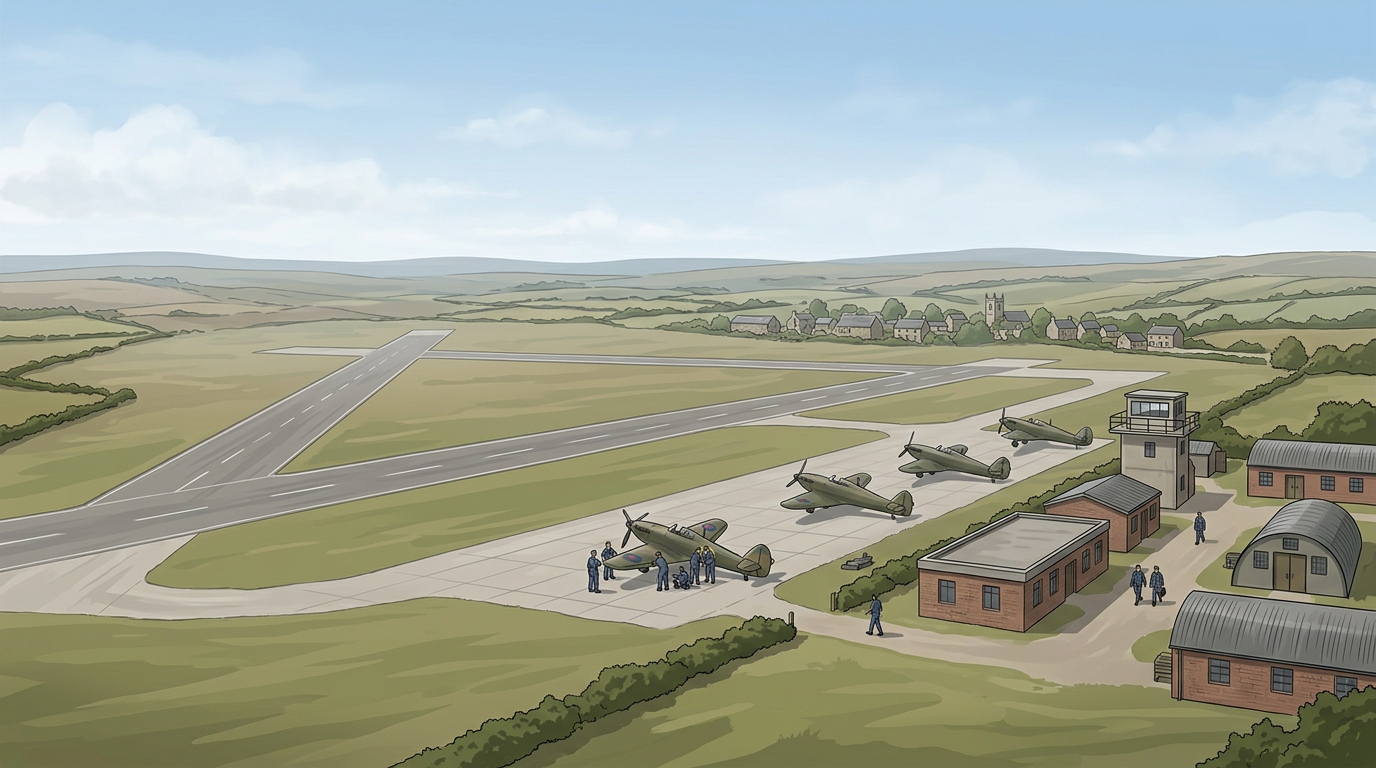
20th Century
RAF Harrowbeer: Dartmoor’s WWII Airfield
A former wartime fighter airfield on the edge of Dartmoor, where cracked runways and scattered concrete still mark the landscape of the Second World War.
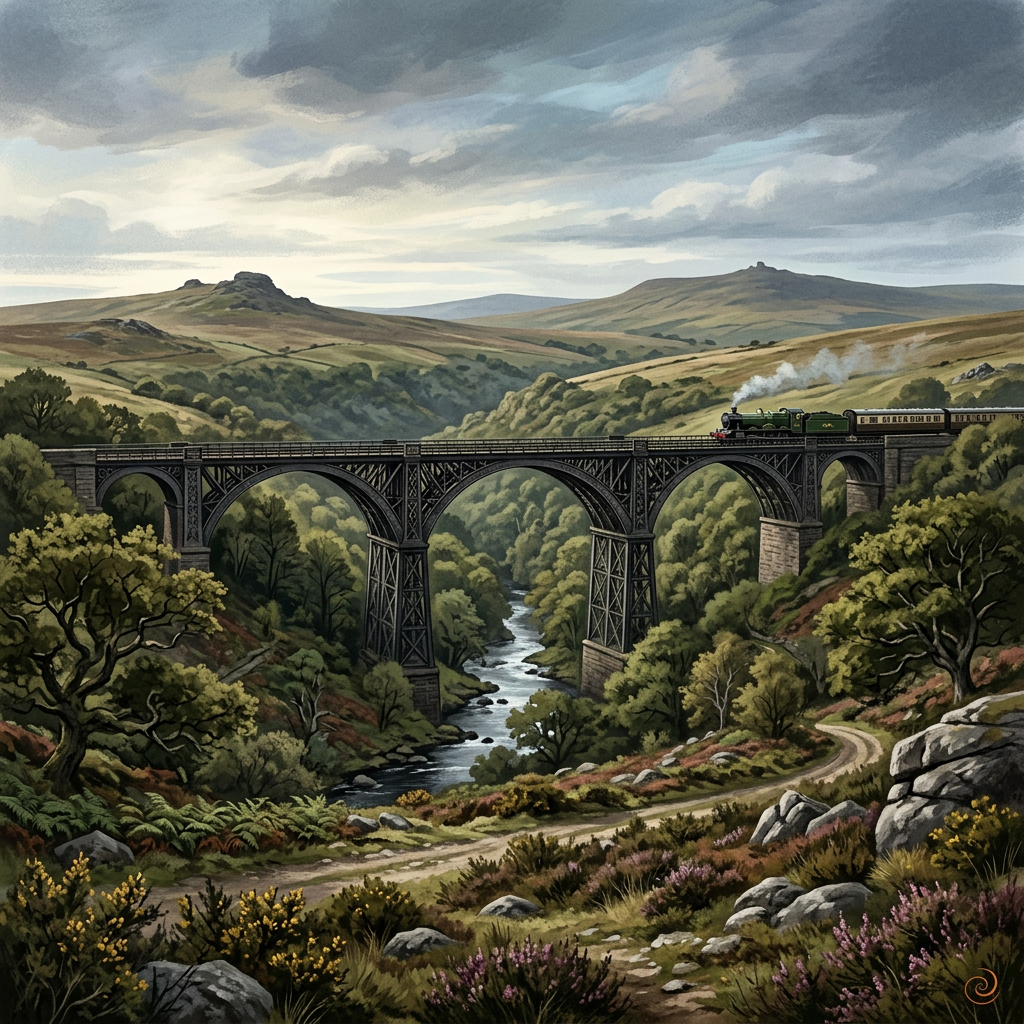
Victorian
Meldon Viaduct
A spectacular Victorian viaduct spanning a deep Dartmoor-edge gorge.
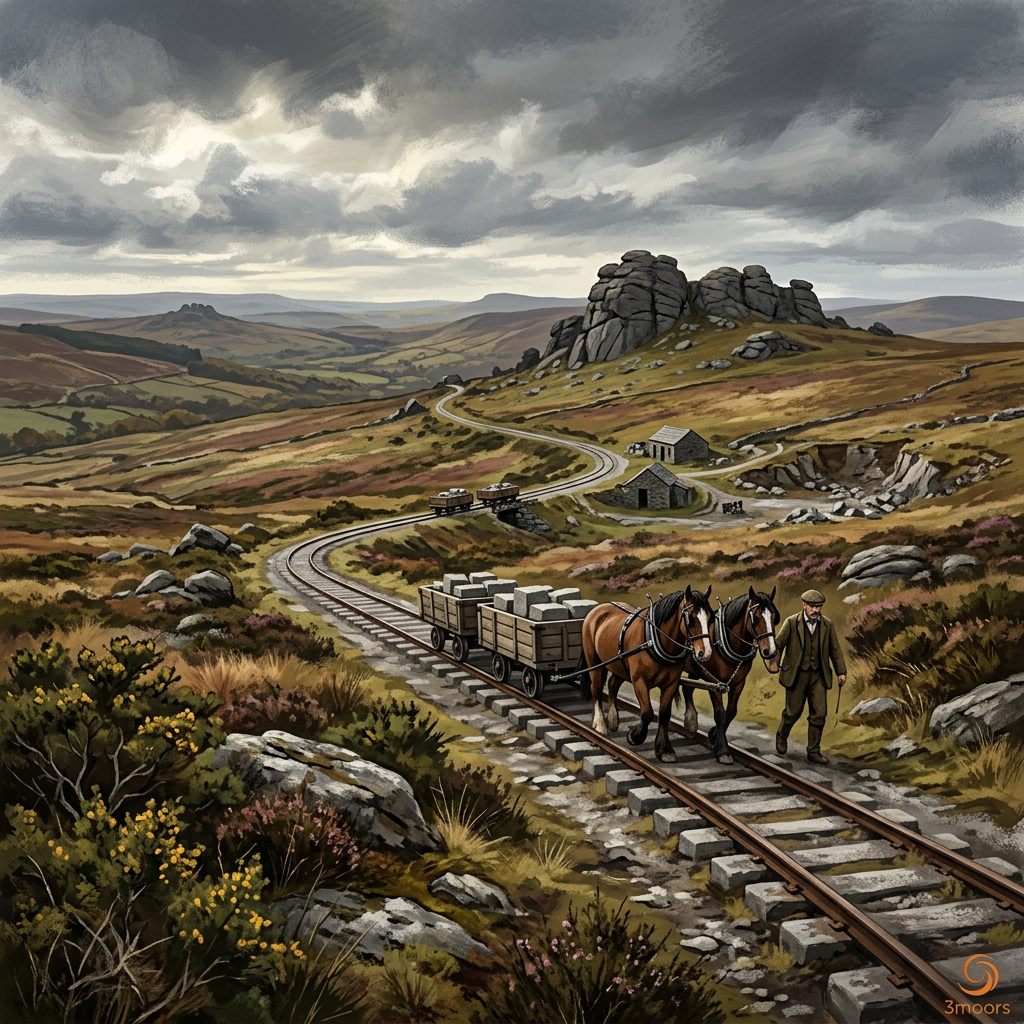
Industrial
Haytor Granite Tramway
An extraordinary early industrial railway where granite rails still survive across Dartmoor.
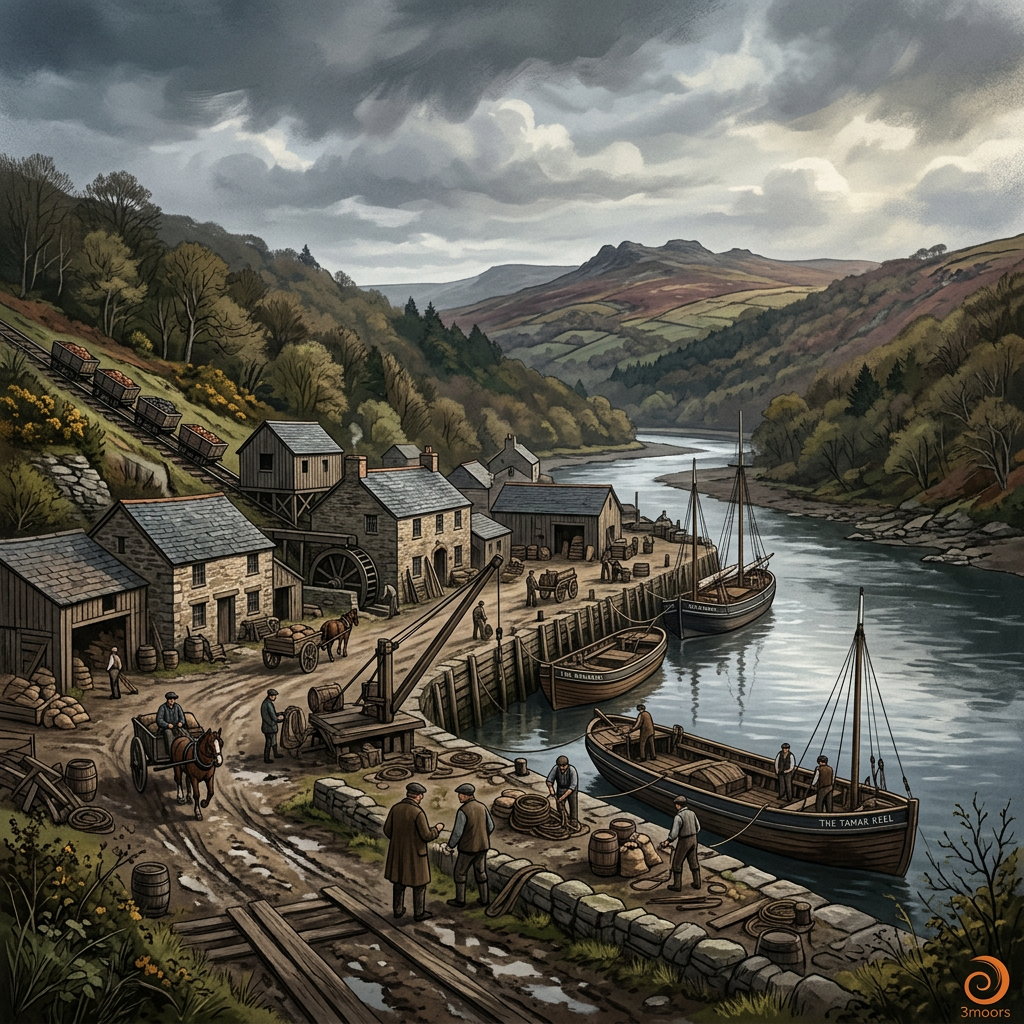
Victorian
Morwellham Quay
A remarkable surviving river port that carried copper, arsenic and industrial wealth from the Tamar Valley to the wider world.
Join the 3moors Community for path conditions & local tips.
JoinNearby places
Quick facts