Bronze Age · Bodmin
Hawks Tor Stone Circle
A quiet prehistoric stone circle on Bodmin Moor, small in scale but rich in atmosphere and ancient presence.
Quick facts
Why this place matters
Hawks Tor matters because it helps show that Bodmin Moor was not an empty wilderness in prehistory, but a lived and meaningful landscape marked by ritual, memory and careful placement of monuments.
Not all ancient monuments were built to overwhelm.
What it is
A Bronze Age stone circle on Bodmin Moor.
Why it mattered
It mattered because even smaller circles formed part of sacred landscapes.
What you can see
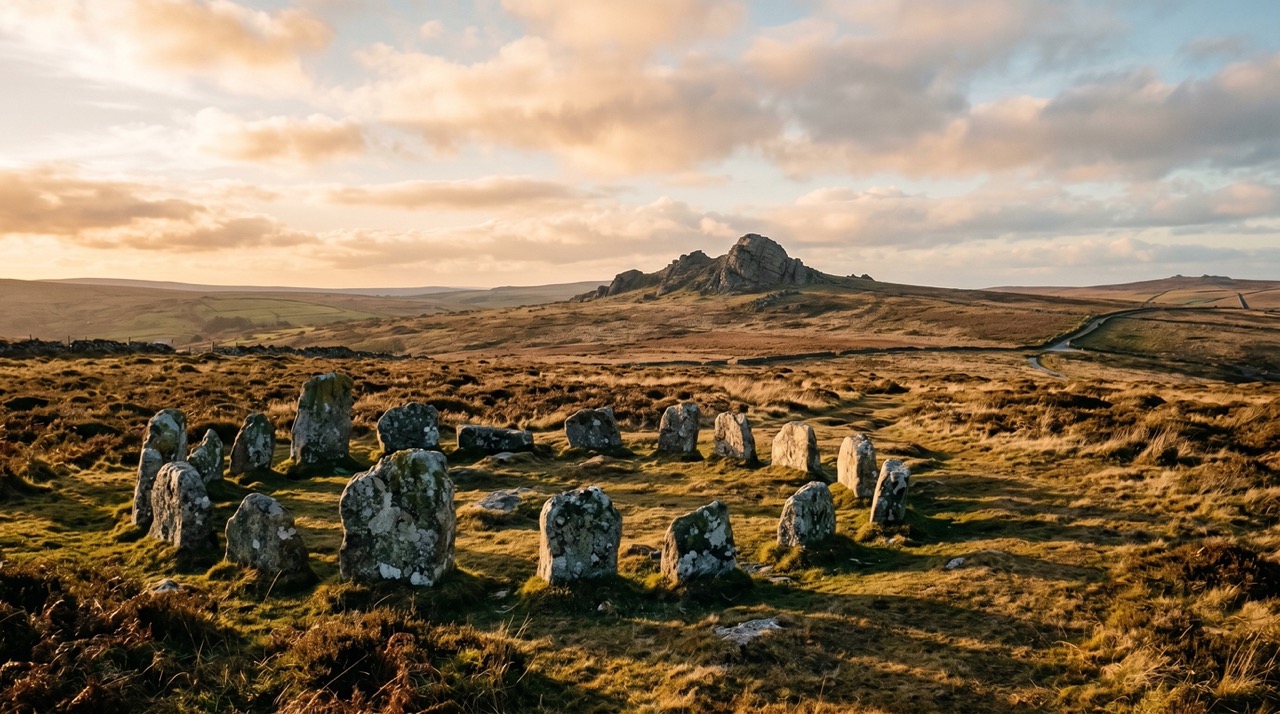
Surviving ring and dramatic moorland setting.
Sometimes subtle places endure longest.
What happened here
Hawks Tor Stone Circle is one of Bodmin Moor’s more understated prehistoric sites, a place where a ring of weathered stones still marks human presence in an open and ancient landscape.
Hawks Tor Stone Circle is thought to date from the Bronze Age, when communities across Bodmin Moor and the wider South West raised stone monuments for reasons that are still only partly understood. Stone circles may have been used for ceremony, gathering, seasonal observance or as markers of significance in the landscape.
Unlike the largest and most dramatic circles, Hawks Tor works through restraint. Its stones are lower and quieter, but their arrangement still carries intent. This was not a random scatter, it was a chosen ring in a chosen place.
The circle belongs to a wider prehistoric world on Bodmin Moor, one that includes cairns, settlements, field systems and other ritual monuments. Together these remains show that the moor was used, understood and shaped by people thousands of years ago.
Today the site survives as a subtle but moving reminder of that deep past. It rewards patient looking and a willingness to value atmosphere as much as scale.
Key dates
Bronze Age
Stone circle constructed
Prehistoric period
Circle in use
Modern era
Protected as ancient monument
Standing here now
Standing here now, the stones feel modest but purposeful, holding their place against the moorland weather. The circle sits quietly in the open ground, with a sense of stillness that makes the site feel older than words.
What to look for
- 1The ring shape formed by the surviving stones
- 2Differences in size, spacing and weathering of the stones
- 3The circle’s relationship to nearby rising ground and wider moor views
- 4Subtle earthfast setting rather than built up features
- 5Other prehistoric hints in the surrounding landscape
Landscape & wider significance
The circle sits within open moorland where visibility, skyline and natural setting matter. Bronze Age builders often chose places where monuments could sit in dialogue with tors, ridges and changing light.
At Hawks Tor the surrounding ground gives the circle room to breathe, making the relationship between stone, sky and moor a central part of the experience.
Myths & folklore
Stone circles across Cornwall often gather folklore about dancing stones, ancient ceremonies or supernatural punishment. Specific stories vary from site to site, but such legends show how strongly these monuments continued to grip the imagination long after their original purpose was forgotten.
Visiting today
Access is by moorland paths and open ground, which can be uneven or wet depending on weather. Wear suitable footwear and avoid climbing on or disturbing the stones. Please leave the site exactly as you find it.
Good to know
💡 Did you know?
🎯 Try this when you visit
🤔 Think about this
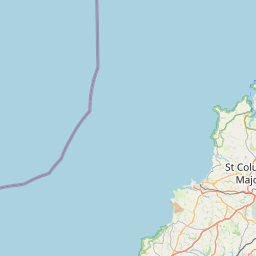
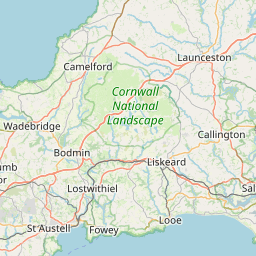
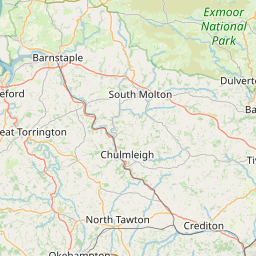
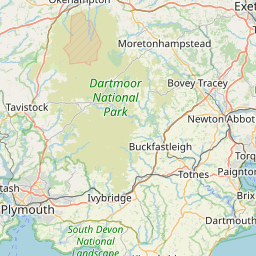
Map & Directions




Related history nearby
Bronze Age
Rocky Valley Carvings: Enigmatic Labyrinths by the Waterfall
Deep within a secluded Cornish gorge, two enigmatic labyrinth carvings are etched into the dark, wet slate of Rocky Valley. Their mysterious age – whether truly ancient or later creations – offers a tangible, silent puzzle that unfolds beside the constant rush of the River Trevillet.
Bronze Age
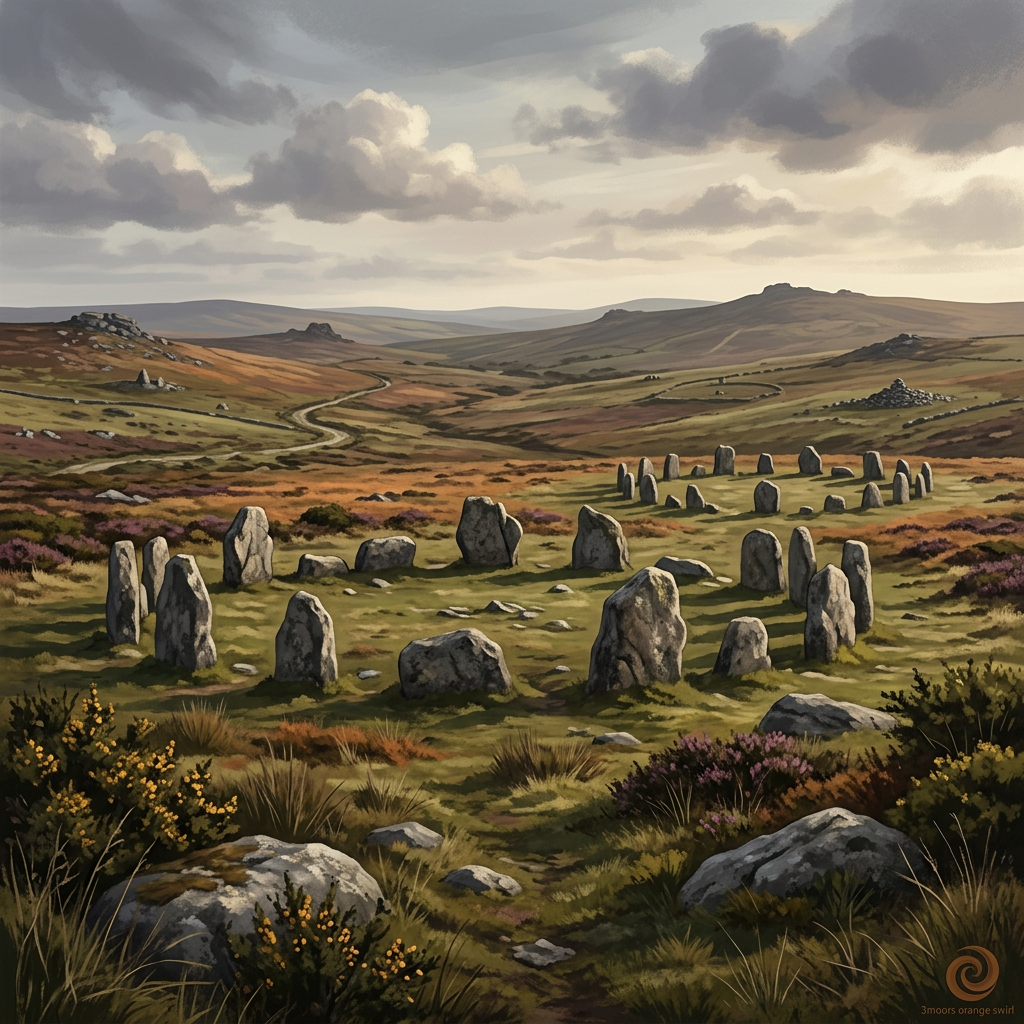
The Hurlers
Three remarkable stone circles on Bodmin Moor, where archaeology and folklore stand side by side.
Industrial
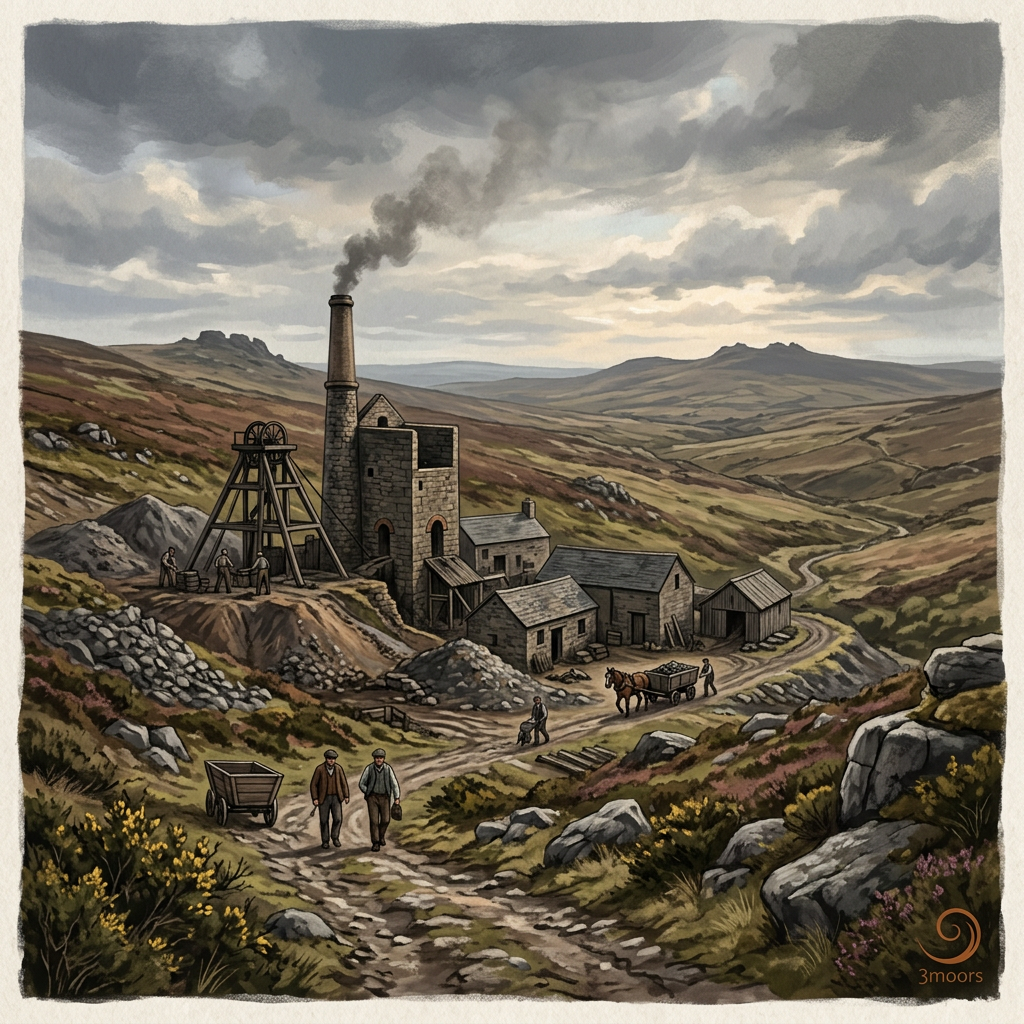
Prince of Wales Mine
A compact but important surviving Cornish mining site where industrial history remains visible on the ground.
Industrial
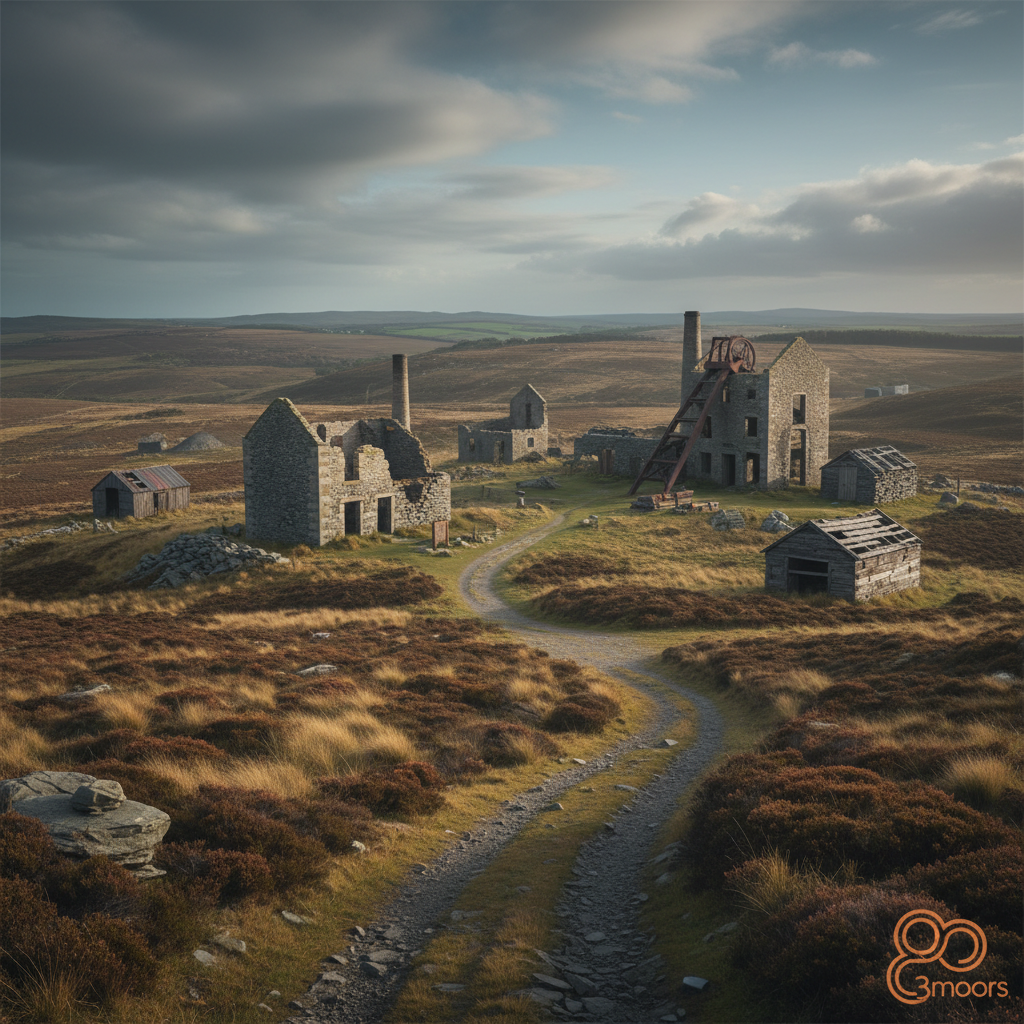
Wheal Coates
One of Cornwall’s most dramatic mining landscapes, where engine houses still stand above the Atlantic cliffs.
Join the 3moors Community for path conditions & local tips.
JoinNearby places
Quick facts