
Georgian · Dartmoor
Princetown & Dartmoor Prison
The highest village on Dartmoor, Princetown was built around one man's failed dream of farming the moor — and the prison that came in its place. Both the village and HMP Dartmoor still stand, weathered into the granite landscape, two centuries on.
Quick facts
Why this place matters
Princetown is the only village on the high moor that owes its existence to a single failed scheme — and to a single building that replaced it. The prison Sir Thomas Tyrwhitt persuaded the government to build here in 1806 was the largest war prison in Britain at the time, and it shaped the surrounding moor for generations. It is one of the few places in England where you can still see how a piece of national history — Britain's wars with Napoleon and the United States — was written into the landscape itself.
A failed farm. A war prison. The highest village in England — built for prisoners who never came home.
What it is
Princetown is a small granite-and-slate village in the centre of Dartmoor, dominated by HMP Dartmoor — a working prison built in 1806 to hold prisoners of war.
Why it mattered
At its peak in 1814, Dartmoor Prison held more than 6,000 American sailors and thousands of French soldiers — making this remote moorland village briefly one of the most internationally connected places in southern England. More than 11,000 Frenchmen and over 270 Americans died here from disease and cold.
What you can see
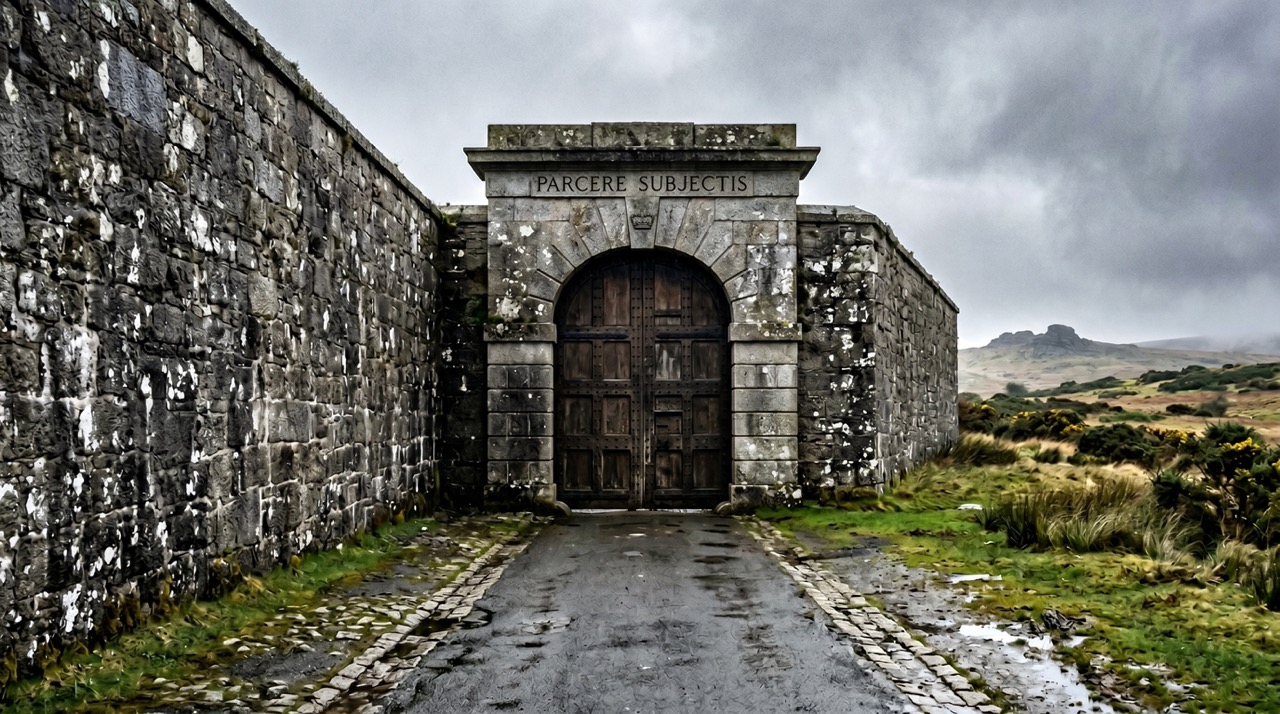
The prison itself is still in use, its long granite blocks and high perimeter wall visible from the village street. The church of St Michael and All Angels — built largely by French and American prisoner labour — stands at the heart of the village. The Plume of Feathers Inn, dated 1785, is the oldest building. Two memorials in the churchyard mark the mass graves of the prisoners who died here.
Two hundred years on, the prison still stands where the farm should have been — and the moor has won every argument since.
What happened here
Princetown sits high in the centre of Dartmoor, exposed to harsh weather and isolation. At its heart stands Dartmoor Prison, a place known for war prisoners, criminals and stories of hardship.
Dartmoor Prison was built during the Napoleonic Wars to house French prisoners of war, and later American prisoners during the War of 1812.
Its remote and bleak location was chosen for security and isolation. Conditions were often harsh, and unrest led to tragic incidents including the Dartmoor Massacre of 1815, when guards fired on prisoners.
Later the prison became a convict prison and then a long term criminal institution, gaining a reputation for severity and endurance.
Princetown itself grew around the prison, with workers, families and services shaped by its presence. Today the prison remains one of Britain’s best known penal sites.
Key dates
19th century
Prison established
Later period
Settlement grows
Modern era
Prison remains defining feature
Standing here now
The wind hits you first. Even in summer, Princetown is colder than the lowland — granite walls, slate roofs, wood smoke catching in the air. The prison sits a short walk from the pub, its perimeter wall meeting the back gardens of the cottages. Tor outlines rise on every horizon. Sheep cross the road. A buzzard turns above the church tower. It does not feel like a prison village so much as a place the moor has tolerated for two hundred years.
What to look for
- 1High prison walls and gatehouse
- 2Prison related buildings in the town
- 3Open moorland surrounding Princetown
- 4Memorials or museum displays linked to prison history
Landscape & wider significance
Princetown sits in a shallow basin on the high central plateau of Dartmoor, ringed by tors — North Hessary to the west, South Hessary to the south, Bellever Tor to the east. The site was chosen for its remoteness: high, exposed, with no easy escape route across the open moor. That same remoteness made farming impossible. The granite bedrock here is close to the surface, the soil is thin and acid, and the elevation pushes the growing season far shorter than the lowlands. Rainfall is among the highest in England.
The moor's geography also explains the village's shape. Princetown grew along the road Tyrwhitt built between Tavistock and the prison — a single straight street with cottages on either side, the church at one end, the prison at the other. Behind the buildings, the open moor begins immediately. There are no fields, no field boundaries, no transitional landscape. You step from the village into the wild.
Myths & folklore
The hounds of the moor. Conan Doyle stayed at Princetown in 1901 while researching The Hound of the Baskervilles — the prison and its escaped convict feature directly in the novel. Local legend holds that the hound itself was inspired by the spectral "Whisht Hounds" said to ride the moor on stormy nights.
The escaped prisoner. Stories of prisoners disappearing into the moor are part of Princetown folklore. Most attempts ended badly: the moor's mires, mists and exposure killed more would-be escapers than recaptures ever did. Local farmers were paid a bounty for returning runaways, dead or alive.
The fog that doesn't lift. Princetown's reputation for unrelenting mist is genuine — the village sits in cloud for an average of 200 days a year — but local stories embellish it: "fogs that swallow voices," "weather that hides the prison from itself."
Visiting today
Free to walk through the village. Princetown is a public moorland settlement; the church, churchyard, pubs and visitor centre are all open to visitors.
Dartmoor Prison Museum — small museum just outside the prison perimeter, run by the prison itself, with original artefacts, prisoner records, and exhibits on the Napoleonic and American periods. Modest entry fee. Check opening hours before visiting — they vary seasonally.
The prison itself is not open to visitors. It remains a working facility (currently in temporary closure for works) and the perimeter is photographable from public roads only.
St Michael and All Angels is open on selected days and during services. Worth checking the church's opening times before travelling.
High Moors Visitor Centre — National Park information point in the former Duchy Hotel. Free entry. Café, toilets, exhibitions.
Parking — free village car park on Tavistock Road, opposite the visitor centre.
Weather — Princetown sits at altitude and is colder, wetter and windier than the surrounding lowlands. Bring proper layers even in summer. Mist can drop visibility quickly.
Good to know
💡 Did you know?
Did you know?
The prison arch's inscription Parcere Subjectis, "Spare the Vanquished", is taken from Virgil's Aeneid. Every prisoner who entered Dartmoor between 1809 and 1816 marched beneath it.
The Princetown Railway, when it opened in 1823, was the highest railway line in England, its terminus at the same 1,430 feet as the village itself.
Of the 6,500 American prisoners held here in 1814–15, around 900 were Black sailors. They occupied a separate barrack block and many refused repatriation south for fear of being sold into slavery on arrival. Conan Doyle wrote part of The Hound of the Baskervilles while staying in Princetown, the novel's "Princetown convict" is a real piece of Dartmoor's literary geography.
Try this when you visit Stand under the original prison arch and read the Latin inscription. It has been there since 1809. Walk to the mass graves and read both obelisks, French and American, side by side. They are usually quiet, often empty.
Step inside St Michael's Church if open, and find the American memorial window in the east wall. Walk the disused railway track bed northward for ten minutes and look back. The prison and church together make one of the most distinctive skylines in southern England.
Think about this The prison was built because farming the moor failed. Two hundred years later, the moor is still here, the prison is still here, and the farm never came. What does Princetown's existence tell us about which schemes a landscape will accept and which it will reject?
🎯 Try this when you visit
🤔 Think about this
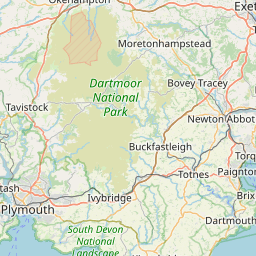
Map & Directions



Related history nearby
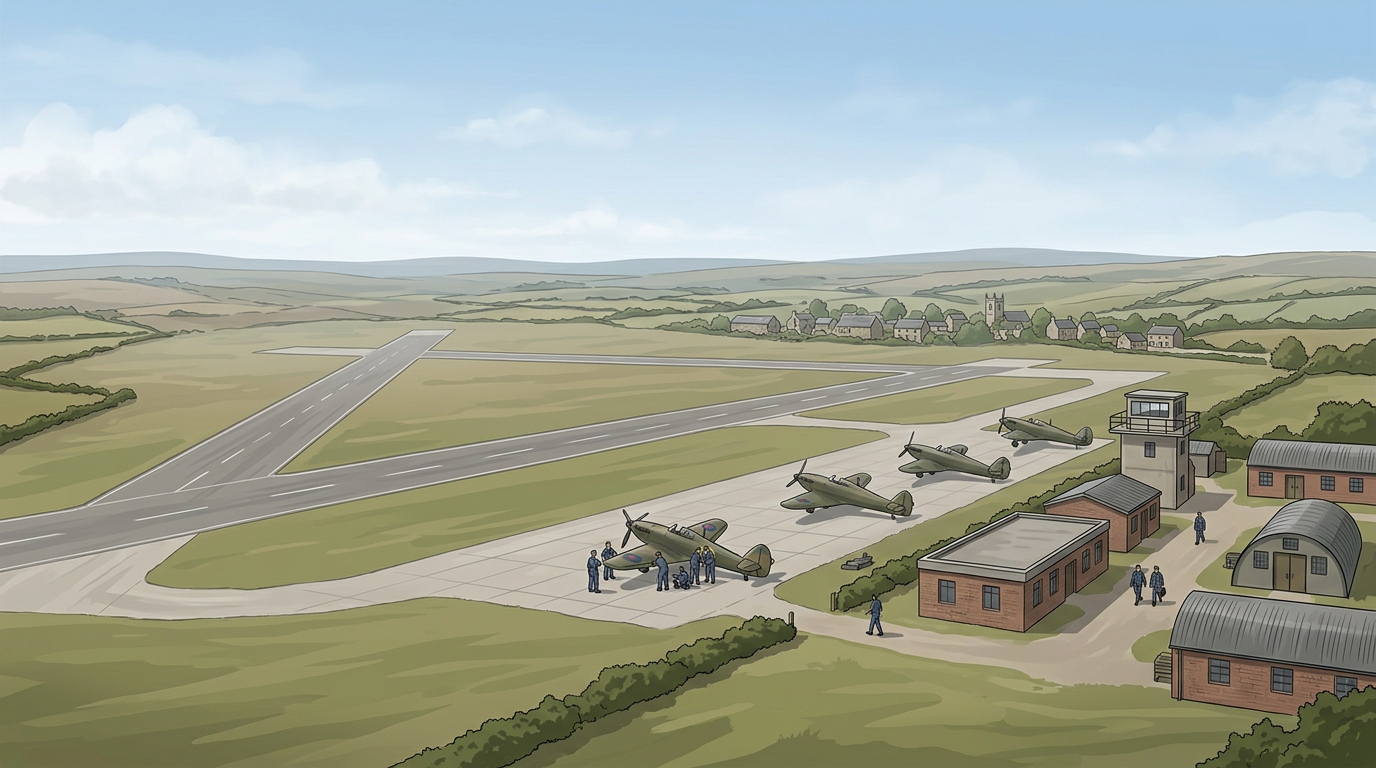
20th Century
RAF Harrowbeer: Dartmoor’s WWII Airfield
A former wartime fighter airfield on the edge of Dartmoor, where cracked runways and scattered concrete still mark the landscape of the Second World War.
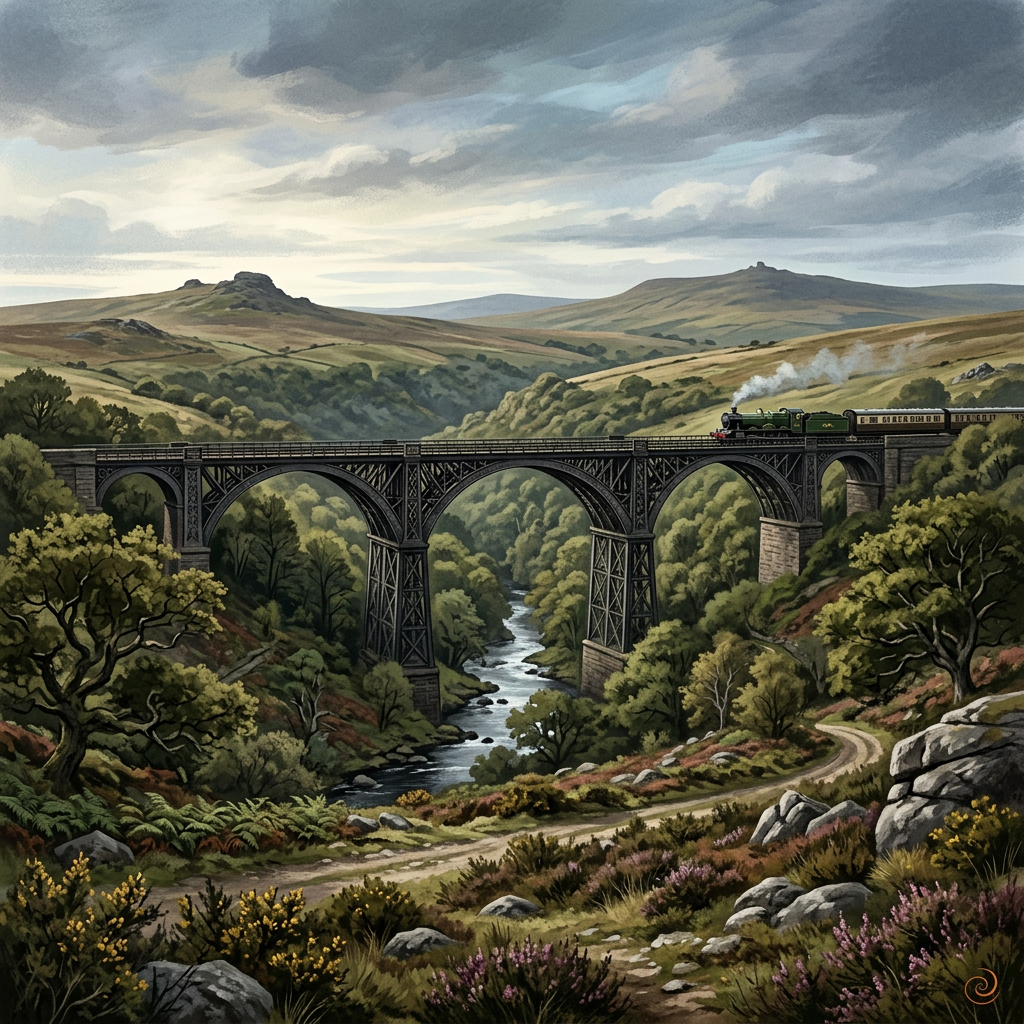
Victorian
Meldon Viaduct
A spectacular Victorian viaduct spanning a deep Dartmoor-edge gorge.
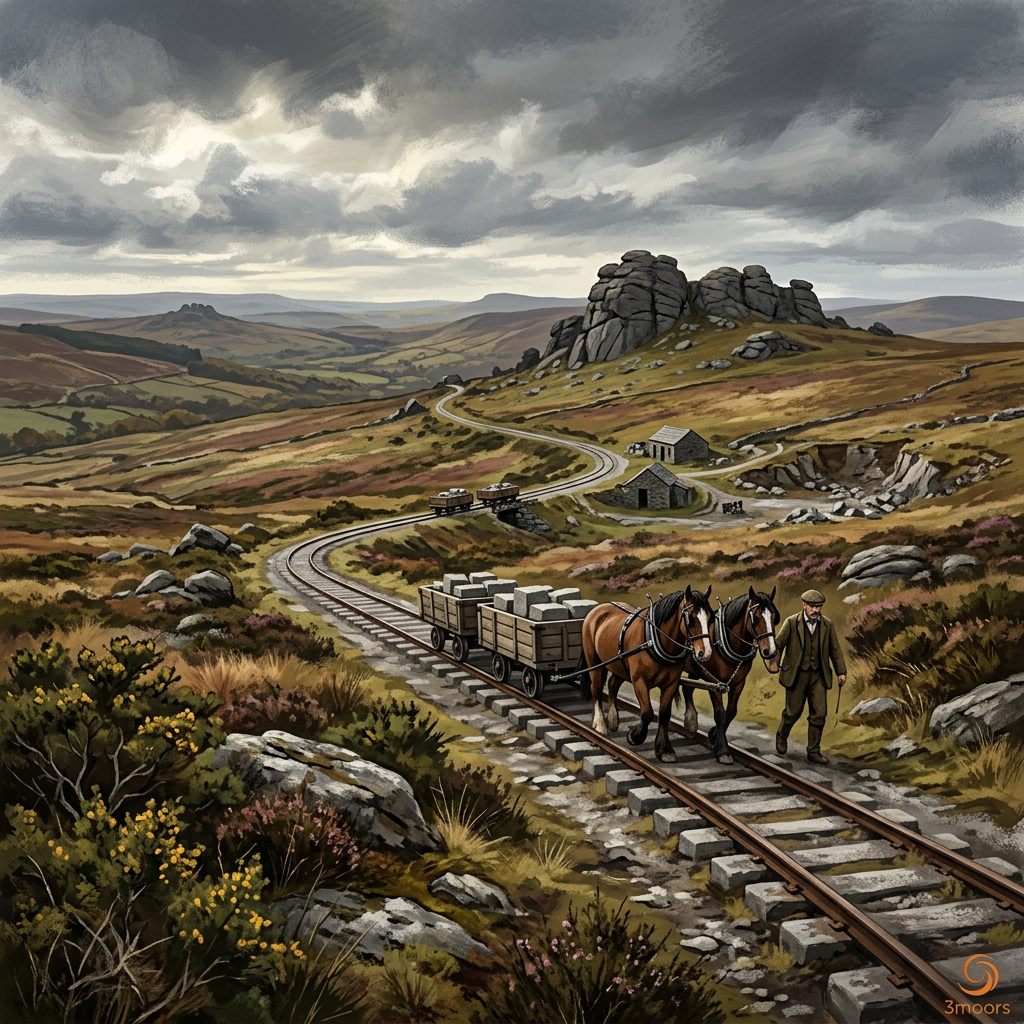
Industrial
Haytor Granite Tramway
An extraordinary early industrial railway where granite rails still survive across Dartmoor.
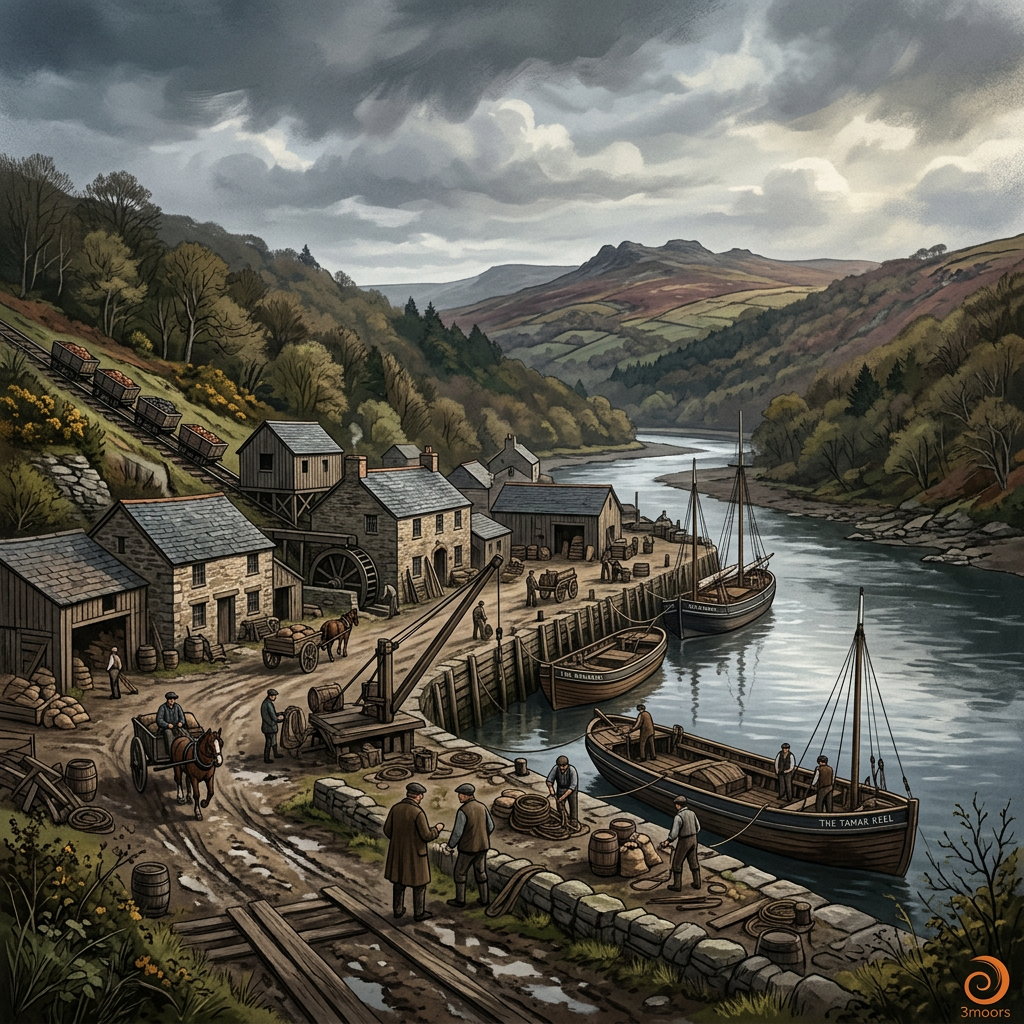
Victorian
Morwellham Quay
A remarkable surviving river port that carried copper, arsenic and industrial wealth from the Tamar Valley to the wider world.
Join the 3moors Community for path conditions & local tips.
JoinNearby places
Quick facts