Dartmoor · South East Dartmoor
Bovey Tracey
A lively gateway town where woodland, moorland and riverside landscapes meet.
About
Bovey Tracey
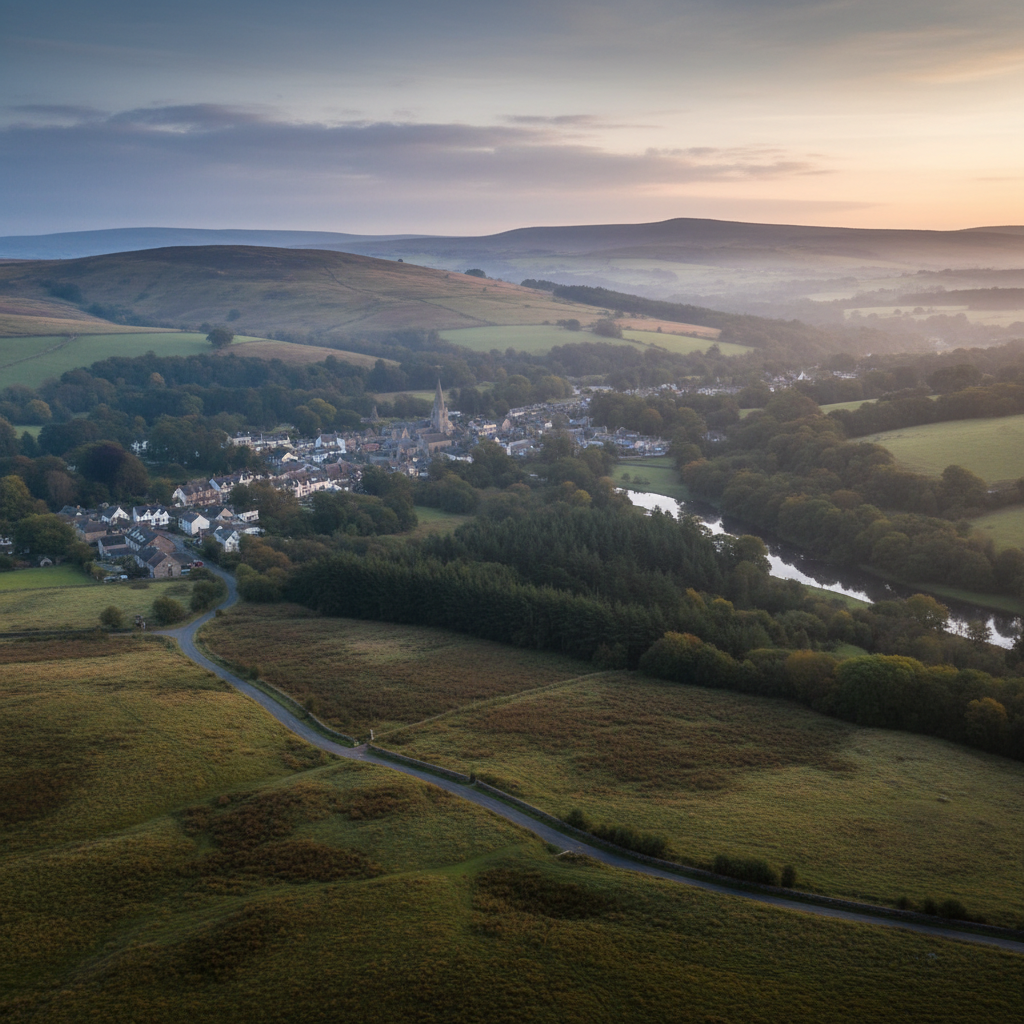
Bovey Tracey sits at the south-eastern edge of Dartmoor, where the moor releases its grip on the land and the ground softens into farmland, mixed woodland and the gentle valley of the River Bovey. It is not a village that happens to have a few amenities, nor a tourist honeypot built around a single attraction. It is a working market town with a functioning high street, a post office, independent shops, a livestock supply store, and the kind of café that serves builders and walkers from the same counter without making a point of it.
The town has been a commercial and administrative node for this corner of Devon for centuries. The church of St Peter, St Paul and St Thomas of Canterbury, thought to date from the fourteenth century, anchors the upper end of town with the solidity of a place that has long served a scattered moorland population. The weekly rhythm of deliveries, local trade and community business continues in a form that would be recognisable to any generation that has lived here.
That working character runs through the grain of the place. Bovey Tracey does not curate itself for visitors, which is precisely what makes it useful to them. You can buy walking boots, post a parcel, find lunch, fill a flask, and be on the moor within twenty minutes. The town's facilities are genuine rather than staged, and the independence of its shops reflects a community that actually uses them.
Visitors come here for different reasons. Some treat it as a base, using the town's accommodation and services as a foundation for days spent deeper in the national park. Others come specifically for the Dartmoor Guild of Craftsmen, housed in the old mill at the bottom of town, which has built a serious reputation for contemporary craft. A few simply stop on the way somewhere else and find themselves lingering longer than planned.
Character
The feel of Bovey Tracey
The physical arrangement of Bovey Tracey gives it an unusual quality for a Dartmoor-edge town. The high street and town square occupy level ground, modest and practical, while the land rises and falls around them in ways that mean the moor is never quite out of mind. Stand at the top of the town near the church and the open horizon to the north-west has a different weight to it, something broader and less settled than the farmland view to the south-east. The town sits precisely at that transition, and the character of the place is partly a product of that position.
This is the landscape edge in a literal and atmospheric sense. Bovey Tracey is not on the moor, but it is of it. The people who use the town include farmers working land that runs up to the national park boundary, walkers who have come down from the higher ground for supplies or a meal, and families whose weekend relationship with Dartmoor begins and ends here. That mixture gives the town a particular texture: neither purely rural nor suburban, neither a tourist destination nor indifferent to visitors.
The River Bovey, which passes through the lower part of town on its way to the Teign, adds a quieter layer to the place. The mill pond and the wooded banks below the town give Bovey Tracey a green, sheltered quality that the higher moor settlements do not have. In that sense the town offers something the open moorland cannot: enclosure, warmth, shade and the sound of moving water.
First-hand visit
Keith's Take
The sound of the weir stayed with me longer than the walk did, that low, flat note underneath everything else while the rest of the town carried on above.
A grey wagtail on the mill weir, holding its position in the current for a moment before dropping to a lower stone. That was the detail that slowed me down. Not the gallery, which I had come specifically to see, and not the walk I had planned for the afternoon. Just the bird, the particular brightness of its underside against the dark water, and the completely indifferent efficiency of what it was doing.
The mill pond sits at the bottom of town and the gallery opens directly onto it. I had arrived mid-morning on a weekday when there were perhaps four other people in the building, which meant you could stand in front of a piece of work for as long as you wanted without feeling that you were blocking someone else's view. The current exhibition had a ceramic section and a textile section and neither felt like it was apologising for sharing the space. The work was made by people who knew what they were doing, and the building, a converted mill with good light through the upper windows, suited it.
What I had not expected was how quickly the town fell away once you crossed the river. The path into the Parke estate takes you from tarmac to leaf mould in under five minutes, and the change in acoustic is immediate. The oak canopy was dense enough to filter the midday light to something greener and cooler, and the river alongside the path was running clear. It is not dramatic country, that stretch. But it has a quality of absorption, the sense that the landscape is doing something quietly on its own terms regardless of whether you are walking through it or not.
Keith's Take — a first-hand account from the 3moors team
Map & Getting Here
Getting to Bovey Tracey
What to expect
A natural way to spend time here
Moving through Bovey Tracey on foot takes less time than you might expect. The town centre is compact enough to cover in a single circuit, from the car park near the old pottery site up through the main street to the church, then back down through the lanes towards the mill. Along the way there are independent shops worth pausing at, a pharmacy, a proper hardware shop, and the kind of secondhand bookshop that holds more than it appears to from the outside. The mill and its gallery at the lower end anchor the visit and are worth unhurried time.
From the mill pond on a still morning, you are more likely to hear a grey wagtail working the shallows than any traffic. The water moves over the weir with a low, consistent sound that sits under everything else, and the surrounding trees in full leaf close the view down to something intimate and contained. It is a different register entirely from the town above, and the contrast between the two is part of what makes the place interesting.
The best approach is to resist the urge to move straight through to the moor. Bovey Tracey rewards a measured pass: time at the gallery, a walk along the river before the paths get busy, and a coffee somewhere you can sit facing the street rather than a screen. The town has an unhurried pace on weekday mornings that the weekend does not always preserve, and if you have any flexibility in your timing, that is when the community rhythm of the place is most legible.
What makes it stand out
What makes Bovey Tracey special
What distinguishes Bovey Tracey from other Dartmoor-edge towns is the combination of genuine civic function and serious creative infrastructure. The Bovey Tracey Pottery tradition is part of the town's long-standing identity, and the presence of the Devon Guild of Craftsmen at Riverside Mill gives the town an artistic credibility that goes well beyond a few galleries selling prints. The Guild's programme of exhibitions and resident makers has been running for decades and draws people specifically to see work made to a professional standard. It is one of the better reasons to stop in any town in the south-west, not just this corner of Devon.
The other distinguishing quality is the woodland. Parke, the National Trust property on the edge of town, gives Bovey Tracey something that comparable moorland towns like Chagford or Moretonhampstead do not have in the same way: an easy, well-maintained network of paths through mature broadleaf woodland, running along a river valley and connecting directly to the open moor. The combination of riverside woodland and accessible moorland within a short walk of a functioning town centre is genuinely uncommon, and it makes Bovey Tracey a more versatile base than its size might suggest.
Don't miss
Things to see and do
Spend proper time at the Devon Guild of Craftsmen in Riverside Mill, not just a glance at the entrance display but the full gallery, which changes regularly and is reliably worth it.
Follow the river path downstream from the mill into the Parke estate, where the oak woodland closes in and the noise of the town drops away within a few minutes.
Look for dippers on the River Bovey below the mill weir, where the fast, shallow water is exactly the habitat they prefer.
Walk up to the church of St Peter, St Paul and St Thomas of Canterbury and read the churchyard at a careful pace, where the inscriptions record the families that have worked this edge of the moor for generations.
Cross into the Parke estate and take the path that climbs above the woodland to the open ground, from where the view south-east across the Teign valley is unobstructed on a clear day.
Browse the side streets off the main high street rather than just the through-route, where the smaller, older buildings hold more character than the main frontages suggest.
Buy something from the Guild shop, where smaller works by member makers are stocked alongside the exhibition programme and where the quality-to-price relationship is generally honest.
Walks from here
Getting out from Bovey Tracey
The most immediate walking from Bovey Tracey uses the Parke estate as its starting point. The National Trust land begins a short walk from the town centre, and the network of paths within it is well-marked and well-maintained. A circular route following the River Bovey through the estate and returning via the higher woodland edge takes roughly an hour and a half at a measured pace, with good ground underfoot for most of the year. The paths are accessible enough for older walkers and younger children, and the gradient is gentle throughout the woodland section.
For those wanting to reach the open moor, the estate paths connect upwards to Lustleigh Cleave and the ridge above, from where the character of the landscape changes entirely. The cleave is one of the less visited parts of eastern Dartmoor, a deep, wooded valley with dramatic rocky outcrops on its upper edges, and the approach from Bovey Tracey through Parke gives it a satisfying sense of earned arrival. This is a longer day, and the terrain above the woodland is rougher, so footwear and navigation matter more.
A third option follows the Templer Way, a long-distance trail that passes through Bovey Tracey on its route from Haytor to the Teign estuary at Teignmouth. Walking any section of it southward from the town gives a different perspective, moving away from the moor through pastoral farmland and the Bovey valley towards the coast, a useful route for those who want variety across a multi-day stay.
Good to know
Before you go
The Devon Guild of Craftsmen is closed on Mondays and worth checking before planning your visit around it. The gallery space is free to enter, which makes it easy to visit briefly or at length depending on the current exhibition. Parking in the town centre can be tight on Saturday mornings when the local trade is busiest, and the car park near the old pottery is generally the most practical option for a half-day visit. The Parke estate has its own car park off the B3387 if you are coming specifically to walk.
The town has a good range of independent food and drink options for its size, but it is not a place with an excess of choice at dinner time, particularly mid-week out of season. If you are staying locally and planning an evening meal in Bovey Tracey itself rather than driving to the wider area, it is worth checking what is open before you arrive. The town is genuinely dog-friendly in most of its outdoor spaces and on the estate paths, which is worth knowing if that shapes your plans.
Across the seasons: Late spring and early summer are the most straightforwardly rewarding times to visit Bovey Tracey. The woodland at Parke is at its best in May when the leaf canopy is still fresh and the wildflowers on the valley floor are present. The river is at a reasonable level, the paths are dry without being dusty, and the town itself is busy enough to feel alive without the pressure of August visitor numbers. Autumn shifts the character of the woodland walks considerably. By late October the oaks along the Bovey take on a colour that justifies the walk on its own terms, and the light through the trees on a clear afternoon has a particular warmth. The town's working rhythm continues regardless of season, which is part of what makes it a more honest autumn destination than places that essentially close down once the summer trade ends. Winter is functional rather than picturesque. The estate paths can be muddy after prolonged rain, and the high-ground routes above the cleave are best avoided in poor visibility. The town's indoor offer, particularly the gallery, becomes more central to the visit in these months, and a winter morning combining the Guild exhibition with the river walk before the light goes is a satisfying and uncrowded way to use the place.
Practical info
Practical info
Bovey Tracey has a pay-and-display car park near the town centre, and on-street parking is available on some roads, though spaces fill quickly on market days and summer weekends. Drivers arriving later in the morning during busy periods may need to circle before finding a space. The car park off Station Road is the most straightforward option for first-time visitors. Check signage carefully, as some bays have time restrictions that are not always immediately obvious.
The town is well served for a settlement of its size, with public toilets, a range of independent shops, cafes, and a supermarket. Several pubs offer food, and there are facilities suitable for families including a small play area near the riverside. Facilities thin out quickly once you leave the town centre and head towards the open moor, so it is worth filling water bottles and picking up supplies before setting off.
Bovey Tracey itself is largely flat and straightforward to navigate on foot, with paved streets and level access to most of the town centre. The riverside path and nearby woodland trails are generally well-maintained but can become muddy after rain, particularly through the lower woodland sections. Paths leading out towards Dartmoor rise more steeply and warrant sturdier footwear even in dry weather. Anyone with limited mobility will find the town centre accessible, but the surrounding countryside requires more care.
varies
Explore nearby
Places nearby
Ilsington
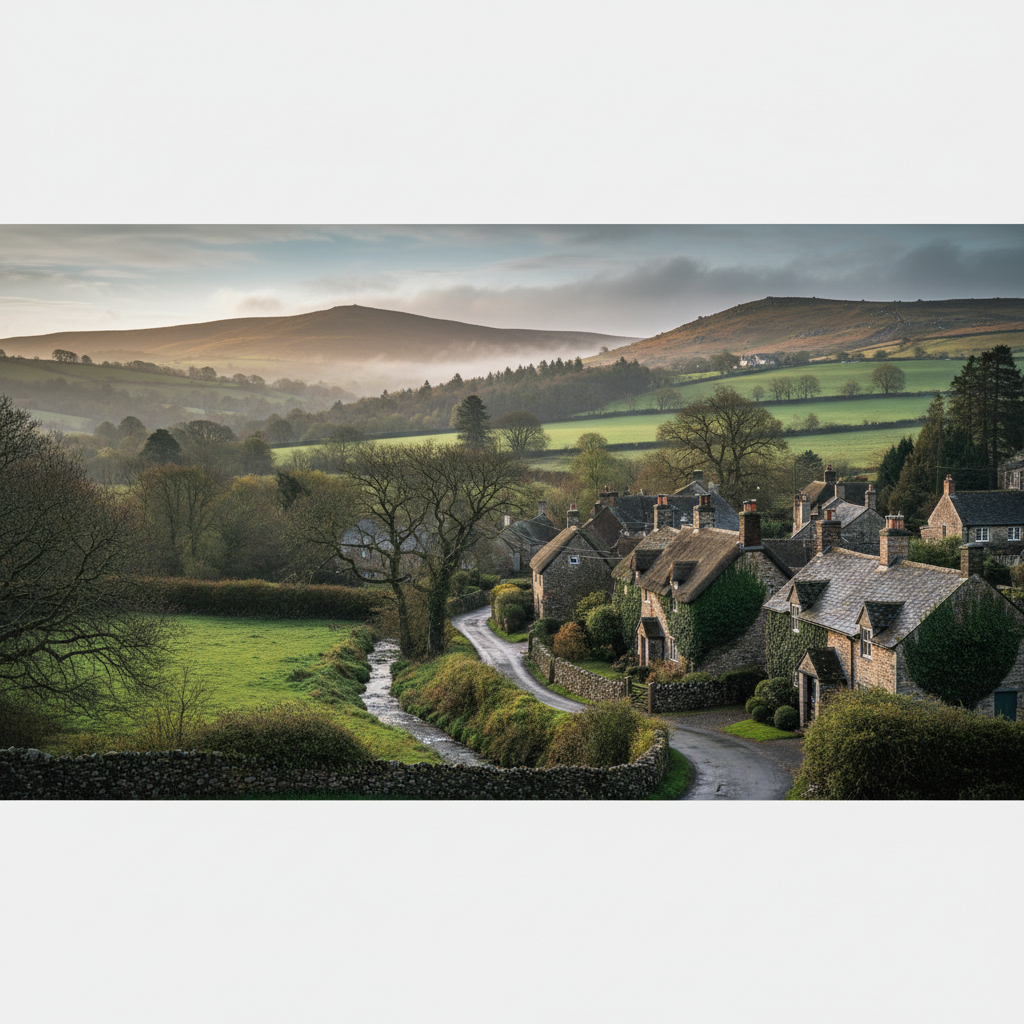
Ilsington offers a softer, greener introduction to southern Dartmoor.
Ilsington
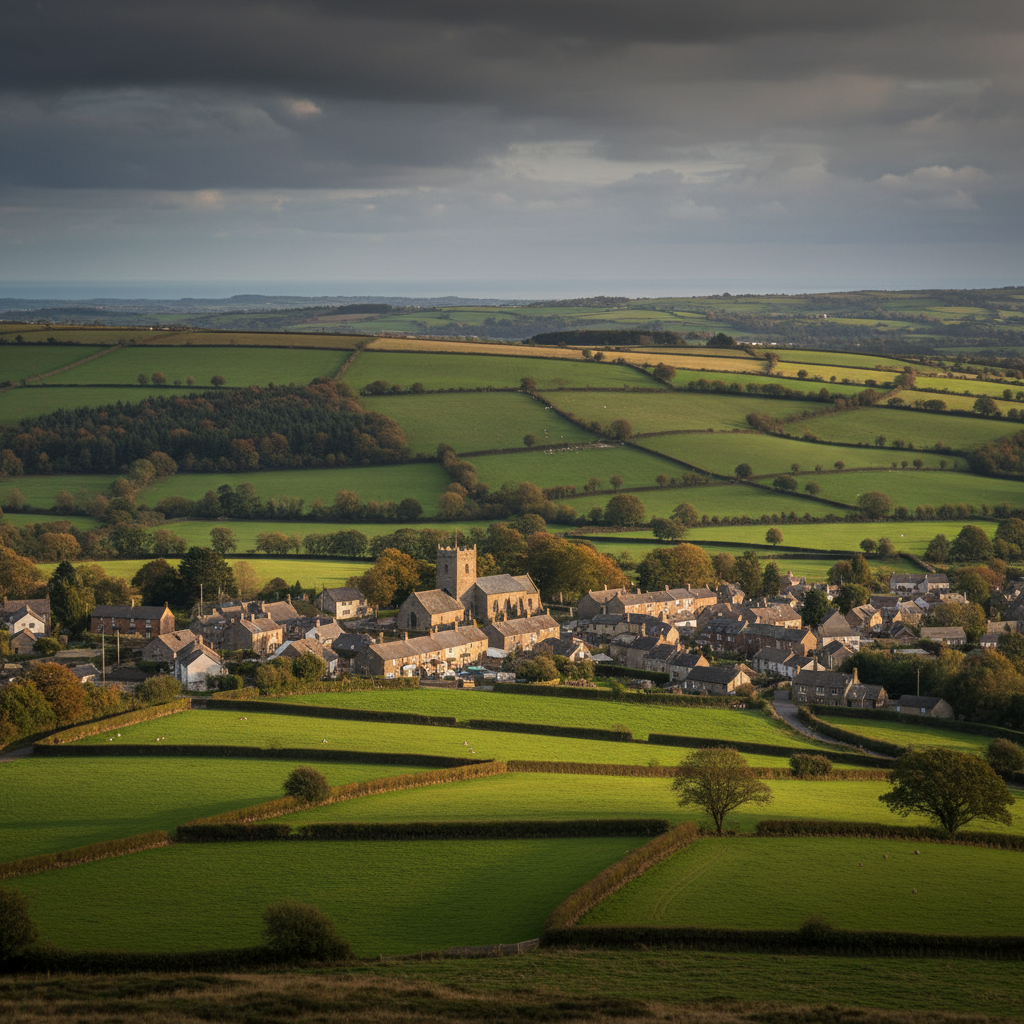
Ilsington offers a softer, greener introduction to southern Dartmoor.
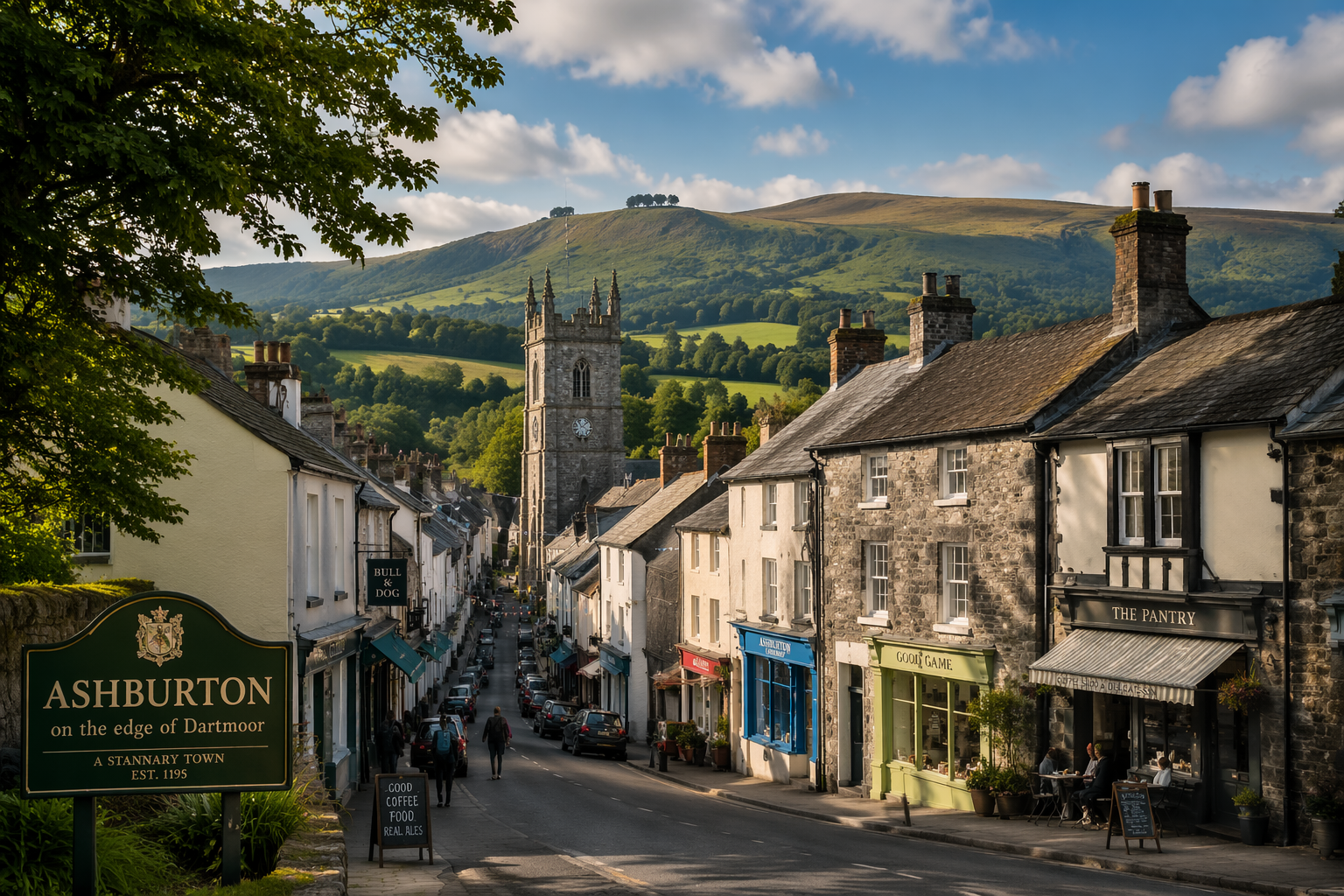
Ashburton
A lively Dartmoor-edge town combining independent shops with quick access to the moor.
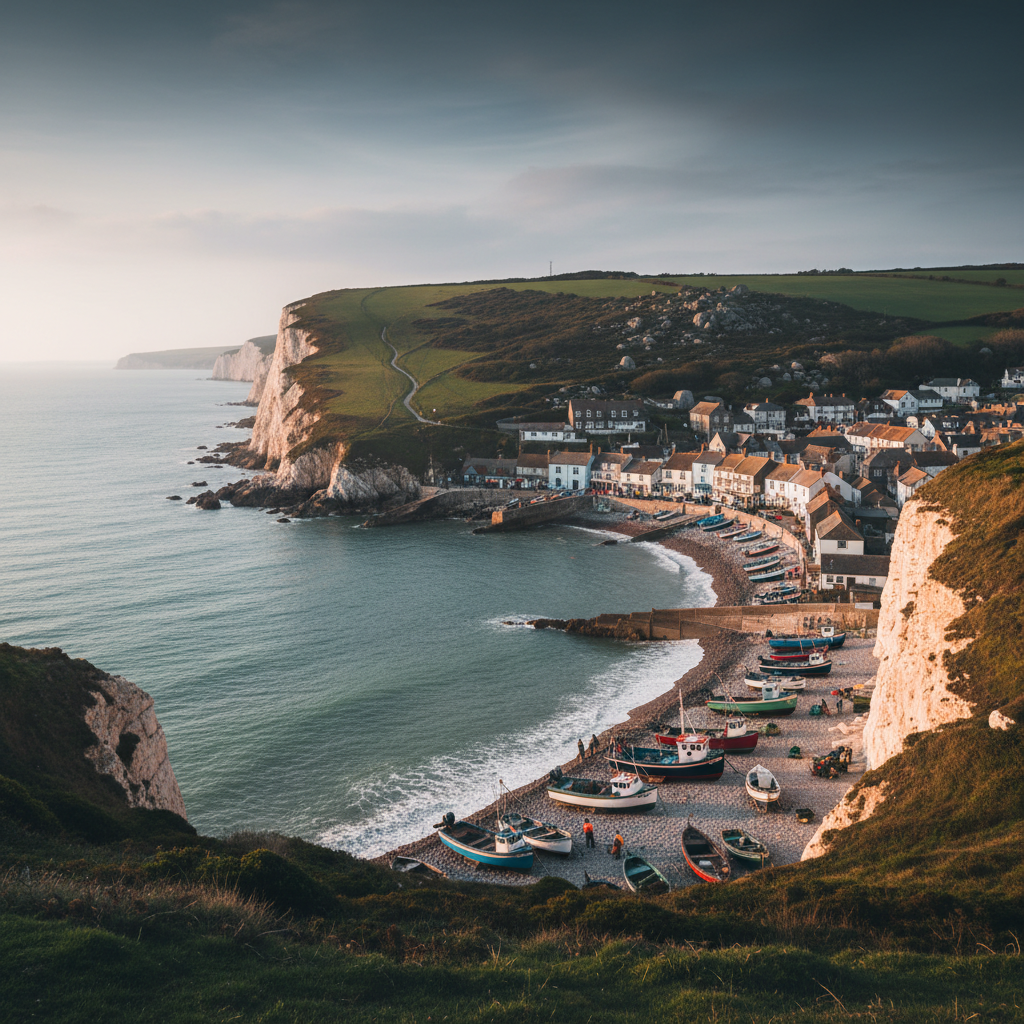
Beer
Beer combines beach atmosphere, fishing heritage and dramatic coastal scenery.
Join the 3moors Community for path conditions & local tips.
JoinWhy this place matters
Bovey Tracey — in its own right
What Bovey Tracey offers, if you pay attention to it, is a model of how a small town can hold its community together without performing itself for outsiders. The businesses on the high street serve people who live here. The church serves people who have lived here across generations. The guild serves makers who take their work seriously and an audience that returns because the standard is maintained. None of this is arranged for the visitor, which is exactly why the visitor benefits from it. There is a kind of community rhythm in places like this that is increasingly difficult to find in towns that have reorganised themselves around tourism or commuter convenience. Bovey Tracey has not done either entirely, and the result is a place that still has the texture of somewhere with its own reasons to exist. That quality is harder to quantify than a view or a walking route, but it is the thing you carry away.
Explore more
Discover other places, walks, and hidden corners across Dartmoor.