
Dartmoor · South East Dartmoor
Ilsington
A traditional Dartmoor-edge village surrounded by lanes, woods and rolling hills.
About
Ilsington
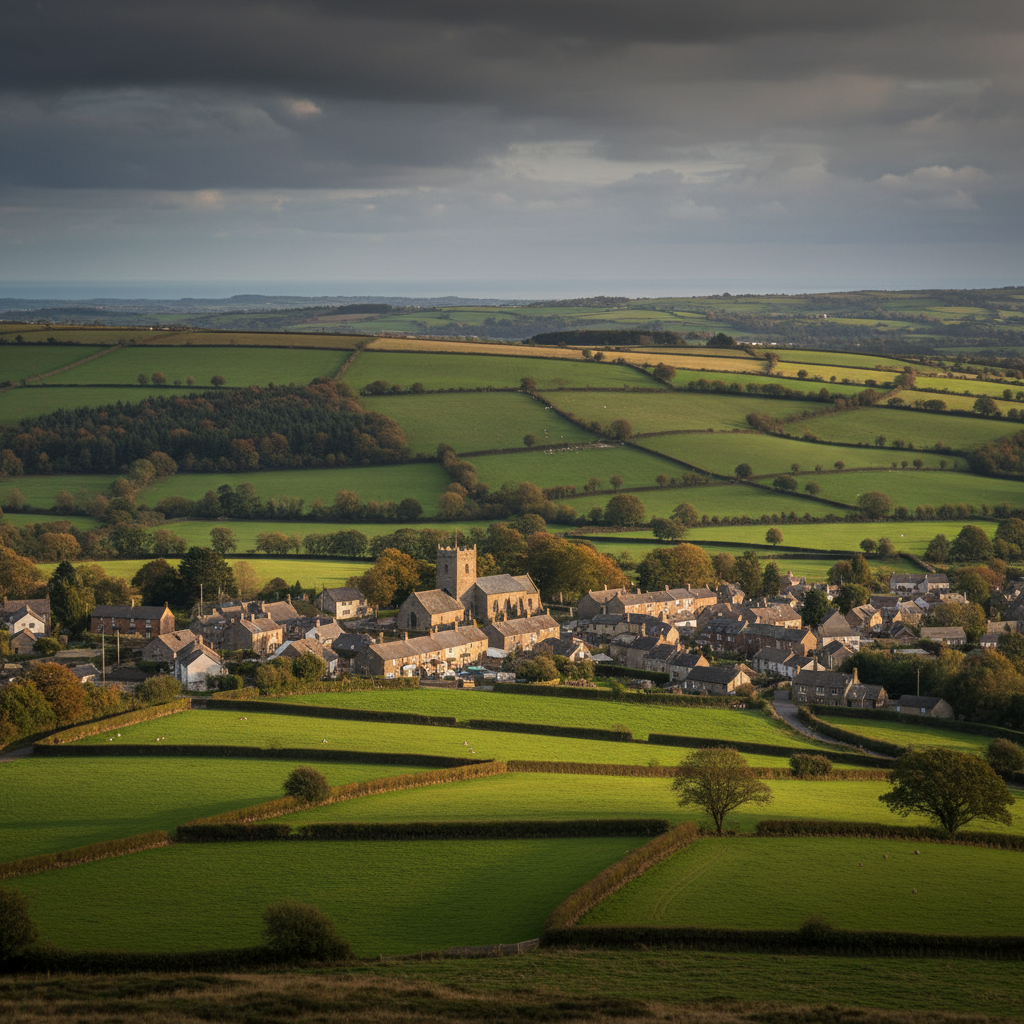
Ilsington sits on the south-eastern fringe of Dartmoor, tucked into a fold of land where the open moor gives way to a more sheltered, wooded country. The village occupies a hillside position above the Wrey valley, with lanes dropping away steeply in several directions and the high ground of Haytor Down visible to the north-west on clear days. It is not a place you pass through by accident. You come to it deliberately, and when you do, you find something that feels genuinely unhurried.
The quietness here is of a particular kind. It is not emptiness or neglect, but the quietness of a place that has been lived in continuously for a very long time and has settled into its own rhythm. There is little traffic noise. The lanes are narrow and high-banked. Birdsong carries in a way it rarely does closer to main roads. The village sits at roughly 280 metres, high enough to feel the weather but sheltered enough that the worst of the moor's exposure rarely reaches it directly.
People come to Ilsington for a kind of Dartmoor experience that does not demand technical preparation or prior knowledge of the terrain. The walks are accessible, the landscape is layered and interesting without being severe, and the village itself offers a base that feels rooted rather than constructed for visitors. It is, in this sense, a softer entry point to a landscape that can, further north and west, be considerably less forgiving.
The surrounding countryside is a mixture of ancient enclosed farmland, mixed woodland, and open common, all within easy reach on foot. The character of the land changes quickly as you climb away from the village, from the enclosed intimacy of the lower lanes to the broader views that open up across the Teign valley and towards the coast on fine days. That layered quality, the sense of landscape unfolding gradually as you move through it, is one of the defining pleasures of this corner of the moor.
Character
The feel of Ilsington
The village has the kind of built character that comes from centuries of practical use rather than deliberate preservation. The church of St Michael, which likely dates in origin from the fourteenth century, anchors the upper part of the settlement and its tower is visible from several of the approach lanes, serving as a quiet landmark as you navigate in. The surrounding cottages and farmhouses are mostly rendered or rough-cast, some granite-faced, built to manage the weather rather than to impress. It holds together as a working parish, not a set piece.
What is most apparent, once you spend time here, is the degree to which the village functions as a genuine community. The Ilsington Country House Hotel sits just outside the village centre and brings some external visitors, but the place does not pivot around them. There is a sense that local life continues on its own terms: the church is maintained by people who use it, the lanes are walked by residents as much as visitors, and the surrounding farmland is actively worked. This is not a village in aspic. It is a place where community persists not as an amenity but as a fact.
That continuity is visible in small details. A well-placed bench. A noticeboard that is clearly read. The way the lane through the centre is worn smooth by years of use. None of it is remarkable in isolation, but taken together it produces a particular quality of settled life that is increasingly difficult to find in villages within easy reach of the A38.
Map & Getting Here
Getting to Ilsington
What to expect
A natural way to spend time here
Coming into the village on foot from any direction involves a degree of ascent, and that physical effort frames the experience usefully. The lanes are narrow enough that you move in single file, hedgebanks close on both sides, before the settlement opens up around the church. The proportions are modest. Nothing is built to a civic scale. The space around the churchyard is about as wide as the village gets, and even there the sense is of something gathered and compact rather than spread out.
Pause somewhere along the upper lane on a still morning and the soundscape is notably spare: wood pigeon, occasionally a buzzard overhead, the distant sound of a tractor working in a field somewhere below. The air carries the faint resinous note of the surrounding woodland when the wind is in the right direction, mixing with the cooler, slightly mineral quality that arrives from the higher ground above. These are not dramatic impressions. They accumulate quietly, and they are more satisfying for being modest.
This place rewards a patient approach. Visitors who try to cover the surrounding landscape in a single efficient outing will find it adequate. Those who allow an afternoon to dissolve into the lanes, the churchyard, the views from the upper tracks, and the descent into the valley will find something more. The village is best used as a place to move out from and return to, rather than as a destination in itself.
What makes it stand out
What makes Ilsington special
What distinguishes Ilsington from comparable Dartmoor-edge villages is its position and its relative restraint. It sits close enough to the moor to feel genuinely connected to it, yet it does not market itself as a gateway or a base in any obvious way. There are no signs directing you to the viewpoint, no laminated walk leaflets in a rack by the door. The moor is simply there, available, and the village trusts you to find it.
The other specific quality is the nature of the surrounding country itself. The lanes around Ilsington pass through a landscape that is neither fully wild nor conventionally pastoral. Ancient hedgebanks carry plants that suggest centuries of continuity. Woodland in the Wrey valley below has the layered density of long-established habitat. The open common above connects, without drama, to the broader moorland plateau. This gradation, from enclosed farmland to open ground, compressed into a short walk, gives the area a richness of landscape experience that takes some visitors by surprise. It reads more complex than it initially appears.
Don't miss
Things to see and do
Walk north from the village onto Haytor Down and turn to look back at the wooded bowl Ilsington sits within, the context only becoming legible once you are above it.
Look closely at the interior of St Michael's church, where carved details and memorial tablets carry the accumulated weight of several centuries of parish life.
Descend into the Wrey valley on the footpath below the village and follow the stream through the woodland, watching for the point where the light changes as the canopy thickens.
Take the lane westward in early morning when mist sits in the lower fields and the higher ground shows clear above it.
Find the spot where the hedgebanks open onto a south-facing view across the rolling country towards the coast and sit with it for longer than feels necessary.
Notice the lichen on the churchyard stones, which in a damp year builds to a depth that suggests the kind of age that does not usually survive in more visited places.
Return to the village from a walk above at late afternoon when the low light catches the rendered walls of the cottages and briefly makes the whole place look as if it were lit from within.
Walks from here
Getting out from Ilsington
The most direct walking connection from Ilsington is northward to Haytor Down and the open moorland around Haytor Rocks and Greator Rocks. The route climbs steadily through fields and open ground, taking roughly forty minutes to reach the ridge at a comfortable pace. From there, the Templer Way and a network of informal moorland paths allow for varied circuits, with the option to loop back via Smallacombe Rocks or descend through Holwell Tor towards Widecombe in the Moor, roughly four to five miles in total depending on the line taken.
Downhill from the village, the Wrey valley offers a quieter alternative: woodland paths following the Wrey Brook through mixed deciduous cover, with connections towards Bovey Tracey to the east. This lower route suits those who prefer sheltered walking, and the contrast with the open ground above makes a satisfying combination if both are taken together in the same day. The Two Moors Way passes through country accessible from Ilsington, though the village is not directly on the route. Walkers intending to join it should allow for some additional cross-country navigation from the village outward to connect with the path.
Good to know
Before you go
The lanes around Ilsington are genuinely narrow and parking within the village itself is limited. Arriving early or on foot from a lower car park avoids the frustration of meeting another vehicle at a passing place with nowhere to go. The village has no shop and no dedicated visitor facilities, so arriving self-sufficient is sensible: food, water, and appropriate footwear for the terrain you intend to cover.
The footpaths in the lower woodland can be muddy for significant periods between October and April, and some of the upper lane approaches become slippery when wet. Boots are worth wearing even in dry weather, since the transition between lane and open ground happens quickly and the surfaces change without warning. The Ilsington Country House Hotel has a bar and restaurant open to non-residents, and it is worth checking their current opening times before planning a visit around them.
Across the seasons: Late spring is the most rewarding time to arrive. The hedgebanks on the approach lanes carry a depth of growth that reduces progressively through summer, and the woodland below the village in May has a quality of green that feels almost excessive before the full canopy closes over. Bluebells and wood anemones can be found in the Wrey valley floor in good years, typically peaking in late April and holding into May. Summer brings walkers to the Haytor area in numbers, and while the village itself remains relatively calm, the lanes above it can see more passing traffic than feels comfortable on a hot afternoon. Early starts resolve this. Autumn brings a gradual richness to the surrounding woodland, with the valley below the village changing colour through October in a sequence that is worth following week by week if you are staying nearby. Winter reveals the structure of the landscape in ways that the growing season conceals. The lanes look longer, the farmland more exposed, and the village itself more distinctly settled against the surrounding country. Cold clear days after a frost are among the best times to be here, when the distant views carry all the way to the coast and the moorland above is hard underfoot and easy to read.
Practical info
Practical info
Parking in Ilsington is limited and largely informal. There is no dedicated visitor car park, and the village lanes are narrow, so drivers should take care not to block access routes or passing places. A small number of vehicles can usually be left near the village centre, but this space is shared with residents and should be treated considerately. Arriving early, particularly at weekends, avoids the most pressure on available spots.
Ilsington is a quiet residential village rather than a visitor hub, and facilities reflect that. The Ilsington Country House Hotel provides food and drink, though it is worth checking opening times and whether booking is required before visiting. There is no village shop, no public toilets, and no visitor centre. Those planning a longer day should arrive self-sufficient, with food, water, and any supplies brought from Bovey Tracey or Newton Abbot.
The village sits on sloping ground with uneven lane surfaces and grass verges that can become muddy in wet weather. Most of the walking routes out of Ilsington involve some gradient, particularly those heading up towards Haytor Down or into the valley woodland. Stout footwear is advisable even in summer, and waterproofs are sensible given the unpredictable nature of Dartmoor's southern edge. The lanes themselves are passable in ordinary shoes, but anyone venturing further should be prepared for rougher going.
varies
Explore nearby
Places nearby
Bovey Tracey
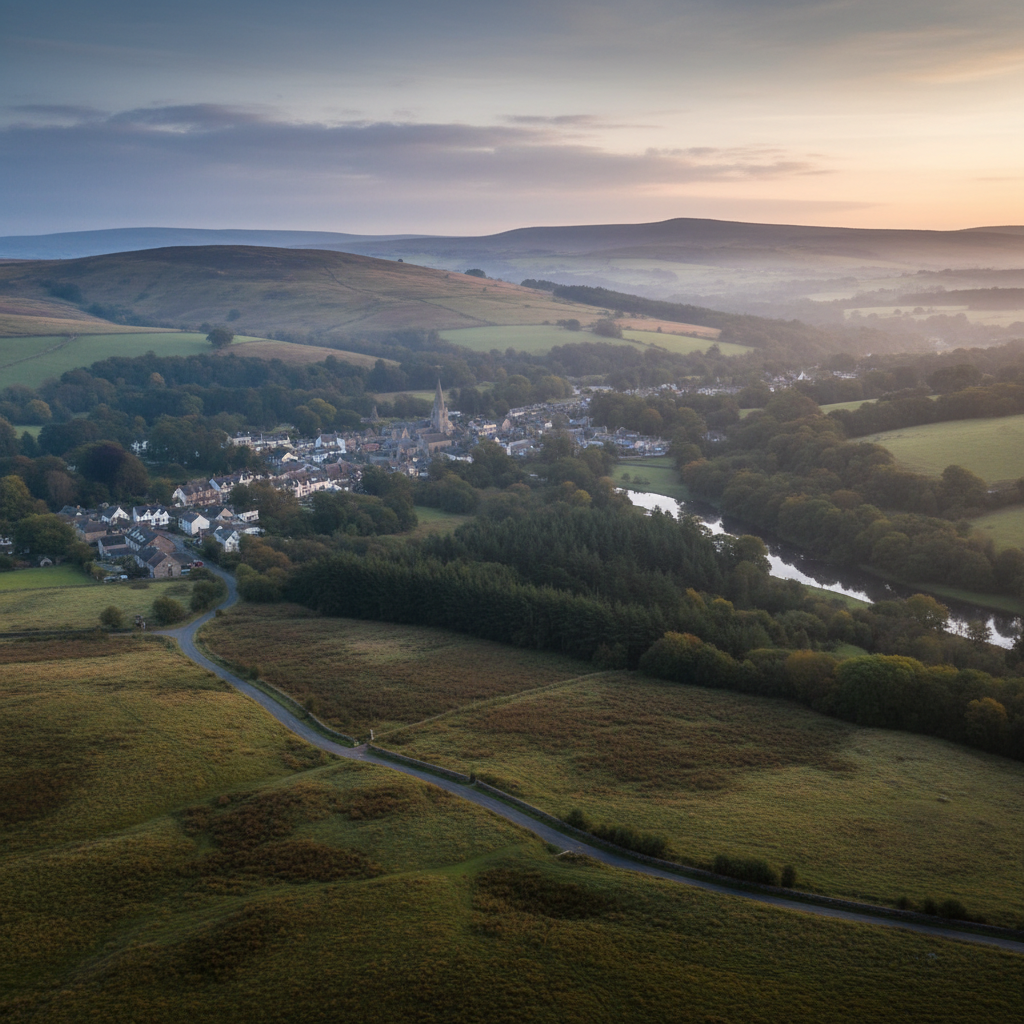
Bovey Tracey offers easy access to eastern Dartmoor alongside strong town facilities and nearby woodland.
Ilsington
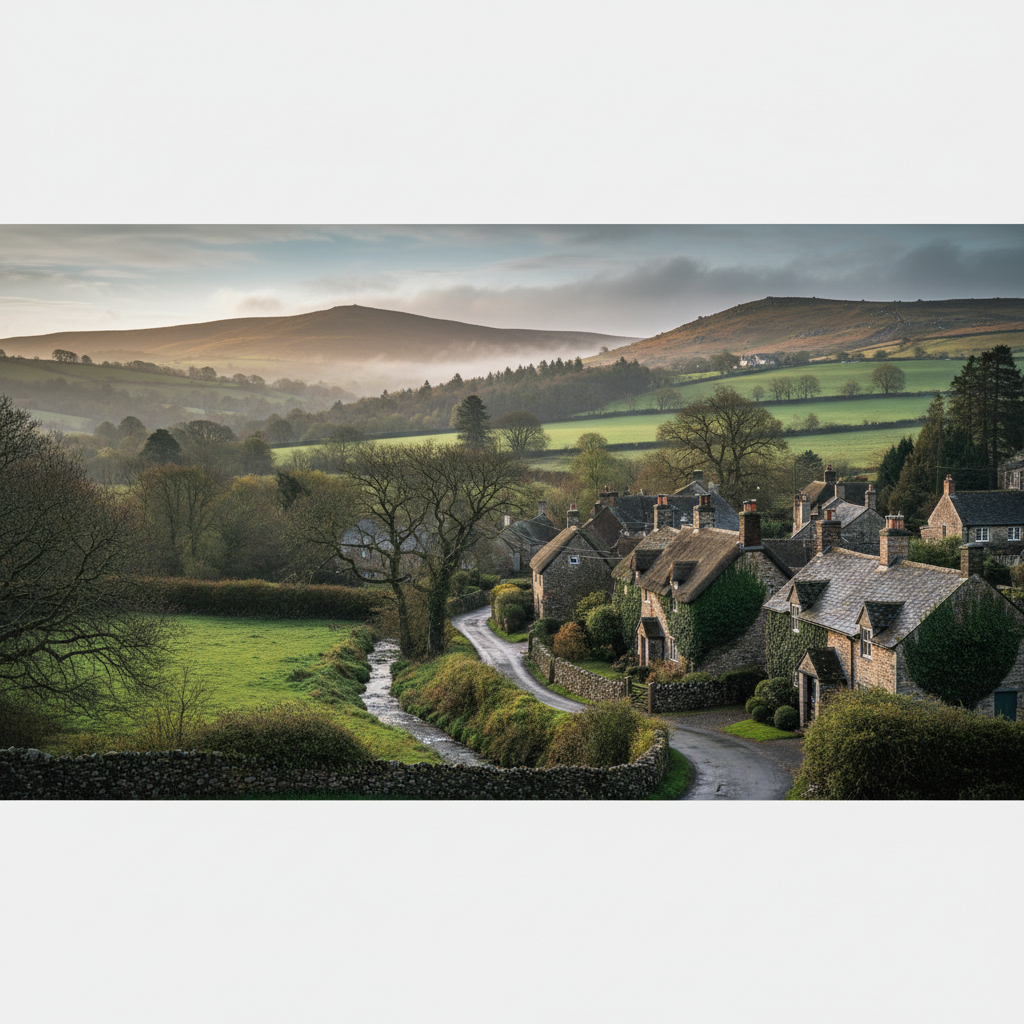
Ilsington offers a softer, greener introduction to southern Dartmoor.
Ashburton
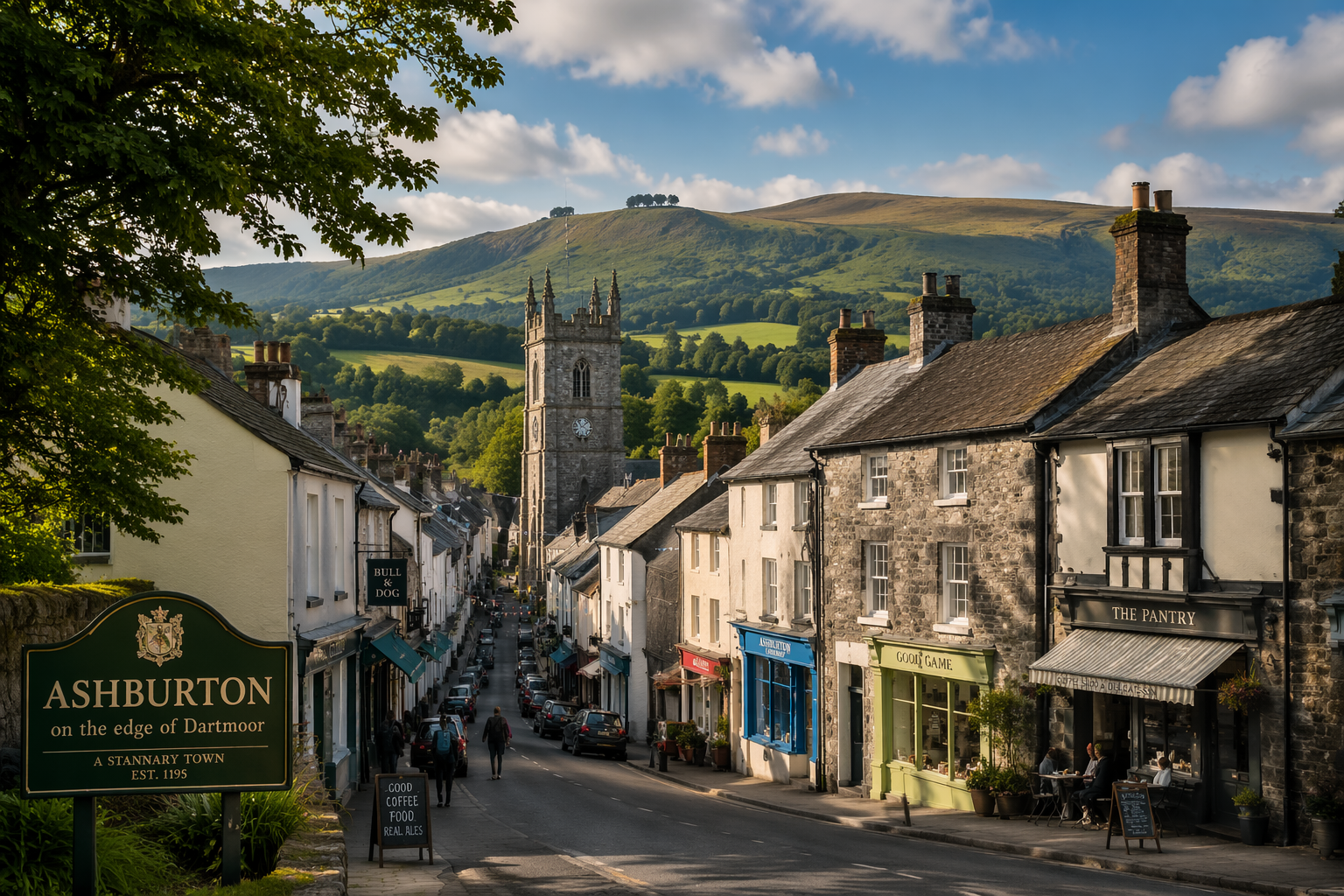
A lively Dartmoor-edge town combining independent shops with quick access to the moor.
Beer
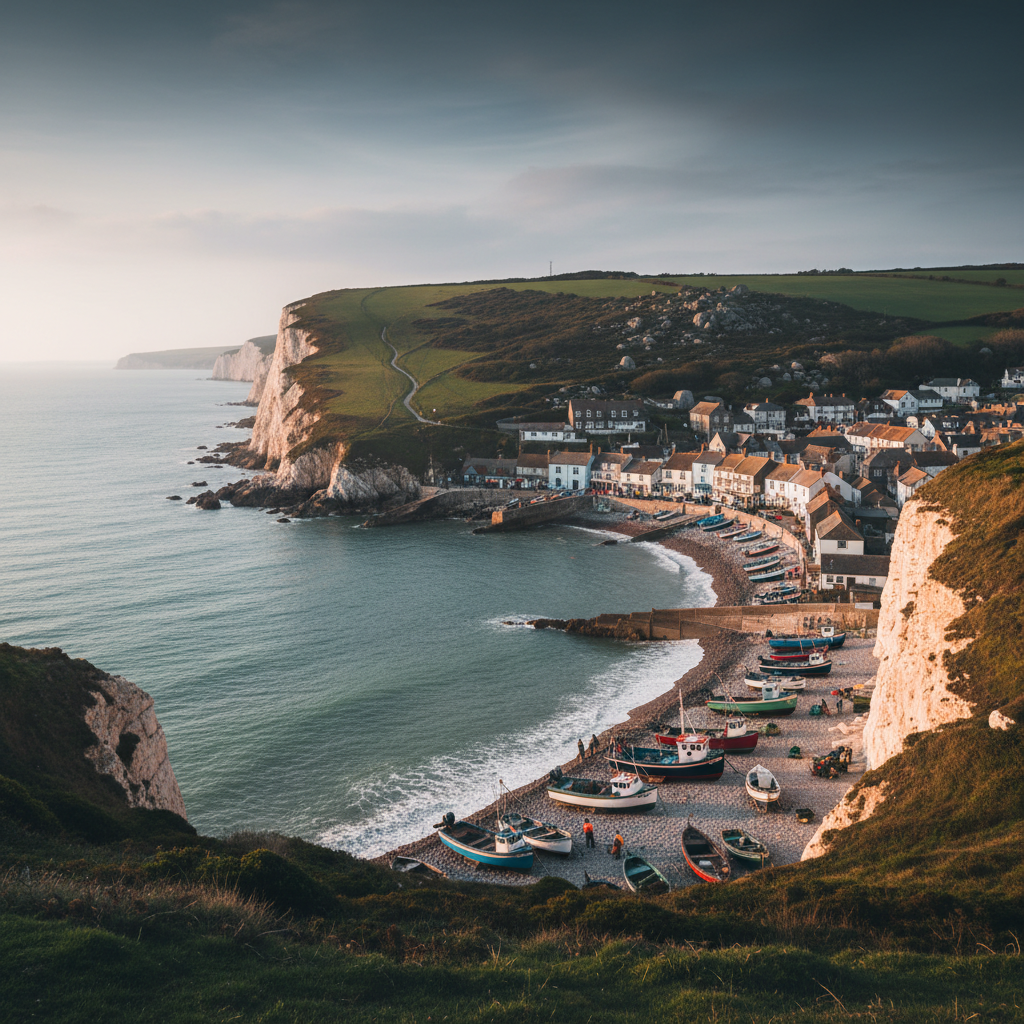
Beer combines beach atmosphere, fishing heritage and dramatic coastal scenery.
Join the 3moors Community for path conditions & local tips.
JoinWhy this place matters
Ilsington — in its own right
What Ilsington offers, in the end, is a particular quality of landscape setting rather than a specific thing to see. The village itself is the orientation point, the place you return to, while the countryside around it does the more complex work of holding your attention. The gradation from enclosed farmland to open moor, compressed into the space of an hour's walking, gives the place a density of landscape experience that feels disproportionate to its modest size. There is a kind of visiting that this place is well suited to: staying for two or three nights, moving through the surrounding country at different times of day, learning the ways the light falls differently depending on the season and the hour. Ilsington does not announce itself. It asks to be read gradually, and it gives more to those who approach it on those terms.
Explore more
Discover other places, walks, and hidden corners across Dartmoor.