Exmoor · North Devon coast
Georgeham
A quieter inland village close to some of North Devon’s best beaches.
About
Georgeham
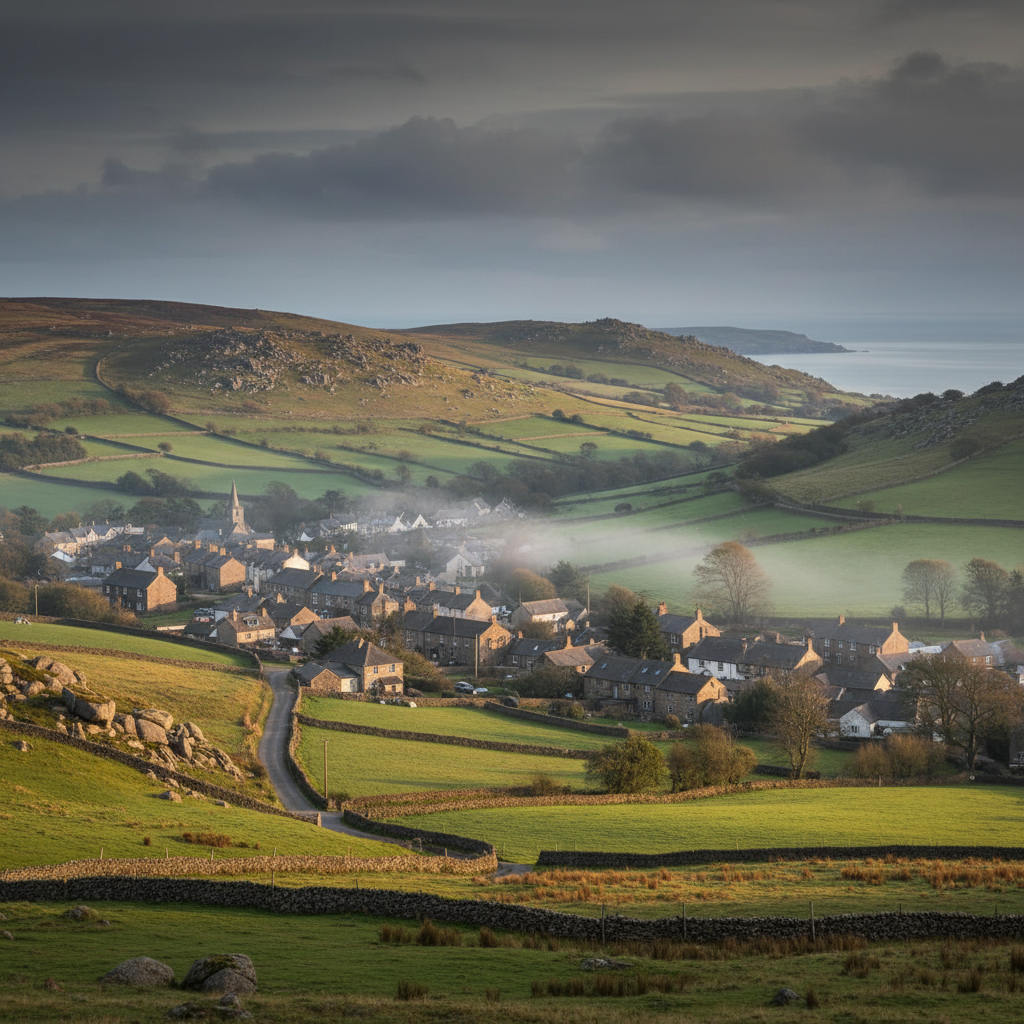
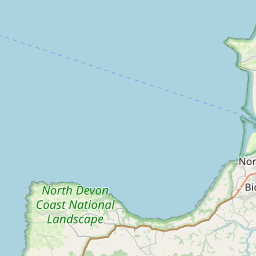
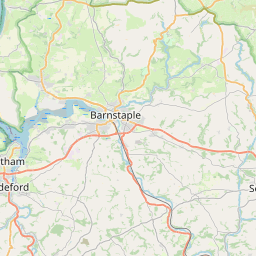
Georgeham sits a mile or so inland from the North Devon coast, tucked into a shallow valley between Croyde and Braunton. It is not a village that announces itself. The approach from any direction is gradual: a narrowing of lanes, a thickening of hedgerows, the sense of something pulling inward rather than spreading out. The village is small enough to cross on foot in a few minutes, yet dense enough in character to reward a longer stay.
The community here has a quality that is increasingly rare on this stretch of coastline. Where nearby Croyde has tilted decisively towards surf tourism, Georgeham has remained a place where people actually live. There is a working church, a pub that serves locals as readily as visitors, and a rhythm to the week that has more to do with tides and school runs than with seasonal footfall. That grounded quality is not accidental. The village has long attracted writers and artists drawn by precisely this combination of landscape access and ordinary life continuing undisturbed around them.
Henry Williamson, author of Tarka the Otter, lived and worked in Georgeham for many years. His presence here was not incidental. The village and the surrounding country fed directly into his writing, and there is still something in the feel of the place that suggests why: it is connected to the wider landscape without being consumed by it. The fields press in close on all sides, and on clear days the sea is just visible from the higher ground above the village.
Visitors come here mainly for the coast access. Croyde Bay and Saunton Sands are both within easy walking or cycling distance, and Georgeham makes a quieter base than either of those busier settlements. But the village rewards attention in its own right, particularly for those who want to slow down after a day on the beach and find themselves somewhere that does not feel arranged for their benefit.
Character
The feel of Georgeham
The built fabric of Georgeham is modest and unpretentious. Whitewashed and rendered cottages line the main lanes, some with low garden walls spilling over with valerian in summer. The church of St George sits at the heart of things, its tower visible from the approaches and its churchyard well-kept in the manner of a community that still uses it. There is no village green as such, but the lanes widen at a few points to create informal gathering places, and the whole settlement has the feeling of something that grew without a plan but arrived, over time, at its own coherence.
The landscape setting shapes the village in ways that are easy to underestimate. Georgeham does not sit on open moorland or on a cliff edge. It occupies a more protected position, sheltered by rising ground to the north and east, with farmland folding away on all sides. This means the village catches light differently from the coastal settlements nearby: it is greener, more wooded at its edges, quieter in the literal sense of being shielded from the prevailing wind off the Atlantic. The relationship between the village and its surrounding fields is close and readable. You can stand at the churchyard wall and look directly out over pasture that has probably been farmed in much the same way for centuries.
That continuity between settlement and landscape gives Georgeham a grounded quality that is distinct from the breezy openness of the coast a mile away. Coming down into the village from the higher lanes, there is a sense of arriving somewhere held rather than exposed, as if the surrounding countryside had gathered itself into a particular form and this village was simply the result.
Map & Getting Here
Getting to Georgeham


What to expect
A natural way to spend time here
The lanes through Georgeham are narrow enough that two cars passing is a negotiation, and walking them puts you close to the hedgebanks in a way that is particular to this part of Devon. These are not decorative hedges but deep, layered structures of earth and stone with decades of growth on top: ferns, stitchwort, hart's-tongue, and in places the twisted roots of hawthorn breaking through the surface. Moving through the village on foot, the scale stays consistently human. Nothing is large. Nothing is distant.
On a still morning, the sounds that carry are mostly agricultural: a tractor somewhere in the fields above, rooks in the elms to the east of the churchyard, the occasional percussion of a gate. The Atlantic is close but not audible from the village itself, which gives Georgeham a different acoustic register from the coast. The wind, when it comes, arrives as something filtered rather than direct, moving through trees rather than off open water.
The village responds best to a patient approach. This is not a place where a single point of interest announces itself and rewards a brief visit. It asks instead to be walked around without a fixed purpose: up one lane and back by another, pausing where the fields open up, doubling back through the churchyard. That kind of attentive wandering, without an itinerary, is how the place gives itself up.
What makes it stand out
What makes Georgeham special
What distinguishes Georgeham from the other small settlements in this part of North Devon is precisely what it has declined to become. Croyde has a surf school on every corner and a seasonal population that inflates the village to several times its winter size. Saunton is largely residential. Georgeham occupies a different register: accessible enough to be used, understated enough to be overlooked. That is not an accident of geography but a quality that has held through considerable pressure from coastal tourism nearby.
The Williamson connection gives the village a particular literary texture that rewards those who come knowing about it. He is not heavily commemorated in any commercial sense, and that restraint suits the place. But for anyone who has read Tarka or his Flax of Dream tetralogy, walking the lanes around Georgeham carries an additional layer of attention. The country he described is still recognisable. The same Devon banks, the same dense hedgerow vegetation, the same quality of light in the valley bottom. That continuity between a written landscape and the actual one is rare and worth seeking out.
Don't miss
Things to see and do
Walk the lane northward out of the village until the hedgebanks drop away and the sea appears between the fields, then stand there a moment before turning back.
Step into the churchyard of St George and read the older stones along the south wall, where the lettering has worn to near-illegibility.
Take the footpath west towards Croyde and follow it all the way to the dunes at Croyde Bay, returning inland by the higher route for the contrast in scale.
Find the bench above the village on the lane towards Pickwell and sit long enough to watch the light move across the valley.
Walk the Tarka Trail connection south towards Braunton Burrows and spend time in the dune system, which is one of the largest in Britain and entirely unlike the moorland country nearby.
Cycle the quiet lane towards Saunton in the early morning before the beach traffic starts, when the road is empty and the hedges are still wet.
Look for the small architectural details in the older cottages along the main lane: the variation in render colour, the different heights of garden walls, the way each property sits differently to the lane.
Walks from here
Getting out from Georgeham
The most direct walk from Georgeham leads west and downhill to Croyde Bay, a route of around a mile and a half that descends through farmland before arriving at the dune system behind the beach. The path is well-used but not overcrowded away from high summer, and the transition from enclosed Devon countryside to open coast is abrupt and striking. Returning by the higher lanes above the village adds perhaps half a mile but gives good views back over the valley and across to Baggy Point to the south-west.
Baggy Point itself is reachable in around an hour from the village on foot, following the coast path from Croyde. The headland is managed by the National Trust and forms one of the more dramatic coastal viewpoints in North Devon, with clear days extending to Lundy Island and along the coast towards Hartland. The walk out and back via the coastal path and return through Croyde makes for a satisfying half-day circuit without requiring a car.
For a longer day, the path south towards Braunton Burrows passes through farmland before reaching the edge of the dune system, which is a UNESCO Biosphere Reserve and worth taking time over. The full circuit via the burrows, the estuary edge, and back through Braunton adds up to around eight or nine miles and covers a wide range of terrain for a coastal walk: lane, footpath, dune, and saltmarsh fringe.
Good to know
Before you go
Parking in the village itself is limited, and in summer the lanes serving Croyde carry more traffic than their width comfortably handles. Arriving before ten in the morning or after four in the afternoon makes a considerable difference on peak days. If you are based nearby and want to walk to the coast from Georgeham, this timing also means you arrive at Croyde Bay before or after the worst of the beach crowds.
The pub in the village, the Rock Inn, serves food and is a reliable option for a meal without travelling to the busier settlements nearby. It is advisable to book for evenings in July and August. The village has no shop, so any supplies should be gathered in Braunton, which is the nearest town with a full range of services and is around three miles to the south-east.
Across the seasons: Late spring is probably the finest time to visit. From May into early June, the hedgebanks around the village are at their most layered and productive: red campion and greater stitchwort in the lower sections, cow parsley at the tops, and the whole Devon bank system doing what it does best. The village itself is still at its winter scale, without the coastal crowds that arrive with the surf season, and the light on the surrounding farmland has a quality that the bleached days of high summer rarely match. July and August bring the coast alive in ways that can make Georgeham's role as a quiet base even more valuable. The village stays largely itself while the beaches nearby become very busy indeed. For anyone wanting the combination of coast access and peace, the contrast between the two is actually more pronounced at this time than at any other, which gives the village a particular usefulness in the height of summer. October is underrated here. The Atlantic light in autumn is lower and more directional, throwing the field patterns into relief and giving the valley setting a more dramatic quality. By late October the trees at the eastern edge of the village have turned, the footpaths are quiet, and the coast path walks are at their best: clear air, long views, and the bracken on the higher ground gone deep amber above the green of the fields below.
Local weather
Weather near Georgeham
Cloudy
Today
Met Office forecast · updated every 30 min
Practical info
Practical info
Georgeham has no dedicated visitor car park. Street parking is available in and around the village but spaces are limited and shared with residents, so early arrival is advisable, particularly in summer. The lanes leading into the village are narrow, and turning a large vehicle can be awkward. If you are planning to walk to Croyde or Saunton from here, check that you are not blocking field gates or passing places when you leave the car.
The village has a pub (the Rock Inn) and a church, but facilities are otherwise modest. There is no visitor centre, no public toilets that can be relied upon, and no dedicated café as a permanent fixture, though provision can change seasonally. Visitors should expect to bring what they need for a day out rather than assuming resupply is straightforward.
The village itself sits on gently rising ground and is easy to walk around without difficulty. Lanes and footpaths in the surrounding area can become muddy after rain, particularly on routes heading towards the coast path or across farmland. Stout footwear is sensible for anything beyond the village streets. Gradients on nearby coastal paths are moderate but can be slippery in wet conditions.
varies
Explore nearby
Places nearby
Hartland
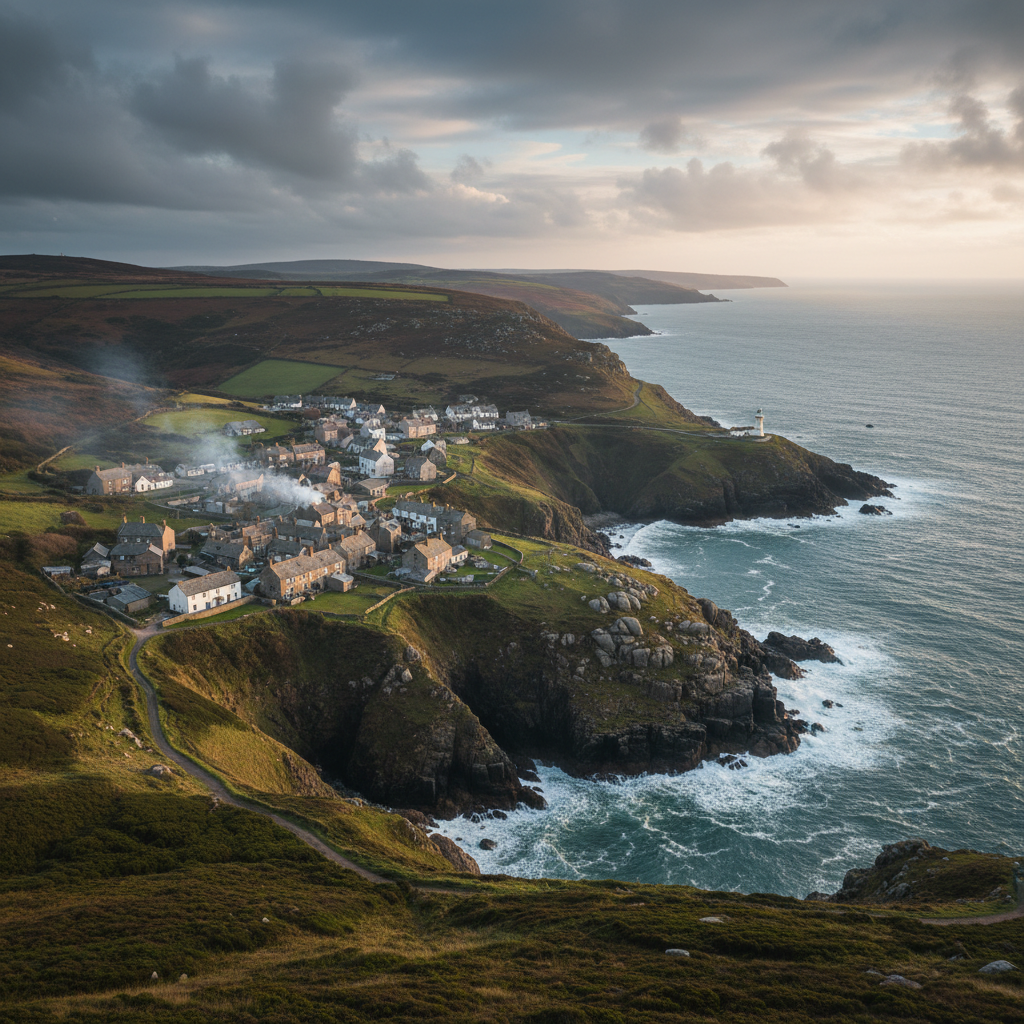
Hartland offers dramatic cliff scenery, isolation and strong Atlantic atmosphere.
Hartland
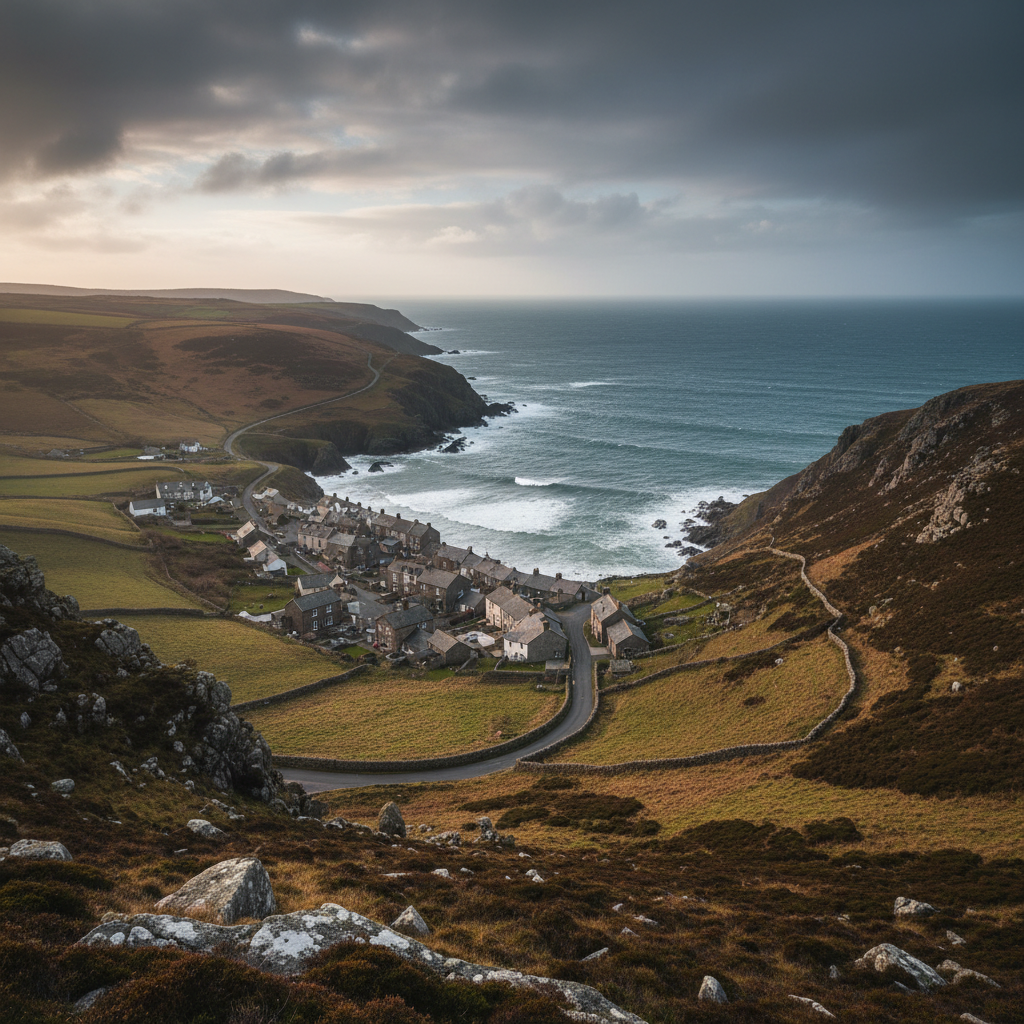
Hartland offers dramatic cliff scenery, isolation and strong Atlantic atmosphere.
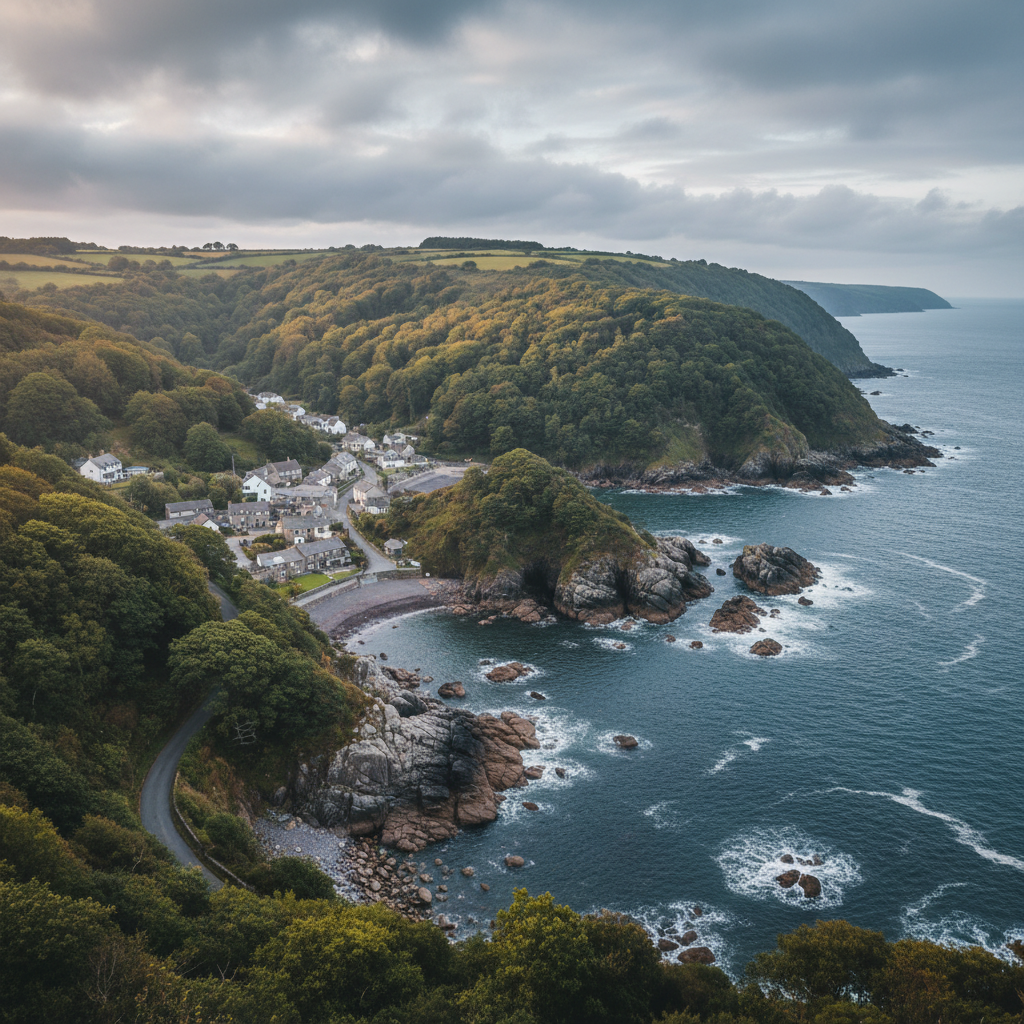
Lee Bay
Lee Bay feels sheltered, hidden and quieter than many North Devon coastal spots.
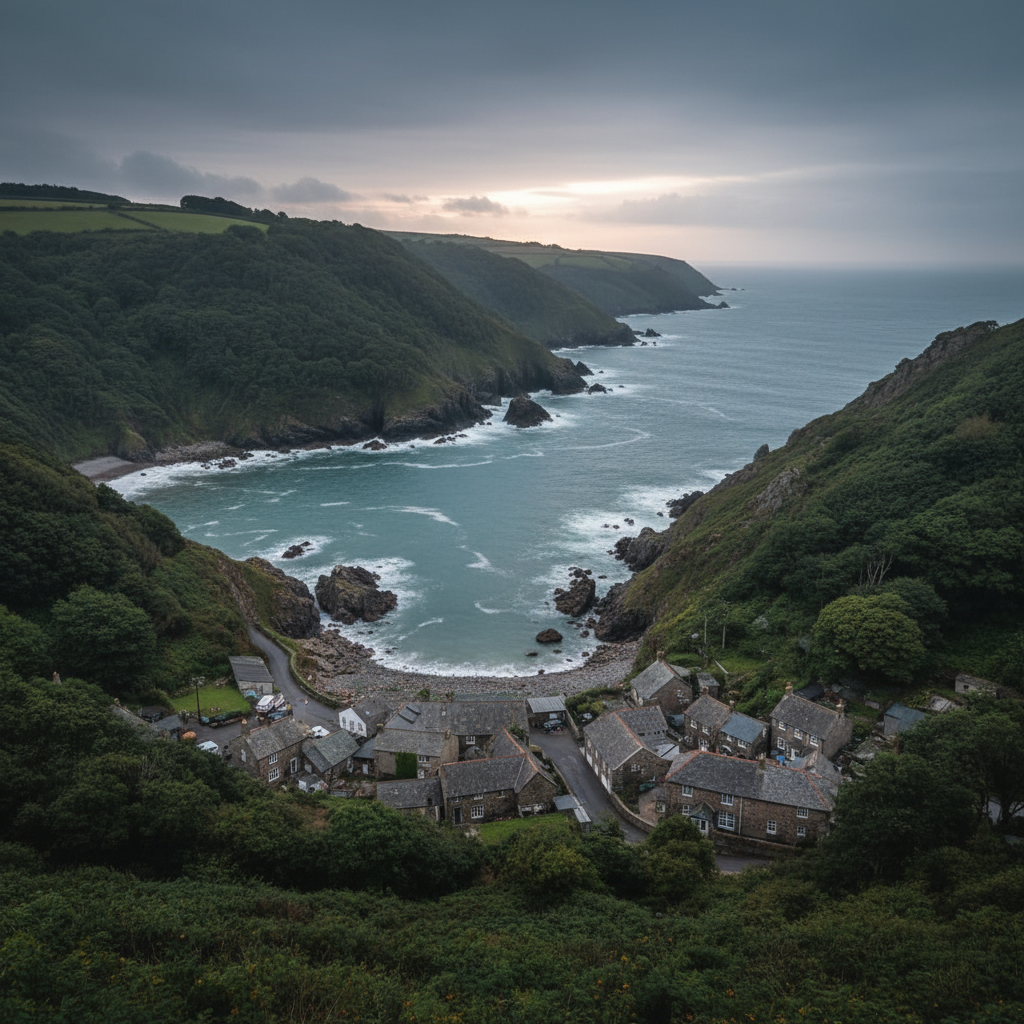
Lee Bay
Lee Bay feels sheltered, hidden and quieter than many North Devon coastal spots.
Join the 3moors Community for path conditions & local tips.
JoinWhy this place matters
Georgeham — in its own right
Georgeham does not make claims on your attention. It does not have a famous view or a celebrated restaurant or a heritage trail with waymarkers. What it has is a specific local character: people going about things, a community maintaining a life that tourism has not yet reorganised around itself. That quality is fragile and worth noticing when you find it. There is a difference between a village that welcomes visitors and a village that has been reconfigured for them, and Georgeham is still, just, the former. Leaving the village on a quiet afternoon, heading back up the lane and out into the open country above, what stays with you is less any particular sight than the sense of having been in a place that was not performing. That is, in the end, what makes a village feel like a village rather than a location.