
Dartmoor · South Dartmoor
Ivybridge
A practical Dartmoor gateway with immediate access to southern moorland routes.
About
Ivybridge
Ivybridge sits at the southern edge of Dartmoor, pressed up against the moorland rather than simply near it. The River Erme runs through the town centre, and the landscape tilts noticeably upward to the north, where open moor begins within a short walk of the last houses. It is not a tourist destination in any conventional sense, which is part of what makes it useful, and quietly interesting, to those who pay attention.
The town has a functioning high street, a secondary school, a leisure centre, and the kind of light industrial and retail presence that keeps a place genuinely alive between weekends. People come here to do things rather than to look at things, and that working character gives Ivybridge a particular kind of honesty. The shops serve residents first. The cafes fill up on school-run mornings. The car parks are used by people with errands, not itineraries.
For visitors, this working orientation is not a limitation but an orientation point. Ivybridge is a place to pass through intentionally, to gather provisions, to park and set off, or to return to at the end of a long day on the moor. It offers the practical infrastructure of a town without the self-consciousness of a heritage destination, and that combination is rarer than it sounds.
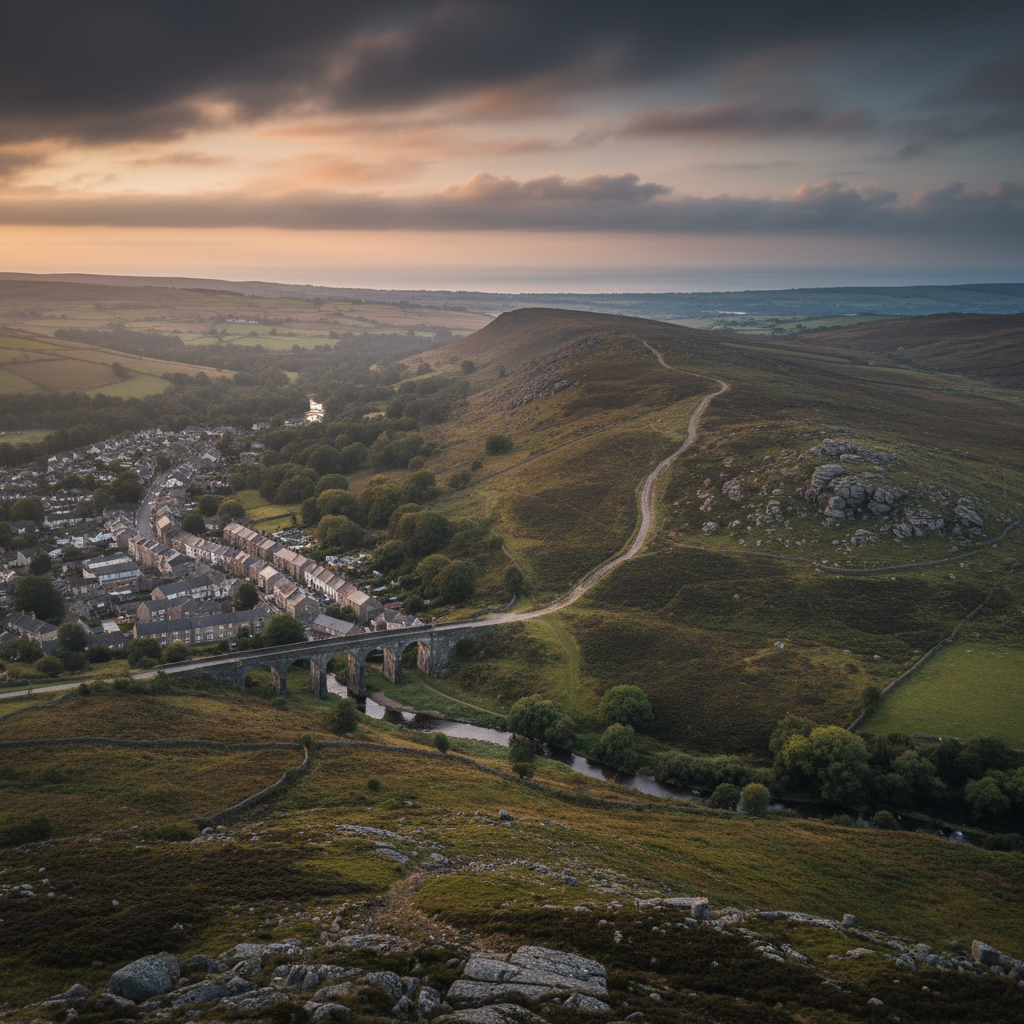
The town grew significantly in the twentieth century, though its origins are older. The viaduct that carries the main railway line over the Erme valley is a visible reminder that this was once an important junction on the edge of an extractive landscape. Paper mills and wool trades shaped earlier centuries. The character left behind is functional and unpretentious, qualities that persist in the town's daily life today.
Character
The feel of Ivybridge
The defining quality of Ivybridge is the abruptness of its edge. On the northern side of town, residential streets give way to moorland with almost no gradual transition. There is no belt of farmland or managed parkland softening the boundary. One moment you are walking past houses
the next, you are on open ground with a view across Stall Moor and the upper Erme valley. This is the landscape edge that shapes how Ivybridge feels, not as a backdrop to the town but as an immediate presence at its boundary.
That proximity has consequences for the town's atmosphere. People here are accustomed to the moor as a daily fact rather than an occasional destination. Dog walkers head north from the end of residential roads. Runners disappear onto the open ground and reappear an hour later. On clear mornings, the high ground above the town is plainly visible from the town centre, and the light on it changes through the day in a way that is hard to ignore once you start noticing. The moor does not feel far away here because it is not far away.
This edge condition gives Ivybridge a dual identity that other moorland towns do not quite replicate. It is not a village absorbed into a wider rural landscape, nor is it a market town that happens to be near the moor. It sits precisely at the join, and that precise positioning is what makes it feel different from Tavistock to the north or Totnes to the east. Those are towns with their own civic weight. Ivybridge is lighter, more transitional, a place where the logic of town and the logic of open country are genuinely in contact.
First-hand visit
Keith's Take
A town that does not slow down for visitors, and a moor that begins before you expect it to.
The sound of the Erme is audible from the car park before you have found the path. That is the detail I keep returning to when I think about Ivybridge, not the view from the ridge or the stepping stones, but the fact that the river announces itself from inside the town boundary. It is a geographical fact, but it works as a kind of signal: the landscape here is not waiting to be discovered beyond a threshold. It has already arrived.
What takes a few visits to notice is how the town behaves differently depending on which direction you approach it from. Coming in from the south, on the road from the A38, Ivybridge reads as a substantial residential town with familiar retail edges. Coming down off the moor from the north, it reads as something smaller, a settlement in a valley, bounded and sheltered. Regular walkers who use it as a base come to understand both versions, and the gap between them is part of what makes the place interesting. The town is not smaller or larger depending on the direction; it is the landscape around it that shifts in scale.
I have noticed, too, that the quieter stretches of the gorge path are usually found not at the edges of the day but in the late morning on weekdays, after the dog walkers have returned and before the lunchtime walkers set out. There is a particular stillness to the lower gorge in that window, the river loud, everything else present but unhurried. First-time visitors who build their days around peak conditions on the high moor often miss it entirely. It requires no special effort to find, only an unscheduled hour and the patience to walk at the speed the path naturally suggests.
Keith's Take — a first-hand account from the 3moors team
Map & Getting Here
Getting to Ivybridge
What to expect
A natural way to spend time here
Arriving on foot from the town centre heading north, you move through a sequence that compresses quickly. The high street gives way to quieter residential roads, which give way to a signed footpath, and then to open ground. The transition happens in stages but takes no more than fifteen or twenty minutes at a measured pace. The path beside the Erme is the most direct route, following the river upstream through a wooded gorge before the trees thin and the valley opens into moorland proper.
In the gorge itself, the sound changes noticeably. Road noise drops away within a few minutes, replaced by the river, which runs fast here over a granite bed. In late spring and early summer, the woodland floor carries the smell of wild garlic in some sections, and dippers are a reasonable expectation on the river if you pause and watch the shallower runs. The acoustic shift from town to gorge is one of the more striking transitions on this stretch of the national park's southern boundary.
The most rewarding approach for first-time visitors is to resist the instinct to head uphill immediately. The lower gorge and the early moorland section around the Erme stepping stones repay a patient visit on their own terms. Later in the day, when other walkers have pushed further north, this stretch tends to quieten. The light in the gorge through late afternoon, when it catches the water and the moss-covered boulders, is something that a quicker visit will miss.
What makes it stand out
What makes Ivybridge special
What distinguishes Ivybridge from other southern Dartmoor access points is the directness of the connection between the town and the upland. Princetown sits on the moor itself, which is a different proposition. Buckfastleigh and South Brent are closer to the agricultural margins. Ivybridge gives you a working town with a supermarket, a railway station, and a leisure centre, and then puts you on open moorland in under twenty minutes on foot. That combination, practical town infrastructure alongside immediate high-ground access, is genuinely unusual.
The town is also notable for what it does not try to be. There is no heritage trail, no visitor centre orientating you towards the landscape, no particular effort to frame the moor as a product to be consumed. The walks north from Ivybridge are well-used and reasonably well-marked, but they begin from car parks and lane-ends rather than from curated gateways. The moor here feels accessed rather than presented, which suits a certain kind of visitor very well.
Don't miss
Things to see and do
Follow the River Erme upstream from the edge of town and stay with it until the woodland opens and the moor comes into view.
Watch for dippers on the fast, shallow runs below the gorge, particularly in the calmer morning hours before foot traffic increases.
Cross the stepping stones on the Erme where the valley floor widens, and take a moment to look back south towards the town before the path draws you further up.
Walk the ridge above the upper Erme valley for a clear view across to the Western Beacon and the broad sweep of south Dartmoor.
Stop at the viaduct viewpoint in the lower town and consider the scale of the railway engineering against the shallow river valley below it.
Take a direct route north to Stall Moor and walk as far as the stone row, one of the longest megalithic rows on the moor, without a car to reach the trailhead.
Return via a different bank of the Erme to see how the gorge reads from the opposite side, a small difference that makes it feel like a new stretch of path.
Walks from here
Getting out from Ivybridge
The Erme valley walk is the natural route from Ivybridge and it extends as far as you choose to take it. The path follows the river north from the edge of town through the wooded gorge, emerging onto open moorland after roughly two to three kilometres. From there, the valley continues north past Erme Pound, a substantial Bronze Age enclosure, and up towards the long stone row that terminates at the Erme stone circle on Stall Moor. The full route to the stone row and back is a serious half-day walk of around sixteen kilometres, but the lower section to the first open ground and back is a comfortable two-hour circuit.
For those wanting height and open views quickly, the Western Beacon provides a straightforward ascent from the northern edge of town. The paths are well-worn and the summit, though modest by Dartmoor standards, gives a wide prospect south across the South Hams and north into the higher moor. It connects with the Two Moors Way, the long-distance route that begins near Ivybridge and runs north all the way to Exmoor, so the town also serves as a southern staging post for multi-day walkers. A shorter circuit combining the lower Erme gorge with a return over the lower slopes of the Western Beacon makes a satisfying morning route without requiring significant commitment to distance.
Good to know
Before you go
The car park at Longtimber Woods on the northern edge of the town is the most practical starting point for Erme valley walks, removing the need to navigate residential streets to find the path. It fills quickly on sunny weekends, particularly from late morning, so arriving before ten is worth considering if the weather is settled. The town centre has further parking and all the provisions a day on the moor requires, including a supermarket for those needing to resupply before a longer outing.
The river crossing via the Erme stepping stones can be impassable after sustained rain. The stones are substantial but the water level rises quickly in wet conditions, and the crossing should not be attempted when the river is running high and fast. If you intend the stepping stones to form part of your route, check conditions before you commit to the far bank.
Across the seasons: Late spring, from mid-April through June, is when the Erme gorge is at its most varied. The woodland carries new leaf, wild flowers appear on the valley floor, and the river is usually running with enough energy to be audible before you reach it. Bird activity is high in this period and the light through the canopy is at its most layered. For walkers who want the moor above alongside the gorge below, this is the most rewarding combination. Summer brings greater foot traffic on the Erme valley path, particularly at weekends and during school holidays. The route does not feel crowded by the standards of more prominent Dartmoor access points, but the lower gorge and stepping stones section sees steady use through July and August. Early morning visits in this period are noticeably different in character from mid-morning ones. Autumn draws the bracken through its full colour range on the open moorland above the valley, and the combination of russet ground and pale sky is most pronounced in late October and early November. Winter walking on the upper moor from Ivybridge requires competent navigation, and the low winter sun through the gorge woodland makes even a short walk on the lower path worthwhile on a clear day. The town itself maintains its working rhythm through all seasons, which is part of what makes it a reliable base regardless of conditions on the high ground.
Practical info
Practical info
Ivybridge has a main public car park off Leonards Road that serves most visitor needs, with reasonable capacity for a town of this size. Street parking exists on some residential roads near the town centre, though spaces fill quickly on weekday mornings when the town is at its busiest. Visitors planning to walk directly onto the moor from town should note that trailhead parking near Stall Moor Road or the Erme valley is limited and largely informal. Arrive early if you intend to combine a town stop with a longer moorland walk.
The town centre has a reasonable spread of shops, cafés, a post office, and public conveniences, making it a practical resupply point before or after a moor visit. There is a library and some independent traders alongside the usual high street staples. Facilities thin out quickly once you leave the town edge and move onto moorland, so fill water bottles and sort kit before departing. Do not expect visitor centres or formal trailhead infrastructure at the southern moor access points.
The town itself is straightforward to navigate on foot, though the ground rises noticeably as you head north towards the moor edge. Paths from Ivybridge into the Erme valley and up onto the southern plateau can be boggy after rain, particularly through the lower valley sections, and waterproof footwear is advisable for anything beyond the tarmac. The open moorland above is exposed to south-westerly weather rolling in from the coast, which can arrive without much warning. The transition from town pavement to open ground happens quickly, and walkers should be prepared for both.
varies
Explore nearby
Places nearby
Ashburton
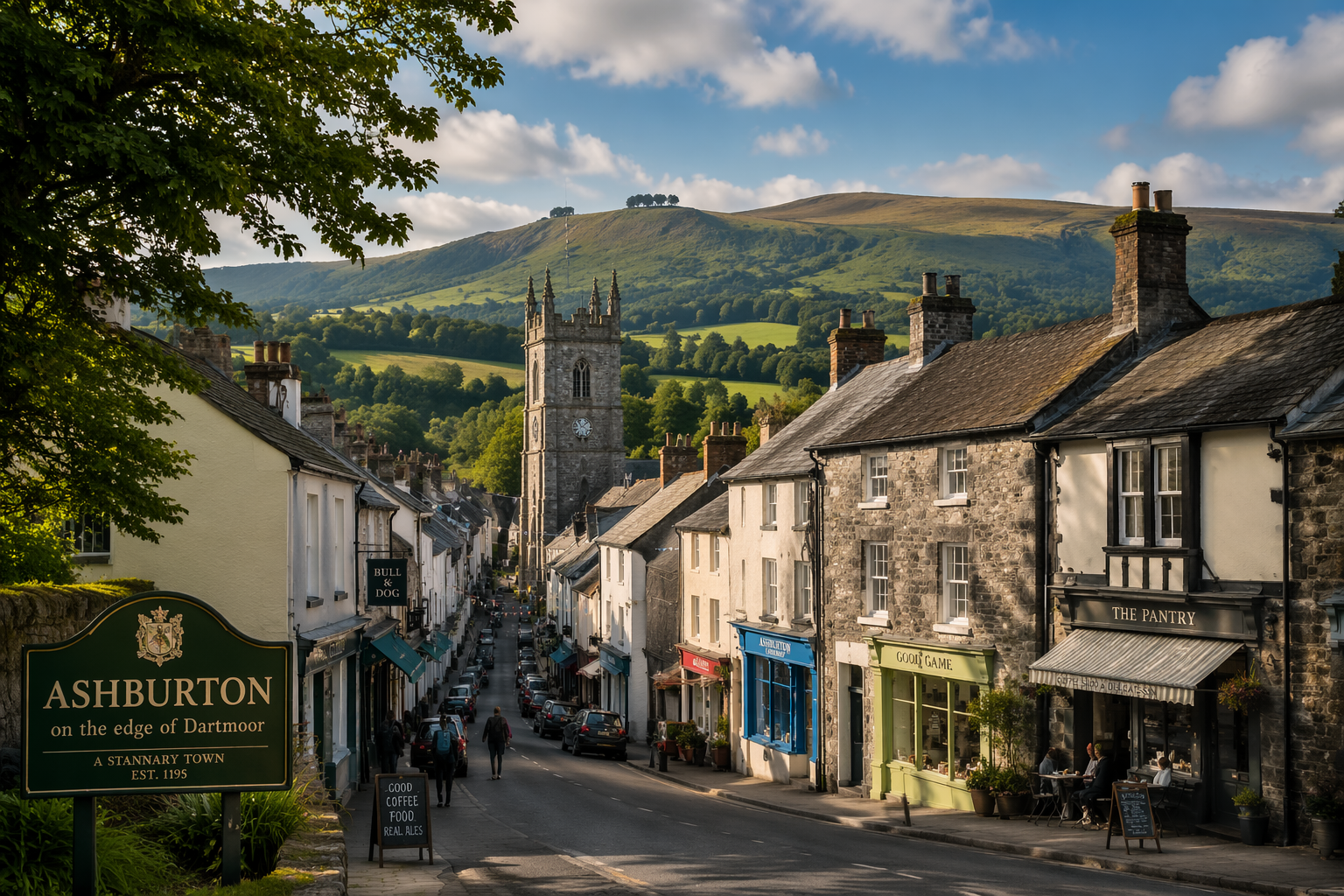
A lively Dartmoor-edge town combining independent shops with quick access to the moor.
Beer
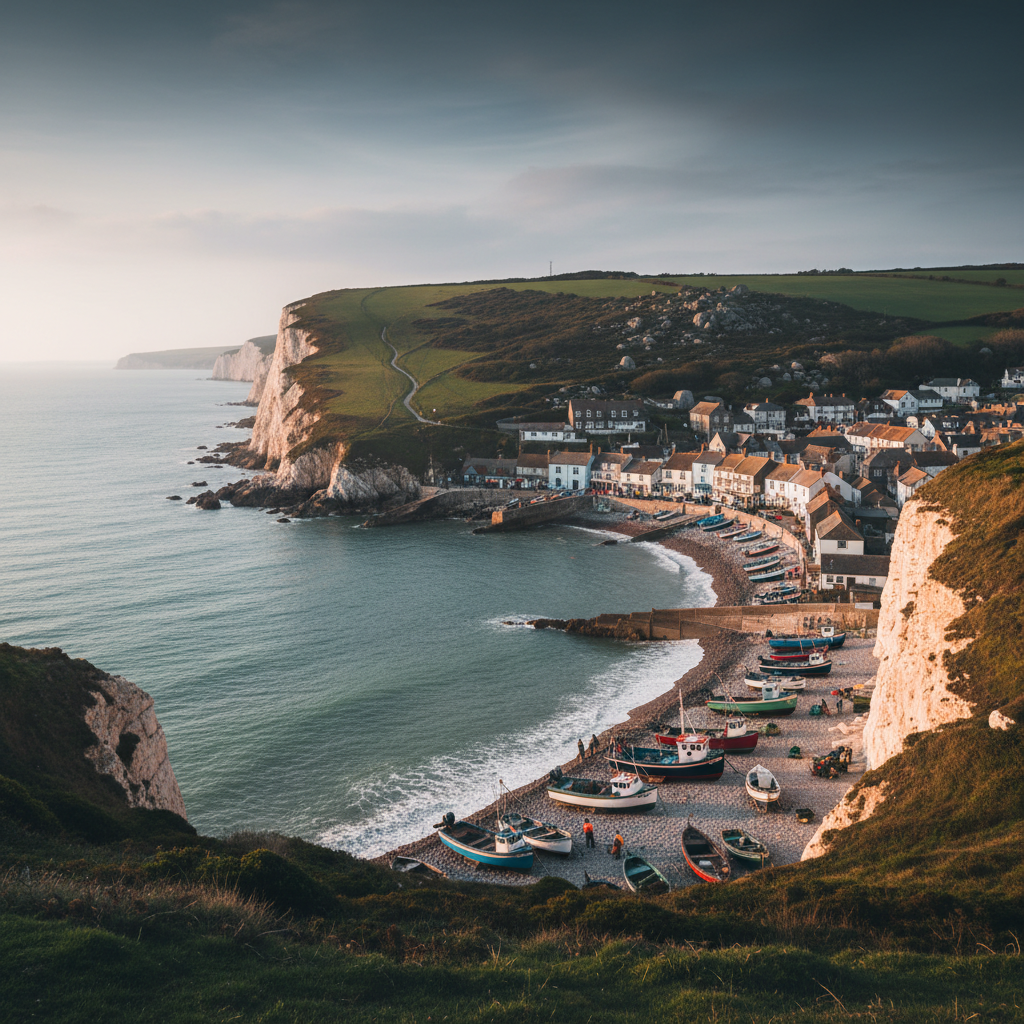
Beer combines beach atmosphere, fishing heritage and dramatic coastal scenery.
Belstone
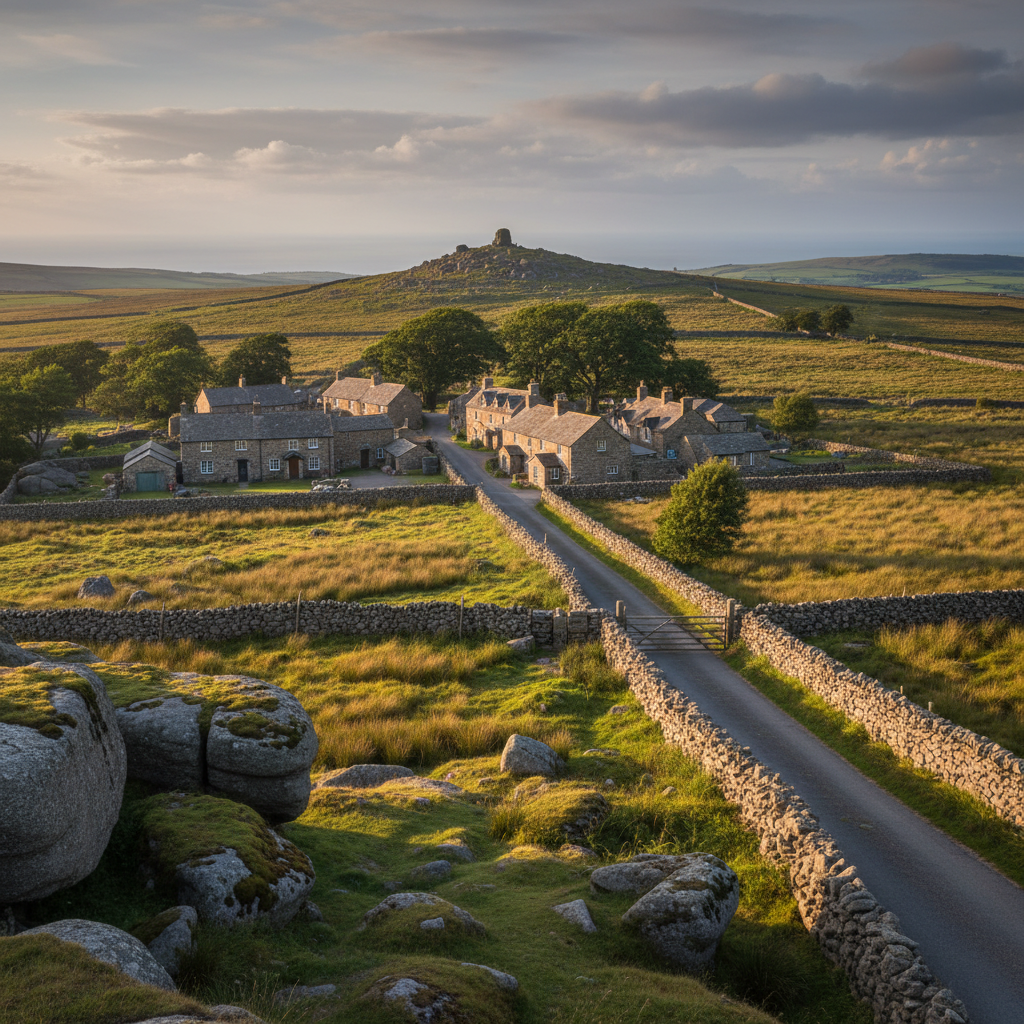
Belstone feels deeply connected to the moor, with immediate access to tors and upland walking.
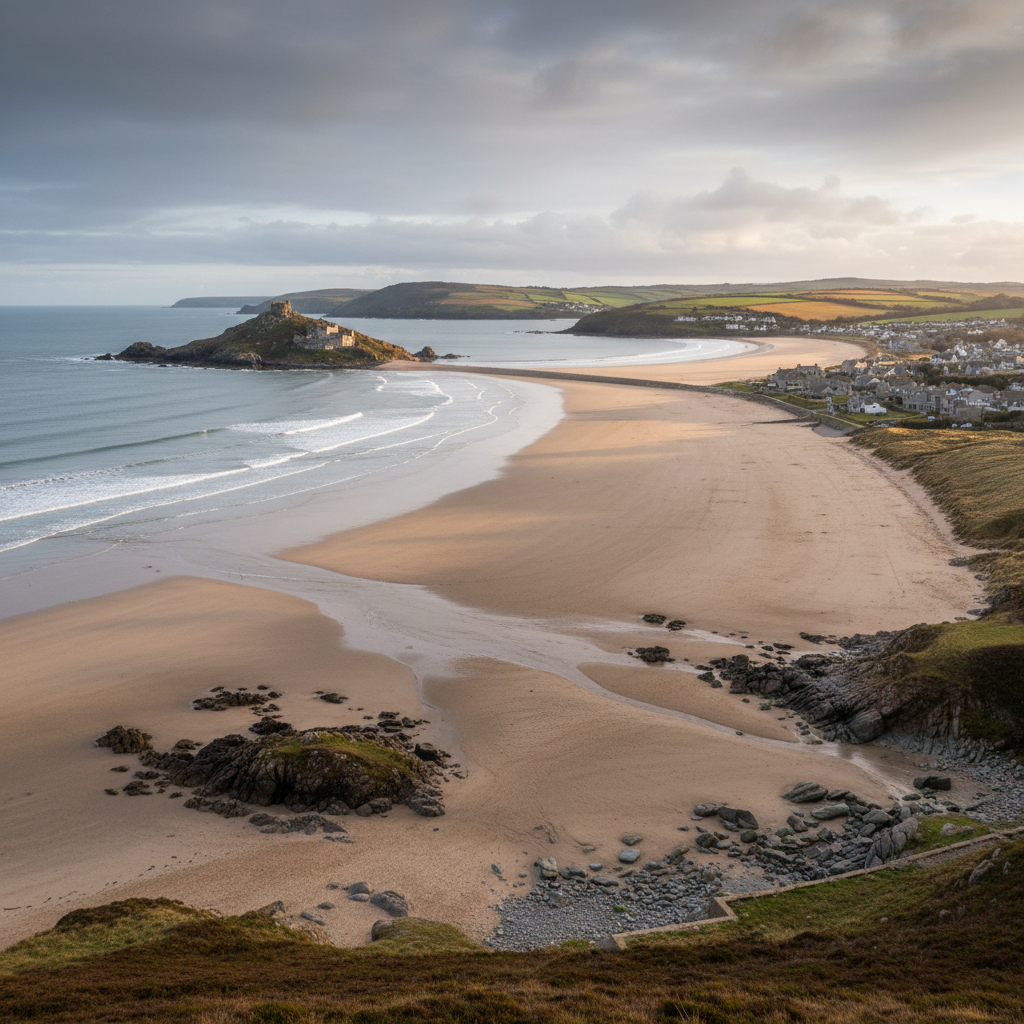
Bigbury-on-Sea
Bigbury-on-Sea is an obvious coastal place for the wider 3moors South West layer, especially for family days and photography.
Join the 3moors Community for path conditions & local tips.
JoinWhy this place matters
Ivybridge — in its own right
There is something particular about a town that does not perform for visitors. Ivybridge goes about its business regardless of whether anyone has arrived to appreciate it, and the moor above it does the same. On a Tuesday morning in February, with most of the high ground under low cloud and the river running fast and brown through the gorge, the town has exactly the same community rhythm it has on a bright Saturday in June. The same roads fill at school drop-off time. The same shops open. The same runners come back down the hill, damp and satisfied. For visitors who come looking for that kind of continuity, rather than for a staged encounter with a landscape, Ivybridge rewards the attention. It is a place that functions, and that functioning is, in its own way, the most honest form of welcome.
Explore more
Discover other places, walks, and hidden corners across Dartmoor.